Best HRV Tracker (2026): What Each Device Measures
Quick answer: The best HRV tracker depends on the job. For nightly trends, the Oura Ring 5, WHOOP, Garmin Cirqa and Google Fitbit Air all report sleep-time HRV. For one reading you can trust, the Polar H10 chest strap is the lab reference. Don't compare numbers across brands: a 2025 ECG study found nightly HRV agreement from 0.82 to 0.99.1
Here's the confusing part. Your Oura says your HRV was 62 last night. A friend's WHOOP says 48. Nobody is wrong, and nobody is healthier. The two devices measured different windows of the night, averaged them differently, and in some cases computed a different statistic. This guide explains what the numbers mean, what each tracker actually reports, and how to get readings you can use.
- Nightly trend, zero effort: a ring or band that reads HRV during sleep. Oura had the strongest published agreement with ECG among the wearables tested so far (Oura Ring Gen 3 and Gen 4, not the Ring 5 itself).
- Most trustworthy single reading: Polar H10 chest strap plus an app that logs beat-to-beat intervals.
- Comparing brands: don't. Compare each device only with its own last 7 to 30 days.
- Medical questions: HRV is a wellness trend, not a diagnosis. Talk to a clinician about symptoms.
Which HRV Trackers Report What? (Comparison Table)
Every device below can show you some form of HRV. What differs is where it sits on your body, when it measures and what number it hands back.
| Device | Worn on | What you get | When it measures | Subscription |
|---|---|---|---|---|
| Oura Ring 5 | Finger | Average HRV and max HRV for the night | Five-minute samples through sleep2 | Paid membership for full data |
| WHOOP 5.0 / MG | Wrist or arm | Nightly HRV (RMSSD) that feeds Recovery | Sleep; weighted toward slow-wave sleep per WHOOP and the 2025 study14 | Membership required |
| Garmin Cirqa | Wrist | HRV status: 7-day average vs. your baseline | Overnight; baseline takes about 21 nights5 | None required |
| Google Fitbit Air | Wrist | Nightly HRV, reported as RMSSD | Sleep; needs a long enough sleep record | None required |
| Polar H10 | Chest | Raw beat-to-beat (RR) intervals; an app computes HRV | Whenever you record, day or night6 | None |
| Polar Verity Sense | Upper arm | Optical pulse data; Polar does not list HRV as a feature | Whenever you record7 | None |
Based on manufacturer pages and the sources listed below, as of November 7, 2026. Fitbit's RMSSD detail comes from developer-facing documentation as summarized in search results, not from a consumer product page. Subscription terms change; check each maker's site.
What Is HRV, and What Is the Difference Between RMSSD and SDNN?
Heart rate variability is the variation in the time between consecutive heartbeats, measured in milliseconds. A healthy heart is not a metronome, and the small beat-to-beat changes reflect how your autonomic nervous system is adjusting to breathing, stress and recovery.3
Two statistics show up in almost every wearable conversation.
RMSSD (root mean square of successive differences) looks at the change from one beat interval to the next. A 2017 review in Frontiers in Public Health calls it the primary time-domain measure of vagally mediated HRV changes, meaning it leans heavily on parasympathetic (rest-and-recover) activity.3 That is why recovery products favor it.
SDNN (standard deviation of normal-to-normal intervals) measures the overall spread of intervals across a recording. It reflects both branches of the nervous system, and its value depends on how long the recording is. Over 24 hours the same review calls it the gold standard for medical stratification of cardiac risk, which is a different job from checking how rested you are this morning.3
Apple Watch is the well-known SDNN case. Apple has historically stored HRV in HealthKit as SDNN. According to a September 2026 report from Gadgets & Wearables, the Apple Watch Series 12 and Ultra 4 add an RMSSD reading, though Apple has not confirmed exactly which on-screen number maps to which statistic.8 If you move between Apple and a ring, expect numbers that do not line up.
Why Can't You Compare HRV Numbers Between Brands?
Because HRV depends on three things that each company chooses for itself: the statistic, the time window and the way readings are averaged. The same review that defines RMSSD also warns that 24-hour, five-minute and ultra-short recordings are not interchangeable, and that age and sex shift baseline values.3
Here is how that plays out in practice.
- Window. Oura reports the mean of all five-minute samples taken while you sleep, plus the highest value of the night.2 WHOOP has described its nightly value as weighted toward slow-wave sleep, and its own pages word this differently in different places.14 Two devices looking at different parts of the same night can disagree by design.
- Averaging. Garmin does not hand you one night as the headline. It compares a rolling seven-day average against a personal baseline, which Garmin says needs about 21 nights of consistent wear to establish.5
- Statistic. RMSSD and SDNN are different measurements. A 2025 letter from two WHOOP employees makes this point about the research itself: comparisons are only fair when metric, window and averaging all match.9 The authors have a commercial stake, but the logic holds for shoppers too.
Our inference: a single night's number is nearly meaningless to someone else, and a brand-to-brand comparison of raw milliseconds tells you about the algorithms, not the people. Your own trend line is the only fair comparison. We go further on that in our WHOOP Recovery Score guide, where HRV carries the most weight in the formula.
How Accurate Is Wearable HRV Compared With an ECG?
In the most direct recent test, the Oura rings tracked an ECG reference best overnight, WHOOP came next, and Garmin and Polar trailed. Dial and colleagues compared five devices against a Polar H10 chest strap (single-lead ECG) in 13 healthy adults over 536 nights and published the results in Physiological Reports in August 2025.1
| Device tested | HRV agreement with ECG (CCC) | Mean absolute % error |
|---|---|---|
| Oura Gen 4 | 0.99 | 5.96% |
| Oura Gen 3 | 0.97 | 7.15% |
| WHOOP 4.0 | 0.94 | 8.17% |
| Garmin Fenix 6 | 0.87 | 10.52% |
| Polar Grit X Pro | 0.82 | 16.32% |
Source: Dial et al., Physiological Reports, 2025 (PMID 40834291). CCC is Lin's concordance correlation coefficient; 1.00 is perfect agreement.
Read that table with care, because it has limits that matter for buying.
- These are older devices. The study did not test the Oura Ring 5, WHOOP 5.0 or MG, Garmin Cirqa, Google Fitbit Air or Polar Verity Sense. Fitbit and Apple were not included at all.1 Oura claims the Ring 5 improves overnight HRV accuracy by 12% over the Ring 4 for the average member, but that is Oura's own figure, and DC Rainmaker's Ray Maker wrote it would be very hard to notice (more in our Oura Ring 5 review).
- Small, healthy sample. Thirteen healthy adults. The authors note the results may not hold for people with sleep or cardiovascular disorders, and that atrial fibrillation, which they did not study, affects HRV readings.1
- Windows were not perfectly matched. For WHOOP the authors used an all-night average because its own algorithm is undisclosed, and for Polar they used only the first four hours of sleep. The WHOOP-employee letter argues this mismatch may have penalized WHOOP.19
- Algorithms change. The authors themselves say firmware updates mean validity should be re-checked over time.1
The fair summary: nightly HRV from a good ring or band is credible for tracking your own trend, rings had the strongest showing in this one study, and no single study should decide your purchase.
Why Is a Chest Strap the HRV Reference, and Do You Need One?
A chest strap measures the heart's electrical signal, so each beat is detected directly instead of inferred from blood flow. That is why researchers use the Polar H10 as the benchmark, including in the nightly study above. In a 2019 validation, the H10 correctly detected about 99.6% of beats across rest and exercise conditions, versus about 94.6% for a medical Holter used for comparison.10 A 2022 study of 25 recreational adults found H10 beat-interval data at rest was nearly identical to a 12-lead ECG, with errors under 1 ms during incremental cycling.11
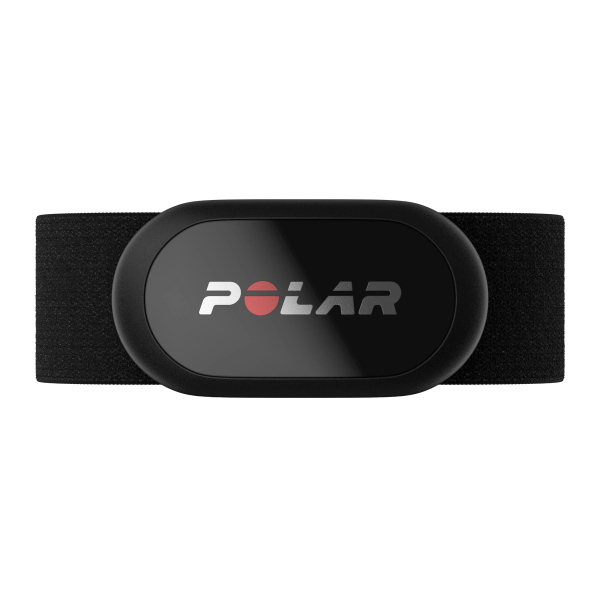
Polar H10 uses electrical sensors and, per Polar, runs up to 400 hours on a replaceable CR2025 coin cell, with Bluetooth and ANT+.6 It does not compute HRV by itself. You pair it with an app that records beat-to-beat intervals. HRV4Training, for example, lists the H10 among sensors it supports for a morning measurement.12 Check any app's current sensor list before you buy. The catch is obvious: nobody sleeps in a chest strap, so this is a spot-check tool, not a nightly one. We cover the battery and strap care in our Polar H10 battery guide.
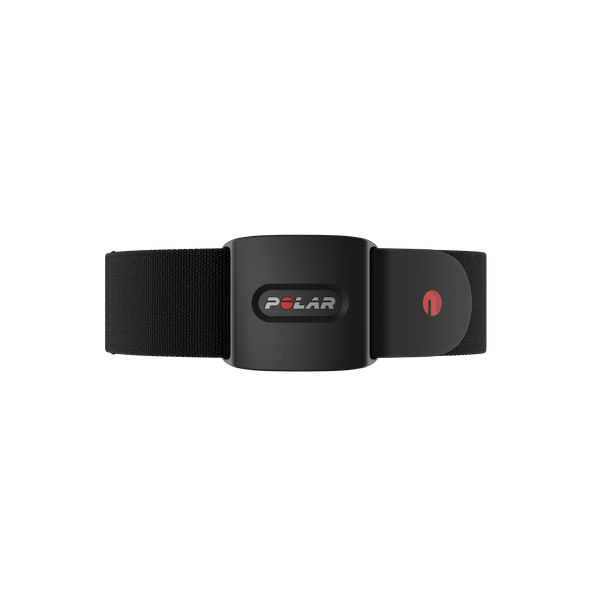
Polar Verity Sense is the optical alternative: it straps to the upper arm, offers up to 30 hours of battery, 16 MB of onboard storage, and Bluetooth plus ANT+.7 But Polar's own page does not list HRV as a feature, and its FAQ says ECG sensors are considered more accurate, especially for HRV. If beat-to-beat HRV is the main reason you're buying, get the H10. If you already want an armband for training, the Verity Sense is fine for heart rate, and our chest strap vs armband vs wrist guide explains where each position wins.
Which Ring or Band Is Best for Nightly HRV?
If you want HRV measured every night without doing anything, you are choosing between four screen-free options. They differ more in ecosystem and cost than in the basic idea.

Oura Ring 5. The finger is a good place for optical sensing at night, since it stays still and has dense blood flow. Oura reports average and max HRV from five-minute samples, and the earlier Oura generations had the best agreement with ECG in the 2025 study.12 The cost is a paid membership for full data. Details in our Oura Ring 5 review, and our no-subscription ring roundup if that bothers you.
WHOOP 5.0 / MG. Built around HRV: it is the largest input into the Recovery Score. WHOOP 4.0 scored a CCC of 0.94 in the nightly study, with the caveat about window matching above.19 It is a membership product, so see what WHOOP really costs over three years and our WHOOP vs Oura comparison. The Amazon listing below bundles a 12-month membership.
Garmin Cirqa. Garmin's approach is the most trend-first of the group: HRV status compares your seven-day average with your own baseline, and the first full status takes about three weeks of wear.5 No subscription is required. It suits runners and lifters already living in Garmin Connect. See our Garmin Cirqa review.
Google Fitbit Air. The cheapest way into nightly HRV from this group, with no required subscription, but with the thinnest published validation. Fitbit was not part of the 2025 study, and Fitbit's community forums include many reports of nights where HRV does not appear. Our take, as an inference: it is good enough for a casual trend and weakest for anyone who plans training around the number. See our Fitbit Air review.
Which HRV Tracker Should You Pick?
Match the device to the habit you will actually keep.
- You want a hands-off nightly trend and don't mind a membership: Oura Ring 5, or WHOOP if you want recovery coaching built around the number.
- You want a trend with no monthly fee, and you train in Garmin's ecosystem: Garmin Cirqa.
- You want the cheapest screen-free start: Google Fitbit Air, accepting thinner validation.
- You want the most trustworthy individual reading, or you do HRV-guided training: Polar H10 and a morning measurement. Pair it with a ring or band for the nights.
- You mostly want the armband for workouts: Polar Verity Sense, and treat HRV as a bonus you shouldn't count on.
Many serious users end up with both: a ring or band for the nightly baseline and a strap for a few spot checks. Our best gym heart rate monitors and ring vs band guide help with that split, and the best screenless fitness trackers page lists the bands side by side.
How Do You Get Consistent HRV Readings?
Consistency matters more than the device. The research literature points the same way: Plews and colleagues recommend appropriate averaging techniques for day-to-day monitoring, and Buchheit's review finds that almost-daily five-minute resting recordings of beat-to-beat measures are likely the most useful monitoring tool.1314 Our practical suggestions follow from that.
- Judge the trend, not the night. Use a rolling average of a week or more. Garmin builds this in; with other devices, eyeball the trend line.
- Wear the device the same way every night. Same finger or wrist position, a snug fit, and a charge schedule that doesn't create gaps in the sleep record.
- For strap spot checks, fix the conditions. Same time of day, same posture, right after waking, still and quiet. Moisten the electrodes. HRV4Training notes that 1-minute recordings have been validated for RMSSD, though Shaffer and Ginsberg still favor five minutes for many metrics.312
- Log the things that move HRV. Alcohol, late meals, hard sessions, illness and poor sleep are the usual suspects. Our WHOOP Recovery guide covers what gear can and can't change.
- Don't switch devices mid-experiment. A new device means a new baseline, so give it a few weeks before judging.
- Know when the sensor is the problem. Optical sensors read worst with movement and cold hands, which is why a strap is cleaner for spot checks; see how accurate smart rings are.
What Can't an HRV Tracker Tell You?
It cannot diagnose anything. HRV moves with sleep, stress, alcohol, illness, training load and plain day-to-day noise, so a low reading has no single cause. Conditions such as atrial fibrillation can also distort the data; the 2025 nightly study explicitly did not cover them.1
If you have palpitations, fainting, chest pain or an irregular-rhythm notification, talk to a clinician. Our heart-health tracker guide covers what rhythm notifications do and don't mean. An HRV score is a wellness trend, not a substitute for medical care.
HRV Tracker FAQ
What is the best HRV tracker?
It depends on what you want to do with the number. For nightly trends, a sleep-time reader such as the Oura Ring 5, WHOOP, Garmin Cirqa or Google Fitbit Air is the practical choice, because you wear it without thinking about it. For a short, controlled reading you can trust, the Polar H10 chest strap is the best option, since it records the heart's electrical signal and is the reference device in published validation studies.
Is RMSSD or SDNN better for tracking HRV?
For day-to-day recovery tracking, RMSSD is the more useful of the two. A 2017 review in Frontiers in Public Health describes RMSSD as the main time-domain measure of vagally mediated HRV changes, while SDNN reflects both sympathetic and parasympathetic influences and depends heavily on how long the recording is. Most rings and bands report RMSSD-style values, though Apple has historically stored SDNN.
Why is my Oura HRV different from my WHOOP or Garmin HRV?
The numbers are built differently. Oura averages five-minute samples across the whole night, WHOOP has described weighting its value toward slow-wave sleep, and Garmin compares a seven-day average against your own baseline. Different time windows give different values even when the underlying heart is identical, so compare each device only against its own history.
What is a good HRV number?
There is no universal good number. HRV varies a lot by age, sex, fitness and the way it is measured, and published reference values for 24-hour, five-minute and ultra-short recordings are not interchangeable. The useful question is whether your reading is above or below your own recent average, ideally a rolling average over a week or more.
Is a chest strap better than a ring for HRV?
For accuracy of individual beats, yes. A chest strap like the Polar H10 reads the heart's electrical signal, and studies against ECG found it very close to the reference. A ring is better for convenience, because it measures every night with no effort. In a 2025 nightly study, the Oura rings tracked an ECG reference more closely than the other wrist devices tested, so a good ring is not a bad choice for overnight trends.
Can an HRV tracker diagnose a heart problem?
No. Consumer HRV numbers are wellness trends, not diagnostic results, and conditions such as atrial fibrillation can distort HRV readings. If you have symptoms such as palpitations, fainting or chest pain, or a notification about an irregular rhythm, talk to a clinician rather than relying on an HRV score.
Do HRV trackers need a subscription?
Some do. WHOOP is sold as a membership, and Oura needs a paid membership for full data. The Garmin Cirqa and Google Fitbit Air have no required subscription, and a Polar H10 strap paired with a free or low-cost app has no recurring fee at all. Check the current terms on each maker's site before you buy.
Sources
- Dial MB, et al. Validation of nocturnal resting heart rate and heart rate variability in consumer wearables. Physiological Reports, 2025;13(16):e70527. PubMed (PMID 40834291) · full text
- Oura Support. Heart rate variability. support.ouraring.com (read November 7, 2026)
- Shaffer F, Ginsberg JP. An Overview of Heart Rate Variability Metrics and Norms. Frontiers in Public Health, 2017. PubMed (PMID 29034226)
- WHOOP. Podcast 194: Understanding Heart Rate Variability and Its Performance Potential. whoop.com
- Garmin. What Is HRV? Heart Rate Variability, Normal Range and Garmin HRV Status. garmin.com
- Polar. Polar H10 heart rate sensor. polar.com
- Polar. Polar Verity Sense. polar.com
- Gadgets & Wearables. Apple Watch recovery HRV and overall HRV (RMSSD). September 2026. gadgetsandwearables.com
- Grosicki GJ, Presby DM. Accurate comparison of wearables requires contextual equivalence. Physiological Reports, 2025;13(23):e70710 (authors are WHOOP employees). PubMed (PMID 41388834)
- Gilgen-Ammann R, Schweizer T, Wyss T. RR interval signal quality of a heart rate monitor and an ECG Holter at rest and during exercise. European Journal of Applied Physiology, 2019. PubMed (PMID 31004219)
- Schaffarczyk M, et al. Validity of the Polar H10 Sensor for Heart Rate Variability Analysis during Resting State and Incremental Exercise in Recreational Men and Women. Sensors, 2022. PubMed (PMID 36081005)
- Altini M. Recommended sensors for heart rate variability (HRV) measurement in HRV4Training. Substack
- Plews DJ, et al. Training adaptation and heart rate variability in elite endurance athletes: opening the door to effective monitoring. Sports Medicine, 2013. PubMed (PMID 23852425)
- Buchheit M. Monitoring training status with HR measures: do all roads lead to Rome? Frontiers in Physiology, 2014. PubMed (PMID 24578692)