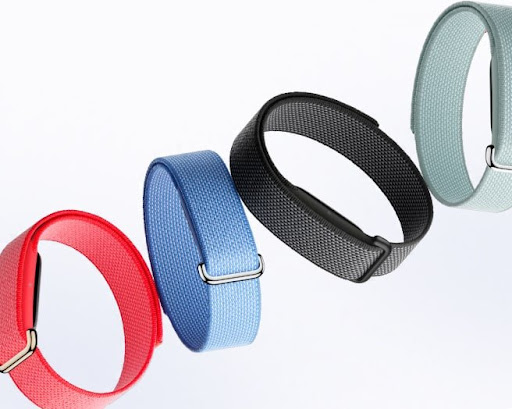
Chest Strap vs Armband vs Wrist: The Heart Rate Accuracy Guide
Quick answer: A chest strap is the most accurate heart rate monitor you can buy, because it reads your heart's electrical signal instead of guessing from blood flow — that's why labs use one as the reference device. An upper-arm optical band gets close enough that most people never notice the gap, and it's far more comfortable. A wrist tracker is the least accurate during hard training but the most useful for the other 23 hours, and a smart ring sits between the two: excellent at night, weakest in the gym. Match the position to the job and you only need to spend once.
Here's the moment that sends most people looking for an answer. You finish a set of heavy squats, you're seeing spots, and your wrist calmly reports 118 bpm. Or you're four rounds into intervals and the number on your band goes flat — same value, minute after minute, like the thing quietly gave up.
It didn't give up. It's doing exactly what it was designed to do, in a situation it was never good at. Understanding why takes about two minutes, and it saves you from either distrusting good data or trusting bad data — both of which cost you training time.
- Chest (ECG-based): the reference standard. Best for intervals, lifting, HRV, anything where the number has to be right.
- Upper arm (optical): within a beat or two of the chest in published tests, and you'll actually wear it.
- Wrist (optical): fine at rest and steady cardio, unreliable under load. Its real job is sleep, recovery and all-day trends.
- Finger / ring (optical): excellent overnight resting HR and HRV, poor for live workout data.
Why Does Wrist Heart Rate Go Wrong in the First Place?
There are only two ways consumer gear measures your heart, and everything downstream follows from which one you're wearing.
Electrical (ECG-based). A chest strap picks up the small voltage your heart muscle generates with every contraction. That signal is unambiguous — a beat either fired or it didn't — and it doesn't care about sweat, skin tone, tattoos, or how fast your pulse is changing. It's the same physics as a hospital ECG, which is why the Polar H10 is the device sports scientists strap on when they need something to compare a new wearable against.
Optical (PPG). A wrist tracker, armband or ring shines green light into your skin and measures how much bounces back. More blood in the capillaries, less light returns. From that wobbly little waveform, software infers beats. It works beautifully when you're still and the signal is clean. It struggles when:
- the sensor moves against your skin — a band riding on your wrist bone during a rowing stroke
- tendons flex underneath it — gripping a barbell, a kettlebell, a pull-up bar
- your heart rate changes faster than the algorithm's smoothing expects — the first 20 seconds of an interval
- blood flow to the extremity drops — cold hands in a January run, which is a real and underrated problem
Notice that lifting weights ticks three of those boxes at once. That's not a defect in your tracker; it's the worst-case scenario for the method it uses.
How Accurate Is Each Position? What the Research Actually Shows
You don't have to take our word for the ranking — this has been measured repeatedly in labs against clinical ECG.
The most-cited consumer study is Cleveland Clinic's 2017 comparison of four popular wrist trackers against an ECG chest strap during exercise, published in Medicine & Science in Sports & Exercise: the chest strap tracked the ECG almost perfectly, while the wrist devices were most accurate at rest and progressively less accurate as intensity rose, with individual readings drifting far enough to put you in the wrong training zone.1 Separate validation work on the Polar H10 found its beat-to-beat intervals good enough to stand in for a research-grade ECG Holter, both at rest and during exercise — which is the technical reason it's used as the benchmark everywhere else.3
Armbands come out of that same literature looking surprisingly good. Validation studies on Polar's OH1 optical armband — the sensor family that became the Verity Sense — reported agreement with ECG-derived heart rate that held up across light, moderate and vigorous intensities, and a 2021 study comparing the same armband against a wrist-worn Fitbit found the armband consistently the closer of the two.24 Move the same optical sensor from the wrist to the bicep and most of the problem disappears, because the bicep barely flexes and has better blood flow.
| Position | How it reads | Accuracy at rest | Accuracy in intervals / lifting | Real-world catch |
|---|---|---|---|---|
| Chest | Electrical (ECG) | Reference standard | Reference standard | Comfort; needs moisture for good contact |
| Upper arm | Optical (PPG) | Excellent | Very good — typically a beat or two off | Must be snug and above the elbow bulge |
| Wrist | Optical (PPG) | Good | Unreliable — lag, dropouts, cadence lock | Loose fit and cold hands make it worse |
| Finger (ring) | Optical (PPG) | Excellent overnight | Poor; usually can't broadcast live | Great for recovery, not for training |
Qualitative summary of published validation work; individual results vary by device, fit and skin condition.
When Does the Difference Actually Matter?
It matters a lot for: interval sessions where you're chasing a zone, strength training and CrossFit-style circuits, HYROX and anything with a sled or a wall ball, heart-rate-variability data you plan to act on, and any training plan that prescribes effort by heart rate zone. Being 25 bpm low on a 4-minute interval doesn't just misreport that rep — it corrupts the weekly load number your app builds on top of it.
It matters very little for: resting heart rate trends, sleep tracking, an easy jog at constant pace, a walk, an elliptical session you're doing while watching TV. In those cases the optical sensor has everything it needs, and a wrist band's number will sit right next to a chest strap's.
That split is the whole buying decision. Most people don't need to replace their tracker — they need to add a $79-$105 strap for the two or three sessions a week where the number actually drives what they do next.
Chest: Buy This If You Want the Truth
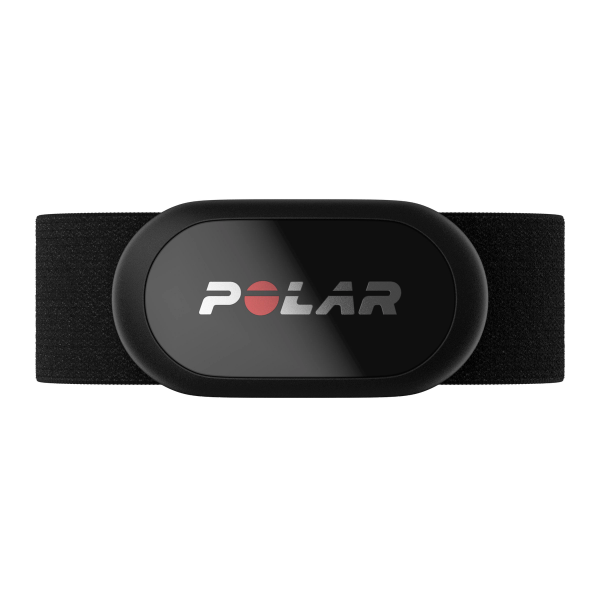
Polar H10 · around $89.95 (September 2026)
Still the default recommendation, and it's not close. Simultaneous Bluetooth and ANT+ means it pairs with your phone, your watch and the treadmill console at the same time; onboard memory records a session if you'd rather train without a phone; the battery is a coin cell you swap once a year for pocket change (and a worn strap is a ~$13 fix, not a new sensor). Wet the electrodes before you put it on — that single habit fixes 90% of "my strap reads garbage for the first five minutes" complaints.
Two alternatives worth knowing. If you're already in Garmin's ecosystem — including the screen-free Garmin Cirqa — the HRM-Pro Plus (~$129.99) adds running dynamics and indoor pace on top of the same ECG-grade heart rate. And the HRM-Fit (~$149.99) clips onto a medium- or high-support sports bra instead of wrapping around your ribs, which is a genuinely better answer for a lot of women than "wear the band tighter."
Upper Arm: The Accuracy Most People Should Actually Buy
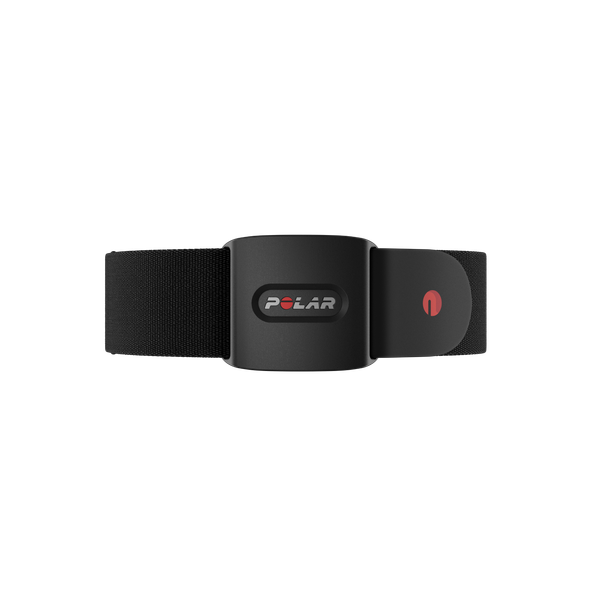
Polar Verity Sense · around $104.95 · COROS HRM · around $79 (September 2026)
The armband exists because of a simple fact: the most accurate monitor is the one you'll put on. Plenty of chest straps live in drawers. The Verity Sense straps to your bicep, swims (there's a goggle clip in the box), stores sessions offline, and broadcasts Bluetooth and ANT+ together — and it feeds the free Polar Flow platform that also runs the Polar Loop. The COROS HRM undercuts it at around $79 with 38 hours of battery and automatic on-wrist detection, giving up swimming, onboard memory, and ANT+ — it's Bluetooth-only, so skip it if you need to pair with a bike computer or older gym console.
Fit rule for both: snug enough that it doesn't slide, high on the bicep or on the forearm below the elbow, never over the elbow joint itself.
There's a third option that blurs the line: the Amazfit Helio Strap (~$99.99) is worn on the upper arm like a dedicated HRM but keeps tracking sleep and recovery all day, with a HYROX race mode built in. It's the pick if you want one device instead of two — just budget for the arm band, which Amazfit sells separately (every option compared here).
Wrist and Finger: Great at Everything Except the Hard Part
None of this makes wrist trackers bad. It makes them specialized. A screen-free band like the Fitbit Air is measuring you continuously for days at a time — resting heart rate creeping up before you get sick, overnight HRV, sleep stages, irregular-rhythm notifications. No chest strap will ever do that, because nobody sleeps in one.
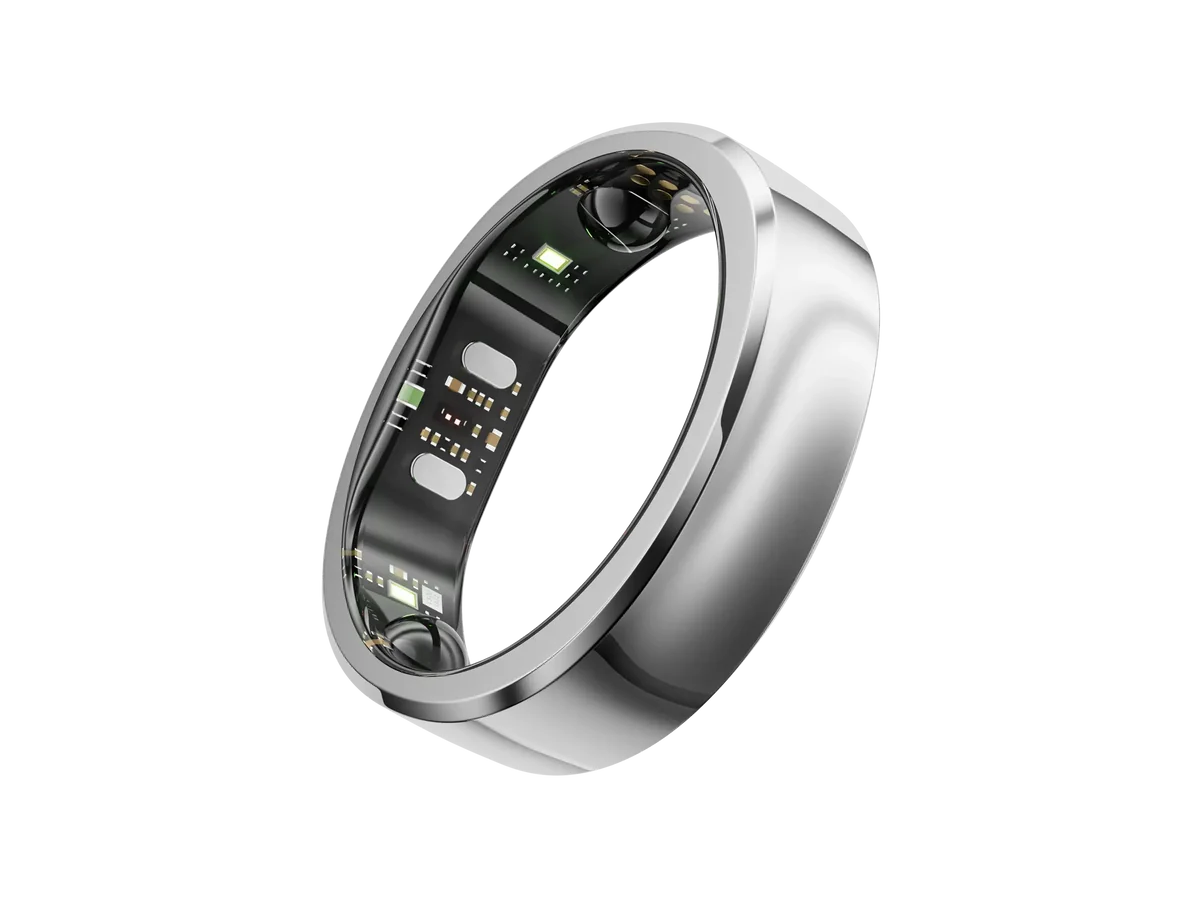
Rings are the same story taken further. The finger has dense blood flow and, at 3 a.m., zero movement — which is the ideal case for an optical sensor, and why a ring like the RingConn Gen 3 produces such clean overnight data. Take it to the gym, though, and you've got a sensor on the body part doing the most gripping, usually with no way to broadcast live heart rate to anything. Use rings for recovery, not for reps. Our ring vs band guide goes deeper on that split.
How Do You Make Any Monitor More Accurate?
Before you buy anything, these cost nothing and fix more errors than an upgrade would:
- Wet chest strap electrodes. Tap water on the two contact pads. Dry skin plus a dry strap equals nonsense for the first several minutes.
- Move a wrist band up. Wear it about a finger's width above the wrist bone, snug enough that it doesn't slide when you shake your arm. Loose is the number one cause of bad wrist data.
- Warm up your hands in the cold. Constricted peripheral blood flow wrecks optical readings; a chest strap is immune to this.
- Don't grip the machine. Holding a treadmill rail or bar with a wrist sensor practically guarantees drift.
- Suspect cadence lock. If your heart rate matches your step or stroke rate suspiciously well, the sensor is tracking your motion, not your pulse.
- Wash the strap. Salt buildup on electrodes degrades contact over months. Rinse it, and machine-wash the band per the maker's instructions.
So Which One Should You Buy?
Three honest paths:
You already own a wrist tracker you like. Keep it for sleep and daily trends, and add an armband — the Verity Sense if you want the better one, the COROS HRM if you want the cheaper one. Total damage under $105, and it fixes exactly the sessions that were broken.
You want the most accurate data possible and don't mind a strap. Polar H10. There's no argument to be had here; it's the reference device, it's under $90, and it lasts years.
You want one device to do everything. The Helio Strap on the upper arm, or a good screen-free band on the wrist if 24/7 metrics matter more to you than the accuracy of any single interval. Just know which trade you made — that's really all this guide is trying to give you.
For specific picks by use case, our best gym heart rate monitors guide ranks all five, and none of them charges a subscription.
Heart Rate Accuracy FAQ
Is a chest strap really more accurate than a wrist tracker?
Yes, and the gap widens as intensity rises. Chest straps read the heart's electrical signal like an ECG; wrist sensors infer beats from blood flow. Published comparisons against clinical ECG put chest straps essentially on top of the reference and show wrist accuracy declining with effort. At rest and on easy steady cardio, the difference is small enough to ignore.
How accurate are armband monitors compared to chest straps?
Close enough for nearly everyone. Validation work on Polar's optical armband sensor found agreement with ECG-derived heart rate holding across light through vigorous exercise, and armbands consistently beat wrist-worn devices in head-to-heads. The bicep barely flexes and has strong blood flow — the two things the wrist gets wrong.
Why does my wrist tracker read low during weightlifting?
Gripping a bar flexes the tendons under the sensor and breaks optical contact, and heart rate during lifting swings faster than the smoothing algorithm expects. The result is a number that looks plausible but often sits 20-40 bpm under reality on a heavy set.
Are smart rings accurate for heart rate?
For resting heart rate, overnight heart rate and HRV — yes, they're excellent, because the finger has dense blood flow and stays still while you sleep. For live training data they're the weakest option here: hand movement disturbs the signal and most rings can't broadcast heart rate to gym equipment at all.
Do I need a chest strap if I only do steady cardio?
Probably not. At a constant effort on a treadmill or bike, a decent wrist or armband optical sensor stays close enough for zone training. Buy the strap when you do intervals, heavy lifting or HYROX-style circuits, or when you want beat-to-beat HRV you can trust.
Sources
- Gillinov S, et al. Variable Accuracy of Wearable Heart Rate Monitors during Aerobic Exercise. Medicine & Science in Sports & Exercise, 2017. PubMed (PMID 28709155)
- Hermand E, et al. Validation of a Photoplethysmographic Heart Rate Monitor: Polar OH1. International Journal of Sports Medicine, 2019. PubMed (PMID 31189190)
- Gilgen-Ammann R, Schweizer T, Wyss T. RR interval signal quality of a heart rate monitor and an ECG Holter at rest and during exercise. European Journal of Applied Physiology, 2019. PubMed (PMID 31004219)
- Muggeridge DJ, et al. Measurement of Heart Rate Using the Polar OH1 and Fitbit Charge 3 Wearable Devices During Exercise: Validation Study. JMIR mHealth and uHealth, 2021. PubMed (PMID 33764310)