Best Trackers for Heart Health: Which Ones Actually Detect AFib?
Quick answer: In this screen-free category, exactly one device has a real, FDA-cleared on-demand ECG that can flag atrial fibrillation: the WHOOP MG (on the Life plan, ~$359/yr), through its Heart Screener feature. One more has a different but genuinely FDA-cleared feature — the Fitbit Air (~$99, no subscription) runs passive Irregular Heart Rhythm Notifications that check for AFib patterns in the background while you sleep or sit still. The Garmin Cirqa, Polar Loop, base WHOOP 5.0, Oura Ring 5, RingConn Gen 3 and Samsung Galaxy Ring all track heart rate and HRV around the clock, but none of them detects or screens for AFib specifically — despite what some "heart health" marketing implies. None of this is a diagnosis. These are screening tools, not medical devices, and a notification — or the absence of one — is never a substitute for seeing a doctor if something feels off.
Type "heart rate tracker AFib" into Amazon and you won't find a shortage of product copy leaning on words like "heart health," "cardiac insights" and "early warning." Some of that is earned. Some of it is a $30 ring borrowing the credibility of a technology it doesn't actually have.
The confusion is understandable, because "heart health tracking" actually covers three different things, and almost nobody's marketing bothers separating them. We went through the FDA's own clearance filings, brand support documentation, and — in one case — a company's own blog post explaining what its product can't do, to sort out which screen-free trackers have real, cleared AFib-detection technology, and which ones are just very good at counting your pulse.
- Real on-demand ECG (FDA-cleared): WHOOP MG — Heart Screener, on the Life plan (~$359/yr)
- Real passive AFib screening (FDA-cleared): Fitbit Air — Irregular Heart Rhythm Notifications, ~$99, no subscription
- No AFib-specific feature, heart rate/HRV trends only: Garmin Cirqa, Polar Loop, base WHOOP 5.0, Oura Ring 5, RingConn Gen 3, Samsung Galaxy Ring
- None of these is a diagnosis — they're screening tools. See a doctor for symptoms, not a wearable.
ECG vs. PPG vs. "Irregular Rhythm Notification": What's Actually Different?
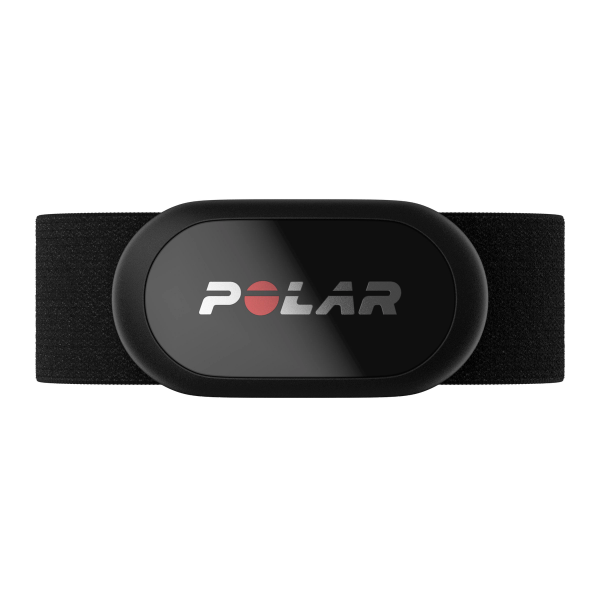
Every wearable in this category measures your pulse using PPG (photoplethysmography) — a light shining into your skin, measuring how much bounces back as blood volume changes with each heartbeat. It's the same underlying technology across every ring and band here, and it's genuinely good at counting beats. What it can't do on its own is diagnose a rhythm disorder, for the same reason a photo of a car's exhaust can't tell you whether the timing belt is slipping: you're reading a downstream effect, not the electrical event itself. Our full chest strap vs. armband vs. wrist guide goes deep on how much that gap matters for everyday accuracy.
An ECG (electrocardiogram) reads your heart's electrical signal directly — the same principle behind every hospital heart monitor. On a wearable, that means two points of skin contact completing a circuit for about 30 seconds, producing an actual waveform that an algorithm, and in a real case a cardiologist, can read for AFib.
Sitting in between is the "Irregular Heart Rhythm Notification" (IHRN, if you want the term the FDA's own clearance paperwork uses). This is still PPG, not ECG — but it's a specific, clinically validated algorithm that watches your background pulse pattern while you're still or asleep, looking for the kind of irregularity AFib produces, and nudges you to get an actual ECG if it sees something suspicious repeatedly. It's a screening trigger, not a diagnosis, and every FDA clearance for this class of feature says so explicitly.
That distinction — on-demand ECG vs. passive PPG notification vs. plain PPG with no rhythm algorithm at all — is the entire story of this guide. Here's exactly where every device in this category lands.
Does WHOOP Detect AFib? Only the MG, and Here's Exactly How
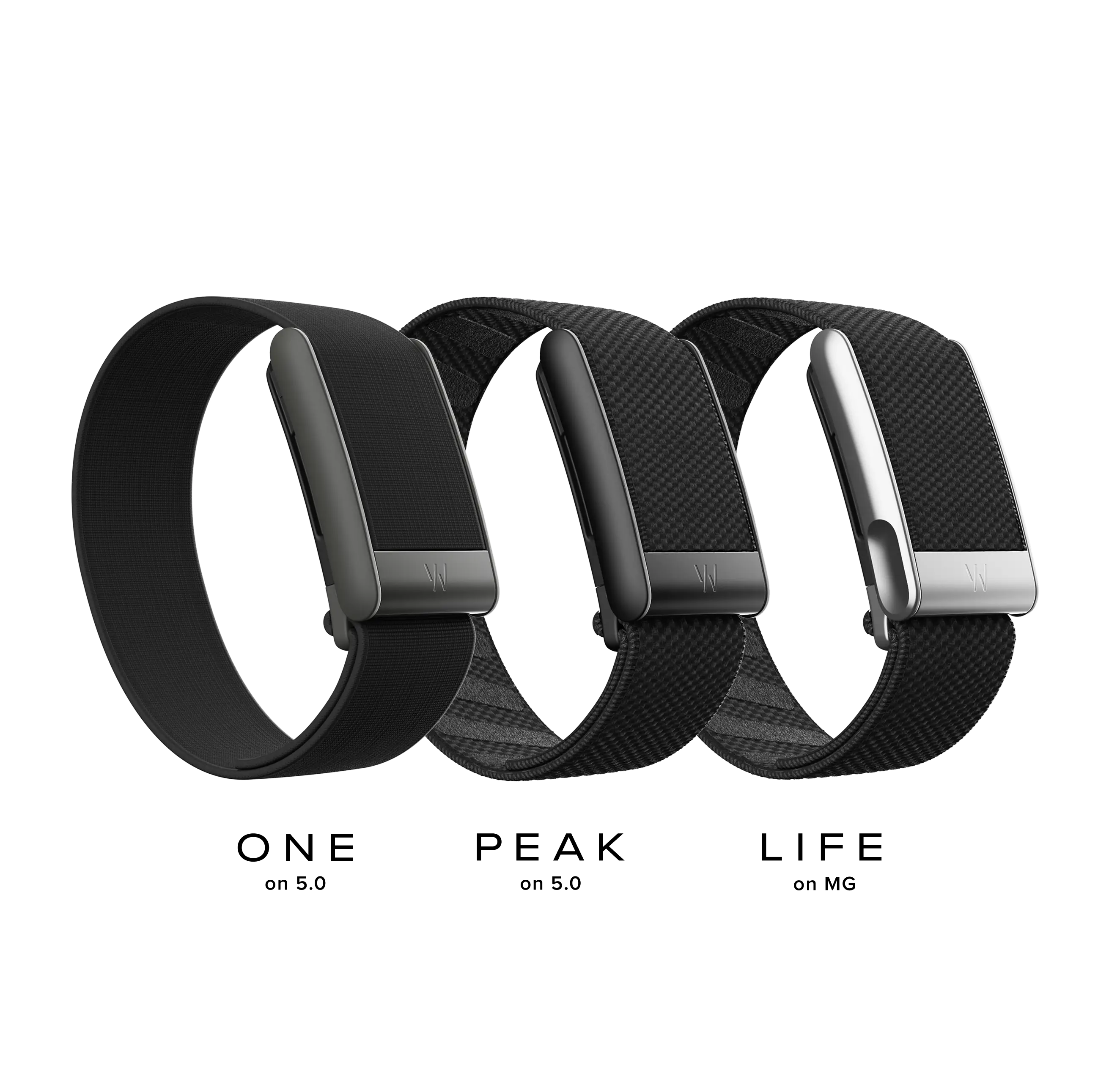
Yes — and it's the real thing. The WHOOP MG, the hardware bundled with the top-tier Life membership (~$359/yr), has an FDA-cleared on-demand ECG feature called Heart Screener. Pinch the MG's conductive metal clasp between your thumb and finger for about 30 seconds and it records a genuine single-lead ECG, comparable to a clinical Lead I reading, and classifies it as atrial fibrillation, normal sinus rhythm, a low heart rate (≤50 bpm) or a high heart rate (≥100 bpm).
That's not a marketing claim we're taking on faith. The FDA cleared WHOOP's ECG feature on April 4, 2025 as a Class II device (510(k) K243236), and the clearance filing states it was validated in a clinical trial of roughly 540 subjects, correctly classifying AFib with 96.2% sensitivity and sinus rhythm with 99.4% specificity. That's a number from a regulatory filing, not ad copy.
The catches are real too, and they matter. Heart Screener is on-demand only — it doesn't run in the background scanning for AFib around the clock; you have to actively take a reading. The clearance excludes anyone under 22 and anyone with a diagnosed arrhythmia other than AFib. And it's explicitly for informational use: the filing says not to act on a result without talking to a healthcare professional. Heart Screener is also a separate feature from WHOOP's Blood Pressure Insights, which drew an FDA warning letter in 2025 over how its estimates were presented — a different feature with a different regulatory story we cover in full in our WHOOP 5.0 vs. WHOOP MG breakdown.
What the Base WHOOP 5.0 Loses Without the Clasp
Buy the standard WHOOP 5.0 on the One or Peak plan and none of this ships with it — not the on-demand ECG, and not even a passive Irregular Heart Rhythm Notification running quietly in the background. The feature is tied to the MG's conductive clasp hardware specifically; put a standard band on and the circuit needed to take a reading doesn't exist. The 5.0 still tracks heart rate, HRV and respiratory rate continuously and well — it just can't do anything with rhythm. If the roughly $120–$160/year gap between the One/Peak plans and the Life plan is the only thing standing between you and Heart Screener, our WHOOP 5.0 vs. MG comparison walks through whether that's worth it for your situation — and if the membership itself is the bigger hurdle, it's worth knowing WHOOP's annual plans, MG included, can qualify as an HSA/FSA expense with the right paperwork.
Does Fitbit Air Have an ECG or AFib Detection?
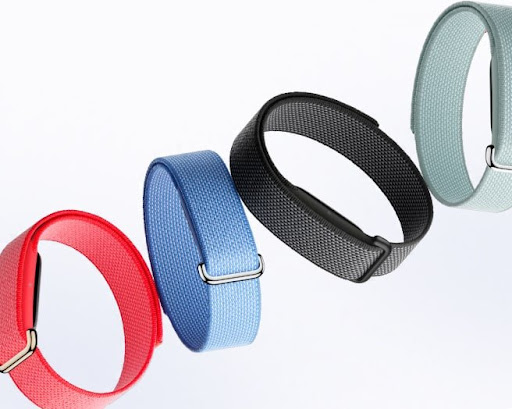
Partially, and it's worth knowing exactly which part. The Fitbit Air doesn't have an on-demand ECG app the way the Fitbit Charge 6 and Sense do — that's hardware the Air's minimalist band design leaves out. If you want to trigger a spot-check ECG reading whenever you feel like it, the Air isn't built for that; our Fitbit Air vs. Charge 6 comparison covers what else that missing hardware costs you.
What the Air does have is Irregular Heart Rhythm Notifications — confirmed directly on Google's own Health Help Center compatible-devices list, which names the Fitbit Air (firmware 1.245.19 or higher) as supported. This is the passive, background feature described above: while you're still or asleep, the optical sensor's algorithm watches your pulse pattern for signs consistent with AFib, and if it sees the same irregularity across multiple readings, it notifies you. The underlying algorithm was FDA-cleared back in April 2022, validated by the Fitbit Heart Study, which found its PPG-based detections matched ECG patch monitors 98% of the time. Like every version of this feature, it isn't intended for anyone under 22 or anyone already diagnosed with AFib, and it isn't scanning continuously — only during stillness.
So: no on-demand reading, but a real, FDA-cleared background check for AFib patterns, on a ~$99 band with no subscription. That's an unusual combination at this price, and it's part of why the Air remains our highest-scored pick overall — see our full Fitbit Air review.
Do Garmin Cirqa, Polar Loop or Oura Ring 5 Detect AFib?
No, on all three — though each one gets there differently, and it's worth knowing why.
Garmin Cirqa
Cirqa runs Garmin's Elevate Gen 4 optical sensor. Garmin's ECG technology exists on select watches carrying the newer Elevate Gen 5 sensor — Cirqa isn't one of them, and Garmin's own spec sheet confirms it plainly: no ECG, and no irregular-heart-rhythm notification feature of any kind. What Cirqa does have is a basic high/low heart rate alert — a simple threshold you set yourself, not a rhythm-pattern algorithm, and it won't fire during your configured sleep window. It's a genuinely capable 24/7 tracker for training load, HRV status and Body Battery — see our full Garmin Cirqa review — it's just not doing anything with rhythm.
Polar Loop
Polar has real ECG technology — Wrist-ECG, built on its Elixir sensor — but it lives on the company's smartwatches, not on the screen-free Loop. Polar's own product page for the Loop is direct about the category it's in: "it is not for medical purposes." If ECG-grade accuracy from Polar is genuinely what you want, that's the H10 chest strap's job, not the Loop's — and it's worth keeping that strap's coin-cell battery and clasp in good shape rather than assuming a bad reading means a dead sensor.
Oura Ring 5
Oura is the most interesting "no" on this list, because the company's own marketing leans on real member stories where the ring played a role in catching AFib — and those stories are true, they're just describing something different from device-based detection. Oura's own support documentation states plainly that the ring "is not a medical device and is not intended to diagnose, treat, cure, monitor, or prevent medical conditions or illnesses." What actually happens in those stories is a sudden, unexplained change in resting heart rate or HRV, or a gap in the data, odd enough that the person went to a doctor — who then ran an actual ECG and made the diagnosis. That's a genuinely useful thing for a tracker to do. It's just not the same claim as "this ring detects AFib," and Oura's own materials are careful not to make that claim.
There's a real ECG-adjacent AFib feature reportedly coming from Oura: a patent surfaced in early 2026 describing a system that combines optical, motion and temperature signals to flag possible AFib and could trigger a confirming ECG reading. As of this writing it hasn't shipped in Ring 5. For how Ring 5 currently stacks up against the ring that owns this niche's no-subscription lane, see our Oura Ring 5 vs. RingConn Gen 3 comparison.
Do RingConn Gen 3 or the Samsung Galaxy Ring Detect AFib?
Also no, and both companies are unusually upfront about it once you look past the box art.
RingConn Gen 3
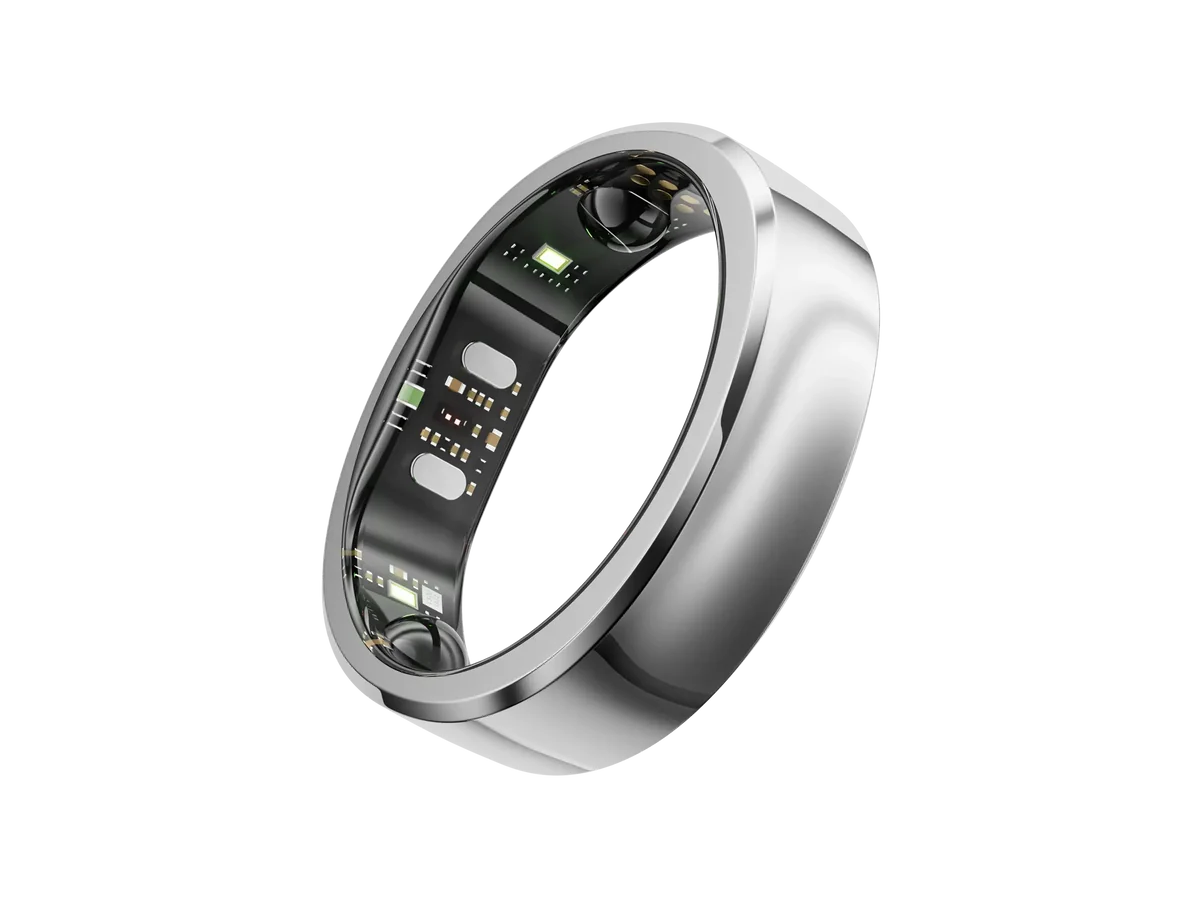
RingConn says so itself, unusually directly for a brand talking about its own product. The Gen 3's actual sensor list is an optical heart-rate sensor, a temperature sensor, a 3-axis accelerometer and a vibration motor — no electrodes, no ECG path. RingConn's own guide on the subject states the ring "should not be described as an ECG device or as a device that diagnoses AFib," and that its Health Alerts feature "is intended to highlight selected changes in supported wellness signals rather than diagnose AFib or another arrhythmia." That's about as clear a company-authored disclaimer as you'll find in this category, and we'd rather quote it directly than paraphrase it. The ring is still excellent at what it does track — see our full RingConn Gen 3 review — heart rhythm just isn't one of those things.
Samsung Galaxy Ring
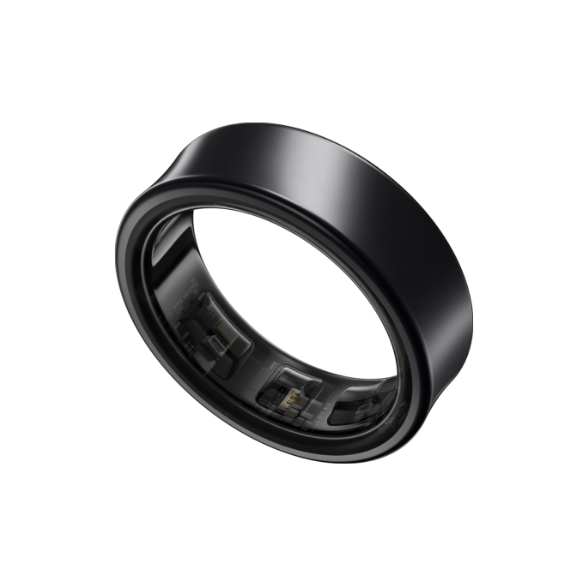
This is the one case where the company genuinely has the underlying technology and simply hasn't brought it to the ring yet. Samsung's Irregular Heart Rhythm Notification is real and FDA-cleared — it launched on Galaxy Watch models in 2024, using the watch's BioActive sensor. The Galaxy Ring, which shares a company and an app with the Watch, does not have it; independent reviewers including Android Central have called out the gap directly next to competing rings that have added AFib detection. If cardiac screening is specifically why you're shopping, know that it's a Watch feature today, not a Ring feature — our full Samsung Galaxy Ring review covers the rest of what the ring's sensor does and doesn't do.
Screenless Heart-Health Trackers, Compared
| Tracker | Heart-rhythm feature | Status | Price (Sept 2026)* | Subscription | Full review |
|---|---|---|---|---|---|
| WHOOP MG (Life plan) | On-demand ECG (Heart Screener) | FDA-cleared ECG | ~$359/yr | Required | Compare |
| Fitbit Air | Irregular Heart Rhythm Notification | FDA-cleared notification | ~$99 once | None | Review |
| WHOOP 5.0 (One/Peak) | None | No AFib feature | ~$199–$239/yr | Required | Compare |
| Garmin Cirqa | Basic high/low HR alert only | No AFib feature | ~$199.99 once | None | Review |
| Polar Loop | None | No AFib feature | ~$169.99 once | None | Review |
| Oura Ring 5 | HR/HRV trend hints only | No AFib feature | ~$399–$499 + ~$5.99/mo | Required for full data | Compare |
| RingConn Gen 3 | None (brand's own disclaimer) | No AFib feature | ~$349 once | None | Review |
| Samsung Galaxy Ring | None (Watch-only feature) | No AFib feature | ~$399.99 (~$299.99 street) | None | Review |
*Reference prices at the time of writing; all change often — check the live listings.
So Which One Should You Actually Buy?
If a real, documented reason to watch your heart rhythm is why you're reading this — a family history of AFib, palpitations you've noticed, a doctor who's asked you to keep an eye on it — the WHOOP MG is the only device in this entire category that gives you an actual, clinically validated ECG on demand, and the Life membership is defensible money for that one feature alone. Take what it shows you to an actual cardiologist, not to a forum.
If AFib detection is genuinely your top priority and you're not wedded to a screen-free design, it's worth knowing this category isn't the only place the technology exists — Apple Watch has had FDA-cleared ECG since 2018, and a couple of ECG-specific rings (Circular Ring 2, Ultrahuman's newer Ring Pro) have added it too. We don't cover those here because they fall outside what this site reviews, and we'd add that we don't recommend Ultrahuman's rings in the US right now given the ongoing import ban tied to its patent dispute with Oura.
If you just want solid 24/7 heart rate and HRV tracking — genuinely useful for noticing when something's off, even without a rhythm feature — the Fitbit Air remains our highest-scored pick overall in our full screen-free tracker rankings, and it's the one device here that adds a real, if passive, FDA-cleared safety net for free. Garmin Cirqa, Polar Loop, Oura Ring 5, RingConn Gen 3 and the Galaxy Ring are all capable trackers for sleep, recovery and daily heart-rate trends — just don't buy any of them expecting an AFib alert, because none of them makes that promise once you read past the marketing.
One more honest point, worth repeating rather than burying: a notification is not peace of mind, and the absence of one is not clearance. If you have symptoms — a racing or fluttering heartbeat, dizziness, shortness of breath, chest discomfort — see a doctor regardless of what any tracker on your wrist or finger says. That's true whether you own the one device here that's FDA-cleared for this, or none of them.
Heart Health Tracker FAQ
Does the Fitbit Air have an ECG app?
No. The Air has passive Irregular Heart Rhythm Notifications — an FDA-cleared feature that checks for AFib patterns in the background while you're still or asleep — but not the on-demand ECG app Fitbit builds into the Charge 6 and Sense line. Those devices have hardware the Air's minimalist design leaves out.
Is WHOOP MG's ECG the same as an Apple Watch's ECG?
Same general category — a single-lead, on-demand ECG cleared by the FDA to detect signs suggestive of AFib — but separate devices with separate clearances. WHOOP's version, Heart Screener, requires the MG hardware and the Life membership; it isn't available on the standard WHOOP 5.0.
Does the Oura Ring detect AFib?
No. Oura's own support documentation states the ring is not a medical device and isn't intended to diagnose, treat, cure, monitor or prevent medical conditions. It tracks heart rate, HRV and temperature trends that can sometimes prompt someone to see a doctor, but it doesn't run an ECG or claim to detect AFib on its own.
What's the difference between an irregular heart rhythm notification and an ECG?
An ECG reads your heart's electrical signal directly and produces a waveform that can be classified on the spot. An irregular heart rhythm notification is a PPG algorithm that watches your background pulse pattern for signs consistent with AFib over time and prompts you to get an actual ECG if it sees something worth checking — a screening nudge, not a diagnosis.
Can a smart ring or screenless band replace a cardiologist?
No, and none of the devices in this category claim to. Even WHOOP's FDA-cleared ECG feature is explicitly for informational use, and its own clearance documentation says results shouldn't be acted on without a healthcare professional. Treat every device here as a screening tool at best.
Does the Samsung Galaxy Ring have AFib detection?
No. Samsung's Irregular Heart Rhythm Notification is FDA-cleared and real, but it currently runs on Galaxy Watch models only — it hasn't been extended to the Galaxy Ring.
Sources
- FDA 510(k) database via Innolitics — WHOOP ECG (electrocardiogram) Feature (1.0), K243236: applicant, Class II classification, decision date (April 4, 2025), indications for use, ~540-subject validation trial sensitivity/specificity.
- WHOOP — Heart Screener: feature description and Life-plan/MG hardware requirement.
- Google Health Help Center — Irregular Rhythm Notifications: compatible devices: confirms Fitbit Air (firmware 1.245.19+) support.
- Google — New Fitbit feature makes AFib detection more accessible: April 2022 FDA clearance, Fitbit Heart Study validation (98% concordance with ECG patch monitors).
- the5krunner — Garmin CIRQA Specs, Features and Battery Life: Elevate Gen 4 sensor, no ECG, heart-rate alert behavior.
- Polar — Polar Loop product page: "not for medical purposes" statement, feature list.
- RingConn — Can Smart Rings Detect AFib or Heart Palpitations? Capabilities and Limits: sensor list, direct disclaimer on ECG/AFib claims.
- Oura Member Care — Oura & Medical Conditions: "not a medical device" statement, arrhythmia data-accuracy caveats.
- Android Central — Samsung Galaxy Ring review: confirms no AFib/irregular-rhythm detection on the Ring versus Galaxy Watch.