Your WHOOP Recovery Score Is Low — Here's What Actually Helps (Not Just More Sleep)
Quick answer: Nothing fixes a low WHOOP Recovery Score overnight, and anything that claims to is overselling it. But the score is built from real inputs — HRV, resting heart rate and sleep performance — and two categories of gear genuinely support those inputs instead of just watching them. A weighted blanket (Bearaby is our pick, around $300) targets the pre-sleep nervous-system arousal that suppresses HRV, with real if narrow research behind it. A mini percussion massage gun (TOLOCO, around $55-60) addresses muscle soreness and stiffness on the training-load side — the evidence there is genuinely mixed, and it won't move your HRV or your Recovery percentage directly. Eight Sleep's temperature-regulating mattress system is worth knowing about as a premium option, but it's not sold on Amazon and it's not a reasonable first purchase for one red morning. None of this replaces sleep, training discipline or a doctor's opinion if the pattern doesn't break.
You open the app before your feet hit the floor. Red. Again — third time this week, and last night didn't even feel bad. You were in bed on time, no drinks, no doomscrolling until 1 a.m. WHOOP disagrees anyway, and now the first ten minutes of your day are spent wondering what you did wrong, or whether you should even bother training.
Here's the thing nobody selling you a strap mentions upfront: WHOOP only measures recovery. It doesn't hand you a plan for fixing it beyond "prioritize rest," which is true but not exactly actionable when you already feel rested and the number won't budge. This page is about the gap between those two things — not gadgets that hack your score, but the handful of products that genuinely support what the score is built from.
One note before we start: this is about WHOOP's Recovery Score specifically — HRV, resting heart rate and sleep performance rolled into one daily percentage. If you're chasing a general Sleep Score from Oura, Fitbit or WHOOP's own sleep tab, our separate guide on fixing a bad sleep score covers that — different metric, different answer, worth reading if that's actually your question.
What Is the WHOOP Recovery Score, Actually?
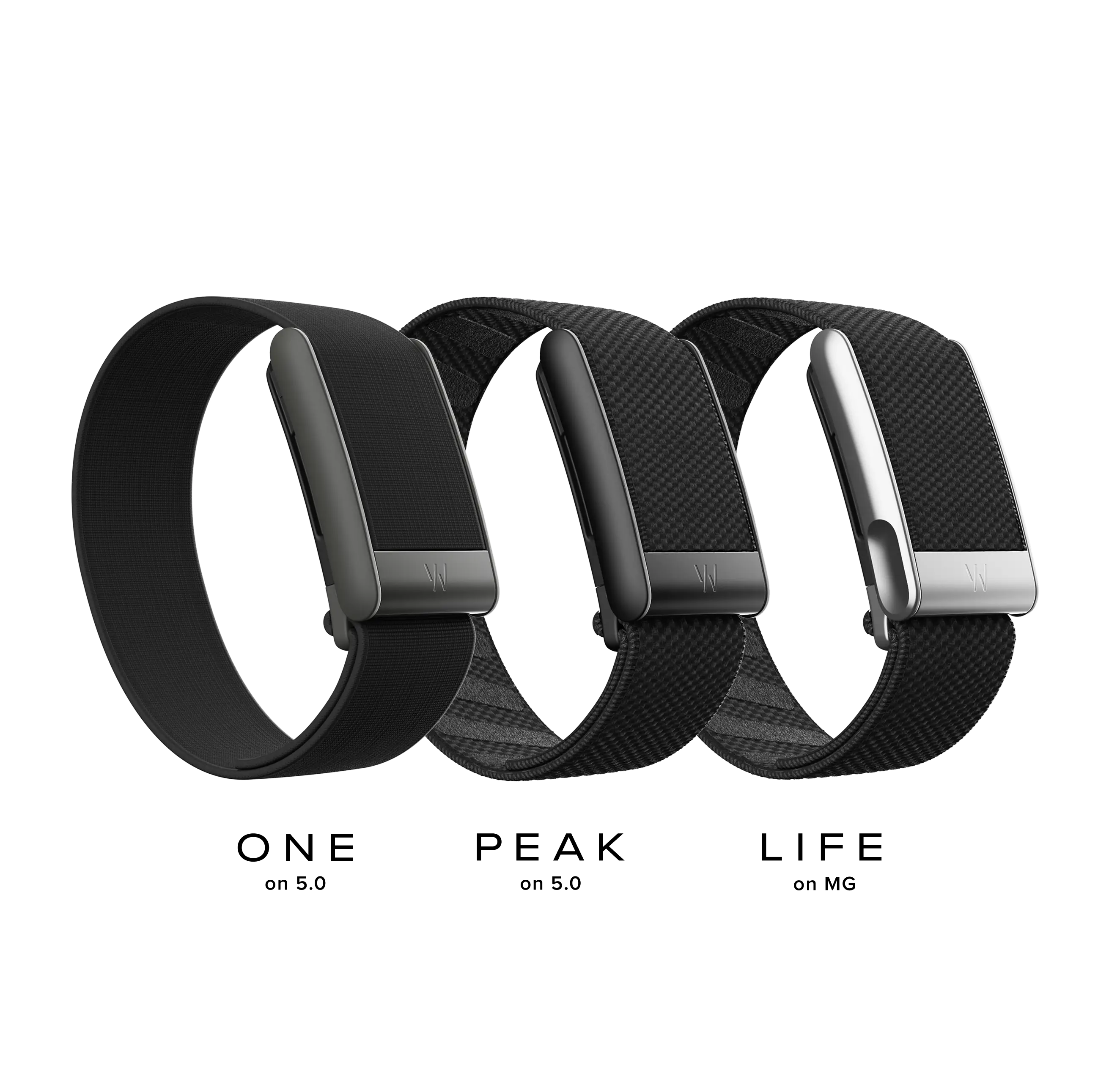
WHOOP's own documentation is clear about the weighting: HRV carries the most influence, because it indexes how much stress your autonomic nervous system absorbed and how ready it is to handle more. Resting heart rate and Sleep Performance — how much sleep you got against how much WHOOP calculated you need — matter too, but contribute less because they overlap heavily with what HRV already captures. Respiratory rate, blood oxygen and skin temperature ride along mostly to flag possible illness, not to move the score day to day.
The result lands as a percentage, color-coded: green (67-100%) means your body is signaling it can handle load, yellow (34-66%) is moderate, and red (0-33%) is WHOOP telling you to prioritize recovery over pushing harder. It's the number that decides whether WHOOP nudges you toward a hard session or a rest day — which is exactly why a stubborn red bar feels so personal.
Is Your Score Actually Bad — Or Just Your Personal Baseline?
Before spending money on anything, it's worth sitting with an uncomfortable possibility: the number might not be wrong, but it might not mean what you think it means either. WHOOP calculates recovery as a percentage against your own rolling HRV average — not a universal scale. That means someone whose natural HRV sits around 20ms because of genetics, age or training history can register as "badly affected" by the algorithm even while objectively fit, while someone with a naturally high HRV coasts through the same day in the green. On WHOOP's own community forum, members have described exactly this: a natural low HRV baseline that gets read as chronic under-recovery, and a single unusual HRV spike that kept dragging the score down for over a month while the algorithm slowly recalibrated.
Neither of those is a defect exactly — it's how a rolling-baseline algorithm behaves — but it matters for this page. If your score has been low for weeks despite a routine that hasn't changed, the honest first move isn't a purchase. It's checking whether you just went through an unusual physiological event (illness, a hard training block, travel, alcohol) that's still working its way out of your baseline. Gear helps the inputs; it can't out-argue a slow-moving algorithm.
Why "Just Sleep More" Isn't the Full Answer
Search WHOOP's own community for what to do about a Recovery Score that won't climb, and the advice converges on two things: check your baseline, and rest. That's not a knock on WHOOP — recovery genuinely isn't something a company can sell you in a box, and "just rest" is honest advice. But it's also not actionable if you already feel like you're resting and the score isn't moving. That gap — between "rest more" and "here's what to actually do tonight" — is exactly where this page tries to be useful, without pretending a product can override physiology.
The Two Real Levers Behind a Low Recovery Score
Strip away the single percentage and Recovery is really tracking two separate things that don't always move together:
- Nervous-system arousal at bedtime — the HRV side. A racing mind or a body that won't settle keeps your sympathetic nervous system lightly activated overnight, which is exactly what suppresses HRV and drags down the metric that matters most to your score.
- Muscle and training-load recovery — the physical side. Hard sessions leave soreness, stiffness and inflammation that don't show up directly in HRV but affect how ready your body actually is, and how you interpret "recovered" day to day.
One product genuinely targets each — and it's worth being honest that they're not interchangeable, and neither is a substitute for actual sleep or a lighter training week.
Does a Weighted Blanket Help the HRV Side of Recovery?

The mechanism is deep-pressure stimulation — even weight distributed across the body, thought to nudge the nervous system toward parasympathetic (rest) mode instead of the mildly activated state that keeps HRV suppressed. A 2024 pilot randomized controlled trial in adults with clinical insomnia found the weighted-blanket group improved significantly more on a standard sleep-quality measure than the control group after one month, with similar gains in stress and anxiety.1 A separate 2020 randomized trial in patients with psychiatric conditions including anxiety found the weighted-blanket group was far more likely to see a meaningful drop in insomnia severity.2 Both trials point the same direction: the effect is real, and it's strongest specifically for anxious or overstimulated bedtimes — which is a plausible description of a lot of stubbornly low Recovery Scores, but not a guarantee for every one.
Bearaby's version skips the usual glass-bead filling for a chunky hand-knit cotton weave that distributes weight without the plastic-bag feel cheaper blankets have, and it's breathable enough that it doesn't turn into a sauna the way denser weighted blankets can — worth caring about given that an overheated room is its own separate HRV-suppressing problem. It's priced at the premium end of this category, around $300 at the time of writing, which is real money to spend chasing one metric on an app. Buy it because a calmer, cooler bedtime routine is worth having regardless of what any single morning's percentage says — the Recovery Score improvement, if it comes, is a byproduct of that, not a guarantee printed on the box.
Do Massage Guns Actually Help Recovery? What the Research Says
This is the section where it would be easy to oversell something, so let's not. Percussion massage guns are one of the most-marketed "recovery" products on the internet, and the honest research picture is mixed — genuinely mixed, not "mixed" as a hedge before recommending one anyway.
A 2025 randomized controlled trial had physically active young men perform squats to induce delayed onset muscle soreness (DOMS), then compared percussion massage therapy against static stretching. The longer massage session (40 minutes) produced significantly better jump-height recovery and lower pain scores at 48 hours than stretching did.3 That's a real, specific win for percussion massage on soreness and explosive power. But a 2026 systematic review and meta-analysis pooling twelve randomized controlled trials found the effect was "outcome-specific" — percussive therapy showed promise for explosive power and reducing creatine kinase (a muscle-damage marker), but the authors were explicit that "current evidence does not show clear benefits for MVC recovery or DOMS relief" once you look across the full body of research, not just one trial.4
Put plainly: a massage gun may genuinely take the edge off soreness and stiffness after a hard session for some people, and there's real research behind that specific, modest claim. What there is no research behind is the idea that it improves your HRV overnight or nudges your WHOOP Recovery Score up the next morning — that's a different physiological pathway, and nobody has studied it. If you already own a hard-training habit and want something for the soreness itself, the TOLOCO Mini Massage Gun (around $55-60, Amazon's best-selling model in the category, six attachment heads) is a reasonable, low-cost pick for that specific job. Just don't buy it expecting your Recovery percentage to move because of it — treat it as a comfort tool for the muscle side, not a hack for the number on the app. See it on Amazon (paid link).
What About Eight Sleep? The Premium Tier, Explained Honestly
If you've spent time in WHOOP or endurance-sport communities, you've seen Eight Sleep's temperature-regulating mattress cover mentioned as the power-user's answer to recovery — it actively cools or heats each side of the bed based on your sleep stage, which directly targets the core-temperature drop your body needs for deep sleep. That's a real mechanism, not marketing fluff, and a warm bedroom is one of the most reliably documented sleep disruptors that exists.
Two honest caveats keep it out of the main recommendation here. First, the price: covers start in the low thousands of dollars, which is a different category of spending than anything else on this page. Second, it isn't sold through Amazon — Eight Sleep runs its own direct sales and its own affiliate program, so it's outside the products we can evaluate and stand behind the way we do everything else on this site. We're naming it because it's a genuine option worth knowing exists, not steering you toward a purchase: eightsleep.com (not an affiliate link). If a documented temperature problem — a partner who runs hot, a bedroom that won't cool below 70°F even with the thermostat down — is genuinely your bottleneck, it's worth researching on its own merits. It isn't a reasonable first purchase for a Recovery Score that was red this week.
How Long Before Your Recovery Score Actually Improves?
Give any single change one to two weeks before judging it. WHOOP builds your baseline from a rolling window of nights, not a single one — so a great night right after a rough stretch won't instantly swing the score, and one bad night won't erase two weeks of good ones either. That cuts both ways: it means you shouldn't panic over one red morning, and it means you shouldn't expect a weighted blanket or a massage gun to "prove itself" after three days. Change one variable at a time — bedtime routine, training load, alcohol, room temperature — so that if the score does move, you actually know why. And if WHOOP itself is what's up for debate, see how it stacks up against every other screen-free tracker in our full rankings.
WHOOP Recovery Score FAQ
Can a weighted blanket or a massage gun actually raise my WHOOP Recovery Score?
Indirectly, and only for the right cause. A weighted blanket targets pre-sleep nervous-system arousal, which can suppress HRV — the metric that carries the most weight in the Recovery formula. The evidence is strongest for anxiety-driven insomnia specifically, not sleep problems in general. A massage gun addresses muscle soreness and stiffness, not HRV directly, and the research on it is genuinely mixed — no study has tied percussion massage to a next-morning Recovery Score change. Neither is a hack; both are, at best, support for one input among several.
Why is my Recovery Score stuck in the red or yellow even though I feel fine?
Two common causes have nothing to do with last night specifically. WHOOP scores recovery against your own rolling HRV average, so a naturally low personal baseline can register as "under-recovered" even in a genuinely healthy person. A recent HRV spike or dip can also take one to several weeks to fully absorb into your baseline. If training, sleep and stress feel normal and the pattern persists for weeks, that consistency is worth mentioning to a doctor — not any single day's number.
How is the WHOOP Recovery Score actually calculated?
HRV carries the most weight, followed by resting heart rate and Sleep Performance, with respiratory rate, blood oxygen and skin temperature factored in mainly to flag possible illness. It's expressed as 0-100%: green (67-100%) means ready for load, yellow (34-66%) is moderate, red (0-33%) means your body is signaling it needs to prioritize recovery.
How long before a change actually shows up in my Recovery Score?
Give it one to two weeks — WHOOP's baseline is a rolling window, so single good or bad nights don't swing it immediately. Change one variable at a time so you can actually tell what moved the number.
Is Eight Sleep worth it for a low Recovery Score?
For most people, not as a first purchase. It's a genuinely capable temperature-regulating system, but covers start in the low thousands and it's sold directly through Eight Sleep, not Amazon. If room temperature is a documented, specific issue for you, it's worth researching on its own — it isn't a reasonable entry point for one red morning.
Sources
- Yu J, Du J, Yang Z, et al. Effect of weighted blankets on sleep quality among adults with insomnia: a pilot randomized controlled trial. BMC Psychiatry, 2024. PubMed
- Ekholm B, Spulber S, Adler M. A randomized controlled study of weighted chain blankets for insomnia in psychiatric disorders. Journal of Clinical Sleep Medicine, 2020. PubMed
- Li H, Luo L, Zhang J, Cheng P, Wu Q, Wen X. The effect of percussion massage therapy on the recovery of delayed onset muscle soreness in physically active young men — a randomized controlled trial. Frontiers in Public Health, 2025. PMC
- Zhu Y, Yang L, Liu T, Yao F, Wang Q, Yi Z. Effects of percussive therapy dosages on recovery from acute exercise-induced muscle damage: a systematic review and meta-analysis. Chiropractic & Manual Therapies, 2026. PMC