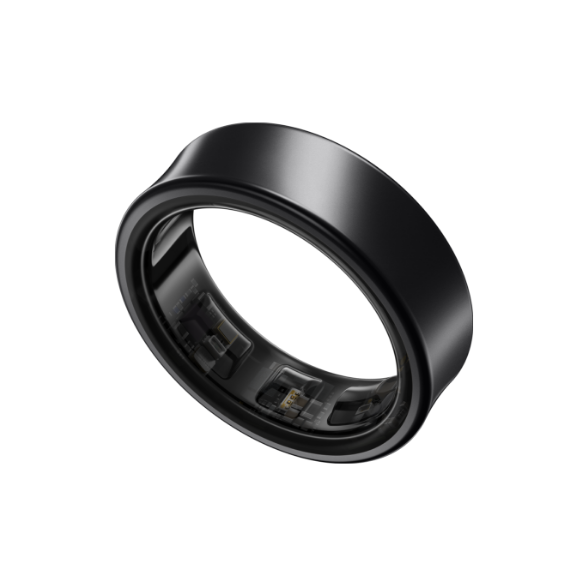
How Accurate Are Smart Rings? What the Research Says
Quick answer: Smart rings are accurate for sleep duration, overnight resting heart rate and nightly HRV trends. In lab work, the Oura Ring Gen3 hit about 92% sleep/wake accuracy against polysomnography. They are weaker at sleep stages (roughly 65% to 90%, depending on the stage), steps, workout heart rate, and any SpO2 or blood pressure claim.
You can see why people ask. A ring is the smallest, quietest tracker you can wear, and it still hands you a sleep score, a readiness number and a temperature trend every morning. Whether those numbers mean anything is a fair question, and there is a real research record to answer it. It is just lopsided: most of it covers one brand.
- Strong: total sleep time, sleep versus wake, overnight resting heart rate, nightly RMSSD (the HRV number most apps show).
- Middling: sleep stages, skin temperature trends, step counts, calorie burn.
- Weak or unproven: workout heart rate, SpO2 on consumer rings, blood pressure.
- Evidence gap: Oura dominates the literature. We found no peer-reviewed validation papers for the Samsung Galaxy Ring or RingConn.
What Do Smart Rings Measure Well, and What Do They Get Wrong?
Rings do well at the things you do lying still, and worse at the things you do moving. This table summarizes the studies we read; the sections below give the numbers and the caveats.
| Metric | Verdict | Best evidence we read | Catch |
|---|---|---|---|
| Sleep vs wake, total sleep time | Good | 91.7-91.8% epoch accuracy vs PSG; meta-analysis mean difference -2.97 min23 | Wake detection is the soft spot (66.6-67.0% predictive value for wake)2 |
| Overnight resting heart rate | Good | Accurate vs chest ECG in 35 people5 | Healthy adults, home setting |
| Nightly HRV (RMSSD) | Good to fair | Accurate RMSSD vs ECG; better when averaged56 | LF and LF:HF measures had high error5 |
| Sleep stages | Fair | 75.5% (light) to 90.6% (REM) for Oura Gen32; pooled 65-81% across finger devices4 | Fine for patterns, not for exact minutes |
| Skin temperature | Fair (trend only) | Cycle-phase shift of 0.30 °C seen at the finger9 | No reference-thermometer validation found; treat as change from your baseline |
| Steps | Fair | Free-living correlation r ≥ 0.76; error under 10% MAPE7 | Mean gap of 2,124 steps in free-living; not a pedometer replacement78 |
| Calories | Fair to weak | Correlated with calorimetry (r = 0.93)7 | Underestimates more as intensity rises7 |
| Workout heart rate | Weak (our inference) | No ring-specific exercise study read; wrist optical sensors vary by activity11 | Grip and hand motion disturb the signal |
| SpO2 | Unproven for consumer rings | Two other ring devices tested well in controlled hypoxia1415 | Not Oura, Samsung or RingConn |
| Blood pressure | Not ready | Only 33.1% of 24-hour systolic averages within 5 mmHg16 | Exploratory study, different device |
Summary of the peer-reviewed papers listed under Sources. Study populations were mostly healthy adults. Results can differ by ring generation, algorithm version, fit and person.

How Accurate Are Smart Rings for Sleep Tracking?
For how long you slept and when you were awake, rings hold up well against polysomnography (PSG), the overnight lab test that is the reference standard. For the stage breakdown, they are decent but not precise.
The biggest lab-style test of a current-generation ring is a Japanese study of 96 healthy adults, up to three PSG nights each, 421,045 scored epochs in all. The Oura Ring Gen3 did not differ significantly from PSG on total sleep time, sleep onset latency or time awake after sleep onset. Its sleep/wake sensitivity was 94.4 to 94.5%, specificity 73.0 to 74.6%, and overall epoch accuracy 91.7 to 91.8%. Stage accuracy ranged from 75.5% for light sleep up to 90.6% for REM.2 The specificity number is the quiet warning: the ring catches sleep very well and quiet wakefulness less well, so lying awake and still can get scored as sleep (our inference from the specificity figure). One caveat on independence: Oura's own page says the study was partly funded by Oura, and that Oura took no role in data analysis or writing.
A second, separate test used 35 adults in a single inpatient night, with the Oura Ring Gen3, Fitbit Sense 2 and Apple Watch Series 8 all worn against PSG. Every device caught sleep versus wake at 95% sensitivity or better. For stages, the Oura's sensitivity was 76.0 to 79.5% and its precision 77.0 to 79.5%, and its stage durations did not differ significantly from PSG. The Fitbit overestimated light sleep and underestimated deep; the Apple Watch underestimated deep sleep by 43 minutes.1
Pooled evidence agrees. A 2025 meta-analysis of six Oura studies (388 people) found no significant difference from PSG or actigraphy in total sleep time (mean difference -2.97 minutes), sleep efficiency, wake after sleep onset, or minutes of light, deep and REM sleep.3 A 2026 review of 28 papers on 11 finger-worn devices pooled 87% sleep/wake accuracy, but only 65% for light, 81% for deep and 74% for REM sleep, and concluded these devices should not replace PSG for detailed sleep architecture.4
A note on how to read this. A near-zero average difference means the ring is right on average across people. On any one night, the stage minutes can still be off in either direction (our inference from the gap between averages and epoch-level accuracy). If you want to know whether your sleep is trending better, a ring is a good tool. If you want to diagnose sleep apnea, it is not. See our best smart rings with no subscription list for sleep-focused picks.
How Accurate Is Smart Ring Heart Rate and HRV?
Overnight, very accurate for resting heart rate and RMSSD. During exercise, nobody has shown the same thing for rings in the papers we read, and we would not trust one for interval training.
In a 35-person home study comparing the Oura Ring with a Shimmer3 chest ECG, the authors concluded the ring could accurately measure nocturnal heart rate and RMSSD in both 5-minute segments and nightly averages. Several other HRV measures (AVNN, pNN50, HF, SDNN) were acceptable only as nightly averages, and the low-frequency and LF:HF ratio measures had high error in both tests.5 If your app only shows you RMSSD, which is what most ring dashboards headline, you are looking at the best-validated number.
A later analysis of 114 people from two in-lab sleep studies found strong agreement with ECG across HR and HRV, with accuracy improving when poor-quality segments were filtered out and when readings were averaged over 30 minutes or longer. HRV was still the weaker of the two: more than half of the older participants (45 and over) exceeded 10% median absolute percentage error on HRV measures.6 Practical takeaway: weekly HRV trends are meaningful, and a single night's number is noisy.
Daytime and workout heart rate is the gap. The ring studies we opened were sleep or free-living studies. For wrist optical sensors, a Cleveland Clinic study of 50 people found accuracy varied by exercise type, and none of the wrist devices were accurate on an elliptical with arm levers; the authors advised chest monitors when accurate heart rate is imperative.11 A ring sits on the part of your body doing the gripping, so we would not expect it to beat the wrist under load (our inference, not a measured result). Our chest strap vs armband vs wrist guide covers what to use instead, and our smart rings for weightlifting guide covers the gym case.
If you have an irregular heartbeat, chest pain or a heart condition, a consumer ring is not a diagnostic tool. Talk to a clinician about readings that concern you.
How Accurate Is Smart Ring Temperature Tracking?
Rings track changes in finger skin temperature well enough to show cycle patterns, but we found no independent paper validating the absolute number against a reference thermometer.
In a pilot of 22 women wearing an Oura ring over about 115 days, nocturnal skin temperature was higher in the luteal phase than the follicular phase by 0.30 °C, compared with 0.23 °C for oral temperature. The authors called it promising for menstrual cycle monitoring, and noted it was a pilot.9 A separate study of 26 healthy women found skin temperature and heart rate changes across the cycle that could be tracked over multiple cycles.10 A 2025 analysis of 1,155 cycles from Oura's commercial database detected 96.4% of ovulations with an average error of 1.26 days against ovulation test kits. That one used the company's own data pool, so weigh it accordingly.17
Read the temperature screen as "how far am I from my own baseline," not "what is my body temperature." Neither is a fever thermometer.
How Accurate Are Smart Ring Steps and Calories?
Steps are usable for trends, calories less so. Both are estimates from a small motion sensor on a finger that moves differently from your torso.
A Swedish study had 32 people wear an Oura Ring alongside hip, thigh and wrist accelerometers and a pedometer for 14 days. Free-living step counts correlated with the references (r ≥ 0.76) and fell under the 10% mean absolute percentage error mark, but the mean difference was still 2,124 steps (SD 4,256), and the authors described low individual-level validity. In the lab, the ring's energy expenditure correlated with indirect calorimetry (r = 0.93) but underestimated more as intensity climbed, by 3.49 METs (SD 3.94) at a very fast run.7 A 21-person Norwegian study of the Gen2 ring concluded it could not replace an ActiGraph for steps or activity minutes, and reported lower step output than the Polar Vantage watch it was compared against.8
So: fine for "was this a 6,000-step day or a 12,000-step day." Poor if you are chasing 10,000 on the dot, or logging calories from a hard workout.
Do Skin Tone, Fit and Hand Choice Affect Accuracy?
Skin tone seems to affect pulse rate accuracy less than people fear, but dark skin can mean more missing data, and nobody has tested the main consumer rings on this question well.
A 2024 meta-analysis pooled four wearable pulse-rate studies (176 people). It found no statistically or clinically significant pulse-rate bias by skin pigmentation, though the 95% limits of agreement were much wider for dark pigmentation (about -33.7 to +32.5 bpm) than for light (about -16.0 to +13.5 bpm), and the authors flagged that pulse rate and SpO2 measurements may breach regulatory thresholds in every group.12 A 2026 study of 28 adults measured skin pigmentation with a colorimeter and found data quality worse on darker skin for all three tested devices, with a small error rise (about 1 bpm) for one of them. Missing data fell disproportionately on dark-skinned participants.13 Both used wrist-style devices, not rings.
On the ring side, two small SpO2 studies are encouraging but narrow. A ring pulse oximeter tested in 11 volunteers across Fitzpatrick skin types I to VI met ISO accuracy limits, with a 2.1% error overall and 1.6 to 1.8% in the four participants with dark skin.14 A different ring, the Circul+, showed no difference in accuracy between 8 Black and 16 non-Black participants, which the authors tied to measuring on the palm side of the finger.15 Neither is an Oura, Samsung or RingConn ring, so do not treat them as proof for those.
Fit is the part we cannot back with a study. A loose ring that spins gives the sensor poor contact, which is simple physics, but we found no paper quantifying it (our inference). Hand choice, at least, did not matter much: in the 96-person Gen3 study, rings on the dominant and non-dominant hand gave nearly identical results.2 Our Oura Ring 5 sizing guide walks through getting the fit right, and it applies to any ring.
Which Smart Rings Have Real Accuracy Evidence?
Oura has by far the most published validation, mainly on the Gen2 and Gen3 rings. Oura has since released newer rings, and we did not find peer-reviewed validation papers for the Oura Ring 4 or Oura Ring 5 specifically.
| Ring | Peer-reviewed validation we found | Gap |
|---|---|---|
| Oura Ring (Gen2, Gen3) | Sleep vs PSG, nocturnal HR and HRV vs ECG, steps and energy expenditure, cycle tracking12579 | No Ring 4 or Ring 5 paper found; at least one study industry-supported |
| Samsung Galaxy Ring | No peer-reviewed paper found | Brand claims only |
| RingConn | No peer-reviewed paper found; one June 2026 preprint, see note below | Brand claims, plus one unreviewed preprint |
| Other rings | Ring SpO2 devices tested in hypoxia1415; a cuffless BP ring16 | Different products and purposes |
Search method: Europe PMC title and abstract searches run November 7, 2026. A paper may exist that our search missed, and new studies appear regularly.
One caveat on RingConn: a June 2026 Research Square preprint (not peer reviewed) put a RingConn Gen 2 next to a Polar H10 chest strap in 64 shooting athletes, seated shortly after a training session, and reported close agreement for heart rate, SDNN and RMSSD. We have not counted it among the 17 studies, and it says nothing about sleep, steps or the newer Gen 3. Preprint (DOI)
Oura updates its algorithms through the app, so Gen3 results are a reasonable guide to newer rings from the same brand (our inference), but not a guarantee. For other brands, the honest position is "plausibly similar sensors, unproven." Our reviews of the Oura Ring 5, RingConn Gen 3 and Samsung Galaxy Ring cover features and cost, not lab accuracy.
How Do You Get More Accurate Readings From a Smart Ring?
You can't change the sensor, but you can change how you read it. These habits line up with what the studies found.
- Read weekly trends, not single nights. Averaging over longer windows cut HRV and heart rate error in the studies we read.56
- Wear it every night. Your baseline needs consistent data, and gaps make the trends noisy.
- Get the size right. Snug without squeezing, so it does not spin. Dominant or non-dominant hand made little difference in the Gen3 study.2
- Keep the sensors clean. Skin oils and lotion can cloud the optical window (our inference; check your maker's care page).
- Don't use it as your workout heart rate source. Pair a chest strap or armband for intervals and lifting.
- Treat SpO2 and blood pressure as wellness trends. Take symptoms or worrying numbers to a clinician.
- Judge sleep by totals and consistency, not by the exact minutes of deep sleep.
Who Should Trust a Smart Ring, and Who Needs Something Else?
Sleep and recovery trackers. A ring is a good fit. Totals and overnight HR/HRV trends are its strongest suit, and the Oura evidence is the deepest. Our no-subscription ring picks are where to start if you don't want a membership.
Lifters and interval athletes. Don't rely on a ring for in-session heart rate. Use a chest strap or armband and keep the ring for recovery. See the chest strap vs armband vs wrist guide.
People with a medical question. Sleep apnea, atrial fibrillation and blood pressure should not be assessed with a consumer ring. The finger-device review found these devices screen severe sleep apnea better than mild.4 Our heart-health tracker guide covers devices with cleared features, and a clinician makes the call.
Shoppers comparing form factors. Our smart ring vs fitness band piece and the screenless fitness tracker guide cover the band side.
Smart Ring Accuracy FAQ
How accurate are smart rings for sleep tracking?
Good for sleep versus wake and total sleep time, fair for stages. In a 96-person polysomnography study, the Oura Ring Gen3 reached 91.7 to 91.8% epoch accuracy for sleep versus wake, and stage accuracy ran from 75.5% for light sleep to 90.6% for REM. A 2026 review of finger-worn devices pooled 87% sleep/wake accuracy but only 65%, 81% and 74% for light, deep and REM. Use the totals, treat the stage minutes as rough.
How accurate are smart rings for heart rate and HRV?
Very good overnight, much weaker during exercise. Against a chest ECG, the Oura Ring tracked nocturnal heart rate and RMSSD accurately in a 35-person study, while the low-frequency and LF:HF HRV measures had high error. Averaging over longer windows improved HRV accuracy in a second study. We found no ring-specific exercise validation, so use a chest strap for workouts.
Are smart rings accurate for blood pressure or oxygen levels?
Not enough to rely on. A real-world study of a ring-type cuffless blood pressure device found only 33.1% of 24-hour systolic averages within 5 mmHg of ambulatory monitoring, and the authors said it was not a formal accuracy validation. For SpO2, the ring studies we read tested specific devices, not the Oura, Samsung or RingConn rings. Treat both as wellness trends and talk to a clinician about symptoms or readings that worry you.
Is a smart ring more accurate than a smartwatch?
At night, often yes; during exercise, no. The finger has strong blood flow and stays still in bed, which suits optical sensing. The studies we read compared rings to lab references, not head to head with watches, so we cannot give a clean percentage gap. For workout heart rate, wrist and finger sensors both lose to a chest strap.
Are Oura, Samsung Galaxy Ring and RingConn equally accurate?
Nobody can say from the published record. Most peer-reviewed validation we found covers the Oura Ring, mainly the Gen2 and Gen3 hardware. In a Europe PMC search on November 7, 2026, we found no peer-reviewed validation papers for the Samsung Galaxy Ring or RingConn rings (one non-peer-reviewed RingConn Gen 2 preprint exists). Absence of evidence is not evidence of inaccuracy, but it means their claims rest on the brand's word.
Does skin tone or ring fit change smart ring accuracy?
Skin tone appears to matter less for pulse rate than people fear, but data loss can rise on darker skin. A 2024 meta-analysis found no significant pulse-rate bias by pigmentation in wearables, though the limits of agreement were widest for dark skin. A 2026 exercise study found missing data fell disproportionately on dark-skinned participants. Those tests used wrist devices, not rings, and ring fit has not been studied the same way.
How can I get more accurate readings from my smart ring?
Look at weekly trends rather than single nights, since averaging over longer windows cut error in the HRV work we read. Wear it every night, keep it snug enough not to spin, and keep the sensor surface clean. Hand choice mattered little in the Oura Gen3 study, which found similar results on the dominant and non-dominant hand.
Sources
Every study below was opened and its abstract read on November 7, 2026. Links go to PubMed. We read abstracts, not always full text, so specific methods and conflict-of-interest statements should be checked in the papers. Industry support: the Svensson et al. study (source 2) was described by Oura's own page as partly funded by Oura.
- Robbins R, et al. Accuracy of Three Commercial Wearable Devices for Sleep Tracking in Healthy Adults. Sensors, 2024. PubMed (PMID 39460013) · DOI
- Svensson T, et al. Validity and reliability of the Oura Ring Generation 3 (Gen3) with Oura sleep staging algorithm 2.0 (OSSA 2.0) when compared to multi-night ambulatory polysomnography. Sleep Medicine, 2024. PubMed (PMID 38382312) · DOI
- Khan S, et al. The Oura Ring Versus Medical-Grade Sleep Studies: A Systematic Review and Meta-Analysis. OTO Open, 2025. PubMed (PMID 41230431) · DOI
- Jin Y, et al. Performance evaluation of finger-worn devices for sleep stage classification and sleep apnea detection: a systematic review and meta-analysis. Journal of Translational Medicine, 2026. PubMed (PMID 42141446) · DOI
- Cao R, et al. Accuracy Assessment of Oura Ring Nocturnal Heart Rate and Heart Rate Variability in Comparison With Electrocardiography in Time and Frequency Domains. Journal of Medical Internet Research, 2022. PubMed (PMID 35040799) · DOI
- Liang T, Yilmaz G, Soon CS. Deriving Accurate Nocturnal Heart Rate, rMSSD and Frequency HRV from the Oura Ring. Sensors, 2024. PubMed (PMID 39686012) · DOI
- Kristiansson E, et al. Validation of Oura ring energy expenditure and steps in laboratory and free-living. BMC Medical Research Methodology, 2023. PubMed (PMID 36829120) · DOI
- Henriksen A, et al. Polar Vantage and Oura Physical Activity and Sleep Trackers: Validation and Comparison Study. JMIR Formative Research, 2022. PubMed (PMID 35622397) · DOI
- Maijala A, et al. Nocturnal finger skin temperature in menstrual cycle tracking: ambulatory pilot study using a wearable Oura ring. BMC Women's Health, 2019. PubMed (PMID 31783840) · DOI
- Alzueta E, et al. Tracking Sleep, Temperature, Heart Rate, and Daily Symptoms Across the Menstrual Cycle with the Oura Ring in Healthy Women. International Journal of Women's Health, 2022. PubMed (PMID 35422659) · DOI
- Gillinov S, et al. Variable Accuracy of Wearable Heart Rate Monitors during Aerobic Exercise. Medicine & Science in Sports & Exercise, 2017. PubMed (PMID 28709155) · DOI
- Singh S, et al. Impact of Skin Pigmentation on Pulse Oximetry Blood Oxygenation and Wearable Pulse Rate Accuracy: Systematic Review and Meta-Analysis. Journal of Medical Internet Research, 2024. PubMed (PMID 39388258) · DOI
- Mulholland AM, et al. Influence of skin pigmentation on the accuracy and data quality of photoplethysmographic heart rate measurement during exercise. European Journal of Applied Physiology, 2026. PubMed (PMID 40968160) · DOI
- Mastrototaro JJ, et al. Performance of a Wearable Ring in Controlled Hypoxia: A Prospective Observational Study. JMIR Formative Research, 2024. PubMed (PMID 38838332) · DOI
- Meira E Cruz M, et al. Validation of a Smart Ring Oximeter in Individuals With Dark Skin Pigment. Mayo Clinic Proceedings: Digital Health, 2023. PubMed (PMID 40206614) · DOI
- Kim HJ, et al. Real-world performance of a ring-type cuffless blood pressure device compared with ambulatory blood pressure monitoring. Clinical Hypertension, 2026. PubMed (PMID 42847102) · DOI
- Thigpen N, Patel S, Zhang X. Oura Ring as a Tool for Ovulation Detection: Validation Analysis. Journal of Medical Internet Research, 2025. PubMed (PMID 39889300) · DOI