Garmin Cirqa Review: The $199 Screenless Band, Honestly Assessed
Quick answer: The Garmin Cirqa is the most serious screen-free band you can buy without a subscription — about $199 once, roughly 10 days of battery, and Garmin's real training stack (Training Readiness, training load, Body Battery, HRV status, VO2 max) on a 20-gram nylon strap with no display. We score it 8.5/10. The catch that keeps it out of the top spot: no onboard GPS, an older Gen 4 heart-rate sensor, and the strange decision to lock the live heart-rate graph behind Garmin Connect+.
Garmin spent a decade telling everyone that data belongs on your wrist, in front of your eyes, ideally on a screen bright enough to read at mile 22. Then Fitbit shipped a $99 band with no screen at all, WHOOP built a business on the same idea, and Garmin — a company that does not enjoy losing categories — shipped the Cirqa on July 24.
It's a fabric strap with a small pod on it. No display, no buttons you'd notice, nothing glowing at 2 a.m. It looks like a fitness band from the days before smartwatches, which is exactly the point: you can wear it with a real watch on the other wrist and nobody asks about it. What's inside, though, is unmistakably Garmin — the same training-science engine that runs on a $700 Forerunner, minus the screen and minus the GPS chip. Whether that trade works depends entirely on what you were planning to do with it.
8.5 / 10
- Best for: Garmin owners and structured trainers who want 24/7 recovery data without another screen — or another annual bill
- Standout: full Garmin training stack (Training Readiness, load, HRV status, Body Battery, sleep coach) with no required subscription, plus ANT+/Bluetooth heart rate broadcasting
- Biggest drawback: no onboard GPS, older Elevate Gen 4 sensor, and the live workout heart-rate view needs Connect+
- Price: around $199 at the time of writing (September 2026) — no subscription required
- Bottom line: the deepest data of any screen-free band, held back by omissions that feel like product-planning decisions rather than engineering limits
What Is the Garmin Cirqa?
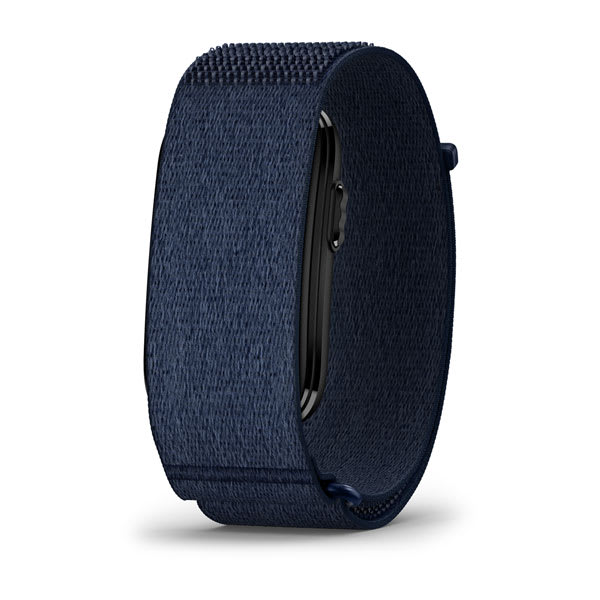
The Cirqa is a screenless 24/7 health and training band. The pod measures about 27 × 47 × 9mm and weighs 14.8 grams; with the woven nylon strap you're at roughly 20 grams total, which is a few grams more than a Fitbit Air and noticeably less than any smartwatch. It comes in two band sizes — S/M fits wrists 120–200mm, L/XL covers 145–240mm — and Garmin sells a $59 upper-arm band if you'd rather wear it on your bicep, where optical heart rate is consistently more accurate than at the wrist.
Inside: Garmin's Elevate Gen 4 optical heart-rate sensor with skin temperature, Pulse Ox, and an accelerometer. It's rated 5 ATM, has 128MB of memory, and broadcasts heart rate over both ANT+ and Bluetooth. There's no altimeter, no compass, no ECG, no EDA sensor, no Wi-Fi, no NFC payments, and no music storage. And no GPS chip — outdoor distance comes from your phone.
Everything it tracks lands in Garmin Connect, the same app that's been running Garmin watches for years, and everything the band collects folds into your existing Garmin history through Physio TrueUp. If you already own a Garmin watch, that's a bigger deal than it sounds — the Cirqa becomes the thing you wear on rest days and overnight without breaking your training-load continuity.
What Does the Garmin Cirqa Actually Track?
This is where it separates from the rest of the screen-free field. The Fitbit Air gives you steps, sleep, heart rate and a readiness-flavoured score. The Cirqa gives you the full Garmin apparatus:
- Training Readiness — a morning score built from sleep, recovery time, HRV status, acute load and stress history
- Training load — acute load, load ratio and load focus, the same charts Forerunner and Fenix owners plan weeks around
- Body Battery — Garmin's energy gauge, still the most intuitive "should I train today" number in wearables
- HRV status — a multi-week baseline rather than a single overnight figure
- Sleep score, stages, sleep coach, nap detection, smart wake alarm and circadian alignment
- 80+ activity profiles with automatic detection for common ones, automatic rep counting for strength work, and a wheelchair mode
- VO2 max (running only), recovery time, training effect, plus stress, respiration, Pulse Ox and women's health tracking
Add heart-rate broadcasting and the picture gets interesting: the Cirqa can act as a heart-rate sensor for a Garmin watch, a bike computer, a Peloton, or any gym app that takes a Bluetooth strap. That's a use case none of its screen-free rivals handle as cleanly.
How Long Does the Garmin Cirqa Battery Really Last?
Garmin's claim is "up to 10 days," which lands neatly between the Fitbit Air's seven and WHOOP's fourteen. In practice, that number assumes you haven't turned on everything: continuous overnight Pulse Ox is the biggest drain, and Garmin's own manual lists several factors that reduce battery life without quantifying any of them — a habit the specialist reviewers at the5krunner called out directly.
Charging takes about 90 minutes through a proprietary four-pin cable (USB-C at the other end), and there's a genuinely nice touch: double-tap the pod and an LED flashes your battery status, so you're not opening the app to find out. There is also a Battery Saver mode, and the honest description is that it switches off nearly everything that makes the band worth wearing. Treat it as an airport-day feature, not a strategy.
Practical read: charge it Sunday morning in the shower and you'll never think about it again. That's the bar a screen-free band has to clear, and the Cirqa clears it.
What's Wrong With the Garmin Cirqa?
1. The live heart-rate graph is behind Connect+. This is the one that has irritated reviewers most, and rightly. You're wearing a heart-rate band with no screen, so the phone is your only display — and during a workout, the live HR graph in Garmin Connect is a Connect+ feature. DC Rainmaker's verdict on the free live-activity view was blunt: astonishingly disappointing. There's a free workaround, and it's a good one — broadcast heart rate to a watch, bike computer or gym app over ANT+/Bluetooth and read it there. But needing a second device to see the number your first device is measuring is a strange place to end up.
2. No onboard GPS. Connected GPS means your phone comes on every run and ride, or you get no distance and pace. For an indoor-gym user or a step-counter, irrelevant. For a runner considering this instead of a watch, decisive.
3. It's the Gen 4 sensor, not Gen 5. Garmin's newer optical sensor sits in its pricier watches. In steady-state and daily use the difference is negligible; in edge cases — hard intervals, cold weather, downhill running — the newer sensor holds on better. If you're buying this specifically for workout heart rate, pair it with a chest strap and use the Cirqa for recovery instead.
4. Launch software was rough. The first weeks brought the usual Garmin launch bugs: activity trimming that didn't work, Training Readiness scores swinging erratically, some activities not syncing to third-party platforms, and auto-detected workouts needing manual confirmation. Garmin patches quickly and several of these have already been addressed — but if you buy in the first months of a Garmin product, you're part of the shakedown cruise.
5. Stock is still catching up. As of this update, some Amazon size and colour combinations show as temporarily out of stock while others ship immediately. If your first choice isn't available, check the other size or colour on the listing before giving up.
Garmin Cirqa vs Fitbit Air vs WHOOP vs Helio Strap
| Band | Price (September 2026)* | Subscription | Battery | Best for |
|---|---|---|---|---|
| Garmin Cirqa | ~$199 | None required (Connect+ optional) | ~10 days | Deepest training data, no screen |
| Google Fitbit Air | ~$99 | None | ~7 days | Best everyday screen-free band |
| Amazfit Helio Strap | ~$99 | None | ~10 days | Gym and HYROX training, cheapest serious option |
| WHOOP 5.0 | Hardware included | ~$199–$359/yr, mandatory | ~14 days | Coaching-led recovery, if you accept the model |
| Polar Loop | ~$170 | None | ~8 days | Calmest sleep science, simplest app |
*Reference prices at the time of writing; check live listings. Full head-to-head: Garmin Cirqa vs Fitbit Air.
Garmin Cirqa Pros and Cons
- ✓ Garmin's full training stack — readiness, load, HRV status, Body Battery — with no mandatory fee
- ✓ ~10-day battery and a 90-minute charge
- ✓ Broadcasts heart rate over ANT+ and Bluetooth to watches, bike computers and gym apps
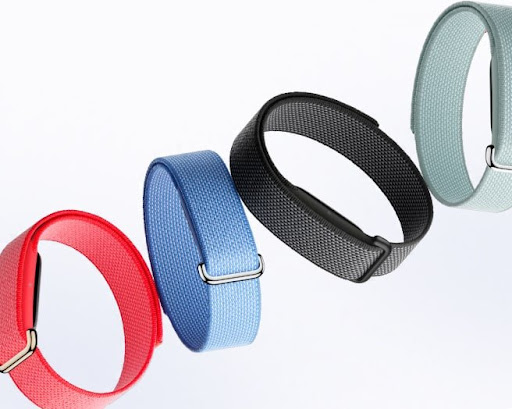
- ✓ 5 ATM, 20 grams, four colours, two band sizes, optional $59 arm band
- ✓ Folds into an existing Garmin history via Physio TrueUp
- ✕ Live workout heart-rate graph requires Garmin Connect+
- ✕ No onboard GPS, no altimeter, no ECG
- ✕ Elevate Gen 4 sensor rather than the newer Gen 5
- ✕ Twice the price of a Fitbit Air or Helio Strap
- ✕ Typical Garmin launch bugs in the first weeks
Who Should Buy the Garmin Cirqa — and Who Shouldn't?
Buy the Cirqa if you…
- Already live in Garmin Connect and want 24/7 coverage without wearing a watch to bed
- Train to a plan and actually use load, readiness and HRV trends — nothing else screen-free gives you this depth
- Want a heart-rate sensor that doubles as a recovery tracker, broadcasting to whatever screen you already own
- Are done with WHOOP's annual billing but not with WHOOP-style data → see our guide to leaving WHOOP
Look elsewhere if you…
- Just want steps, sleep and heart rate for the least money → Fitbit Air at around $99
- Mostly train in the gym and want accuracy per dollar → Amazfit Helio Strap, also around $99
- Run outdoors without a phone → you want a watch with real GPS, not this
- Want the data on your finger instead of your wrist → no-subscription smart rings
Is the Garmin Cirqa Worth $199? The Verdict
Yes — for a specific person. If you think in training load and readiness, the Cirqa is the only screen-free band that speaks that language, and it does it for a one-time $199 with no annual invoice. Against WHOOP that's a straightforward win on money over any horizon longer than a year. Against the Fitbit Air it's a harder sell: you're paying double for depth that plenty of people will open twice and never look at again.
What keeps it at 8.5 rather than higher is that its weakest points aren't physics. A missing GPS chip in a $199 band is a cost decision. The Gen 4 sensor is a segmentation decision. And putting the live heart-rate graph behind Connect+, on a device with no screen, is a decision that reads as pure upsell — on a product whose entire pitch is "no subscription required." Fix that one and this is a 9.
Buy it if the training stack is why you're here. If it isn't, save a hundred dollars and take the Fitbit Air — it remains our overall pick for most people. See both, and everything else we've tested, in our full tracker rankings.
Garmin Cirqa FAQ
Does the Cirqa need a subscription?
No. Sleep, Body Battery, HRV status, Training Readiness, training load, VO2 max and all activity profiles are free. Connect+ adds coached and structured workouts, nutrition tracking, guided breathwork, manual laps and the live activity heart-rate graph.
How accurate is the heart rate?
Good for daily tracking and steady efforts, less reliable during hard intervals — normal for wrist optical sensors, and this is the Gen 4 rather than Garmin's newest. For interval work, pair a chest strap; the Cirqa will happily record the strap's data or broadcast its own.
Can I swim with it?
It's 5 ATM, so showers, rain and pool swimming are fine. Garmin doesn't list open-water swimming support, and there's no multisport profile.
Does it track sleep well?
Yes — sleep score, stages, nap detection, sleep coach and a smart wake alarm, all included. Being screenless and 20 grams, it's easier to sleep in than any Garmin watch.
Which size should I order?
S/M fits wrists 120–200mm and L/XL fits 145–240mm. Measure before you order; the pod is identical, only the strap differs. There's also a $59 upper-arm band option — see our full accessories guide for which bands and colors are actually in stock right now, and the honest story on that arm band.
Cirqa or WHOOP?
The Cirqa costs $199 once; WHOOP costs $199–$359 every year and stops working when you stop paying. WHOOP's coaching is more prescriptive and its battery lasts longer, but on cost there's no contest — see our WHOOP alternatives guide.
Sources
- DC Rainmaker — Garmin Cirqa hands-on: feature list, Connect+ boundaries, launch bugs, live-activity view.
- the5krunner — Cirqa specifications: dimensions, weights, band sizes, sensors, 5 ATM rating, charge time.
- Garmin — product documentation for battery claims, Physio TrueUp and heart-rate broadcasting.