Fitbit Air vs Oura Ring 5: The 3-Year Cost, the Sleep Scores and Who Should Buy Which
Quick answer: Choose the Google Fitbit Air if you lift weights, want a silent alarm or don't want a subscription: it costs about $100 over three years. Choose the Oura Ring 5 if you mainly care about sleep, already wear a watch, and will pay for Oura's membership, which brings it to about $609 over three years.1, 2, 3
Read enough threads from people who wear both and a pattern shows up fast. Bedtime and wake-up time match within a few minutes. Then the two apps grade the same night differently, and the owner starts wondering which one is wrong. The other half of the argument is money: a $99.99 band with an optional subscription against a $399 ring whose membership Oura all but requires.4, 5
We built this from Google's and Oura's help pages, published tests (PCMag, The Wall Street Journal via 9to5Mac, DC Rainmaker), two peer-reviewed sleep studies and about 20 Reddit threads from people who wore both, read through September 30 and paraphrased. Most comparisons ranking for this search used the Ring 4. This one uses the Oura Ring 5, Oura's current ring since June 4, 2026, and flags where a discounted Ring 4 changes the answer.6
- Fitbit Air if you lift, golf or cook a lot, want a silent alarm or AFib alerts, are losing weight, or just won't pay a subscription. About $100 over three years on the free app.
- Oura Ring 5 if sleep and recovery are the point, you already wear a watch, or you want temperature-based cycle tracking. About $609 over three years with membership.
- The scores won't match between the two, mostly because of the formulas. Here's why.
- Cheapest way into Oura right now: the Ring 4, on sale for about $244 at Oura's store on October 2, 2026 (down from $349; sale prices change), if a bigger ring doesn't bother you.
How Do the Fitbit Air and Oura Ring 5 Compare at a Glance?
The Fitbit Air is a $99.99 sensor pod on a fabric band, and the Oura Ring 5 is a $399 titanium ring. Here's how the makers' specs line up, checked October 2, 2026.1, 2, 3, 7, 8, 9, 10
| Google Fitbit Air | Oura Ring 5 | |
|---|---|---|
| List price (October 2026) | $99.99 ($129.99 Stephen Curry Special Edition) | $399 Silver or Black, $499 other finishes |
| Subscription | Optional Google Health Premium: $9.99/month on Google's store, or $99.99/year as reported at launch; 3 months included | Oura Membership, $5.99/month or $69.99/year; first month included |
| Without paying | Sleep score and stages, readiness, heart rate, HRV, SpO2 | Three daily scores (Readiness, Sleep, Activity) and little else |
| Form and weight | Pod on a band, 5.2 g pod, 12 g with band | Ring 6.09 mm wide, 2.28 mm thick, from 2 g |
| Sizes | Adjustable band | Whole sizes 6 to 13 only |
| Battery (maker's claim) | Up to a week; 5 minutes of charging for about a day | 6 to 9 days; about 80 minutes to charge |
| Data stored on the device | About 7 days | Up to 3 days |
| Water rating | 50 m | 100 m |
| Vibration (silent alarm) | Yes | No |
| AFib alerts | Yes, background irregular-rhythm checks | None listed by Oura (October 2026) |
| Temperature | Skin temperature variation from existing sensors | Dedicated digital temperature sensor |
| Phones | Android 11+ and iOS 16.4+ | iOS and Android |

How Much Do the Fitbit Air and Oura Ring 5 Cost Over 1, 2 and 3 Years?
Over three years, the Oura Ring 5 costs about $609 with its membership, against about $100 for the Fitbit Air on the free Google Health app, or about $400 if you add Google Health Premium. Those are store prices as of October 2, 2026, before tax.1, 2, 3, 9, 11
| Setup (USD, store prices on October 2, 2026) | Upfront | After 1 year | After 2 years | After 3 years |
|---|---|---|---|---|
| Fitbit Air, free Google Health app | $99.99 | $100 | $100 | $100 |
| Fitbit Air + Premium (yearly plan after 3 free months) | $99.99 | $200 | $300 | $400 |
| Oura Ring 4 on sale + membership ($244.30, yearly plan) | $244.30 | $314 | $384 | $454 |
| Oura Ring 5 Silver/Black + membership (yearly plan) | $399 | $469 | $539 | $609 |
| Oura Ring 5 other finishes + membership (yearly plan) | $499 | $569 | $639 | $709 |
How we calculated it: device list price plus each yearly fee, paid when the free period ends (3 months for Google Health Premium, 1 month for Oura Membership) and again every 12 months. Each column is the total you've paid by the end of that year. Paying monthly lands within about $30 of these totals over three years. Prices: Google and the Google Store (monthly Premium), Android Authority and PCMag (the $99.99 yearly Premium plan, which Google's store page doesn't list), and Oura's store and support pages, checked October 2, 2026. Oura's Ring 4 price is a sale price and may not last. Extra bands, an Oura charging case and sales tax aren't included.
Premium closes part of the gap. PCMag's Andrew Gebhart ran the math against a Ring 4 with both subscriptions on and found you'd need to keep the devices more than eight years before the Oura came out cheaper, since Premium costs $30 a year more than Oura's membership.12
What do you get from each without paying anything?
On the Oura Ring 5, very little. Without a membership, Oura says you see only your three daily scores (Readiness, Activity and Sleep), the battery, your profile, settings and the Explore library. Detailed sleep, 24/7 heart rate, temperature, SpO2 and cycle insights sit behind the fee, though you can still export your data.3 An owner of both put it bluntly on r/fitbit: skip the membership and the ring is close to useless.4
On the Fitbit Air, most of it. Google's own comparison lists readiness, sleep score, sleep stages, heart rate, HRV, breathing rate, SpO2 and cycle logging in the free tier. Premium adds the Gemini-based coach, fitness plans, detailed sleep insights and a workout library. PCMag also notes the readiness score is free, and DC Rainmaker lists Daily Readiness among the Air's built-in features.7, 9, 12
What about the ring's battery wearing out?
Oura sells its rings with a limited one-year warranty, and its care guide suggests keeping the battery between 25% and 80% to help it last.13, 14 In a September r/ouraring thread about a ring that barely lasted two days at 18 months, several replies said Oura replaced theirs after an in-app diagnostic, and one owner was on their third ring in under two years.5 Nobody publishes failure rates, so treat these as anecdotes; still, if a fade happens outside warranty, the fix is another ring. The Air has only been out since late May 2026, so nobody knows yet how its battery ages; replacing it outright costs $99.99 at list.1
Why Don't the Fitbit Air and Oura Ring Sleep and Readiness Scores Match?
The Fitbit Air and Oura Ring 5 scores don't match because Google and Oura score different inputs on different scales. Bedtime and wake time usually line up within minutes; the gap opens when each app turns those hours into a number.4, 15, 16
| What feeds the number | Fitbit Air (Google Health) | Oura Ring 5 |
|---|---|---|
| Readiness inputs | 3: HRV, sleep over the past week, resting heart rate. Google removed activity from the formula. | 9 contributors, including resting heart rate, HRV balance, body temperature, sleep, two-week sleep balance, sleep regularity and the previous day's activity |
| Readiness labels | 65+ High, 30 to 64 Moderate, 29 or below Low | 85+ Optimal, 70 to 84 Good, 60 to 69 Fair, under 60 Pay attention |
| Baseline | First score after 7 nights; about a month for a fuller baseline | Up to two weeks to learn your averages; "long-term" means two months |
| Resting heart rate | Estimated once a day; Google notes your sleeping heart rate is often lower | Readiness uses your lowest heart rate of the night |
| HRV | RMSSD from your longest sleep (3+ hours) in the past 24 hours | Average of 5-minute samples taken across the night |
| Sleep score | Most users average 72 to 83; only wake-ups longer than 5 minutes count as interruptions | Same 0 to 100 bands as Readiness, with 85+ as Optimal |
From Google Health Help Center and Oura Support pages, checked October 2, 2026.15, 16, 17, 18, 19
Read the labels before the numbers. A 62 from Google sits in its Moderate band, which Google describes as typical recovery. A 62 from Oura is Fair. So when owners complain that the Air's readiness runs low, part of that is the scale.15, 16 Resting heart rate splits the same way: Oura's readiness uses your overnight low, while Google estimates a daily resting figure that often runs above your sleeping heart rate.15, 18 HRV is computed over different windows, so Oura showing a higher number doesn't mean your nervous system disagrees with itself.18, 19
Same night, different verdicts: what owners report
Owner reports split down the middle. Some people comparing the two night after night say Oura matched how they actually slept, catching wake-ups the Air missed, and that the Air's readiness and HRV ran lower. Others who've worn both since launch see scores that are usually very close and fall-asleep times two to five minutes apart; one night's deep sleep came out at 1:44 on the Air and 1:36 on Oura. And a few find the raw sleep data nearly identical but think Oura's score keeps telling them they slept better than they did. Neither camp is wrong about their own wrist or finger.4, 5
What should you compare instead?
Compare total sleep time, bedtime and wake time, and two-week trends inside one app. Don't line up HRV or readiness numbers across brands, and don't switch apps mid-trend; each one needs time to build your baseline.15, 16
Fitbit Air vs Oura Ring for Sleep Tracking: Which Is More Accurate?
Nobody has published a proper lab study of the Fitbit Air against the Oura Ring 5, so the honest answer is that they're close, with evidence pointing both ways:
- The Wall Street Journal, one night in a sleep lab. Columnist Nicole Nguyen wore an Apple Watch, the Fitbit Air, the Oura Ring 5 and a Whoop for a night at Stanford Health Care's Sleep Medicine Center. Per 9to5Mac's summary, the Apple Watch matched the lab's 6 hours 52 minutes, the Air was a close second, and Oura followed. One person, one night.20
- A 2024 lab study of older models. Brigham and Women's Hospital researchers compared an Oura Ring Gen3, a Fitbit Sense 2 and an Apple Watch Series 8 with polysomnography in 35 adults. All three correctly flagged at least 95% of lab-scored sleep as sleep; telling the stages apart was harder, with sensitivity between 50% and 86%. Oura's stage estimates didn't differ significantly from the lab's, while the Fitbit overestimated light sleep by 18 minutes and underestimated deep sleep by 15. Oura funded the study, and the lead author disclosed a seat on Oura's medical advisory board.21
- Oura's own numbers. Oura advertises "95% sleep staging accuracy," and its footnote ties that figure to two-stage (sleep vs wake) scoring. Its 2021 validation by Oura researchers found 96% for sleep vs wake and 79% for four stages across 440 nights.2, 22
- One person, one week, four devices. Fitness coach Dan Go wore an older Oura ring (not the Ring 5) with the Air, an Apple Watch and a Whoop. All four landed within about half an hour on total sleep, but deep sleep split into two camps: Oura and the Apple Watch had him around 47 minutes a night, while the Air and the Whoop put him at 70 and 81.23
- PCMag's head-to-head with the Ring 4. Gebhart gave sleep tracking to Oura for the depth and readability of its overnight data, while calling the Air's coach more conversational.12
The pattern: duration and timing agree, deep sleep is where they part ways, and one night proves nothing. If you lie awake but still, be skeptical of both; some Air owners say it logs fast sleep onset and few wake-ups, while others say it marks lying in bed as awake.4, 5
Oura Ring vs Fitbit accuracy for heart rate, steps and workouts
For workouts, the Fitbit Air has the edge. In the WSJ's activity tests, as 9to5Mac summarized them, both the Air and Oura faltered during periods of high activity, and on a bumpy outdoor bike ride only the Apple Watch stayed relatively accurate.20 PCMag found both accurate for heart rate during workouts, but only the Air shows actual beats per minute; the Ring 4 shows zones.12 Dan Go's pedometer check put the Air within a few hundred steps, while Oura's weekly total came in low because he took the ring off to lift and swim.23 Ray Maker of DC Rainmaker calls Oura's app pretty limited for workout data.7 More in our Fitbit Air workout tracking guide.
Ring or Band: Which Is Easier to Live With Every Day?
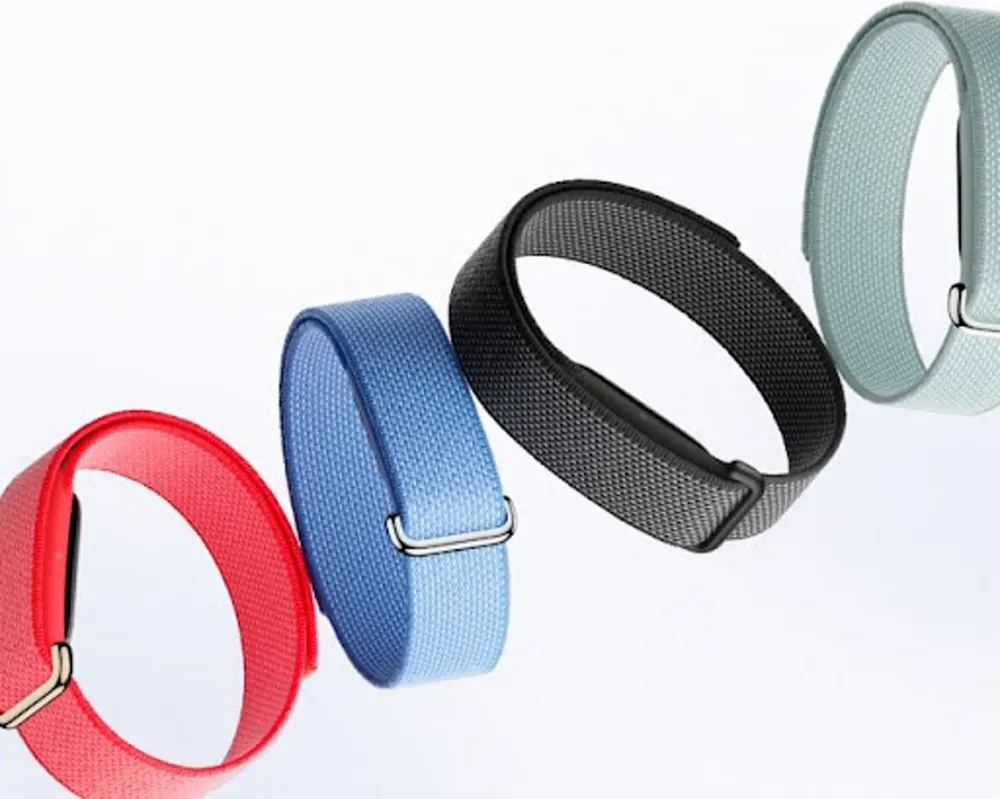
For most people, hands and wrists settle this faster than any sensor spec. Here's where each one gets in the way.
Gym, golf and the kitchen
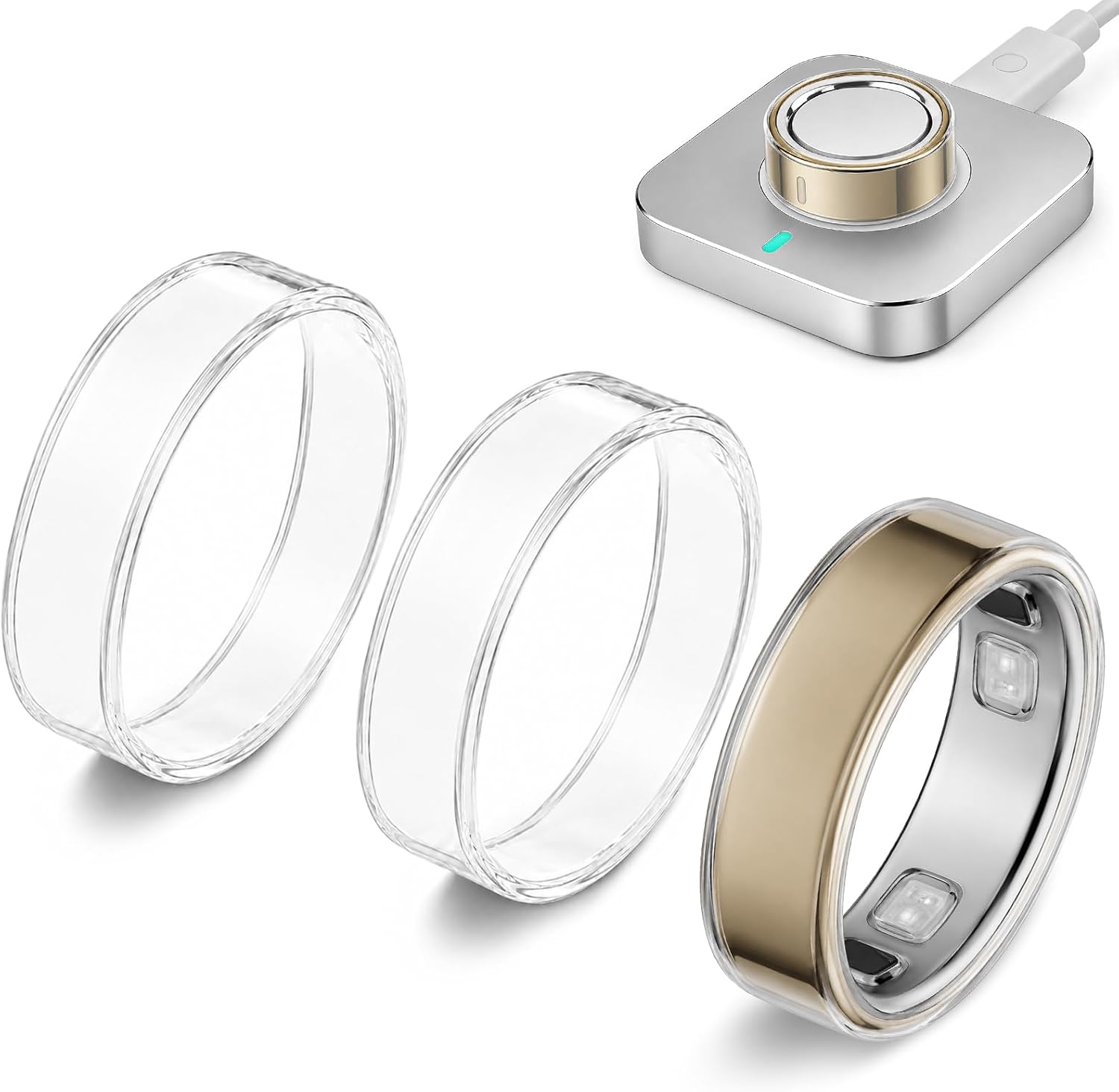
Oura's own care guide suggests taking the ring off for high-friction activities like weightlifting, when handling hard things like pots and pans, and for rigorous handwashing; its tips for the ceramic Ring 4 go further: take it off before washing your hands or doing dishes. Scratches aren't covered by the warranty.14 Owners describe the same routine: a golfer who takes it off every round, lifters wary of a ring on a barbell, and a RingConn owner who switched to the Air for lifting.4 PCMag's reviewer preferred the Air at the gym.12 If you keep the ring, a clear cover helps; see our Oura Ring 5 covers guide and our piece on smart rings and weight lifting.
Sleeping in it, and the second-wrist problem
Comfort in bed is a split decision. Several owners of both say the ring is easier to sleep in, while PCMag's reviewer regularly forgot the Air was there.4, 5, 12 The bigger factor is whether you already wear a watch. In an r/ouraring thread, an owner who wears a watch on the left wrist tried the Air for two months, couldn't stand a strap on the right, found a bicep band even worse, and went back to Oura.5
Sizing, weight loss and swollen fingers
The Oura Ring 5 comes in whole sizes 6 to 13, with no half sizes, and its sizing differs from both jewelry sizes and the Ring 4. Oura says to use the Ring 5 sizing kit, wear the sizer for 24 hours including a night, and pick the smaller size if you're between two (our Oura Ring 5 sizing guide has more).8, 24 Weight loss is a real reason people leave: owners on r/fitbit and r/ouraring dropped the ring once it started sliding off rather than buy another in a smaller size, and one noted Oura has no trade-in for that.4, 5 A band just tightens. Wear a 14 or 15? The Ring 5 doesn't come in your size; the Ring 4 goes up to 15.24
Battery, charging and syncing
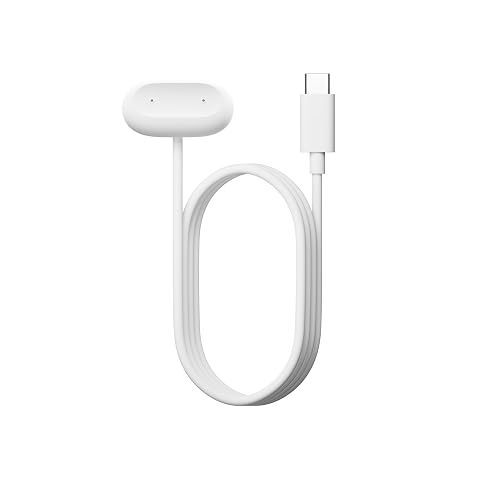
The Oura Ring 5 lasts 6 to 9 days and takes about 80 minutes to charge, but it stores only up to three days of data, so open the app every couple of days.8 The Fitbit Air is rated at up to a week, which DC Rainmaker's unit met; five minutes on the charger buys about a day, a full charge takes about 90 minutes, and it keeps about seven days of detailed data.1, 7, 10
Which Features Does Only One of Them Have?
When everything else is a toss-up, owners tend to decide on one of these.4, 5, 25
| Feature | Fitbit Air | Oura Ring 5 |
|---|---|---|
| Silent vibrating alarm | Yes, including Smart Wake | No vibration motor |
| AFib alerts | Yes, background checks with irregular-rhythm notifications | None listed by Oura as of October 2026; Oura says arrhythmia can affect its heart data |
| Early illness warning | No equivalent listed by Google | Symptom Radar (membership) |
| Cycle tracking | Cycle logging in the free app | Temperature-based Cycle Insights, period prediction and Natural Cycles sync (membership) |
| Blood pressure trends | Not listed by Google | Blood Pressure Signals (membership; US, India and UAE; also on Gen3 and Ring 4): alerts on overnight patterns, no blood pressure reading |
| Swimming and sauna | Water resistant to 50 m | 100 m, rated for sauna and water sports |
The alarm decides it for a lot of people. One r/fitbit owner called it the biggest improvement over their Oura Ring 4, and the Air supports up to eight vibrating alarms, though not everyone wakes to them (our Fitbit Air alarm guide covers that).4, 7 For heart rhythm, Google lists AFib alerts and DC Rainmaker lists "FDA-certified" background AFib detection; Oura calls its ring "not a medical device" and says arrhythmias can skew its heart and sleep data.1, 7, 26 Oura's Symptom Radar flags signs of strain once it has seven nights of data, and its temperature sensor drives period prediction and Natural Cycles sync.2, 27 The Air reports skin temperature variation only, after three nights.28 Blood Pressure Signals arrived alongside the Ring 5 but also runs on Gen3 and Ring 4 for members in the US, India and the UAE. After at least 15 nights of data it watches for overnight patterns that may point to rising blood pressure and only notifies you if it spots one; it doesn't measure your blood pressure.6, 29
Then there's the app. Google replaced the Fitbit app with Google Health in May 2026 and published a fix-it roadmap after the backlash.11, 30 Owners often sum up the Air as great hardware with a rough app; one owner who returned the Air said Google Health showed a 147 bpm peak at 1:30 a.m. while they were asleep, when their Oura and Apple Health showed nothing above 70.4, 5, 25 Others like Google's coach and find the app cleaner than Oura's.4 Oura's app is generally called polished, though Ray Maker thinks its home screen has gotten a bit surface-level.7 On iPhone, Air data has written to Apple Health since August 3, 2026, minus HRV and skin temperature (see our Fitbit Air vs Apple Watch comparison).31, 32
Fitbit Air or Oura Ring 5: Which Should You Buy?
Buy the Fitbit Air if your hands, your budget or your weight are going to fight a ring; buy the Oura Ring 5 if sleep is the whole point and the membership doesn't bother you. Start at the top of this list and stop at the first line that fits you:
- You lift, golf, cook or wash your hands a lot → Fitbit Air. (Or an Oura plus a cover and the habit of taking it off.)
- You already wear a watch you like → Oura Ring 5. A second strap on the other wrist drives a lot of people back to a ring.
- You're losing weight or your fingers swell → Fitbit Air. A band adjusts; a ring means buying again.
- Your ring size is 14 or 15 → Fitbit Air, or a discounted Oura Ring 4.
- You need a silent alarm that won't wake a partner, or AFib alerts → Fitbit Air.
- You want temperature-based cycle tracking or Natural Cycles → Oura Ring 5.
- You won't pay a monthly fee → Fitbit Air. For a ring with no fee, see our best smart rings with no subscription.
- Sleep and recovery are the point, and about $70 a year is fine → Oura Ring 5.
- You lie awake but still for long stretches → Don't expect either to settle it. A doctor and a sleep study will.
Plenty of owners end up with both: the ring at night, and the Air or a watch for the gym.4, 5 If you're still choosing between form factors in general, our smart ring vs fitness band guide takes a step back, and our screenless fitness tracker rankings cover the other bands.
Is the Oura Ring 4 a Better Deal Than the Ring 5?
On price, yes for now: Oura's own store lists the Ring 4 at $244.30 in Silver and Stealth, down from $349, which puts three years with membership at about $454 (October 2, 2026).13 You get a bigger ring (7.9 mm wide against 6.09 mm), sizes 4 to 15, 5 to 8 days of battery and up to a week of on-ring storage.8, 33 Membership and scores are the same, but the sizing kits aren't interchangeable.
Why Are People Ditching Oura Rings?
People leave Oura mostly over the membership, battery fade and the ring getting in the way; fewer mention privacy or the 2026 lawsuit. From owner threads:4, 5, 25
- The fee. A former Gen3 owner on r/FitbitAir described Oura as a three-year device with a subscription on top.
- Batteries. Owners describe fading at 12 to 24 months and warranty swaps, some on their third ring.
- Fit. No half sizes, occasional skin irritation, and rings that stop fitting after weight loss.
- The gym. Taking it off for every lift or round of golf.
- Privacy. In 2025 a viral claim said Oura shared user data with the Pentagon and Palantir. Oura's CEO denied it, saying the company will never share data unless members direct it to.34
Plenty stay, though. Loyal owners point to the comfort in bed, the app, Symptom Radar and cycle tracking. One r/ouraring commenter spread a Ring 4 and the fee over the 30 months they expect the battery to last, got about €15 a month, and compared it to a pizza. Others tried the Air and went back.5
Why Is Oura Ring Being Sued?
Oura is being sued over its sleep-tracking accuracy claims. A proposed class action, Surber v. Oura (No. 3:26-cv-08686, U.S. District Court for the Northern District of California), was filed on August 20, 2026.35, 36 It alleges Oura marketed 79% and then 95% sleep-staging accuracy against a sleep lab while a ring can't measure the brain and eye signals that define sleep stages; MedCity News reports the complaint cites a 2025 study that found about 53% accuracy.36, 37
Oura disputes the claims, saying sleep stages have measurable physiological signatures, its staging has been validated against polysomnography in peer-reviewed studies, and the ring isn't a medical device.36, 37 Its store page ties the 95% figure to sleep-versus-wake scoring.2 On September 10, 2026, Oura moved to compel arbitration. No class has been certified, and there's no ruling on the claims as of October 2, 2026.35
Is Anything Better Than the Oura Ring?
Nothing beats the Oura Ring at everything, but several devices beat it at specific jobs. The Fitbit Air wins on price, gym use, the silent alarm and AFib alerts. If the fee is the problem, look at no-subscription rings; RingConn sells under a license from Oura after Oura won its patent case at the U.S. International Trade Commission in October 2025.38 Our Oura Ring 5 vs RingConn Gen 3 and Galaxy Ring vs Oura Ring 5 comparisons run those numbers. In the WSJ's single lab night (per 9to5Mac), an Apple Watch beat both on sleep.20 Weighing a WHOOP too? Our WHOOP vs Oura Ring 5 comparison puts it against the ring directly, and our Fitbit Air vs WHOOP comparison covers the band side; or read our full Fitbit Air review.
Fitbit Air vs Oura Ring FAQ
Is the Fitbit Air as accurate as the Oura Ring for sleep?
Close. Owners who wear both usually see sleep and wake times within minutes, and in one Wall Street Journal lab night, as summarized by 9to5Mac, the Air came second and the Oura Ring 5 third behind an Apple Watch. They disagree most on deep sleep, so trust each device's trend over any single night.4, 20
Does the Fitbit Air need a subscription?
No. The free Google Health app includes sleep score and stages, readiness, heart rate, HRV and SpO2. Google Health Premium ($9.99 a month on Google's store, or $99.99 a year as reported by Android Authority and PCMag, October 2026; 3 months included) adds the AI coach, fitness plans and detailed sleep insights.9, 11, 12
What does the Oura Ring do without a membership?
Very little. Oura says that without a membership you only see your three daily scores (Readiness, Activity and Sleep), battery, profile, settings and the Explore library. You can still export your data. Membership costs $5.99 a month or $69.99 a year in the US (October 2026).3
Is Google Health Premium more expensive than Oura Membership?
Per year, yes: about $100 against $69.99 as of October 2026, or $9.99 against $5.99 a month. But Premium is optional on the Air, while an Oura ring shows little more than three scores without its membership.3, 11
Does the Oura Ring 5 have a vibrating alarm?
No. The Oura Ring 5 has no vibration motor, so it can't buzz you awake. The Fitbit Air does, with Smart Wake and up to eight alarms.7, 8
Does the Oura Ring detect AFib?
Not as of October 2026. Oura doesn't list AFib or irregular-rhythm alerts among the Oura Ring 5's features or in its Heart Health hub, and its support pages say arrhythmias such as atrial fibrillation can affect its heart rate, HRV and sleep data. The Fitbit Air runs background heart rhythm checks with AFib alerts.1, 2, 8, 26, 29
Can you lift weights with an Oura Ring?
You can, but Oura suggests removing it for weightlifting and other high-friction activities, and scratches aren't covered by the warranty. Many lifters use a cover or wear a wrist band for the gym instead.14
Does the Fitbit Air track skin temperature?
Yes, as nightly skin temperature variation from your personal baseline, using its existing sensors. It needs at least three nights to set the baseline. The Oura Ring 5 has a dedicated digital temperature sensor.8, 28
Is my Oura Ring 4 size the same for the Ring 5?
Not necessarily. Oura says sizing differs slightly between generations and the Ring 5 only comes in whole sizes 6 to 13, so use the Ring 5 sizing kit even if you know your Ring 4 size.24
Can you wear a Fitbit Air and an Oura Ring together?
Yes, and plenty of owners do, often the ring at night and the Air or a watch for workouts. Expect the two apps to score the same night differently, so pick one for your trends.4, 5
Is Google phasing out Fitbit?
Not the hardware: the Google Fitbit Air launched in 2026. What changed is software. The Fitbit app became the Google Health app in May 2026, and Fitbit Premium became Google Health Premium. Our Fitbit-to-Google-Health explainer covers the move.11, 30
Sources
- Google: Introducing the new Google Fitbit Air (May 2026). $99.99 starting price, $129.99 Special Edition, bands from $34.99, a three-month Google Health Premium trial, up to a week of battery, five minutes of fast charging for a full day, heart rhythm monitoring with AFib alerts, SpO2, resting heart rate, HRV, sleep stages, Android 11+ and iOS 16.4+, U.S. shelf date of May 26.
- Oura: Oura Ring 5 store page, checked October 2, 2026. $399 Silver and Black, $499 Gold, Deep Rose, Stealth and Brushed Silver; 6.09 mm wide, 2.28 mm thick, from 2 grams; 6 to 9 days of battery; 100 m water resistance; temperature-based period prediction and Natural Cycles integration; the "95% Sleep Staging Accuracy" claim, whose footnote cites 2-stage (sleep and wake) comparisons with polysomnography.
- Oura Support: Oura Membership (updated September 8, 2026). $5.99 a month or $69.99 a year in the US, one included month for new members, features that require membership, what you see without it (three daily scores, battery, profile, settings, Explore), and data export without a membership.
- r/fitbit owner threads (paraphrased, not quoted): Fitbit Air vs Oura Ring: has anyone made the switch? (June 8, replies through September 23: the alarm as the biggest improvement over an Oura Ring 4, golf, lifting and degloving worries, weight loss and no trade-in, comfort, opinions on the Google Health app and coach, an owner on a third Oura ring, a RingConn owner who switched for lifting, a returner's 147 bpm reading while asleep); Fitbit Air vs Oura 5 (my experience) (June 22: fall-asleep times within two to five minutes, similar scores, deep sleep of 1:44 vs 1:36 one night, lying in bed counted as awake); FitBit Air vs. Oura Ring Sleep Tracking (June 17: an insomniac's worry about lying still in bed; an owner of both on the ring without membership).
- r/ouraring owner threads (paraphrased, not quoted): Fitbit Air vs Oura Ring 5 Data (June 11: four nights compared, missed wake-ups, lower readiness and HRV on the Air); Anyone change to Fitbit Air? (June 10, replies through July 31: no half sizes and skin irritation, weight loss, a watch wearer who went back to Oura, the same returner's 147 bpm reading while their Oura and Apple Health showed nothing above 70, owners who can't go back to a wrist band); 18 Months In - Battery Shot (September 3: battery fade, diagnostics and replacement rings); Fitbit air vs Oura Ring (September 6: similar sleep data, different scores); Debating between Fitbit Air and Oura Ring 5 (September 18: comfort in bed, weight loss, a cost-per-month calculation, owners of both); I feel the only long term benefit of Oura is to monitor sleep (September 2: Symptom Radar and cycle tracking praised by some owners and doubted by others, complaints that the app has become bloated).
- TechCrunch: Oura unveils its Ring 5 with a thinner, lighter design starting at $399 (Aisha Malik, May 28, 2026). Pre-orders from May 28, shipping June 4; pricing by finish; 6 to 9 days of battery against 5 to 8 on the Ring 4; Blood Pressure Signals, which looks for overnight patterns that may indicate rising blood pressure.
- DC Rainmaker: Fitbit Air In-Depth Review (May 2026). Spec list (7-day battery, 5-minute quick charge, about 90 minutes for a full charge, 7 days of detailed data storage, Daily Readiness, "FDA-certified" background AFib detection, skin temperature sensor, vibration motor for smart wake and regular alarms, 50 m water resistance, 5.2 g without band and 12 g with band); up to eight alarms; Premium pricing. In the comments, Ray Maker's May 28 reply on Oura's limited workout data and its home screen.
- Oura Support: Discover Oura Ring 5 (updated July 27, 2026). Sizes 6 to 13; sensors (two tri-LEDs, two photodetectors, digital temperature sensor, accelerometer, no vibration motor listed); 6 to 9 days of battery; about 80 minutes to charge; 100 m water resistance; Ring 5 vs Ring 4 table (6.09 mm vs 7.9 mm wide, up to three days vs one week of data storage, sizes 6 to 13 vs 4 to 15).
- Google Store: Google Health Premium, checked October 2, 2026. "From $9.99"; the free Base tier lists steps, calories, distance, cardio load, readiness, sleep score, sleep schedule, sleep duration, sleep stages, heart rate, HRV, breathing rate, SpO2 and logging for weight, nutrition, water, moods and cycles; Premium adds Ask Coach, adaptive fitness plans, detailed sleep insights, proactive insights and a workout and mindfulness library.
- Google Store: Google Fitbit Air tech specs, checked October 2, 2026. Water resistant up to 50 meters; saves 7 days of detailed motion data; battery life of up to 7 days; 90 minutes for a full charge and a day of battery from 5 minutes; vibration motor; Android 11+ and iOS 16.4+.
- Android Authority: Fitbit Premium is becoming Google Health Premium and it'll cost more (Adamya Sharma, May 7, 2026). $9.99 a month or $99.99 a year, up from Fitbit Premium's $79.99 a year; the Fitbit app becoming the Google Health app; Premium included with Google One AI Pro and Ultra.
- PCMag: Fitbit Air vs. Oura Ring: Can a $99 Wrist-Worn Fitness Tracker Really Beat This Luxury Smart Ring? (Andrew Gebhart, July 13, 2026), tested against the Oura Ring 4; checked against the original on October 2, 2026. Free Daily Readiness in Google Health; Premium at $99.99 a year; the "more than eight years" cost comparison with both subscriptions; Oura wins sleep tracking; both accurate for heart rate in his workouts, with the Air showing precise bpm while the Ring 4 shows zones; the Air preferred at the gym and easy to forget; 8 days of battery for the Air and just over 7 for the Ring 4 in his test.
- Oura: Oura Store, checked October 2, 2026. Ring 4 at $244.30 in Silver and Stealth (list $349) and $279.30 in Gold (list $399); Ring 5 from $399; limited 1-year warranty; returns within 30 days; free trial month for new members; $59 replacement chargers.
- Oura Support: Caring for Your Oura Product (updated September 21, 2026). Titanium rings: consider removing the ring for high-friction activities such as weightlifting and when handling hard materials like pots and pans; remove it for rigorous handwashing. Ceramic Ring 4: remove it before washing hands or doing dishes. Scratches aren't covered by the warranty; keep the battery between 25% and 80%.
- Oura Support: Readiness Contributors (updated July 14, 2026). Nine contributors; resting heart rate uses the previous night's lowest heart rate; up to two weeks to learn averages and two months of long-term data; scores rated 85 to 100 Optimal, 70 to 84 Good, 60 to 69 Fair, 0 to 59 Pay attention.
- Google Health Help Center: Understanding your readiness score in the Google Health app. Inputs (HRV, sleep over the past week, resting heart rate, with activity removed in the update); 7 nights before the first score and a month for a fuller baseline; High 65 or above, Moderate 30 to 64 ("typical recovery levels"), Low 29 or below; the Premium coach adjusts training to the score; the Google Fitbit Air is on the compatible-device list.
- Google Health Help Center: What's the Sleep Score in the Google Health app. Score components, only wake periods longer than five minutes counted as interruptions, targets tailored to age and gender, and most users averaging between 72 and 83.
- Google Health Help Center: Track your heart rate with your Pixel Watch or Fitbit device. Resting heart rate is estimated each day and sleeping heart rate is often lower; HRV uses RMSSD, with the latest value taken from the longest sleep period in the past 24 hours (over 3 hours).
- Oura Support: Heart Rate Variability (updated October 1, 2026). HRV is measured only during sleep, from five-minute samples averaged across the night.
- 9to5Mac: Here's how Apple Watch Series 11 stacks up against Oura, Fitbit, and Whoop, per WSJ (June 7, 2026), summarizing Nicole Nguyen's Wall Street Journal test with the Oura Ring 5, the Fitbit Air, a Whoop and an Apple Watch Series 11, including a night at Stanford Health Care's Sleep Medicine Center (Apple Watch first, "the Fitbit Air was a close second, followed by Oura") and activity tests in which "the Fitbit Air and Oura faltered" at high activity. We read 9to5Mac's summary, not the WSJ article itself.
- Robbins R, Weaver MD, Sullivan JP, et al. Accuracy of Three Commercial Wearable Devices for Sleep Tracking in Healthy Adults. Sensors 2024;24(20):6532 (PMID 39460013). Oura Ring Gen3, Fitbit Sense 2 and Apple Watch Series 8 against polysomnography, 35 adults, one night; sensitivity for sleep vs wake of at least 95% for all devices and 50% to 86% across sleep stages. Funded by Oura Ring Inc.; the lead author disclosed membership of Oura's Medical Advisory Board.
- Altini M, Kinnunen H. The Promise of Sleep: A Multi-Sensor Approach for Accurate Sleep Stage Detection Using the Oura Ring. Sensors 2021;21(13):4302. 440 nights from 106 people; 96% accuracy for sleep vs wake and 79% for four stages. Both authors list Oura Health as an affiliation.
- Dan Go: I Wore An Apple Watch, Oura, Whoop, And Fitbit Air All At The Same Time (June 16, 2026). One week, one person, with an Oura ring that predates the Ring 5 (the post says Oura's thinner ring was still to come): total sleep within about half an hour across all four devices; deep sleep around 47 minutes on Oura and the Apple Watch vs 70 and 81 on the Fitbit and the Whoop; step counts checked against a pedometer, with Oura's weekly total low because the ring came off for lifting and swimming. The author sells fitness coaching, not wearables.
- Oura Support: How to Choose the Right Oura Ring Size (updated August 10, 2026). Ring 5 kit sizes 6 to 13 and Ring 4 kit sizes 4 to 15; sizing differs between generations; whole sizes only; wear the sizer for 24 hours; choose the smaller size when between two.
- Other Reddit threads (paraphrased, not quoted): r/FitbitAir: Do you regret buying Fitbit air band? (September 19: a former Oura Gen3 owner on cost, "great hardware, bad app" verdicts); r/FitnessTrackers thread from an owner wearing both (September 28 to 30: which one feels more accurate, AFib alerts and Oura tags as deciding features).
- Oura Support: Oura & Medical Conditions (updated July 14, 2026). Oura Ring "is not a medical device"; arrhythmias such as atrial fibrillation can affect resting heart rate, HRV and sleep staging data.
- Oura Support: Symptom Radar (updated July 20, 2026). Requires an active membership and at least seven nights of sleep data in the past 14 days; uses body temperature, respiratory rate, resting heart rate, HRV and inactive time.
- Google Health Help Center: How can Google Health help me track my temperature?. The Fitbit Air surfaces sleep-measured skin temperature variation through existing sensors; at least 3 nights to estimate a baseline, refined over up to 30 days.
- Oura Support: Heart Health Hub (updated August 12, 2026). Available on Gen3 or later with an active membership; Cardiovascular Age, Blood Pressure Signals, Cuff Readings, Cardio Capacity and Nighttime BP; Blood Pressure Signals and Nighttime BP for members in the US, India and the UAE; at least 15 of the past 30 nights to set a Blood Pressure Signals baseline, with a notification only if a pattern is detected; Nighttime BP shows no mmHg values. No AFib or irregular-rhythm feature is listed.
- 9to5Google: Google's roadmap for the Google Health app after the Fitbit backlash (Ben Schoon, May 27, 2026). Complaints after the redesigned app rolled out, and the fixes Google promised.
- Google Health Help Center: How do I use Apple Health with the Google Health app?. Data written to Apple Health, with heart rate variability and skin temperature read-only.
- Apple App Store: Google Health (Fitbit) version history. Version 5.05 (August 3, 2026) added "Sync to Apple Health."
- Oura: Oura Ring 4 store page, checked October 2, 2026. Battery of 5 to 8 days depending on size and lifestyle; membership pricing.
- TechCrunch: Smart ring maker Oura's CEO addresses recent backlash, says future is a 'cloud of wearables' (Sarah Perez, September 9, 2025). Viral claims about data sharing with the Department of Defense and Palantir, and Tom Hale's denial: "we will never share your data with anyone unless you direct us to do it."
- PacerMonitor: Surber v. Oura, Inc. et al., No. 3:26-cv-08686, U.S. District Court for the Northern District of California, filed August 20, 2026; defendants' motion to compel arbitration filed September 10, 2026; briefing schedule order of September 21; no ruling on the motion or on class certification. Checked October 2, 2026.
- TechCrunch: Oura faces lawsuit accusing it of misleading consumers about sleep tracking accuracy (Aisha Malik, August 21, 2026). Proposed class action by Clarkson Law Firm; the 79% and 95% claims; Oura's statement that "Oura's sleep staging has been validated and compared favorably in multiple studies against polysomnography, the gold standard."
- MedCity News: Why Oura's Sleep-Tracking Lawsuit Is Really About Trust (Katie Adams, August 25, 2026). The complaint's citation of a 2025 study finding about 53% sleep-stage accuracy; Oura's statement that the ring estimates stages from multiple signals and is "not a medical device."
- Oura: Oura Secures Decisive Legal Victory with ITC Patent Ruling. The U.S. International Trade Commission's October 21, 2025 final determination against Ultrahuman and RingConn, and Oura's multi-year license to RingConn. Oura is a party to the case.