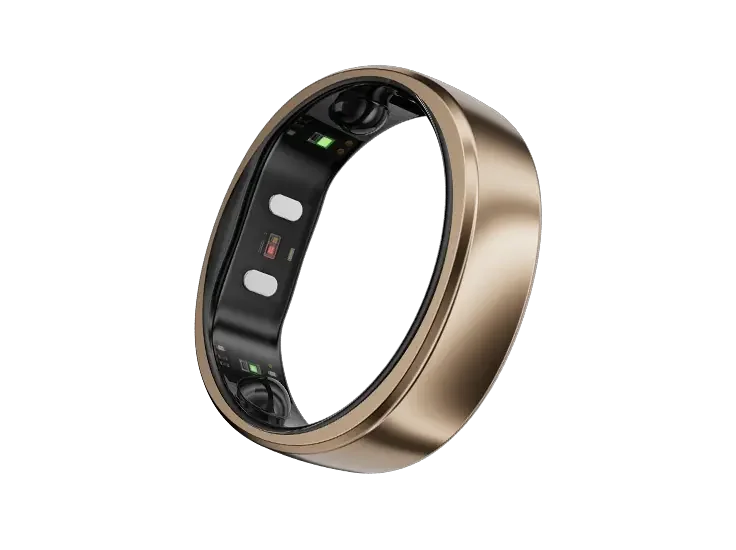
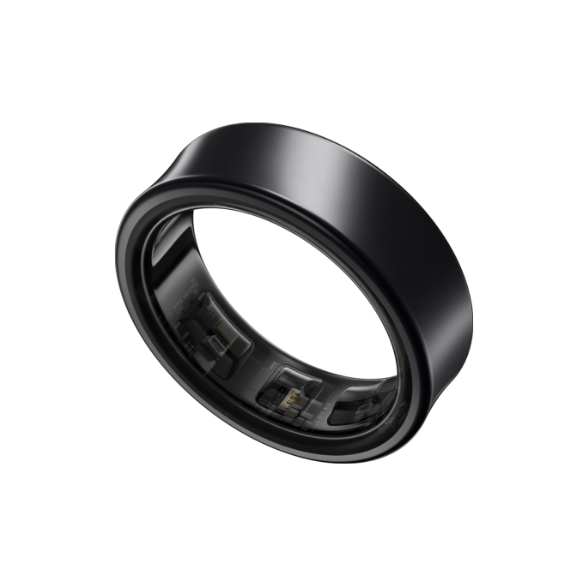
Oura Ring 5 vs RingConn Gen 3: The Membership Ring vs the One You Own
Quick answer: The RingConn Gen 3 ($349 list, paid once, no subscription) is the better buy for most people — 10–14 day battery, sizes 6–15, sleep-apnea screening and a charging case in the box, for roughly $260–$460 less over three years. The Oura Ring 5 ($399–$499 list plus a $5.99/mo or $69.99/yr membership for full features) is still the better ring in two ways that matter: it's the smallest smart ring ever made, and the Oura app remains the one everyone else is chasing. Pay for polish, or keep the money. That's the whole fight.
These two launched five days apart — RingConn Gen 3 on May 29, Oura Ring 5 shipping June 4 — and they read like opposing answers to the same exam question. Oura shrank its flagship 40%, added overnight blood-pressure trend alerts, and kept the membership model that funds all of it. RingConn matched the modern feature list, stretched the battery past a week and a half, and printed "No App Subscription" on the box like a dare.
We've compared spec sheets, launch coverage and early published reviews of both (we haven't worn them side by side ourselves — sources at the bottom). Here's where the real differences are, including two the other comparisons keep skimming past: the sizing gap and the actual three-year bill.
- Best for most people: RingConn Gen 3 — modern 2026 hardware, the longest battery in its class, and nothing behind a paywall. It's our #1 no-subscription smart ring, and our full review scored it 8.8.
- Best if the app is the point: Oura Ring 5 — wedding-band-small, the deepest readiness and sleep coaching in the category, and new cardiovascular trend features. Just go in knowing the membership isn't optional in any meaningful sense.
- Deal-breaker check: finger size 14 or 15? Oura stops at 13. Decision made.
The Real Question: Do You Want a Bill With Your Ring?
Strip away the sensor talk and this is a business-model comparison wearing jewelry.
The Oura Ring 5 costs $399 in Silver or Black, $499 in the premium finishes (list prices), and then asks for Oura Membership — $5.99 a month or $69.99 a year at the time of writing — to unlock the full experience. Skip the membership and a $399 ring shows you a stripped-back set of basic scores. Oura's defense is honest enough: those fees fund real software work, and the Ring 5 shipped genuinely new capability. But the meter runs as long as you wear it.
The RingConn Gen 3 costs $349, list, once. Sleep staging, sleep-apnea monitoring, vascular trends, vibration alerts, women's health — all of it included, permanently. RingConn has been the loudest voice in the no-subscription ring camp for three generations now, and the Gen 3 is the first time its hardware feels like a flagship rather than a compromise you accept for the pricing.
Neither ring has a screen, both work with iPhone and Android, and both will quietly log your sleep without glowing on your nightstand at 2 a.m. From here it's a question of what each one does with the data — and what that costs you by year three.
Oura Ring 5: What the $399-Plus-Membership Buys

The headline is the shrink. Oura cut the Ring 5's volume roughly 40% versus the Ring 4 — about 6.1mm wide and 2.3mm thick — which moves it from "obviously a gadget" to plain-wedding-band territory. Reviewers keep calling it the smallest smart ring ever made, and for a device you're supposed to wear every single night, disappearing is a feature.
The new health stack is led by Blood Pressure Signals: overnight, the ring watches pulse-waveform patterns while your cardiovascular system is at its most stable, and flags you when the trend suggests your blood pressure may be creeping up. Read that wording carefully — it does not measure blood pressure, there's no cuff-grade number, and it's a wellness feature rather than an FDA-cleared measurement. It also isn't live in every market yet (UK reviewers couldn't test it at launch). What you get is a nudge toward a real cuff, which is genuinely useful and genuinely not a diagnosis.
Beyond that: full titanium with PVD coating, 50+ tracked metrics, live workout heart rate, and the Oura app — still the most polished, most opinionated coaching layer any ring ships. Readiness scores people actually reorganize their day around. Battery runs six to nine days, up slightly from the Ring 4.
The honest asterisks: the charging case costs $99 extra, the charger is locked to one generation and one ring size if you ever lose it, and Oura itself suggests taking the ring off for barbell work. And then there's the membership, which we've covered.
RingConn Gen 3: What $349 Once Buys
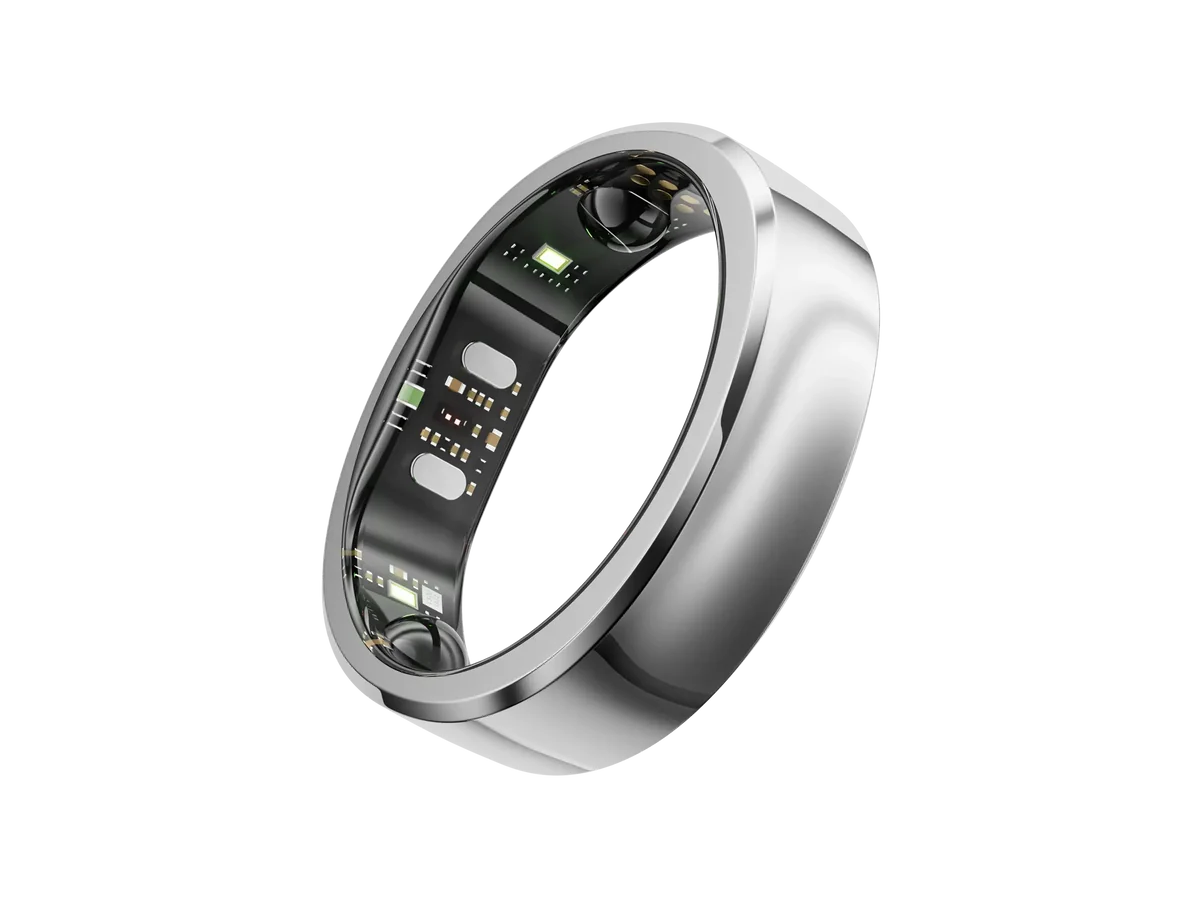
The Gen 3 is RingConn deciding to stop competing only on price. It's 2.3mm thick and 2.5–3.5 grams depending on size — effectively tied with the Oura on thickness, a hair heavier — in titanium with an epoxy-resin inner shell rather than Oura's full-titanium build. That resin is one of the few places the lower price shows.
Then the spec sheet starts punching up. RingConn claims up to 14 days of battery; Techlicious's hands-on landed around 10 days with vibration alerts running, which still roughly doubles what the Oura Ring 5 manages. The wireless charging case comes in the box — the thing Oura charges $99 for — and holds extra charges for travel. Sizes run 6 through 15. And it's the ring that physically talks back: a vibration motor delivers silent alarms, sitting reminders and health alerts on your finger, something no Oura ring does at all.
On the health side, the Gen 3 carries forward the sleep-apnea monitoring RingConn debuted on the Gen 2 — screening, not diagnosis, but a real differentiator at this price — and adds Vascular Health Insights, which builds long-term vascular trend lines from heart rate, SpO2, skin temperature and motion data. Same wellness-feature caveat as Oura's version: it's a trend line and a prompt to see a professional, not a measurement.
The trade-off you're accepting is software. The RingConn app has improved fast, but nobody serious argues it matches Oura's coaching, its trend depth, or its integrations. You get your numbers, clearly presented, and less interpretation on top. Our full RingConn Gen 3 review goes through the app screen by screen.
Oura Ring 5 vs RingConn Gen 3: Spec Comparison
| Oura Ring 5 | RingConn Gen 3 | |
|---|---|---|
| Price (list)* | $399 Silver/Black · $499 premium finishes | $349, all finishes |
| Subscription | ~$5.99/mo or ~$69.99/yr for full features | None — ever |
| Sizes | US 6–13 (whole sizes) | US 6–15 |
| Dimensions | ~6.1mm wide, ~2.3mm thick, from 2g | 2.3mm thick, 2.5–3.5g |
| Materials | Full titanium, PVD coating | Titanium with epoxy-resin inner shell |
| Battery | 6–9 days | Up to 14 days claimed; ~10 days in hands-on testing |
| Charging case | $99 accessory | Included |
| Cardio trend feature | Blood Pressure Signals (overnight pulse-wave trends) | Vascular Health Insights (long-term vascular trends) |
| Sleep apnea screening | Breathing disturbance trends | ✅ Dedicated monitoring since Gen 2 |
| Haptics / silent alarms | ❌ None | ✅ Vibration motor — alarms, alerts, reminders |
| App & coaching | Best in category | Solid, improving, less interpretive |
| Phones | ✅ iPhone + Android | ✅ iPhone + Android |
*Manufacturer list prices at the time of writing (August 2026) — check live listings. Amazon's price at checkout governs.
What Do They Actually Cost Over 3 Years?
This is the table Oura's marketing will never print, so here it is with August 2026 reference pricing:
| Cost over 3 years* | RingConn Gen 3 | Oura Ring 5 (Silver/Black) | Oura Ring 5 (premium finish) |
|---|---|---|---|
| Hardware | $349 list | $399 list | $499 list |
| Membership × 3 years | $0 | ~$210 (at $69.99/yr) | ~$210 |
| Charging case | Included | +$99 if you want one | +$99 if you want one |
| Total | ~$349 | ~$609–$708 | ~$709–$808 |
| If you stop paying | Nothing changes | App drops to basic scores | |
*Reference pricing at the time of writing; Oura sets membership rates and they can change. Both rings are frequently discounted below list.
Call it $260 at minimum, $460 at the top end. And unlike a WHOOP, the Oura hardware doesn't brick when you stop paying — but a smart ring showing "basic scores" is a $399 piece of titanium doing the job of a $50 one. In practice, buying an Oura is signing up for the fee. Budget for it honestly or buy the ring that doesn't have one. (Weighing a $99 band instead? See our Fitbit Air vs Oura Ring 5 comparison.)
One more wrinkle in RingConn's favor: the Gen 3 is HSA/FSA-eligible through RingConn's own store, which knocks the effective price down further if you have pre-tax dollars sitting around.
Sizing: The 6–13 vs 6–15 Gap Nobody Leads With
Here's the detail that quietly ends this comparison for a chunk of buyers. The Oura Ring 5 comes in US whole sizes 6 through 13 — a narrower range than the Ring 4's 4–15, which surprised a lot of returning Oura owners. The RingConn Gen 3 runs 6 through 15.
If you wear a 14 or 15 — common for larger hands, and for anyone who wants a ring on their index finger or thumb where Oura says signal quality is worth chasing — Oura doesn't make your size. Full stop. The RingConn does, and so does Samsung's Galaxy Ring if you're on Android.
Two cautions that apply to both rings: smart-ring sizes don't match jewelry-store sizes, and RingConn warns that even its own Gen 3 sizes differ from its earlier rings. Order the free sizing kit, wear the sizer for a full day including a workout and a night's sleep, and then buy. We wrote up the whole ritual — swollen-finger mornings and all — in our Oura Ring 5 sizing guide, and the same logic applies to RingConn.
Blood Pressure Signals vs Vascular Trends: Same Idea, Different Badge
Both companies shipped a cardiovascular trend feature this generation, and both deserve the same one-paragraph reality check.
Neither ring measures blood pressure. Oura's Blood Pressure Signals watches your pulse waveform overnight and alerts you when patterns correlate with rising blood pressure; RingConn's Vascular Health Insights assembles heart rate, SpO2, temperature and movement into long-term vascular trend lines. Both are wellness features that dodge FDA measurement clearance by design — carve-out territory, not cleared medical devices. Both are, at best, an early smoke alarm that tells you to go put a real cuff on your arm. That's worth having. It's not worth choosing a ring over, because functionally they're playing the same game with different marketing.
Where a real gap exists: sleep apnea. RingConn has shipped dedicated sleep-apnea monitoring since the Gen 2 and continues it here; Oura tracks breathing disturbances as trends but doesn't position it the same way. If snoring or suspected apnea is on your mind, RingConn is the one built around that question — and a formal sleep study is the actual answer if the ring keeps flagging you.
Battery and Charging: Not Close
Oura quotes six to nine days on the Ring 5 and reviewers land inside that range. Fine — better than a watch, worse than its rival. RingConn claims up to 14 days; Techlicious measured about 10 with alerts enabled. Even on the conservative number, you're charging the RingConn half as often.
The charging story compounds it. RingConn's case is in the box and holds spare charges, so a week-long trip needs zero cables. Oura's case is a $99 add-on, and the standard dock is famously specific: locked to your ring's generation and size, so losing it means buying an exact replacement rather than borrowing a friend's. None of this is disqualifying. All of it points the same direction.
Who Should Buy Which?
Buy the RingConn Gen 3 if you…
- Refuse to pay a monthly fee for hardware you own — this is the best ring that never bills you
- Want the longest battery in the category and a travel case without spending another dime
- Wear size 14 or 15, where Oura simply doesn't go
- Want silent vibrating alarms or sleep-apnea screening — neither exists on the Oura
Buy the Oura Ring 5 if you…
- Want the smallest, most jewelry-like smart ring made, in a full-titanium build
- Will actually read the readiness coaching every morning — the app is the product, and it's the best one
- Care about the deepest metric set (50+) and the widest third-party integrations
- Have done the math, accepted ~$70/yr as the cost of the software, and budgeted the $609+ three-year total with open eyes
Oura Ring 5 or RingConn Gen 3? Bottom Line
Most people should buy the RingConn Gen 3. It matches the Oura where it counts — thickness, sleep tracking, a cardiovascular trend feature, iPhone and Android support — beats it clearly on battery, sizing range, haptics and what's in the box, and costs hundreds less over any realistic ownership window because there's no meter running. That combination is exactly why it tops our no-subscription smart ring rankings.
The Oura Ring 5 wins one argument, and it's a real one: if the reason you want a smart ring is the interpretation — coaching that changes your behavior, trends your doctor will actually look at, an app polished by a decade of iteration — Oura is still alone at that altitude, and the membership is the price of admission. Just make sure you're buying it for the software, because on hardware value, the $349 ring with the 10-day battery already won. For the wider field beyond just these two, see our full screen-free ring and band rankings.
Oura Ring 5 vs RingConn Gen 3 FAQ
Is the RingConn Gen 3 better than the Oura Ring 5?
On value, yes — $349 once versus roughly $609+ over three years, with double the battery and more sizes. On software depth and hardware finish, the Oura is still ahead. Most buyers are better served by the RingConn; app devotees are the exception.
Does the RingConn Gen 3 have a subscription?
No. There's no paid tier at all — sleep, apnea monitoring, vascular trends, alerts and women's health are all included in the $349 list price, permanently.
How much does the Oura Ring 5 really cost over three years?
About $609 for a $399 finish plus membership at ~$69.99/yr — up to roughly $808 for a premium finish with the $99 charging case. The RingConn Gen 3 is ~$349 all-in, case included.
What if my ring size is 14 or 15?
Then the Oura Ring 5 is off the table — it stops at size 13. The RingConn Gen 3 goes to 15, as does the Galaxy Ring on Android. Use the free sizing kit either way; smart-ring sizes don't match jewelry sizes.
Can either ring actually measure blood pressure?
No. Oura's Blood Pressure Signals and RingConn's Vascular Health Insights both track overnight trends that correlate with cardiovascular changes and nudge you toward a real reading. They're wellness screening features, not FDA-cleared measurements or diagnoses.
Sources
- RingConn — Gen 3 official product page: $349 list price, up-to-14-day battery claim, included charging case, sizes, no-subscription policy, Vascular Health Insights, vibration alerts, HSA/FSA eligibility.
- TechCrunch — Oura unveils its Ring 5: $399/$499 pricing, $5.99/mo membership, sizes 6–13, 6–9 day battery, 40% size reduction, Blood Pressure Signals description, June 4 ship date.
- MacRumors — Oura Ring 5 unveiled: dimensions, volume reduction vs Ring 4, blood-pressure trend framing.
- Techlicious — RingConn Gen 3 hands-on: ~10-day real-world battery with alerts on, haptics behavior, launch pricing.
- Gadgets & Wearables — RingConn Gen 3 vs Oura Ring 5: thickness/weight comparison, materials, ownership-cost framing.