Fitbit Air vs WHOOP 5.0: The $99 Band vs the $199-a-Year Membership
Quick answer: The Fitbit Air ($99.99 list, paid once) is the better buy for most people — independent testing puts its heart-rate, sleep and step accuracy in the same bucket as WHOOP's, and it adds background AFib alerts, which WHOOP doesn't offer in the US on any plan (its $359/yr Life tier has an on-demand ECG instead). Choose the WHOOP 5.0 (from ~$199/yr, membership required) only if you'll genuinely use its strain coaching and recovery guidance — the parts that are still best-in-class.
This is the fight WHOOP spent a decade avoiding. Since 2015, if you wanted a screenless band that tracked sleep and recovery, WHOOP was the only serious game in town — and it charged rent. Then Google dropped the Fitbit Air in May: 12 grams, same no-screen philosophy, $99.99 list, no required subscription. DC Rainmaker's review called it "an easy-button recommendation" for most people who'd otherwise buy a WHOOP. That's about as close to a mic drop as wearable reviewing gets.
But "easy button for most people" isn't "better for everyone." WHOOP still does things the Air doesn't even attempt. So let's line them up properly — accuracy data, real three-year costs, and the honest annoyances of both.
- Best for most people: Fitbit Air — the core data (sleep, heart rate, HRV, AFib alerts) with accuracy that independent testing ranks alongside WHOOP's, for roughly what WHOOP charges every six months. Our full review scored it 9.2.
- Best for dedicated athletes: WHOOP 5.0 — strain scores, recovery coaching, the best automatic workout detection in DC Rainmaker's testing, and a 14+ day battery. You're paying ~$199+ every year for the coaching layer, and for the right person it's worth it.
The Real Difference: You Buy One, You Rent the Other
Everything else in this comparison is detail. This is the fork in the road:
The Fitbit Air is a product. You pay $99.99 (list), and sleep, heart rate, heart-rhythm alerts, HRV, skin temperature and activity data are free in the Google Health app for as long as the hardware lasts. There's an optional Google Health Premium tier ($9.99/mo or $99/yr) for Gemini-powered coaching — every Air includes a three-month trial — but nothing core sits behind it.
The WHOOP 5.0 is a membership. The band ships "free" with a plan — One at ~$199/yr, Peak at ~$239/yr, or Life at ~$359/yr with the MG hardware — and if you stop paying, the band doesn't lose features. It stops working. Entirely. We broke down what each tier actually buys in our WHOOP 5.0 vs MG comparison; the short version is that the recovery engine is identical on every tier, and you're mostly choosing accessories and medical extras.
Neither has a screen, which is why they're both here: no glow on your wrist at 2 a.m., no notifications at dinner, everything in the app the next morning.
Fitbit Air: What $99.99 Buys
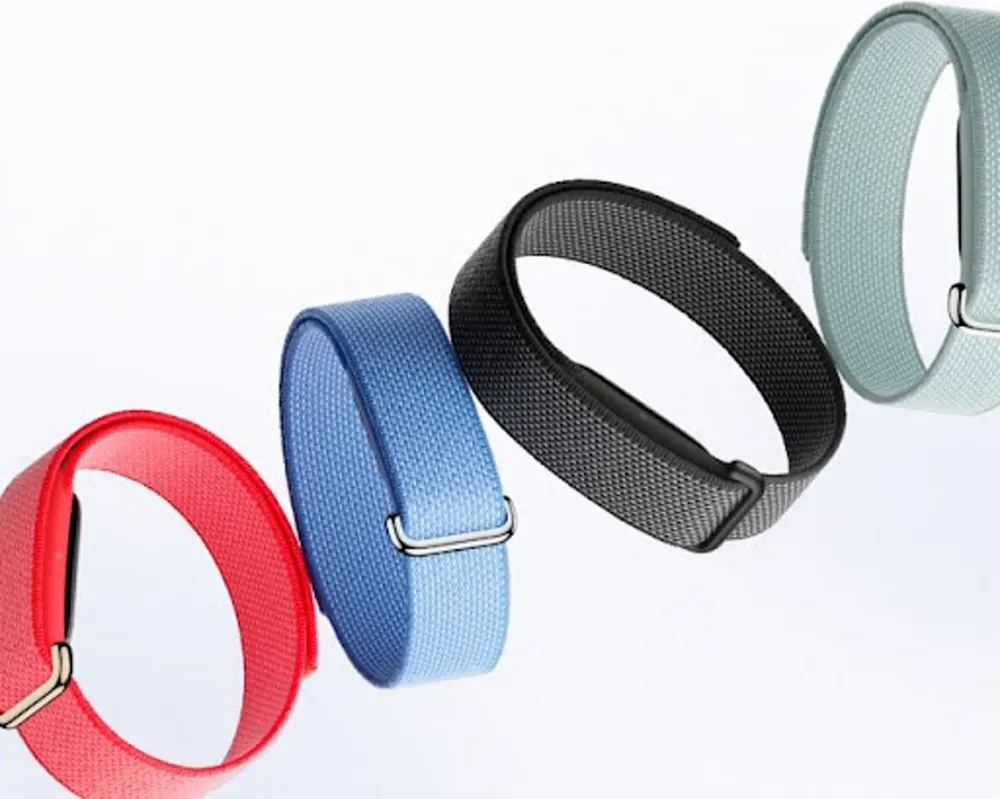
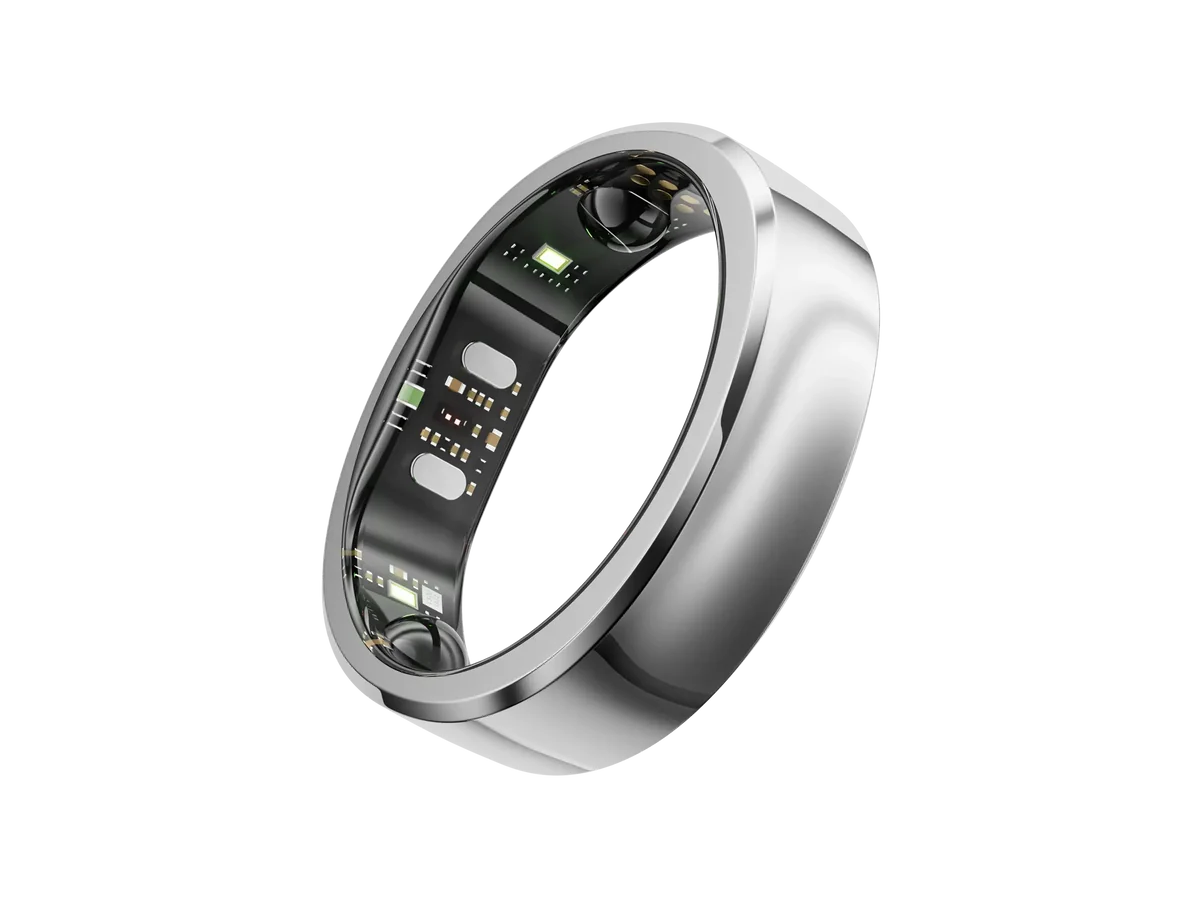
Launched May 7, 2026, the Air is Google's bet that WHOOP's idea was right and WHOOP's business model was wrong. At 12 grams it's less than half the weight of a WHOOP 5.0 on its band — Tom's Guide measured 12 g vs 28 g side by side — and light enough that "forgot I was wearing it" shows up in basically every review.
The sensor list doesn't read like a $99 product: 24/7 optical heart rate, SpO2, skin temperature, full sleep staging, HRV, and — the headline — heart-rhythm monitoring with AFib alerts. Hold that thought, because WHOOP's closest equivalent is an on-demand ECG on its $359-a-year Life plan, and its background rhythm alerts aren't offered in the US yet. Battery runs up to 7 days, and a 5-minute charge buys a full day, which in practice means you top it up in the shower and never sleep without it.
One housekeeping note: the Fitbit app is gone. Data lives in the new Google Health app since the forced migration on May 19, and the transition was bumpier than Google admits. It works with both iPhone and Android.
WHOOP 5.0: What the Membership Buys
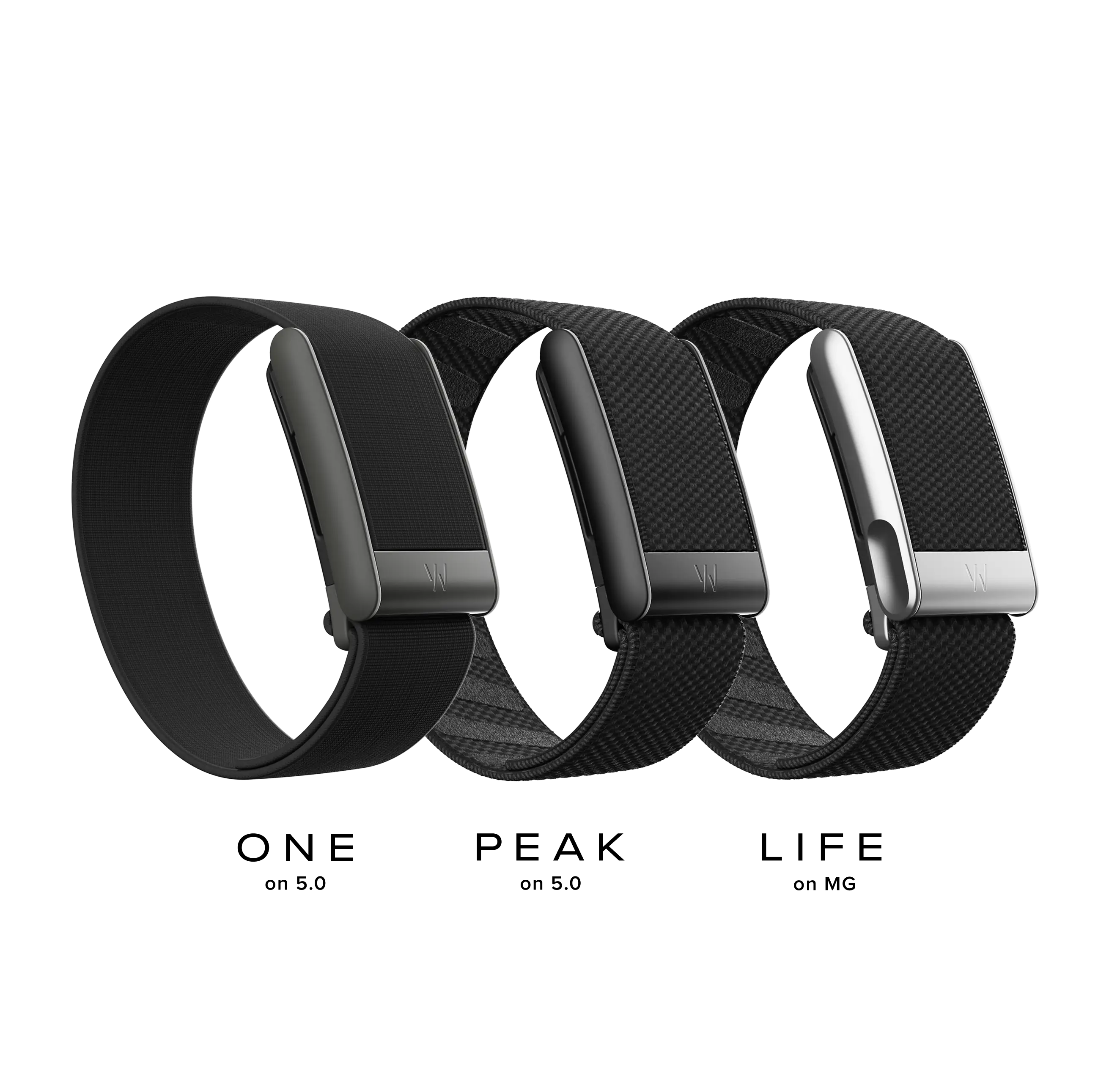
Here's the thing the price outrage crowd skips: WHOOP is still genuinely good at the job it invented. Strain scores that tell you how hard today actually was. Recovery percentages each morning that people organize their training around. Sleep coaching, VO2 max, women's hormonal insights, and automatic workout detection covering 45+ activity types — which DC Rainmaker's August testing ranked the best of any screenless band.
The 5.0 hardware fixed the old model's biggest complaint, too: battery went from 4–5 days on the 4.0 to 14+ days, double the Air's. (One quiet catch for upgraders: 4.0 bands don't fit the 5.0 — our WHOOP bands guide covers what does.)
What the base 5.0 does not have: any screen, ECG, or AFib screening. The ECG lives exclusively on the WHOOP MG, which requires the ~$359/yr Life plan, and it's on-demand only: WHOOP's background irregular-rhythm notifications aren't available in the US as of August 2026, per its regional availability page. WHOOP's Blood Pressure Insights feature also drew an FDA warning letter in July 2025 — closed in June 2026 after WHOOP softened the presentation — so treat that one as a wellness trend, not a measurement.
Fitbit Air vs WHOOP 5.0: Spec Comparison
| Feature | Fitbit Air | WHOOP 5.0 |
|---|---|---|
| Pricing model* | $99.99 list, once | Membership: ~$199–$359/yr, band included |
| Works without paying | ✅ Core data free forever | ❌ Band stops working when membership lapses |
| Weight | 12 g | ~28 g with band (Tom's Guide measurement) |
| Battery | Up to 7 days; 5-min charge = 1 day | 14+ days |
| AFib / heart-rhythm alerts | ✅ Included | ❌ Not offered in the US; the MG (~$359/yr Life plan) has an on-demand ECG instead |
| Sleep staging | ✅ Full stages | ✅ Full stages |
| Recovery coaching | ⚠️ Readiness + Cardio Load; deeper AI coaching is optional paid | ✅ Strain, recovery %, sleep coach — the flagship feature |
| Auto workout detection | Near-flawless per DCR, but fewer activity types | 45+ activities, ranked #1 in DCR testing |
| Screen | None | None |
| App | Google Health (new, still maturing) | WHOOP (mature, athlete-focused) |
| Phone support | ✅ iOS + Android | ✅ iOS + Android |
*List/membership prices at the time of writing (August 2026) — check live listings. Amazon's price at checkout governs.
Which One Actually Costs Less Over 3 Years?
It's not close, but let's do it anyway, because the gap is the story of this category:
| Cost over 3 years* | Fitbit Air | WHOOP One | WHOOP Life (MG) |
|---|---|---|---|
| Hardware | $99.99 list | Included | Included |
| Required fees | $0 | ~$199 × 3 | ~$359 × 3 |
| Total | ~$100 | ~$597 | ~$1,077 |
| What you own after | The tracker | Nothing that works | Nothing that works |
*August 2026 reference pricing; WHOOP sets membership prices and they can change.
Even if you add Google Health Premium every single year ($99/yr — which most people won't need), the Air lands around $400 over three years. That's still under WHOOP's cheapest tier, and you keep the hardware. This math is why the WHOOP-alternatives search exploded this year — people aren't leaving because WHOOP got worse. They're leaving because the rent came due for the third time.
Which Is More Accurate? What Independent Testing Found
We haven't lab-tested these ourselves, so let's lean on someone who straps five devices on at once and publishes the charts. DC Rainmaker's August 2026 accuracy deep-dive ran the WHOOP 5.0, Fitbit Air, Garmin Cirqa, Amazfit Helio Strap and Polar Loop through weeks of workouts, sleep and step tests. The conclusion, verbatim: for Garmin, Fitbit and WHOOP, "they're all roughly in the same bucket accuracy-wise. Each with their own quirks."
The quirks, since they're the useful part:
- Workout heart rate: comparable between the two overall. DCR's May review found WHOOP a touch steadier on steady-pace runs and intervals, with the Air ranging from matching it to occasionally missing badly on individual sessions.
- Automatic workout detection: WHOOP ranked first, the Air a close second with "very rare" errors — but WHOOP recognizes far more activity types.
- Steps: the Air was the only device in the test to score a 500-step count exactly. Daily totals across all devices varied 5–8%.
- Sleep: both nailed fall-asleep and wake times within a couple of minutes. Neither showed a meaningful edge on duration.
- WHOOP oddities: daily calorie totals ran surprisingly low versus every competitor, and step syncing lagged ~10 minutes.
- Air oddities: GPS track recording in manual workouts frequently failed in DCR's May testing, and elevation data showed zero.
Translation: if you're choosing between these two on sensor accuracy, you're choosing on the wrong axis. They measure about the same. They just bill very differently.
Sleep and Recovery: Where WHOOP Still Earns the Fee
Here's the honest case for paying WHOOP $199 a year when a $99 band measures the same numbers: WHOOP doesn't sell measurement, it sells interpretation. The morning recovery score that tells you to back off today. Strain targets that stop you from junk-mile-ing yourself into a hole. Sleep debt coaching that actually changes when you go to bed. That behavioral layer is the product, it's genuinely the best in the business, and the Air has nothing equivalent out of the box.
The Air's counterargument is Cardio Load and Readiness scores — real, free, and directionally similar — plus optional Gemini coaching in Health Premium, which DCR called "genuinely useful" but quirky (it apparently fixates on preferences you mentioned once, like an overeager personal trainer). It's a lighter-touch experience. For someone who mostly wants to know how they slept and whether their heart's okay, lighter touch is a feature, not a gap.
And one more thing the Air does that the 5.0 flatly cannot: AFib screening. WHOOP locks its ECG behind the MG at ~$359/yr, and its background rhythm notifications aren't offered in the US at all yet. Google includes rhythm alerts on a $99.99-list band. If heart health is any part of why you're shopping, that's a strange thing to pay 3.5x more for annually and still not get.
The Annoyances, Honestly
Fitbit Air
- ✓ ~$100 once; core data free forever
- ✓ 12 g — you'll genuinely forget it
- ✓ AFib alerts included
- ✓ Only device to ace DCR's step-count test
- ✓ 5-minute charge covers a day
- ✕ Manual workout tracking covers only a handful of activity types; GPS recording was buggy in DCR's testing
- ✕ Google Health app is new — migration left scars
- ✕ Deeper coaching costs extra (optional)
WHOOP 5.0
- ✓ Best recovery/strain coaching in the category
- ✓ #1 automatic workout detection, 45+ activities
- ✓ 14+ day battery — double the Air
- ✓ Mature app athletes already trust
- ✕ ~$199–$359 every year, forever; band dies if you stop paying
- ✕ No background AFib alerts in the US; ECG only on the MG tier
- ✕ Calorie totals ran oddly low in DCR's testing
- ✕ Your old 4.0 bands don't fit
Who Should Buy Which?
Buy the Fitbit Air if you…
- Want sleep, heart and recovery basics without a recurring bill
- Care about AFib/heart-rhythm alerts (the Air includes them; WHOOP doesn't offer them in the US, and its ECG costs $359/yr)
- Wear it 24/7 and value the lightest band in the category
- Were WHOOP-curious but the word "membership" stopped you cold
Buy the WHOOP 5.0 if you…
- Train with structure and will actually act on strain and recovery scores
- Want the best automatic workout detection with no button-pressing
- Value 14+ day battery over everything else
- Have done the three-year math and decided the coaching is worth ~$600 — that's a legitimate call, just make it with open eyes
Fitbit Air or WHOOP 5.0? Bottom Line
The Fitbit Air is the right answer for most people, and not by a little. Independent testing says you're not sacrificing meaningful accuracy, you gain background AFib alerts that WHOOP doesn't offer in the US on any plan, and over three years you'll spend roughly a sixth as much. DC Rainmaker called it the easy-button pick for exactly this reason.
WHOOP survives this fight in one segment: committed athletes. If a morning recovery percentage genuinely changes what you do at 6 a.m., WHOOP's coaching is still unmatched, and no free app currently replaces it. Everyone else is paying $199 a year for numbers a $99 band also produces.
Fitbit Air vs WHOOP FAQ
Is the Fitbit Air better than the WHOOP 5.0?
For most people, yes — same accuracy bucket per independent testing, AFib alerts included, and ~$100 once instead of ~$199+ every year. WHOOP is better for dedicated athletes who'll use its strain and recovery coaching daily.
Does the Fitbit Air have a subscription?
No required one. Core tracking is free in Google Health; the optional Premium tier ($9.99/mo or $99/yr, 3-month trial included) adds AI coaching. WHOOP's membership, by contrast, is mandatory — the band stops working without it.
Which tracks sleep better?
They're effectively tied on the numbers — DC Rainmaker's testing found both detect sleep and wake times within a couple of minutes. WHOOP layers more coaching on top of the same data; whether that's worth a yearly fee is the whole question.
Can I get AFib detection on WHOOP?
Only as an on-demand ECG on the WHOOP MG, which needs the ~$359/yr Life membership; the base 5.0 has no ECG hardware. WHOOP's background irregular-rhythm alerts aren't offered in the US as of August 2026. The Fitbit Air includes background AFib alerts at its $99.99 list price. See our 5.0 vs MG breakdown for what else Life buys.
Is the Stephen Curry Special Edition the same Fitbit Air?
Yes. It's the same tracker with a different band, at $129.99 list against $99.99 for the standard model, so it's the fallback if the standard Obsidian listing doesn't suit you or shows unavailable when you click.
Sources
- DC Rainmaker — Fitbit Air In-Depth Review: A True Whoop Competitor for $99?: pricing, sensors, workout HR findings, GPS/elevation bugs, "easy-button" verdict.
- DC Rainmaker — Accuracy Deep-Dive: Cirqa vs Whoop 5.0, Fitbit Air, Helio, Polar Loop: HR/sleep/step accuracy rankings, auto-detection results, calorie and sync quirks.
- Tom's Guide — Fitbit Air vs Whoop side by side: weight measurements (12 g vs 28 g), sleep comparison, AFib paywall point.
- WHOOP — Membership options: One/Peak/Life tier pricing and included hardware.
- WHOOP Support — Regional Feature Availability (last published August 20, 2026): the on-demand ECG is listed for the United States; Irregular Heart Rhythm Notifications are listed for Canada, the UK and much of Europe, but not the US.