Best Fitbit Air Bands: All 3 Official Styles, Compared
Quick answer: Buy the Active band (sweat-resistant silicone, around $34.99, small or large) if you train, sweat, or shower with your tracker on — it's the single most useful second band. The Performance Loop fabric band is what came in your box and remains the most comfortable thing to sleep in, so a spare in another color is the cheap way to rotate while one dries. The Elevated Modern band (~$49.99, polyurethane with a stainless steel clasp) is the one that doesn't look like gym gear at a meeting. All three snap onto the same pod, no tools.
Here's the thing nobody mentions when they hand you a screenless tracker: you're going to wear it constantly. Sleep, showers, workouts, the whole 24 hours. Which means the band — a $35 strip of fabric or silicone — turns out to matter more day to day than half the specs on the box. A soaked fabric loop that never quite dries by bedtime is the number one reason a good tracker starts spending nights on a nightstand.
Fitbit sells three official styles. They're genuinely different, and which one you want depends entirely on when you sweat. (If you're still deciding whether the Air itself is the right tracker for you — especially versus a gym-focused rival — see our Fitbit Air vs Amazfit Helio Strap comparison first.)
- Best overall second band: Active (silicone) — ~$34.99, S/L, rinses clean, doesn't stay wet
- Comfiest for sleep: Performance Loop (fabric) — ~$34.99, the one in your box, softest against skin
- Best for the office: Elevated Modern — ~$49.99, polyurethane, solid stainless clasp
- Most underrated buy: a second USB-C charger — ~$24.99, ends charging as a chore
What Band Does the Fitbit Air Come With?
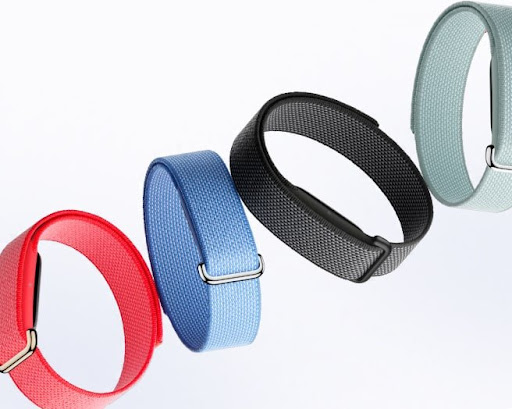
Your Air arrived on a Performance Loop — soft woven fabric, in black, lilac, pink or fog green depending on which one you ordered. It's genuinely nice: light, breathable, no pressure point, easily the best of the three to sleep in.
Its weakness is exactly what you'd expect from fabric. Sweat and shower water soak in, and a damp band against your skin all evening is unpleasant enough that people take the tracker off — which is how you lose a night of sleep data. Extra Performance Loops cost about $34.99, so rotating two is a legitimate strategy.
1. Active Band — The One Most Owners Should Buy
Around $34.99 (September 2026) · Sweat-resistant silicone · Small and large
If you buy exactly one accessory for your Air, make it this. The Active band is silicone, which means sweat sits on the surface instead of soaking in, a rinse under the tap cleans it in five seconds, and it doesn't stretch out when wet the way a fabric loop does. Same four colors as the loops, sold in small and large.
It's also the band to wear if you're doing anything where the tracker needs to stay put — intervals, lifting, a hot yoga class. A snug silicone band keeps the sensor pressed where it belongs. Worth knowing: even a perfect band won't fix optical heart rate during heavy lifting, which is a limitation of wrist sensors, not of the strap. Our heart rate accuracy guide explains why, and what to wear instead when the number has to be right.
The trade-off versus fabric: silicone against skin for eight hours of sleep gets slightly clammy for some people. That's the whole argument for owning both.
2. Performance Loop — The Sleep Band
Around $34.99 (September 2026) · Woven fabric · Four colors
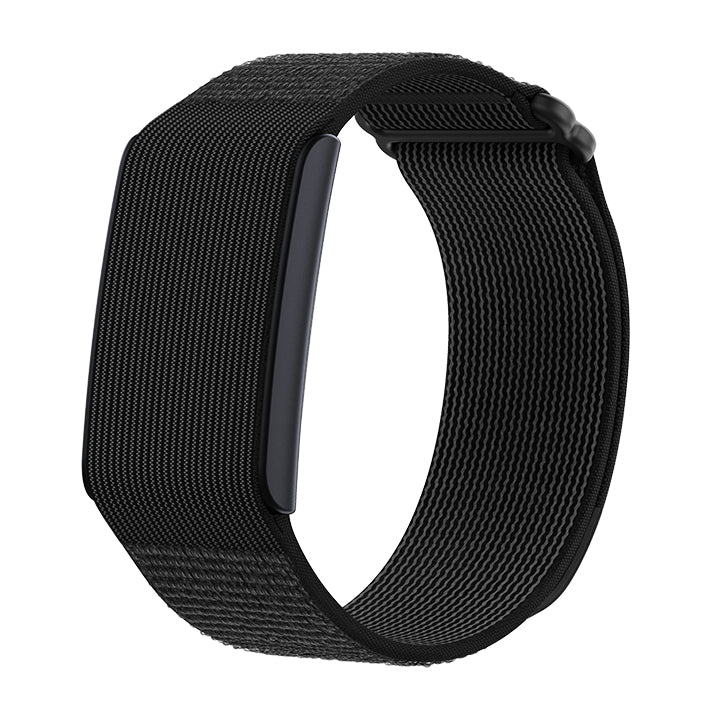
The stock band, and still the most comfortable of the three for overnight wear — which matters a lot on a device whose best trick is sleep tracking. Buying a second one in a different color costs the same as the silicone band and solves the real problem: one is drying while the other is on your wrist.
Care tip that extends their life considerably: rinse in cool water after heavy sweat, and let them dry flat rather than balled up in a gym bag. Fabric bands that die early usually die of salt, not wear.
3. Elevated Modern — The One That Doesn't Look Like Gym Gear
Around $49.99 (September 2026) · Polyurethane · Stainless steel clasp
The dress-up option, and the only one with a real metal clasp instead of a loop-through closure. Polyurethane in muted colorways — Moonstone grey-blue, black, Porcelain cream — that read as an accessory rather than a fitness device. Fifteen dollars more than the others.
Honest take: this is a want, not a need. But the entire pitch of a screen-free tracker is that it disappears into your life, and for anyone whose life includes clients or a dress code, this is the band that finishes the job. It's the least sweat-friendly of the three, so it's a complement to the Active band rather than a replacement.
4. The Spare Charger Nobody Thinks to Buy
Around $24.99 (September 2026) · USB-C
Not a band, but it belongs on this list because of how the Air actually gets used. A screenless tracker earns its keep by never coming off — and the moment charging becomes a decision ("do I do it now or tonight?"), you start losing nights of data. A second charger in a desk drawer or travel kit means you top up during a meeting or a shower and never think about it again.
The Three Official Bands Side by Side
| Band | Price (September 2026)* | Material | Sizes | Best for | Weak spot |
|---|---|---|---|---|---|
| Active | ~$34.99 | Silicone | S / L | Workouts, showers, everyday | Slightly clammy overnight |
| Performance Loop | ~$34.99 (in box) | Woven fabric | One-size loop | Sleep, all-day comfort | Soaks up sweat, slow to dry |
| Elevated Modern | ~$49.99 | Polyurethane + steel clasp | Adjustable | Work, evenings out | Priciest, least sweat-friendly |
*Reference prices at the time of writing; check live listings.
Should You Buy Third-Party Fitbit Air Bands?
Amazon fills up with $10-15 multipacks for any popular tracker within weeks, and the Air is no exception. They're not automatically bad — plenty of people run cheap silicone bands for years — but two things separate the usable ones from the junk.
The pod has to seat flush. The Air's sensor only works pressed against skin. A band that holds the pod even slightly proud of the wrist produces gappy heart-rate data at night, and you'll blame the tracker.
The closure is where cheap bands fail. Loop-through fabric knockoffs slacken; thin plastic pins snap. If a listing's photos don't show the tracker actually mounted in the band, that's usually because the seller never tested it in one.
Our rule of thumb: buy the official Active band as your workhorse, then experiment with cheap colors if you enjoy that. Don't make an unverified $12 band the one that holds your tracker through a night of sleep tracking. Worth noting: the Amazfit Helio Strap takes the opposite approach entirely — a standard 22mm fitting that makes cheap third-party bands the norm rather than a gamble. We compare the two ecosystems in our Fitbit Air vs Helio Strap guide.
How Do You Change a Fitbit Air Band?
- Pop the tracker pod out of its cradle — push from the underside, it releases with light thumb pressure.
- Check the pod's sensor window for lint or dried sweat while it's out. Wipe with a dry cloth; skip alcohol and abrasives.
- Seat the pod into the new band, pressing until it sits flat with no lip standing proud.
- Tug the band gently at both ends before you wear it — a band that shifts here will shift on a run.
- Wear it about a finger's width above the wrist bone, snug but not tight. Loose is the top cause of bad overnight heart-rate data.
Fitbit Air Band FAQ
Which band comes in the box?
The fabric Performance Loop, in the color you ordered — black, lilac, pink or fog green. Spares cost around $34.99, the same as the silicone Active band.
What's the best Fitbit Air band for working out?
The Active silicone band. It rinses clean, doesn't hold sweat, and stays snug when wet — everything a fabric loop struggles with after a hard session.
Do the bands come in different sizes?
The Active silicone bands come in small and large. If you're between sizes and sleep in your tracker, size up — wrists swell slightly overnight.
Are third-party bands safe?
Often fine, with two checks: the pod must sit flush against your skin, and the clasp is where cheap bands fail. Avoid listings with no photo of the tracker seated in the band.
Is a second charger worth $25?
If you wear the Air overnight for sleep data, yes. A spare at work or in a travel bag turns charging into something that happens while you're busy, instead of a decision that costs you a night of tracking.
Sources
- Google — Introducing the new Google Fitbit Air: band materials, colors and starting prices.
- Google Store — Fitbit Air Active Band: silicone material, sizes and price.
- Google Store — Fitbit Air Performance Loop Band: fabric material and colors.
- Google Store — Fitbit Air Elevated Modern Band: polyurethane material, clasp and price.