Best Sleep Trackers You Never Have to Look At (2026)
Quick answer: The best sleep tracker for most people is the Google Fitbit Air: $99.99, about a week of battery, no required subscription. Want a ring? RingConn Gen 3 costs $349 with no fees, and Oura Ring 5 costs $399 plus $69.99 a year. Want sleep-only tracking on your upper arm? Garmin Index Sleep Monitor is $169.99.
Most "best sleep tracker" lists quietly assume you are happy to wear a smartwatch to bed. A lot of us are not. A glowing screen, a bulky case and a nightly charging chore are the reasons people take the thing off by 2 a.m. and then wonder why the data looks patchy. Everything below is a screenless fitness tracker, ring or upper-arm band with no display, built to sit on you all night and be forgotten.
One boundary first. This page is about the tracker itself. If your tracker is working and your score is still low, that is a different problem, and our guide on what to buy when your sleep score is bad covers the room, the light and the blanket.
- Lowest cost: Google Fitbit Air, $99.99 with no required fee
- Ring, no fees: RingConn Gen 3, $349 one time
- Ring, best-known app: Oura Ring 5, $399 plus $69.99 a year
- Hate things on wrist or finger: Garmin Index Sleep Monitor, $169.99, upper arm
- Galaxy phone owners: Samsung Galaxy Ring, from $299.99
- Sleep plus recovery science, no fees: Polar Loop, $199.99
- Want coaching and accept a membership: WHOOP One, $199 a year
How do the 7 best sleep trackers compare side by side?
The table puts all seven on one line each, with a three-year total that includes the fees you must pay. Prices are manufacturer or press prices as of the source date shown, not Amazon prices, so check the live listing before you buy.
| Tracker | Where worn | Price (source) | Battery | Required fee | 3-year cost* |
|---|---|---|---|---|---|
| Google Fitbit Air | Wrist band | $99.99 (Google, May 2026) | Up to 7 days | None required; Premium optional | $99.99 |
| Oura Ring 5 | Finger | $399 (TechCrunch, May 28, 2026) | 6 to 9 days | $69.99 a year for full features | $608.97 |
| RingConn Gen 3 | Finger | $349 (The Gadgeteer, June 2026) | 10 to 12 days (spec) | None | $349.00 |
| Garmin Index Sleep Monitor | Upper arm | $169.99 (Garmin MSRP) | Up to 7 nights | None required; Connect+ optional | $169.99 |
| Samsung Galaxy Ring | Finger | From $299.99 (Samsung, Nov 7, 2026) | Up to 7 days | None found | $299.99 |
| Polar Loop | Wrist | $199.99 (Polar, Nov 7, 2026) | Up to 8 days | None | $199.99 |
| WHOOP One (WHOOP 5.0) | Wrist | $199 a year, band included (CNBC) | About 14 days | Membership required | $597.00 |
*Upfront price plus required fees for 36 months, no tax or shipping, no sales. Optional subscriptions are excluded here and shown in the cost table below.
1. Is the Google Fitbit Air the best cheap sleep tracker?
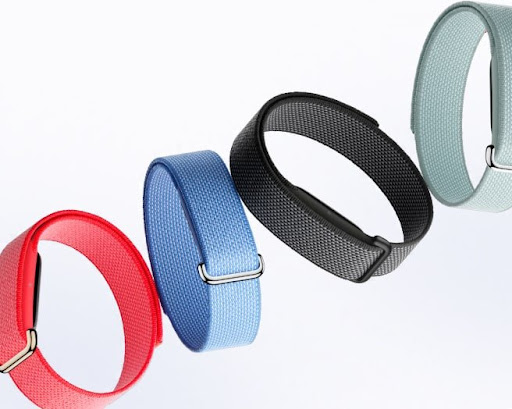
Google Fitbit Air · $99.99 (Google, May 2026 launch) · Wrist band · up to 7 days of battery · no required subscription
Yes, if you want the lowest total cost. The Google Fitbit Air launched at $99.99, and Google describes sleep stages and duration as part of its 24/7 tracking, with a note that sleep tracking is not intended for medical purposes. [1] DC Rainmaker confirmed the one-week battery claim in his review, going from 95% to 10% over a week that included daily workouts. [2]
On sleep specifically, his read was that fall-asleep and wake-up times were "pretty much spot on," though the app sometimes revises the wake-up time about an hour after you actually get up, and naps of 20 minutes or more are detected but can take hours to show up. [2] He is more skeptical of sleep stages in general, since the "gold standard" they are scored against is itself only in the mid-80s percent for accuracy. [2]
The catch is the optional Google Health Premium tier: $9.99 a month after a three-month trial, or $99 a year per DC Rainmaker. [1][2] Core sleep and heart tracking do not require it, but the AI coaching does. Our Fitbit Air review goes through the rest.
Good: Cheapest to own, no required fee, a week of battery. Not so good: AI coaching sits behind Premium; late wake-time corrections.
2. Is the Oura Ring 5 worth it just for sleep?

Oura Ring 5 · $399 Silver or Black (TechCrunch, May 28, 2026) · Finger · 6 to 9 days of battery · $69.99 a year membership
It is the most polished sleep experience in this list, and you pay for it. The Oura Ring 5 starts at $399 for Silver and Black and $499 for the other four finishes, and TechCrunch put its battery at 6 to 9 days. [3] New in this generation are a 30-day view of nighttime breathing disturbances and blood pressure signals during sleep. [3] Those are trend features, not diagnoses.
The membership is $5.99 a month or $69.99 a year in the US, with one free month. [4] Without it you still get the three daily scores (Readiness, Activity and Sleep) and your battery level, but not the detail underneath. [4] Over three years that adds up fast, which is why the Oura row in the cost table below is the most expensive one. Read the Oura Ring 5 review for sizing and the Ring 4 question.
Good: Best-known app and sleep analytics, ring comfort in bed. Not so good: $69.99 a year on top; most expensive over three years.
3. What is the best sleep tracker ring with no subscription?

RingConn Gen 3 · $349 (The Gadgeteer, June 2026) · Finger · 10 to 12 days with vibration alerts on · no subscription
The RingConn Gen 3. The Gadgeteer lists it at $349 for standard finishes with no subscription, and the spec sheet claims 10 to 12 days of battery with vibration alerts on; the reviewer's own week projected to roughly 10 days. [5] Everything, including its sleep apnea style breathing report, comes with the purchase.
That breathing report is screening, not diagnosis. In The Gadgeteer's seven-night test it flagged one night as "Suspected Mild" (AHI 8.1, 48 events), and the reviewer booked a sleep study afterward. [5] The same review found sleep scores sometimes generous, such as a 63 ("Good") after a 4 hour 56 minute night, and no FDA-cleared diagnostics. [5] If you snore loudly or wake exhausted, take that kind of flag to a clinician rather than to a forum. Details are in our RingConn Gen 3 review.
Good: No fee ever, long battery for a ring, breathing screening. Not so good: Scores can read generous; blood pressure trends need a cuff baseline.
4. Do you need a Garmin watch to use the Garmin Index Sleep Monitor?
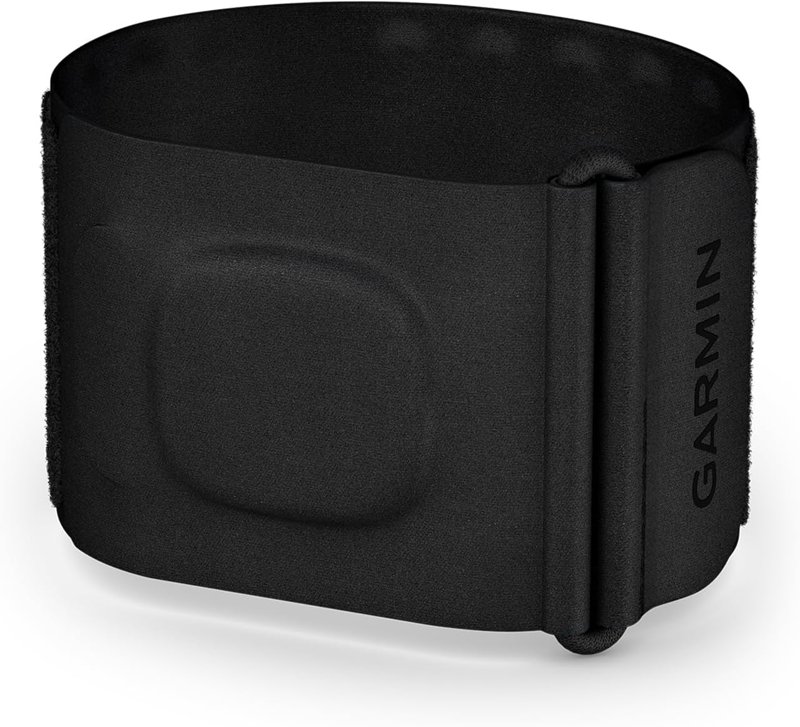
Garmin Index Sleep Monitor · $169.99 (Garmin MSRP) · Upper arm · up to 7 nights of battery · no required subscription
No. Garmin says the Index Sleep Monitor tracks sleep on its own and syncs to the Garmin Connect app; pairing it with a compatible watch fills in gaps. [6] DC Rainmaker agrees: "You don't need a Garmin watch at all to use it." [7] It lists at $169.99 and is worn on the upper arm, which is the point for anyone who cannot sleep with something on a wrist or finger.
Garmin lists a 0 to 100 sleep score, light, deep and REM stages, HRV status, pulse ox, breathing variations, skin temperature and a smart wake alarm that vibrates in lighter sleep. [6] Garmin quotes up to 7 nights of battery; DC Rainmaker saw roughly 8 to 9 days of sleep data per charge. [6][7] Limits: it does not count steps, and in his 2025 review a tap-snooze bug could end the sleep session early. [7] Garmin Connect+ is optional at $6.99 a month or $69.99 a year, and Garmin said existing Garmin Connect features stay free. [8] More in the Index Sleep Monitor review.
Good: Sleep-only comfort, works without a watch, no required fee. Not so good: No step counting; a sleep tool only.
5. Is the Samsung Galaxy Ring a good sleep tracker if you own a Galaxy phone?
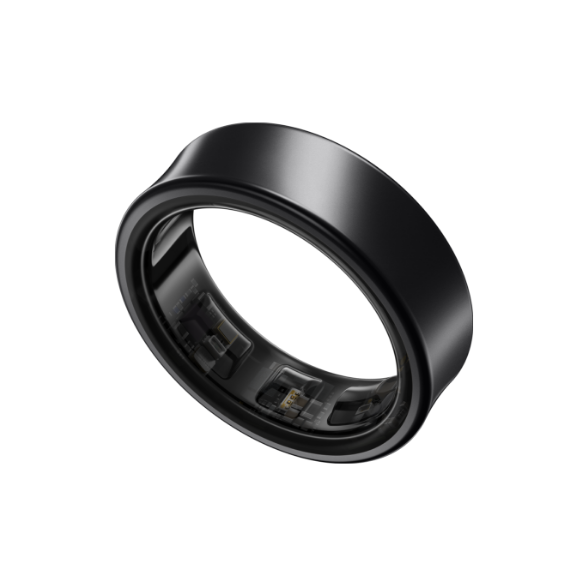
Samsung Galaxy Ring · From $299.99 before trade-in (Samsung US page, Nov 7, 2026) · Finger · up to 7 days of battery
It is a strong fit for Galaxy phone owners and a weaker one for everyone else. Samsung's US page showed the ring from $299.99 before trade-in on November 7, 2026, with a seven-day charge and sleep score, sleep stages, average heart rate, skin temperature and sleep coaching. [9] We found no subscription mentioned on that page.
Two fine-print items matter. Snore detection needs your phone within 2 feet and Samsung Health 6.22 or later, and Samsung says the ring requires a compatible smartphone, with Galaxy AI features tied to a compatible Samsung Galaxy phone. [9] Samsung also advertises up to 14 days when you count a full cradle charge, and a battery footnote says "for sizes 12 and 13; up to 6 days for smaller sizes," so small sizes may run shorter than the 7-day headline. [9] Our Galaxy Ring review covers the iPhone problem in more detail.
Good: No fee found, cheaper now, comfortable titanium ring. Not so good: Best on Galaxy phones; hardware dates from 2024.
6. Is the Polar Loop a good sleep tracker with no monthly fee?
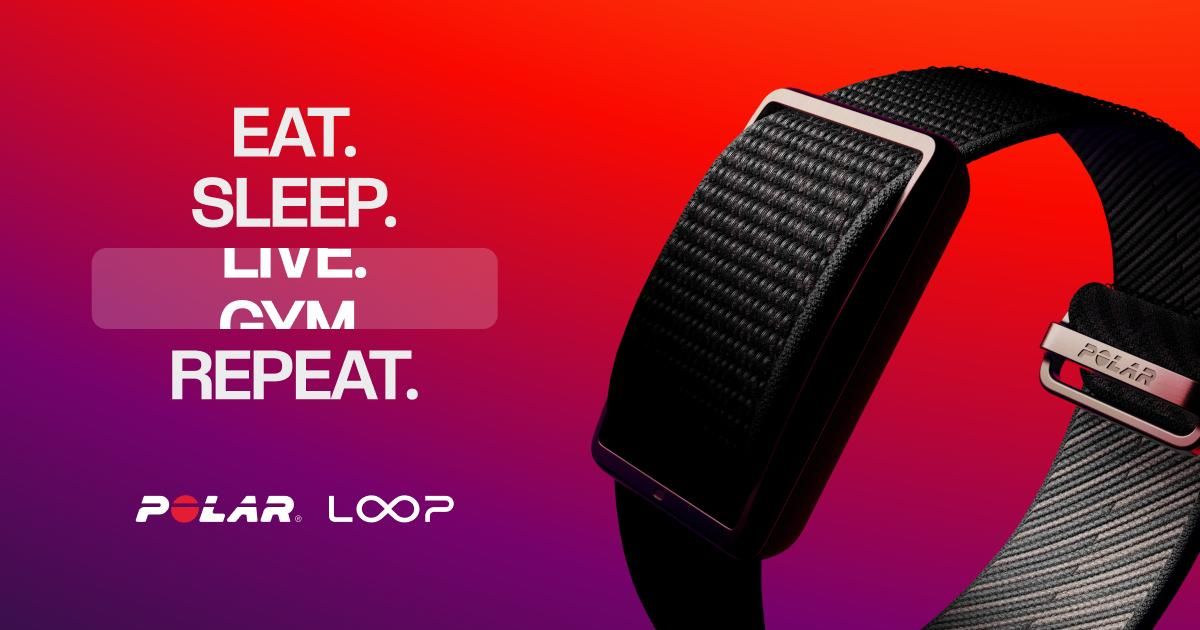
Polar Loop · $199.99 (Polar US page, Nov 7, 2026) · Wrist · up to 8 days of battery · no monthly fees
Yes, and it is the pick for people who like Polar's recovery science. Polar's US page lists $199.99, up to 8 days per charge, and "no monthly fees" with every feature available from day one. [10] Sleep Tracking splits the night into light, deep, REM and interrupted sleep with a morning score, while Nightly Recharge combines that score with heart rate, HRV and breathing data to estimate overnight recovery. [10]
It costs about $100 more than the Fitbit Air, and the Polar Flow app has drawn complaints from early owners, according to the5krunner. [11] Pick it if you also train and want recovery guidance with no paywall. The Polar Loop review has the full trade-offs.
Good: No fees, Nightly Recharge and recovery view, 8 days of battery. Not so good: $100 above the Fitbit Air; app has been bumpy for some.
7. Is WHOOP a good sleep tracker if you do not mind a membership?
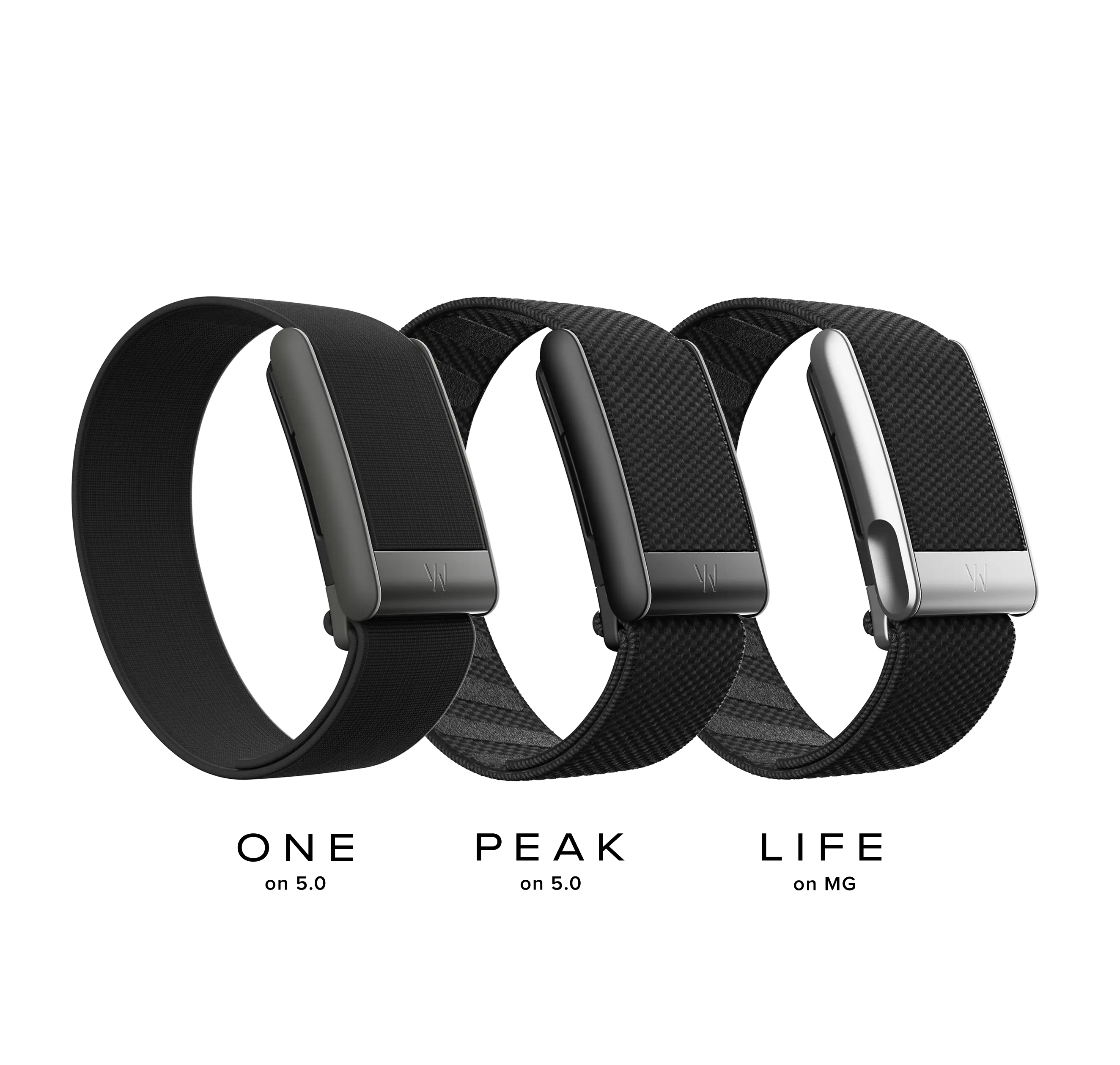
WHOOP One (WHOOP 5.0) · $199 a year, band included (CNBC, May 2025) · Wrist · about 14 days of battery · membership required
It can be, if you want coaching built around sleep and recovery and accept that the band comes with the membership. CNBC reported WHOOP One at $199 a year with the WHOOP 5.0 band included, Peak at $239 and Life at $359, all with about 14 days of battery. [12] WHOOP's own support pricing page did not render for us on November 7, 2026, so confirm the live price at checkout.
The honest downside is the lock-in: three years on the One plan is $597, which is more than every other device here except the Oura Ring 5 on a three-year view. For a plain sleep-and-recovery number, a one-time-price band does the same job for less. Our WHOOP cost guide and WHOOP vs Oura comparison cover cancellation and the middle plans.
Good: About 14 days of battery, strong recovery coaching. Not so good: Membership is the product; $597 over three years.
How does sleep tracking actually work, and how accurate is it?
Sleep trackers estimate sleep from movement, heart rate and heart rate variability, and they are better at detecting sleep versus wake than at naming sleep stages. None of these seven is a medical device, and the American Academy of Sleep Medicine said in 2018 that consumer sleep technology is not suitable for diagnosing or treating sleep disorders. [15]
Under the hood, a light sensor reads pulse from your skin, an accelerometer reads motion, and some devices add skin temperature. An algorithm then infers when you fell asleep, when you woke and which stage you were in. A lab measures sleep stages from brain activity with polysomnography (PSG), so every stage a wearable shows you is an educated guess from indirect signals. That framing is ours, but the studies below back it up.
- Independent lab test. Chinoy and colleagues compared seven consumer devices against PSG in 34 healthy adults. Sleep detection was strong (sensitivity 0.93 or higher), wake detection was weak (specificity 0.18 to 0.54), most devices performed as well as or better than actigraphy for sleep/wake, all six that report sleep stages differed from PSG on light sleep (five overestimated it, one underestimated), and performance dropped on nights with poor or disturbed sleep. [13] The devices tested were older models, not the 2026 ones here.
- Manufacturer-linked ring study. Altini and Kinnunen reported 79% four-stage and 96% two-stage (sleep versus wake) accuracy for an Oura Ring algorithm across 440 nights and 106 people. Their author affiliations include Oura Health, so weigh it accordingly. [14]
- Reviewer view. DC Rainmaker found the Fitbit Air's sleep and wake times reliable and questioned how much weight to put on stage scores, since the reference standard itself is imperfect. [2]
Our inference: we did not locate an independent PSG study covering these exact 2026 devices, so treat the stage breakdown as an estimate and the long-term trends (bedtime consistency, resting heart rate, night-to-night changes) as the useful part. Pick the tracker you will actually wear every night, because that matters more than any accuracy gap between them. If you snore heavily, stop breathing in your sleep or feel exhausted all day, talk to a clinician; a tracker cannot rule anything in or out.
What does each sleep tracker cost over three years?
Over 36 months, a no-fee sleep tracker costs between $99.99 and $349, while the Oura Ring 5 reaches $608.97 and WHOOP One reaches $597. The table adds the optional subscriptions that some people end up paying anyway.
| Option | Upfront | Fee per year | Year 1 | Year 2 | Year 3 |
|---|---|---|---|---|---|
| Google Fitbit Air, no Premium | $99.99 | $0.00 | $99.99 | $99.99 | $99.99 |
| Google Fitbit Air, with Premium ($99 a year) | $99.99 | $99.00 | $198.99 | $297.99 | $396.99 |
| Oura Ring 5, Silver or Black | $399.00 | $69.99 | $468.99 | $538.98 | $608.97 |
| RingConn Gen 3 | $349.00 | $0.00 | $349.00 | $349.00 | $349.00 |
| Garmin Index Sleep Monitor, no Connect+ | $169.99 | $0.00 | $169.99 | $169.99 | $169.99 |
| Garmin Index Sleep Monitor, with Connect+ ($69.99 a year) | $169.99 | $69.99 | $239.98 | $309.97 | $379.96 |
| Samsung Galaxy Ring (from price, no trade-in) | $299.99 | $0.00 | $299.99 | $299.99 | $299.99 |
| Polar Loop | $199.99 | $0.00 | $199.99 | $199.99 | $199.99 |
| WHOOP One (band included with membership) | $0.00 | $199.00 | $199.00 | $398.00 | $597.00 |
Year columns are cumulative totals. Fees: Oura $69.99 a year (Oura Support, Nov 7, 2026, first free month ignored); Fitbit Premium $99 a year (DC Rainmaker); Garmin Connect+ $69.99 a year (Garmin, March 2025); WHOOP One $199 a year (CNBC, May 2025). Upfront prices as listed in the table above. Excludes tax, shipping, replacement bands and any sales.
Which sleep tracker should you pick?
- You want the cheapest decent option: Google Fitbit Air. Lowest cost and a week of battery.
- You want a ring and hate subscriptions: RingConn Gen 3, or the Samsung Galaxy Ring if you carry a Galaxy phone.
- You want the best-known ring app and will pay for it: Oura Ring 5. Budget about $609 over three years.
- You cannot stand anything on your wrist or finger at night: Garmin Index Sleep Monitor on the upper arm.
- You also train and want recovery guidance with no fees: Polar Loop.
- You want coaching and accept a membership: WHOOP One.
Still choosing between a ring and a band? Our smart ring vs fitness band guide walks through the trade-offs, and best smart rings with no subscription narrows the ring side. If you are buying for someone else, sleep tech gifts for sleep-score people helps.
What about sleep trackers you do not wear?
Bedside and under-mattress trackers exist, and Chinoy and colleagues tested three of them (EarlySense Live, ResMed S+ and SleepScore Max) against PSG alongside wearables. [13] They suit people who will not wear anything. We have not researched current non-wearable models for this page, so we are not recommending one here; judge them on the same questions as above: fees, accuracy evidence and whether you will really use it.
Sleep Tracker FAQ
What is the best sleep tracker that does not have a screen?
For most people, the Google Fitbit Air: $99.99, up to a week of battery and no required subscription. If you prefer a ring, the RingConn Gen 3 ($349, no fees) and Oura Ring 5 ($399 plus $69.99 a year) are the main choices. The Garmin Index Sleep Monitor ($169.99) is the pick for upper-arm, sleep-only tracking.
Are sleep trackers accurate?
They are decent at telling when you slept and woke, and less reliable at sleep stages. In a 34-person lab study against polysomnography, consumer devices had high sleep detection (sensitivity 0.93 or higher) but poor wake detection (specificity 0.18 to 0.54) and tended to overestimate light sleep. Use them for trends, not diagnosis.
Is a ring or a band better for tracking sleep?
Neither is proven better in the independent studies we found. A ring or an upper-arm band is more comfortable for people who dislike a wrist device in bed, while a wrist band such as the Fitbit Air or Polar Loop costs less and is easier to take off. Comfort and fees should decide it.
Which sleep trackers have no subscription?
As of November 7, 2026, the RingConn Gen 3, Polar Loop, Garmin Index Sleep Monitor and Samsung Galaxy Ring have no required fee, and the Google Fitbit Air does not require one either (Google Health Premium is optional). Oura Ring 5 needs $69.99 a year for full features, and WHOOP is membership-based.
Can a sleep tracker diagnose sleep apnea?
No. The American Academy of Sleep Medicine said consumer sleep technology is not suitable for diagnosing or treating sleep disorders. Some devices, such as the RingConn Gen 3, offer breathing screening that can prompt a conversation with a clinician, but only a medical sleep study can diagnose apnea.
Is the Oura Ring 5 worth it for sleep tracking?
It is worth it if you want a ring and a polished app and you will pay $69.99 a year, which puts three years at about $609. If you only want sleep timing and trends, the RingConn Gen 3 or Fitbit Air costs much less over the same period.
Do I need to wear a sleep tracker every night?
Wearing it most nights matters more than any single reading. Scores are compared with your own personal baseline, so a week or two of consistent wear gives you something meaningful, while a single night is noisy. Charge it during a daily routine so it does not die mid-week.
Sources
- [1] Google: Introducing the new Google Fitbit Air: launch price, up-to-a-week battery, sleep stages tracking, Google Health Premium $9.99 a month (read Nov 7, 2026).
- [2] DC Rainmaker: Fitbit Air in-depth review: battery test, sleep timing accuracy, Premium $99 a year (read Nov 7, 2026).
- [3] TechCrunch: Oura unveils its Ring 5 (May 28, 2026): $399 and $499 pricing, 6 to 9 day battery, nighttime breathing and blood pressure signals.
- [4] Oura Support: Oura Membership: $5.99 a month or $69.99 a year, what works without membership (read Nov 7, 2026).
- [5] The Gadgeteer: RingConn Gen 3 smart ring review (June 12, 2026): price, battery, no subscription, seven-night sleep results and drawbacks.
- [6] Garmin Newsroom: Index Sleep Monitor launch (June 18, 2025): $169.99, up to 7 nights, upper-arm wear, metrics, works without a watch (read Nov 7, 2026).
- [7] DC Rainmaker: Garmin Index Sleep Monitor in-depth review (June 2025): no watch needed, 8 to 9 days per charge, snooze bug, no step tracking.
- [8] Garmin Newsroom: Garmin Connect+ (March 27, 2025): $6.99 a month or $69.99 a year; existing features remain free.
- [9] Samsung: Galaxy Ring (US): from $299.99 before trade-in, seven-day charge, sleep features, snore detection requirements (read Nov 7, 2026).
- [10] Polar: Polar Loop (US): $199.99, up to 8 days, no monthly fees, sleep features (read Nov 7, 2026).
- [11] the5krunner: Polar Loop review: independent view of Polar Flow app issues.
- [12] CNBC: Whoop launches two new wearables (May 8, 2025): WHOOP One $199, Peak $239, Life $359 a year, about 14-day battery.
- [13] Chinoy et al.: Performance of seven consumer sleep-tracking devices compared with polysomnography (Sleep, 2021): 34 adults; sleep/wake sensitivity and specificity; light sleep overestimated.
- [14] Altini & Kinnunen: The promise of sleep, a multi-sensor approach for accurate sleep stage detection using the Oura Ring (Sensors, 2021): 440 nights, 106 people; 79% four-stage and 96% two-stage accuracy; authors include Oura Health employees.
- [15] Khosla et al.: Consumer Sleep Technology, an AASM Position Statement (J Clin Sleep Med, 2018): consumer devices not suitable for diagnosing or treating sleep disorders.