Samsung Galaxy Ring Review: No Monthly Fees, One Big Catch
Quick answer: The Samsung Galaxy Ring is a comfortable, titanium smart ring that never charges you a second time to use it — Energy Score, sleep coaching and cycle tracking are all free forever in Samsung Health. The catch is real and it's not small: there's no iPhone support at all, and even non-Samsung Android phones lose features like the double-pinch gesture and full Find My Ring. It runs up to 7 days per charge, comes in eleven sizes (5 to 15), and lists for $399.99 (regularly discounted toward $299.99). We score it 8.0/10 — an easy yes if you carry a Galaxy phone, and not the ring to buy if you don't.
Two years before any other phone maker took smart rings seriously, Samsung shipped one that actually looks like jewelry. No screen, no charging strap, nothing that reads as "gadget" across a dinner table. The Galaxy Ring was Samsung's opening argument that a company that sells phones, watches and refrigerators could also make a ring worth wearing every day — and for a specific kind of buyer, that argument still holds up in its third year on the market.
The catch hasn't changed since launch, either. Samsung built this ring for Samsung phones, full stop. Own an iPhone and there's no way in. Own a Pixel or a OnePlus and you get a noticeably smaller slice of the experience. Own a Galaxy phone and you get one of the more polished, genuinely subscription-free pieces of wearable hardware on shelves right now. We went through Samsung's own spec sheets and support documentation, plus two-plus years of independent reviews and owner reports, to figure out exactly which of those three groups you're in — and whether that's reason enough to buy.
8.0 / 10
- Best for: Samsung Galaxy phone owners who want sleep and health tracking with zero monthly fees
- Standout: every feature — Energy Score, sleep coaching, cycle tracking — free forever, with no Samsung Health+ upsell in sight
- Biggest drawback: no iPhone support, and non-Galaxy Android phones lose real features too
- Price: $399.99 list at the time of writing (September 2026), commonly discounted toward $299.99 — no subscription, ever
- Bottom line: the best ring for a Samsung household; not a serious option for anyone else
What Is the Samsung Galaxy Ring?
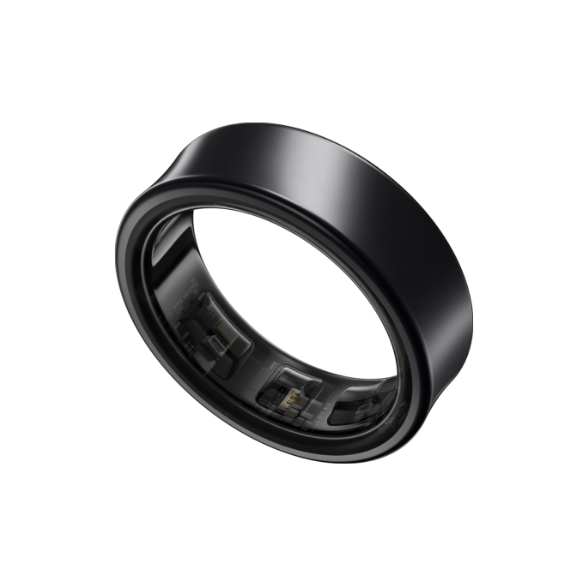
Samsung launched the Galaxy Ring on July 10, 2024 — the first smart ring from a company most people already carry a phone from. It's titanium, weighs roughly 2.3 to 3.2 grams depending on size, and ships in Titanium Black, Silver or Gold. Buying one isn't a normal checkout, either: Samsung mails you a free sizing kit first, you wear the correct plastic sizer for a full day, and only then does the actual ring ship. Skip that step and you'll likely be printing a return label within a week.
More than two years later, there's still no Galaxy Ring 2. Samsung added two new sizes — 14 and 15 — in January 2025, bringing the total range to eleven sizes (5 through 15, wider than Oura's current Ring 5 at 6 through 13), and the software keeps improving in small updates. But the sensors, the shell, and the 7-day battery claim are exactly what they were at launch. Whether that matters depends entirely on what you're comparing it to, which we'll get to.
What Does the Galaxy Ring Actually Track?
Sleep and the Energy Score
Every night the ring logs sleep stages, resting heart rate and HRV, then rolls it into Samsung's Energy Score the next morning — a single number meant to answer "should I push today or take it easy," the same job Oura's Readiness Score or WHOOP's Recovery does. Galaxy AI layers a chronotype read on top, sorting you into a "sleep animal" personality (bear, wolf, lion, dolphin) and nudging your bedtime and wind-down habits accordingly. It's a gimmicky name wrapped around a genuinely useful idea, and reviewers who've worn the ring for months — Wareable among them — consistently rate the sleep tracking as the strongest thing it does.
Heart Rate, Blood Oxygen — and the AFib Gap
The optical sensor runs continuously for resting and active heart rate, plus high/low heart rate alerts. Blood oxygen is measured too, but only overnight — you get the single lowest SpO2 reading from your sleep, with no on-demand daytime check the way a Galaxy Watch offers. What the Galaxy Ring doesn't do is detect AFib or irregular heart rhythms. Samsung has that technology — it's FDA-cleared and it's real — but it lives on the Galaxy Watch, not the Ring. If cardiac screening is the actual reason you're shopping, a ring isn't the product category to be in yet.
Cycle Tracking, Built on a Real Methodology
Cycle Tracking combines calendar-based prediction with retrospective skin-temperature analysis, and Samsung's own support documentation is unusually specific about the limits: you need at least 4 consecutive hours of sleep between 7 p.m. and 9 a.m. for a valid temperature reading, room temperature and sleep position can throw it off, and you still have to manually enter your period start date — the ring doesn't guess that part on its own. It's a genuinely useful passive tool, not a substitute for contraception or a fertility app built specifically for that purpose, and Samsung's own documentation says as much.
Snore Detection (That the Ring Isn't Actually Doing)
Snore detection is one of the Galaxy Ring's most-marketed features, and it's worth knowing exactly how it works before you count on it: the ring has no microphone. Detection happens through your paired Galaxy phone's mic, which needs to be on the nightstand, charging, and in range all night. The ring's actual contribution is the sleep-stage and movement data around it. It's a useful feature — just not one the ring itself is doing.
Battery: Up to 7 Days, on Paper
Samsung quotes up to 7 days per charge, with the included charging case (it comes in the box, unlike Oura's $99 accessory) good for roughly another week of top-ups before you need a wall outlet. That's the spec-sheet number. It's also worth knowing that battery complaints show up regularly enough in owner reports — rings that managed 5-plus days at launch dropping to a few hours of runtime after months of daily wear — that we wouldn't call 7 days a guarantee for the life of the ring. Some capacity loss is normal for any lithium-ion wearable; how much is normal here is genuinely unclear.
Why Is the Galaxy Ring (Mostly) Limited to Samsung Phones?
This is the part to read before you buy, not after, because it decides the entire purchase for most people. The phone in your pocket puts you in one of three tiers:
- iPhone: not supported, period. There's no Galaxy Ring app for iOS, no partial mode, no workaround worth your time. If you're on iPhone, this decision is already made — skip to our Galaxy Ring vs Oura Ring 5 comparison instead.
- Android, but not a Galaxy phone (Pixel, OnePlus, Motorola and similar): the ring pairs fine through the Samsung Health app on Android 11 or newer, and the core numbers — Energy Score, sleep, heart rate, cycle tracking — all work normally. What you lose is Galaxy-specific: the double-pinch gesture that controls your camera shutter or dismisses alarms, and full Find My Ring functionality, which reviewers have specifically flagged as needing hooks that only exist in Samsung's own One UI.
- Samsung Galaxy phone: this is the ring's actual home turf. Every feature works, the Galaxy AI integration is tightest, and this is the only scenario where the Galaxy Ring is unambiguously one of the best rings you can buy right now.
Translate that into plain terms: buying a $399 ring and discovering afterward that a chunk of its personality lives behind a phone you don't own is an expensive way to learn a lesson. Check your phone before you check the price.
Does the Galaxy Ring Need a Subscription?
No, and Samsung doesn't bury this — the Amazon listing itself is titled with "No App Subscription" right in the name. Energy Score, sleep coaching, cycle tracking, and the Galaxy AI wellness tips are all included for the life of the ring, with no premium tier waiting to upsell you. That's a real advantage next to Oura, whose $399+ Ring 5 needs roughly $70 a year on top for full functionality.
One honest caveat: Samsung has been reported discussing a broader Samsung Health subscription tier for its wearables lineup in general, similar to what Garmin and Fitbit already run. Nothing has been announced for the Galaxy Ring specifically, and every feature described in this review is free today. If that changes, we'll update this page. For the full lineup of rings that skip monthly fees entirely, see our best smart rings with no subscription guide.
What Are the Galaxy Ring's Biggest Problems?
1. No AFib or irregular-heart-rhythm alerts. Samsung has real, FDA-cleared irregular-heart-rhythm notification technology — it's just Watch-only, not Ring-only. Ultrahuman added FDA-cleared AFib detection to its own ring back in 2024, which is worth knowing even though we don't recommend buying an Ultrahuman ring right now: it's subject to a US import ban stemming from a patent dispute with Oura. Net result — nobody we'd actually recommend sells reliable AFib detection in ring form yet, and the Galaxy Ring is no exception.
2. Blood oxygen is overnight-only, and some owners question the accuracy. You get one number: the lowest SpO2 reading from your sleep, logged automatically, with no on-demand reading during the day the way a Galaxy Watch offers. Some long-term owners have also reported occasional readings that look implausibly low with no symptoms to match — the kind of thing you'd shrug off once but would want addressed if it kept happening on a device you're trusting with health data.
3. The battery doesn't always age gracefully. Samsung's 7-day claim reflects a healthy ring early in its life. Owner reports compiled by outlets like Android Authority describe batteries that held 5-plus days at first dropping to just a few hours of runtime within months — a lithium-ion wearable aging faster than it should. It's not universal, and Samsung does offer warranty support for genuine defects, but it's a common enough pattern that we'd keep an eye on your battery percentage in the first few months rather than assume day-one performance is forever.
4. It's aging hardware, and the reviews reflect it. Two-plus years without a successor means you're buying July 2024 sensors in 2026. Coverage of the ring has genuinely split along these lines: outlets that focus on comfort and sleep tracking (BGR, Tom's Guide, Garage Gym Reviews) call it a smart buy for the price; outlets that focus on what's missing point at the AFib gap and the Galaxy-phone lock-in above — Android Central's review is titled, bluntly, "the most useless product in the Galaxy." Both are describing the same ring accurately. They're just weighing the same trade-offs differently than each other, which is exactly what this review is trying to help you do for yourself.
How Does the Galaxy Ring Compare to Oura Ring 5 and RingConn Gen 3?
| Ring | Price (Sept 2026)* | Subscription | Sizes | Battery | Phones |
|---|---|---|---|---|---|
| Samsung Galaxy Ring | $399.99 list, often ~$299.99 | None, ever | 5–15 (11 sizes) | Up to 7 days | Android 11+ (Galaxy for full features) |
| Oura Ring 5 | $399–$499 | ~$5.99/mo or ~$69.99/yr | 6–13 | ~6–9 days | iPhone and Android |
| RingConn Gen 3 | ~$349 | None | 6–15 | 10–14 days | iPhone and Android |
*Reference prices at the time of writing; all three change often — check the live listings.
If an iPhone is anywhere in the picture — yours, or a partner's you're buying for — the Galaxy Ring is off the table, and the real choice is between Oura's polish-and-subscription model and RingConn's own no-fee pitch; our full Galaxy Ring vs Oura Ring 5 comparison walks through the three-year cost math in detail. If you're Android-first but not locked into Samsung, the RingConn Gen 3 matches the Galaxy Ring's no-subscription pitch with nearly double the battery and none of the phone restrictions.
Galaxy Ring Pros and Cons
- ✓ Every feature free forever — no subscription, no paywall, ever
- ✓ Comfortable titanium build in eleven sizes (5–15) — wider than Oura's current Ring 5 lineup
- ✓ Genuinely strong sleep tracking and an Energy Score that's easy to actually use
- ✓ 10ATM + IP68 rating survives showers, pools and the dishes
- ✓ Charging case included in the box, not a $99 add-on
- ✕ No iPhone support at all
- ✕ Non-Galaxy Android phones lose the double-pinch gesture and full Find My Ring
- ✕ No AFib or irregular-heart-rhythm detection
- ✕ Blood oxygen is overnight-only, not on-demand
- ✕ Unchanged hardware since July 2024, with no successor yet
- ✕ Like every smart ring, most people pull it off for heavy lifting or contact sports
Who Should Buy the Galaxy Ring — and Who Shouldn't?
Buy the Galaxy Ring if you…
- Carry a Samsung Galaxy phone every day and want sleep and health tracking with zero monthly fees
- Need a ring size Oura doesn't stock — the Galaxy Ring covers 5 through 15
- Are done paying rent on data from hardware you already bought
- Want passive cycle tracking that lives in a phone you're already carrying, no separate app required
Look elsewhere if you…
- Use an iPhone → Oura Ring 5, or a cross-platform no-subscription pick
- Use a non-Samsung Android phone and want the full gesture and Find My Ring experience → RingConn Gen 3
- Want AFib screening specifically → no ring we recommend does this reliably yet; talk to your doctor about a dedicated option
- Aren't sure a ring beats a band for your routine at all → start with our ring vs. band guide
Is the Samsung Galaxy Ring Worth It? The Verdict
The Galaxy Ring earns its 8.0/10 by doing one thing fewer companies bother with every year: shipping real hardware and then not charging you a second time to use it. Sleep tracking is genuinely strong, the Energy Score is easy to live with day to day, and eleven sizes means almost nobody gets turned away for fit. None of that changes the math for most ring shoppers, though, because most of the U.S. still carries an iPhone — and for that audience, this review is really a well-researched "not for you."
If a Galaxy phone is already in your pocket, buy it with confidence; the no-subscription pitch is real, not a marketing footnote. If it isn't, the Oura Ring 5 or the RingConn Gen 3 will treat you far better than a ring that's quietly deciding how much of itself to show you based on which logo is on your phone. See how all three stack up against everything else we've tested in our complete smart ring rankings.
Samsung Galaxy Ring FAQ
Is the Samsung Galaxy Ring worth it in 2026?
Yes, if you carry a Samsung Galaxy phone. You get subscription-free sleep tracking, an Energy Score, and cycle tracking for a one-time $399.99 (often discounted toward $299.99), in a titanium ring that comes in eleven sizes. We score it 8.0/10. If you're not on a Galaxy phone, the value case falls apart fast.
Does the Samsung Galaxy Ring work with an iPhone?
No. The Galaxy Ring requires the Samsung Health app on an Android phone running Android 11 or newer, and Samsung has never offered an iPhone version of the app. If you're on iPhone, look at the Oura Ring 5 or a RingConn ring instead.
Does the Galaxy Ring require a subscription?
No. Energy Score, sleep coaching, cycle tracking and Galaxy AI insights are all included free, permanently, in Samsung Health — the Amazon listing even says "No App Subscription" in the title. Samsung has discussed a broader Samsung Health subscription tier for other products, but nothing has been announced for the Ring.
How long does the Galaxy Ring's battery actually last?
Samsung quotes up to 7 days per charge, with the included charging case adding roughly another week of top-ups before you need a wall outlet. That's the spec-sheet number; some long-term owners report the battery fading well before 7 days after several months of daily wear, which is worth knowing on a $399 purchase.
Does the Galaxy Ring detect AFib or measure blood oxygen?
It measures blood oxygen, but only overnight — you get the lowest reading from your sleep, not an on-demand check during the day. It does not detect AFib or irregular heart rhythms; that feature exists on Samsung's Galaxy Watches, not the Ring, and some ring competitors have started to close that gap.
Is a Galaxy Ring 2 coming, and should I wait for it?
Nothing official yet. The current ring launched in July 2024 and Samsung hasn't announced a successor; reporting points to sometime in 2027 at the earliest. If you want a ring now and you're on a Galaxy phone, two-year-old hardware at a fair, often-discounted price is still a reasonable buy.
Sources
- Samsung — Galaxy Ring product page (US): materials, 10ATM/IP68 rating, up-to-7-day battery, no-subscription claim, sizing kit.
- Tom's Guide — Galaxy Ring now available in bigger sizes: confirms sizes 14 and 15.
- Samsung Support — Use Cycle Tracking in the Samsung Health app: methodology, manual period entry, temperature-reading limits.
- GSMArena — Galaxy Ring skin temperature tracking and snore detection: no on-ring microphone, phone-based snore capture.
- Wareable — Samsung Galaxy Ring review: independent hands-on comfort and sleep-tracking assessment.
- Android Central — Samsung Galaxy Ring review: no AFib detection, Find My Ring limited to Galaxy phones.