RingConn Gen 3 Review: The $349 Ring With No Monthly Bill
Quick answer: The RingConn Gen 3 is the strongest no-subscription smart ring of 2026: about $349 one-time, titanium, roughly 10 real-world days of battery (up to 14 with vibrations off), vibration alerts, sleep-apnea-style breathing analysis and overnight vascular trends — all free forever in the RingConn app, with zero premium tier. We score it 8.8/10. Its two honest flaws: exercise heart rate runs hot at high intensity, so it's not a workout tracker, and there's no wake-up alarm yet, though RingConn has promised one in a later update. If you mostly train hard and need accurate heart rate, the Amazfit Helio Strap does that better for less; if you want the most polished app and don't mind paying, Oura Ring 5 is the alternative, though it costs roughly $200 more in fees over three years.
There's a moment every Oura owner knows: month fourteen, the $5.99 charge hits the card again, and you do the math on what this ring has actually cost you. RingConn built its whole company on that moment. Three generations in, the pitch hasn't changed — buy the ring, own the ring, keep every feature forever — but the Gen 3 is the first one where the hardware feels like it fully backs the pitch up.
It's a titanium ring about 2.3mm thick, somewhere between 2.5 and 3.5 grams depending on size, and after a few hours you genuinely forget it's there. What's new is that it talks back: a tiny vibration motor taps your finger when your stress spikes, when you've been glued to a chair too long, or when the battery's dying. And it quietly watches your blood-pressure trends overnight. No screen, no app tax, no meter running. Released at the end of May, it's had two months of owners living with it — enough to know what holds up and what doesn't.
8.8 / 10
- Best for: anyone who wants WHOOP-style recovery data in a ring, without WHOOP-style annual dues
- Standout: vibration alerts + sleep apnea screening + vascular trends, all on the free app, with ~10 real-world days of battery
- Biggest drawback: exercise heart rate runs hot at high intensity, and there's no wake-up alarm yet (promised in a later update)
- Price: around $349 at the time of writing (September 2026) — no subscription, ever
- Bottom line: the strongest no-subscription smart ring you can buy right now, and our new top ring pick
What Is the RingConn Gen 3?
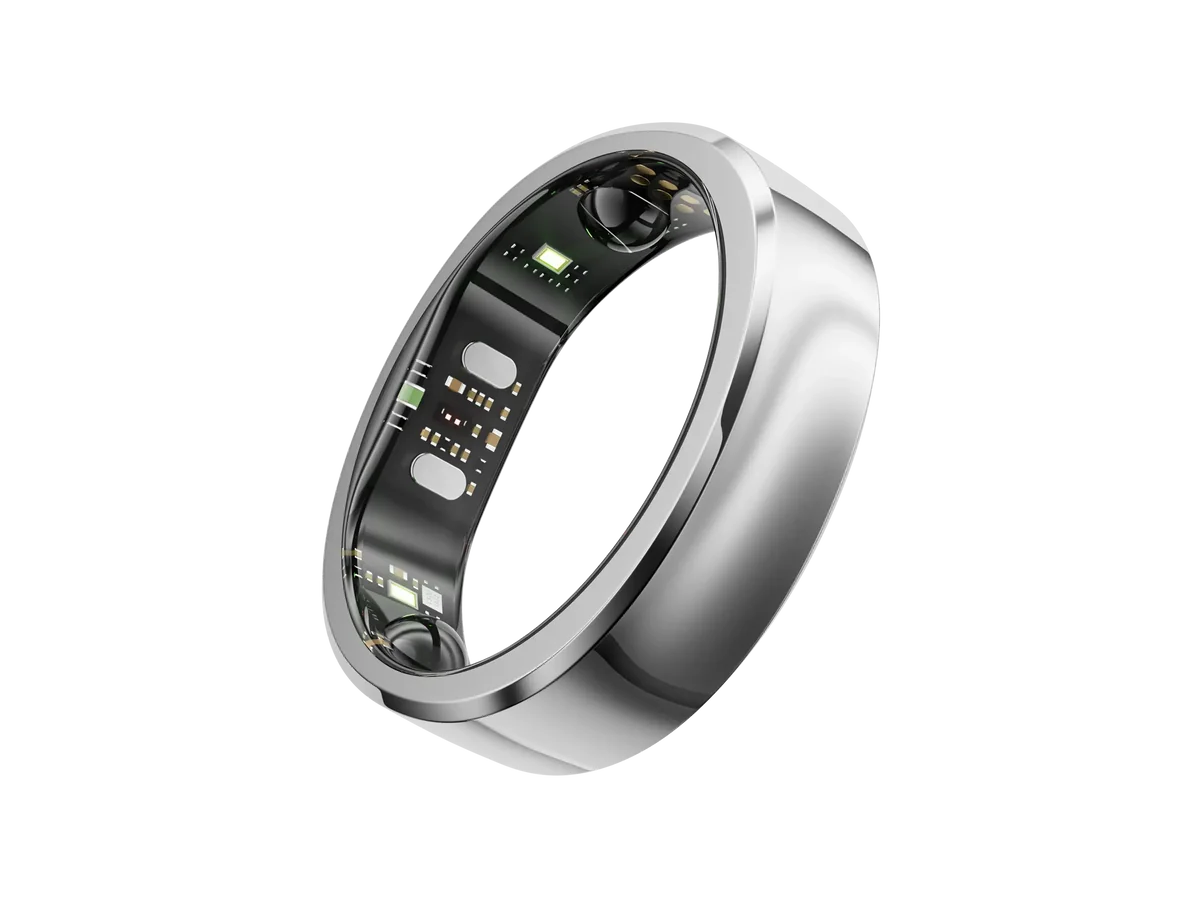
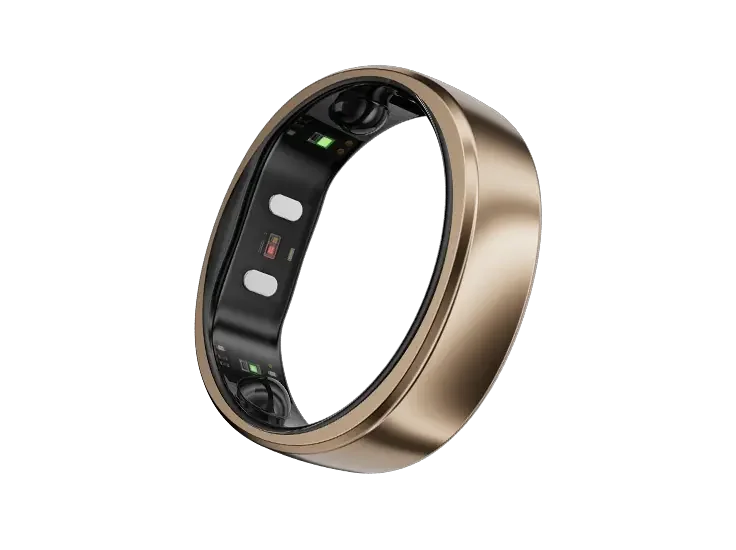
RingConn is the company that's been needling Oura from the budget end since 2022, and the Gen 3 is its first genuinely premium swing: new optical heart-rate sensors, an upgraded temperature sensor, a bigger battery, and — the headline — the first vibration motor in a mainstream smart ring. It comes in five finishes (Future Silver, Royal Gold, Matte Black, Brushed Silver, Brushed Rose Gold) and a new sizing system, so RingConn ships you a free sizing kit before the ring itself. Don't skip it, and don't assume your Gen 2 size carries over — it may not.
Everything it measures — sleep stages, HRV, SpO2, stress, workouts, and the new vascular tracking — lands in the free RingConn app. There is no premium tier. That single fact is doing a lot of work at $349, and we'll come back to it.
What Does the RingConn Gen 3 Do Well? A Ring That Taps Your Finger
Smart rings have always had a communication problem: all that data, and no way to reach you without going through your phone. The Gen 3's vibration motor fixes more of this than we expected. A subtle buzz for high stress, one for sitting too long, one for low battery — small things, but they change the relationship. You stop checking the app to see what the ring thinks; the ring tells you, quietly, and only when it matters.
The sleep side is where RingConn has always been strong, and the Gen 3 keeps that up. Sleep-duration tracking correlates within a few percent of WHOOP and Garmin in independent testing, the app breaks nights into stages with HRV, SpO2, breathing and circadian-alignment views, and the built-in sleep apnea screening is more than a gimmick. One reviewer at The Gadgeteer had the ring flag suspected mild apnea — 48 breathing events in a night, an AHI score of 8.1 — and booked a sleep study on the strength of it. That's not a diagnosis (the ring is not a medical device, and it says so), but as an early warning you'd otherwise never get from a $349 purchase, it's remarkable.
Then there's Vascular Health Insights, the feature RingConn calls a world first: overnight blood-pressure trend monitoring. The honest description — after you calibrate it once against a real arm cuff, it watches how your vascular patterns drift week over week while you sleep. It shows direction, not clinic-grade numbers. As a "hey, something's been creeping up for three weeks, maybe check it properly" nudge, that's genuinely useful territory no other no-subscription ring touches.
And the battery is simply in a different class than Oura's. RingConn quotes 10–12 days with vibrations on, up to 14 with them off; real-world owner reports settle around 10. The charging case is now universal wireless (Gen 2's was size-specific — a real annoyance, now fixed) and holds multiple charges, so a two-week trip needs no cable at all.
What Are the RingConn Gen 3's Problems?
1. Don't buy it as a workout tracker. At easy effort the heart-rate numbers track a Garmin chest-strap setup almost beat for beat. Push into intervals and they run hot — max readings 10–15 bpm above reference in independent testing. That's typical smart-ring physics (fingers move, blood shifts), but if training data is the point, a Helio Strap or a chest strap does it better for less.
2. The alerts are half-finished. The motor works; the software hasn't caught up. There's no silent wake-up alarm and no custom timed reminders yet — the two things everyone immediately wants a vibrating ring to do. RingConn says both are coming in updates later this year. Until they land, the vibrations are useful but narrower than the marketing suggests.
3. Vascular Health Insights has homework. The cuff calibration requirement is buried in fine print, on-demand readings want 30 seconds of total stillness, and the whole feature is trend-only. If you skip the setup, you'll wonder why the tab is empty. Ten minutes with a drugstore cuff sorts it.
4. The app grades on a curve. It's clean and well-organized, but scoring can be generous — nights under five hours have earned a "Good." Oura's app remains the more polished, more opinionated coach. RingConn gives you excellent data and lets you draw conclusions; whether that's a con depends on you.
How Does the RingConn Gen 3 Compare to Oura and Galaxy Ring?
| Ring | Price (September 2026)* | Subscription | Battery | Best for |
|---|---|---|---|---|
| RingConn Gen 3 | ~$349 | None | 10–14 days | Best no-subscription ring overall |
| Oura Ring 5 | $399+ | $5.99/mo for full features | ~9 days | Most polished app & ecosystem |
| RingConn Gen 2 | ~$299 | None | 10–12 days | Same apnea screening, less hardware |
| RingConn Gen 2 Air | ~$199 | None | 10 days | Budget entry into smart rings |
| Samsung Galaxy Ring | ~$399.99 | None | 7 days | Samsung/Android households only |
*Reference prices at the time of writing; check live listings. Rings vs bands more broadly: our ring-vs-band guide. Deciding between the Gen 3 and its cheaper sibling specifically? See our full RingConn Gen 3 vs Gen 2 Air comparison.
RingConn Gen 3 Pros and Cons
- ✓ Every feature free forever — no membership, no locked tiers
- ✓ First mainstream ring with vibration alerts
- ✓ Sleep apnea screening + overnight vascular trends included
- ✓ ~10 real-world days of battery; universal wireless charging case
- ✓ Titanium, 2.3mm, five finishes — disappears on your finger
- ✕ Heart rate runs hot during hard exercise
- ✕ No wake-up alarm or custom reminders yet (promised later in 2026)
- ✕ Vascular Health Insights needs one-time cuff calibration most buyers won't expect
Who Should Buy the RingConn Gen 3 — and Who Shouldn't?
Buy the RingConn Gen 3 if you…
- Want Oura-class sleep and recovery tracking without a subscription line item — this is the category's best answer
- Snore, or your partner says you do — the apnea screening alone has sent people to sleep studies that mattered
- Keep an eye on blood pressure and want a passive early-warning trend, not another gadget to remember
- Hate charging things — 10 days plus a wireless case is as low-maintenance as wearables get
Look elsewhere if you…
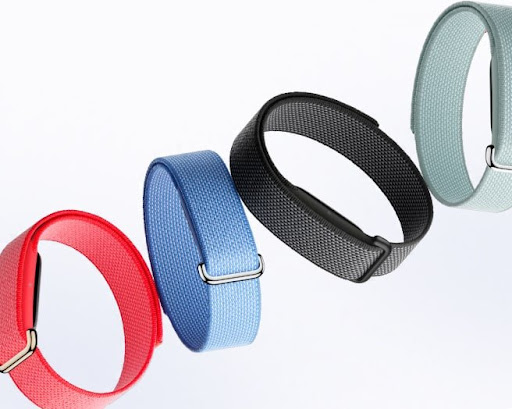
- Mostly want workout heart rate → Amazfit Helio Strap does it better for ~$99
- Want the slickest possible app and don't mind paying monthly → Oura Ring 5, eyes open about the fees
- Want to try a smart ring for as little as possible → RingConn's own Gen 2 Air at ~$199
- Aren't sure a ring beats a band for you at all → start here
Is the RingConn Gen 3 Worth $349? The Verdict
The smart ring market has spent years asking you to pick two: good hardware, a fair price, or no subscription. The Gen 3 is the first ring where we don't feel the compromise. It matches Oura on the tracking that matters most — sleep — beats it soundly on battery, adds alerts and vascular trends Oura doesn't have, and does it all without a membership. That's an 8.8/10 and the top ring slot in our no-subscription rankings.
What keeps it under 9: the workout heart rate, and software that's still catching up to its own vibration motor. If RingConn ships the promised alarm and reminder updates this fall, this score gets revisited. For now, if you've been waiting for the ring that doesn't charge rent — this is the one we'd put on our own finger. See how it and every other option compare in our full ring rankings.
RingConn Gen 3 FAQ
Does the RingConn Gen 3 require a subscription?
No. Sleep staging, apnea screening, stress, vascular trends, vibration alerts — all of it lives in the free app, permanently. There's no premium tier at all.
How long does the battery really last?
Spec sheet says 10–12 days with vibrations on, up to 14 without. Owners consistently report around 10 days of full wear — still roughly double an Oura Ring, and the wireless charging case covers trips.
What exactly is Vascular Health Insights?
Overnight blood-pressure trend monitoring. Calibrate once against a regular arm cuff, and the ring tracks how your vascular patterns drift over weeks while you sleep. Directional insight only — it's a screening nudge, not a medical device.
RingConn Gen 3 vs Oura Ring 5?
Gen 3: cheaper up front, zero monthly fees, ~double the battery, vibration alerts. Oura 5: more polished app, bigger ecosystem, $5.99/month forever for full features. Over three years the Oura costs roughly $200 more in fees alone — that math decides it for most people.
Will my Gen 2 size fit the Gen 3?
Maybe not — Gen 3 uses a new sizing system. RingConn ships a free sizing kit first; wear the sizer for a full day (fingers swell overnight) before confirming.
Does it work with iPhone and Android?
Yes, both, through the free RingConn app.
Sources
- RingConn — RingConn Gen 3 product page: battery life, no-subscription policy, vascular trends feature.
- The Gadgeteer — seven-night RingConn Gen 3 review: the sleep-apnea screening result (AHI 8.1, 48 events) referenced in this review.