Best Fitness Trackers for Women (2026): Cycle Tracking, Small Wrists and Pregnancy
Quick answer: The Garmin Cirqa ($199.99, no subscription) is our pick for cycle tracking that uses sleeping skin temperature, and the Google Fitbit Air ($99.99) is the cheapest band, fitting wrists from 130 mm. The Oura Ring 5 leans hardest on temperature but needs a membership. None is birth control or medical advice.
Most lists of the best fitness tracker for women are the same list as every other fitness tracker roundup with a pink band photo on top. The questions women actually ask are different. Will it fit a small wrist? What does the cycle feature really do, and what does it not do? What happens to the data when you are pregnant? Those are the questions this page is built around.
Two ground rules. Every cycle claim below comes from the brand's own pages, quoted or closely paraphrased, with the source linked at the bottom. And nothing here is birth control or medical advice. If you are trying to avoid or achieve a pregnancy, that is a conversation for a clinician, not a wearable.
- Best screen-free band for skin-temperature cycle tracking: Garmin Cirqa ($199.99, no subscription)
- Best budget and small-wrist pick: Google Fitbit Air (from $99.99, 12 grams)
- Most temperature-driven cycle insights: Oura Ring 5 ($399 plus membership)
- Best for training around your cycle: WHOOP (membership from $199 a year)
- Best free cycle tracking if you carry a Galaxy phone: Samsung Galaxy Ring (from $299.99)
- Best workout strap built for a sports bra: Garmin HRM-Fit (workouts only)
Which fitness trackers are best for women at a glance?
Six trackers made the list, split between screen-free bands, two rings and one chest-strap accessory. Prices come from each brand's own page on the date shown. Amazon prices change, so we do not quote them.
| Tracker | Type | Price (brand page) | Ongoing fee | How the cycle feature works (per the brand) |
|---|---|---|---|---|
| Garmin Cirqa | Screenless band | $199.99 (Garmin, Jul 21, 2026) | None for the band | Cycle and pregnancy tracking; sleeping skin temperature improves predictions |
| Google Fitbit Air | Screenless band | From $99.99 (Google Store, Nov 7, 2026) | None required; Google Health Premium optional | You log periods and symptoms; predictions come from your logs |
| Oura Ring 5 | Ring | $399 (Oura, checked Oct 3, 2026) | $5.99/month or $69.99/year | Nightly temperature trends drive period, phase and fertile-window estimates |
| WHOOP | Screenless band | From $199/year (WHOOP, Apr 23, 2026) | Membership is the product | Menstrual Cycle Insights and Pregnancy Insights using HRV, resting heart rate and skin temperature |
| Samsung Galaxy Ring | Ring | From $299.99 before trade-in (Samsung, Nov 7, 2026) | None | Calendar prediction plus skin temperature from sleep |
| Garmin HRM-Fit | Sports bra clip | Not verified (check Garmin or a retailer) | None | None. Workout heart rate only |
Cycle details are summarized from each brand's pages and may change by country. Natural Cycles, where mentioned, is a separate paid app with its own subscription.
How do fitness trackers track your cycle?
They use two methods, and brands mix them differently. The first is a calendar: you log your period and the app predicts the next one from your history. The second is body temperature: wrist or finger sensors read skin temperature while you sleep, and the app looks for the small rise that follows ovulation.
Google's cycle feature is the calendar kind. Its help page says predictions are estimated from the period and cycle-length details you give it, plus any ovulation test results you log, and it falls back to a 28-day cycle and 5-day period if you give it nothing. Oura is the temperature kind: its support page says Cycle Insights uses nightly temperature deviations, along with signals like HRV, to predict your cycle. Garmin and Samsung sit in between, with calendar logging improved by sleeping skin temperature.
The honest limit is the same everywhere. Illness, alcohol, a warm bedroom and hormonal birth control all muddy temperature data. Oura says hormonal contraception mostly works by preventing ovulation, so with it selected you get period predictions but not phases or a fertile window. Samsung says its tracking will not be useful for spotting ovulation if you take hormonal birth control. Treat any prediction as an estimate.
What are the best fitness trackers for women in 2026?
1. Garmin Cirqa: the band that uses sleeping skin temperature, no subscription
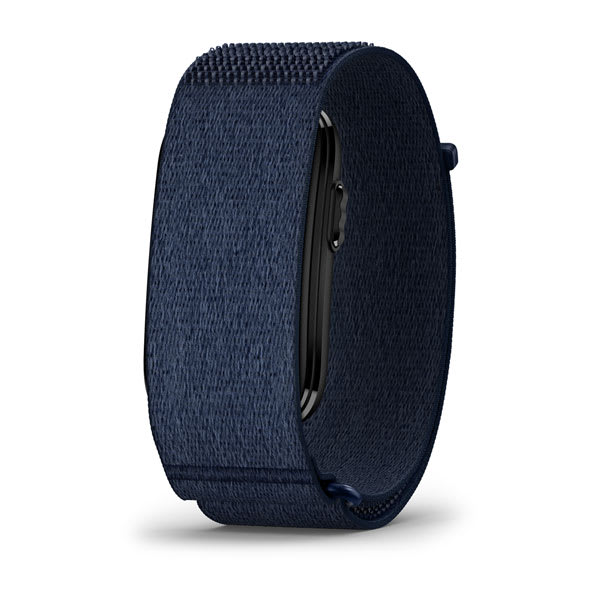
$199.99 at launch (Garmin, July 21, 2026) · Screenless band · up to 10 days battery
Garmin says women can track their menstrual cycle and pregnancy on the Cirqa and "get better period predictions and past ovulation estimates by tracking skin temperature while sleeping." DC Rainmaker confirms Garmin added an extra hardware layer over its Gen4 heart-rate sensor to read skin temperature, and says the nightly data is mostly useful for cycle predictions. Garmin Connect adds a pregnancy mode with weekly updates, symptom logging, and the option to pause training status while pregnant.
Garmin also lists a sync with the Natural Cycles app, which is FDA-cleared and needs its own subscription. Garmin's footnote is blunt about the rest: its skin temperature feature is "not intended to support conception, contraception or birth control," and the Natural Cycles app, not the band, decides your fertility status.
The catches are real. At $199.99 it costs twice a Fitbit Air. DC Rainmaker notes the strap is 27 mm wide, a touch wider than the WHOOP 5.0 band, and temperature is read at night only, so room temperature matters. There is no screen, no GPS, no ECG. Our full Garmin Cirqa review covers the rest, and the Cirqa vs Fitbit Air comparison helps if price is the deciding factor.
2. Google Fitbit Air: the cheapest screen-free band, and the one for small wrists
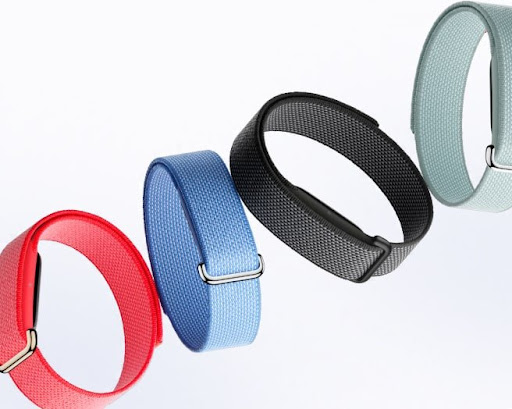
From $99.99 (Google Store, November 7, 2026) · Screenless band · 12 grams · up to 7 days battery
Google's store page for the Fitbit Air lists cycle and symptom tracking: log your menstrual cycle and how you feel, then view history and get period predictions. Google's help page for the feature adds that it also shows an estimated fertile window and ovulation day, that it "works without a device," and that it "isn't intended to be used for contraceptives or other medical purposes."
Our inference from that help page: the predictions are built from what you log, not from the band's skin temperature, so the Air is mainly a comfortable all-day sensor next to a cycle diary. That is fine if you just want period reminders and a sleep score, and it is the cheapest route here. If you want temperature to do real work, look at the Cirqa or Oura. Google's coach can connect logged cycle data to your sleep and activity, but that sits inside the optional Google Health Premium membership, which the store page says comes free for 3 months with the band.
On sizing, Google's store lists 130 mm as the smallest supported wrist. We did not find a pregnancy mode described for the Air; Google's help page suggests turning predictions off during pregnancy. Read our Fitbit Air review and the Fitbit Air bands guide for fit and comfort.
3. Oura Ring 5: the most temperature-driven cycle insights

$399 (Oura store page, checked October 3, 2026) plus $5.99 a month or $69.99 a year · Ring · sizes 6 to 13
Oura's support page (updated October 14, 2026) says Cycle Insights needs a Gen3 ring or later with an active membership, and uses your nightly temperature deviations to predict periods and show how your cycle shapes the rest of your body. Oura's own blog says that in your first 60 days predictions rely on the calendar method, and then shift to temperature once there is enough data. Fertile window and ovulation-day estimates are a regulated feature, so Oura says they only appear in countries where the requirements are met.
Oura is just as direct about limits: those insights "are for tracking purposes only and should not be used as a form of birth control." For actual contraception, Oura points to Natural Cycles, which Oura describes as FDA-cleared and which accepts Oura Ring temperature data. The ring syncs temperature to that app each morning, and Natural Cycles charges separately. Oura says pregnancy can hide the temperature pattern, which stops it from predicting a period.
The trade-off is the membership. Without it, cycle insights go away. Total for three years is below. A ring also sidesteps wrist size completely, and our Oura Ring 5 review and sizing guide cover fit in more depth.
4. WHOOP: best for planning training around your cycle
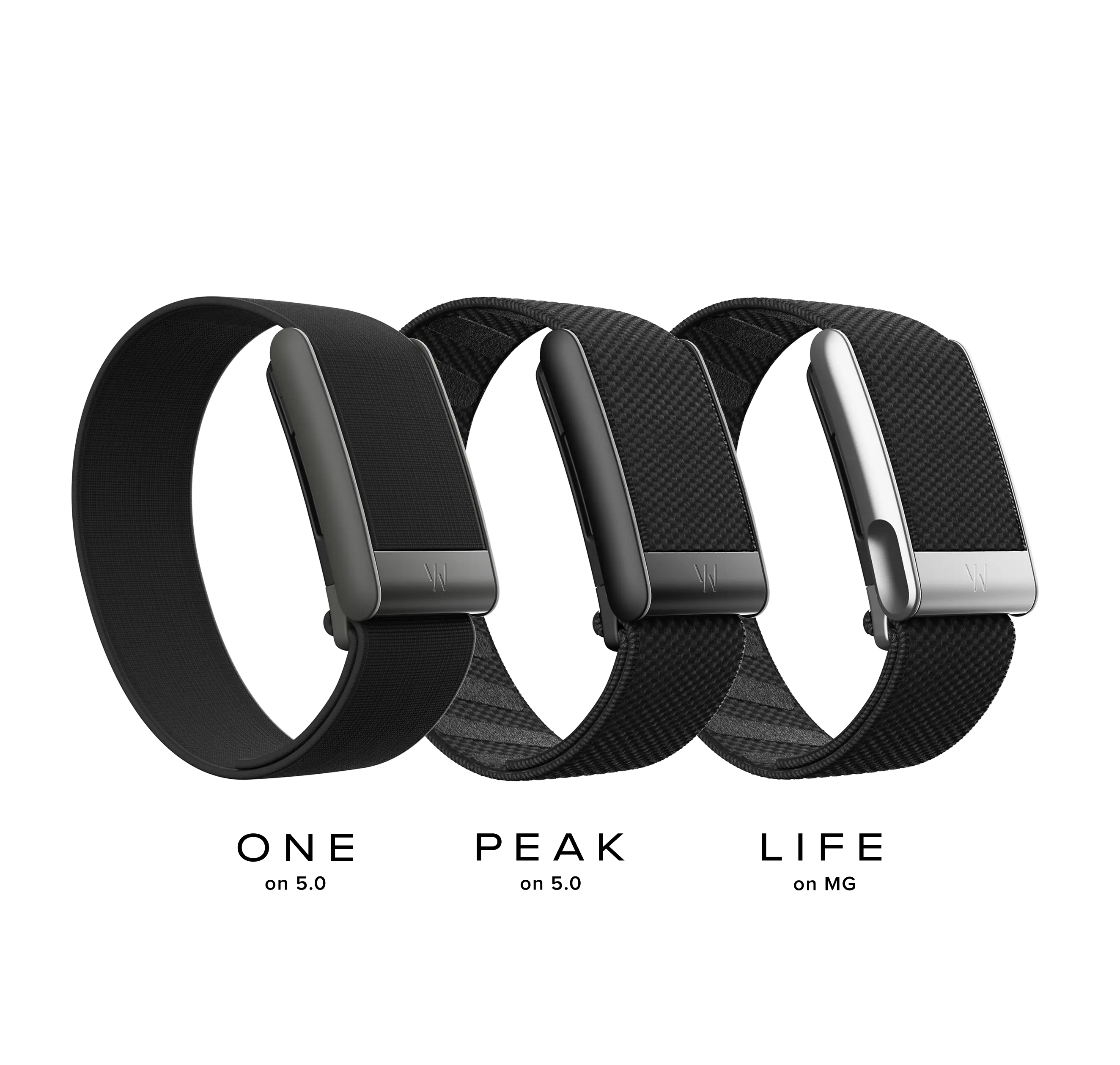
Membership from $199 a year (WHOOP billing page, April 23, 2026) · Screenless band
WHOOP packages this as Women's Hormonal Insights, with two parts: Menstrual Cycle Insights and Pregnancy Insights. WHOOP's pages describe it as phase-based guidance on sleep, strain and recovery, using heart rate variability, resting heart rate and skin temperature, and as available to members with a 4.0 or newer device. WHOOP says users on hormonal birth control can still log their cycle, but phase-based predictions are designed for people who are not on it.
WHOOP also says Menstrual Cycle Insights is not a medical device or medical advice, should not be used for conception or contraception, and that every phase, ovulation included, is an estimate. One caution on our own research: WHOOP's site blocked our automated fetch, so we relied on excerpts of WHOOP's pages and on our own WHOOP vs Oura comparison. Check WHOOP's current page for your country before buying. Prices and plan tiers are in our how much WHOOP costs guide.
5. Samsung Galaxy Ring: free cycle tracking, but Android only
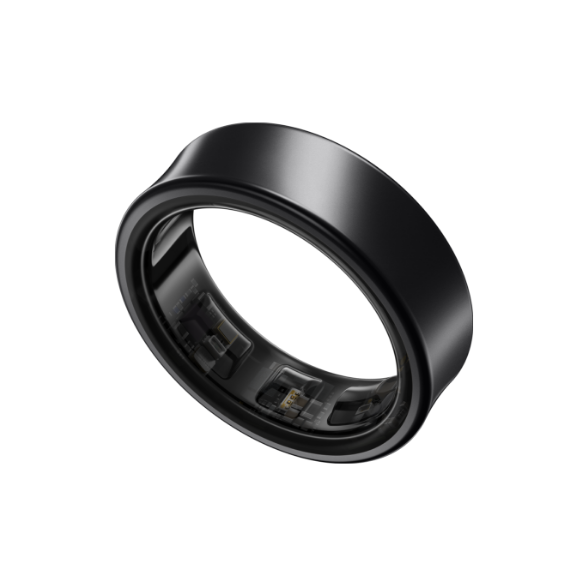
From $299.99 before trade-in (Samsung, November 7, 2026) · Ring · no ongoing fee
Samsung's cycle tracking lives in the Samsung Health app. Samsung's support page says it predicts your next period, fertile window and ovulation dates from your cycle history, and that a Galaxy Ring or recent Galaxy Watch improves predictions with skin temperature but is not required. Temperature is recorded only when you sleep at least four consecutive hours between 7 PM and 9 AM, and Samsung notes the environment can affect it.
Samsung's US product page marks cycle tracking "NOT INTENDED FOR CONTRACEPTION" and says it will not help track ovulation if you take hormonal birth control or hormonal treatment that inhibits ovulation. The bigger catch is the phone: the ring needs Samsung Health and does not work with iPhone, per our Samsung Galaxy Ring review. If you are on iPhone, this one is out.
6. Garmin HRM-Fit: not a tracker, but the strap made for a sports bra
Price not verified (Garmin's page was not available to us; check Garmin or a retailer)
The HRM-Fit clips onto the band of a sports bra instead of wrapping around your ribs, which is the design reason it exists. It does not track cycles or sleep. It is a workout heart rate sensor that feeds Garmin Connect, so it pairs naturally with a Cirqa for people who find wrist optical heart rate unreliable during lifting or intervals. If you wear a Garmin already, that is the case for it. Our gym heart rate monitor guide compares it with chest straps and armbands.
Two we left out on purpose: the Polar Loop (the Polar page we read, $199.99, describes no cycle tracking and only bundles a trial of the Clue app), and the Amazfit Helio Strap, whose official page we could not open for this guide.
Which fitness tracker fits a small wrist?
The Garmin Cirqa S/M and the Google Fitbit Air go smallest among the bands here, at 120 mm and 130 mm. Both numbers are the shortest wrist circumference the brand lists. Measure around your wrist bone with a soft tape before ordering, because a band that is too loose gives worse sensor readings.
| Tracker | Smallest listed fit | Weight | Source |
|---|---|---|---|
| Garmin Cirqa (S/M band) | Wrist from 120 mm | 20.7 g with strap | Garmin product page |
| Google Fitbit Air | Wrist from 130 mm (Small silicone band 130 to 175 mm) | 12 g | Google Store |
| Polar Loop (S/M textile) | Wrist from 135 mm | 29 g (band) | Polar |
| Oura Ring 5 | Ring sizes 6 to 13 | From 2 g | Oura Support |
| Samsung Galaxy Ring | Sizing kit first, then your size | About 2.3 to 3.2 g | Samsung via our review |
We did not verify WHOOP's band lengths for this page. If a tiny wrist is your main constraint, the two rings avoid the problem, and the sizing kits are free or cheap.
Can a fitness tracker predict ovulation or act as birth control?
No. This is not birth control or medical advice. Every brand here either says so outright or limits the claim. Garmin says its skin temperature feature is not intended to support conception, contraception or birth control. Google says cycle tracking is not for contraceptives or other medical purposes. Oura says its insights should not be used as birth control. WHOOP and Samsung say similar things.
The single regulated exception is Natural Cycles, a separate app that the FDA cleared as a contraceptive in 2018. It can take overnight temperature from some Garmin devices and the Oura Ring, but it is a different product with a different subscription, and effectiveness depends on how you use it. If contraception is the goal, start with a clinician and read Natural Cycles' own materials, not a wearable review.
What should you know about fitness trackers during pregnancy?
Some trackers let you log pregnancy, but none of them replaces prenatal care. Garmin Connect has pregnancy tracking with weekly updates, symptom logging, blood glucose and baby movement notes, and a 4-week summary Garmin says is useful for checkups. WHOOP lists Pregnancy Insights. Google's help page says to turn off period predictions during pregnancy, and Oura says pregnancy can hide the temperature patterns its period predictions rely on.
Our inference: recovery, readiness and strain scores are built around a stable baseline, and pregnancy changes body temperature patterns, so those scores can stop meaning what they used to. Use them as trends, not targets. Ask your OB or midwife about exercise heart-rate limits and what to do if a tracker flags something. A wrist reading is a prompt to ask, never a diagnosis.
If you are pregnant right now, do not use any number from a tracker to make a medical decision. That covers heart rate, temperature, sleep and recovery scores, and any alert or missing alert. Call your clinician about symptoms, whatever the app says. Nothing on this page is medical advice.
How much do these trackers cost over three years?
The Google Fitbit Air is cheapest at $99.99, and the Oura Ring 5 and WHOOP cost roughly six times that over three years. The totals below use each brand's own price and assume prices do not change, which they may.
| Tracker | Upfront | Per year after | 3-year total |
|---|---|---|---|
| Google Fitbit Air | $99.99 | $0 (Premium optional) | $99.99 |
| Garmin Cirqa | $199.99 | $0 | $199.99 |
| Samsung Galaxy Ring | $299.99 (from, before trade-in) | $0 | $299.99 |
| WHOOP One | $199 first year (hardware included) | $199 | $597 |
| Oura Ring 5 | $399 | $69.99 | $608.97 (399 + 3 x 69.99) |
Natural Cycles costs extra on any device. WHOOP One figure assumes the $199 annual plan from WHOOP's billing page (April 23, 2026) renews at the same price. Garmin HRM-Fit excluded: it is an accessory.
Who should pick which tracker?
- You want temperature-based cycle tracking without a subscription: Garmin Cirqa.
- You want the cheapest decent screen-free band, or have a small wrist: Google Fitbit Air.
- You want the deepest cycle and sleep detail and do not mind $5.99 a month: Oura Ring 5.
- You train hard and want guidance that shifts with your cycle: WHOOP.
- You own a Samsung Galaxy phone and want free cycle tracking: Samsung Galaxy Ring.
- You are on iPhone and want no subscription: Cirqa or Fitbit Air, not the Galaxy Ring.
- Your wrist optical readings drift during lifting: add a Garmin HRM-Fit, or see our wrist vs chest strap accuracy guide.
Ring or band? Rings are easier to sleep in and fit small hands, bands read better during workouts and cost less. We break the trade-off down in smart ring vs fitness band. If you lean toward a ring, our best smart rings for women guide goes deeper on ring sizing and cycle features. The full lineup of best screenless fitness trackers is on our homepage.
Fitness Trackers for Women: FAQ
What is the best fitness tracker for women?
It depends on what you want from cycle tracking. The Garmin Cirqa is the best screen-free band for skin-temperature cycle tracking with no required subscription, the Google Fitbit Air is the budget pick at $99.99, and the Oura Ring 5 is the most temperature-driven option if you accept a membership. All three treat cycle features as wellness tools, not medical advice.
Can a fitness tracker predict ovulation or work as birth control?
No. Garmin, Google, Oura, WHOOP and Samsung all say their cycle features are not intended for contraception, and several say predictions are estimates. The only birth control route is Natural Cycles, a separate FDA-cleared app that can use temperature data from some Garmin devices and the Oura Ring, and it needs its own subscription. This page is not birth control or medical advice, so talk to a clinician.
What is the best fitness tracker for small wrists?
On published sizing, the Garmin Cirqa S/M band starts at 120 mm and the Google Fitbit Air starts at 130 mm, both measured around the wrist. The Polar Loop S/M starts at 135 mm. A smart ring such as the Oura Ring 5 sidesteps wrist size entirely, with ring sizes 6 to 13. Measure your wrist in millimeters before you buy.
Do you need a subscription for cycle tracking on these trackers?
Not for the basics on most of them. The Garmin Cirqa and Samsung Galaxy Ring include cycle tracking at no ongoing cost, and Google's cycle logging works without a device. Oura's Cycle Insights needs an active Oura membership, WHOOP's women's insights are part of a WHOOP membership, and Natural Cycles is a separate subscription on any device.
Can I use a fitness tracker during pregnancy?
Some track it, but none replaces your prenatal care. Garmin Connect has a pregnancy mode with weekly updates and symptom logging, and WHOOP lists Pregnancy Insights. Google suggests turning period predictions off during pregnancy, and Oura says pregnancy can hide the temperature patterns it uses. Ask your clinician about exercise heart-rate targets and any alerts.
Is a smart ring or a fitness band better for women?
A ring wins on comfort, small hands and sleeping, a band wins on workouts and price. For cycle tracking both rely on the same idea, overnight temperature trends, so pick the one you will wear every night. Our smart ring vs fitness band guide goes deeper.
What is the best fitness tracker for women over 50?
Pick for comfort, sleep tracking and battery first. Garmin says its Connect cycle tracking works for regular and irregular cycles, menopause transitions and people without periods, so the Cirqa is the one brand-documented fit for that stage. If cycle features no longer matter, the Google Fitbit Air at $99.99 is the simplest low-cost option.
Sources
- Garmin CIRQA Smart Band announcement (July 21, 2026): www.garmin.com
- Garmin CIRQA Smart Band product page (specs): www.garmin.com
- DC Rainmaker: Garmin CIRQA everything you need to know: www.dcrainmaker.com
- Garmin Connect: pregnancy tracking: connect.garmin.com
- Garmin Connect: menstrual cycle tracking: connect.garmin.com
- Google Store: Google Fitbit Air: store.google.com
- Google Health Help: cycle health tracking: support.google.com
- Oura Support: Cycle Insights: support.ouraring.com
- Oura: period prediction: ouraring.com
- Oura: Oura partners with FDA-cleared birth control app Natural Cycles (August 2, 2022): ouraring.com
- Samsung: Galaxy Ring: www.samsung.com
- Samsung: Use Cycle Tracking in the Samsung Health app: www.samsung.com
- Polar Loop official product page: www.polar.com
- WHOOP: Women's Hormonal Insights and Menstrual Cycle Insights pages (whoop.com). WHOOP blocked our automated fetch, so the WHOOP details above come from excerpts of those pages shown in search results, WHOOP's billing page as summarized in our own how-much-is-WHOOP guide, and WHOOP's community help thread.