Amazfit Helio Strap Bands: What Actually Fits (and What to Skip)
Quick answer: Three things settle this. First, the Helio Strap uses a 22mm band with quick-release pins — a completely standard fitting — which is why straps start around $8 instead of the $49 WHOOP charges. Second, most cheap listings are "band only": no tracker module, and no middle frame either, so you'll be shuttling one frame between straps unless you buy a band that includes a case. Third, the official arm band lives on Amazfit's own store, not Amazon US — about $19.99 there, versus $9 to $16 for a third-party bicep strap on Amazon.
The original Helio Strap band is nylon hook-and-loop, and nylon hook-and-loop does exactly what you'd expect after a few months of squat sessions: it holds sweat, it starts to smell, and the loop side gets fuzzy and stops gripping the way it did in week one. Nobody's shocked. It's a $99 tracker with a fabric strap.
What surprised us while pulling this together is how easy Amazfit made the fix, almost by accident. Because the Helio Strap borrowed a standard 22mm watch fitting instead of inventing a proprietary clasp, the entire aftermarket of Amazfit watch bands works on it. That's the opposite of the situation WHOOP owners are in, where even the previous generation's own straps don't fit. Here you can spend eight dollars and be done.
The catch isn't the band. It's the little metal frame the band goes through — and almost no listing explains it.
Does the Helio Strap Use Standard 22mm Bands?
Yes, and this is the single most useful fact about owning one.
Amazfit's own spec sheet lists the strap as nylon with a hook-and-loop closure, 22mm wide, sized for wrists from 145 to 205mm, on a 20-gram module rated 5 ATM. The 22mm figure is the part that matters, because replacement bands sold for the Amazfit Balance, Balance 2, T-Rex 3 and the Bip 5 and Bip 6 all use that same 22mm quick-release fitting — and sellers list them as Helio Strap compatible for exactly that reason.
Practically, that means the pool of straps you can choose from is enormous and the prices are aftermarket-cheap: silicone at around $8, braided nylon around $10, sport loops in the low teens. Quick-release pins mean no tools; you squeeze the pin lever, the strap comes off, the new one clicks in.
One honest caveat. A generic 22mm watch band puts the tracker module on top of the strap, watch-style. The original Helio band tucks the module under a fabric overlay, which is part of why it disappears on your wrist and part of why it survives being knocked around. If the low-profile look is why you bought a screen-free tracker in the first place, buy a band that copies the overlay design rather than the cheapest generic strap.
The Catch Nobody Puts in the Title: Band Only vs Band Plus Frame
Read enough of these listings and the same parenthetical keeps appearing: "wristband only, excluding Helio Core and middle frame."
Here's what that's telling you. The tracker — Amazfit calls it the Helio Core — snaps into a rectangular frame, and the strap threads through that frame. You can see it clearly in the photo of Amazfit's own arm band below: the band is the fabric, and the frame is that metal rectangle in the middle.
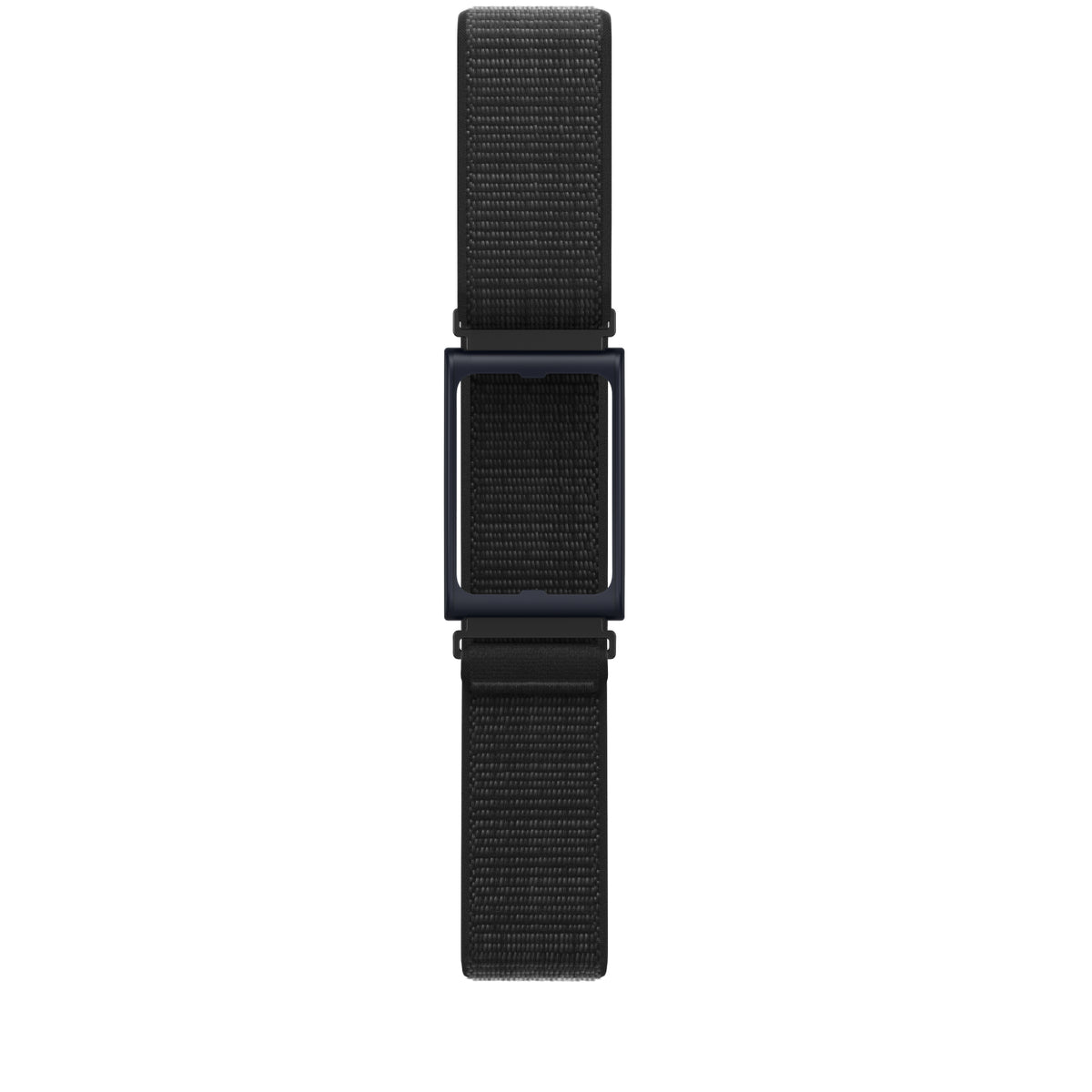
So a band-only purchase gives you a spare strap, not a spare setup. Every time you want to switch, you pop the Core out, slide the frame across, and reassemble. That's fine if you're replacing a worn strap. It's genuinely annoying if the plan was "nylon for the office, silicone for the gym, elastic band for lifting" — two minutes of fiddling every switch adds up, and small metal parts on a bathroom counter eventually go down a drain.
The rule: if you want more than one wearing position, buy at least one band that ships with its own case or frame. Then each setup stays assembled and you just move the Core, which takes a second. Bands that include a case cost a few dollars more and are worth every cent of it.
Which Helio Strap Wrist Bands Are Worth Buying?
1. Silicone 22mm quick-release — the cheapest sane pick (~$8)
Two-toned silicone with a metal buckle, adjustable across 5.5 to 8.7-inch wrists, quick-release pins pre-fitted. Silicone is the right material for anyone whose complaint is sweat: rinse it under the tap, dry it in a minute, no odour build-up. At this price you can buy two colours for less than a third of what one official WHOOP strap costs, which is a fair summary of why this whole category exists.
2. Braided nylon with a case — best if you want two setups (~$10)
This is the one we'd buy first, and only because of four words in the listing: "with case." You get a nylon braided strap plus a snap-on case for the Core, so your original band stays assembled and switching becomes a one-second job. It closes with a magnetic buckle, which is easy to adjust and the reason for the one warning here — under heavy pressing or anything that drags the band along a bench, magnetic closures shift more than hook-and-loop does. Great daily band, not our first choice for a max-effort lifting day.
3. Overlay-covered nylon loop — closest to the original look (~$14)
Built with the same overlay structure as the factory band, so the Core sits hidden under the fabric with an aluminium middle ring holding things together. If you liked how the stock strap looked and just want a fresh one that doesn't smell like a gym bag, this is the direct replacement. Case not included — you're reusing your frame.
4. Stretchy sport loop with pre-installed pins — best for sleep (~$12)
A one-piece elastic loop with the 22mm pins already in it. No buckle, no hook-and-loop patch, nothing with an edge to press into your skin — which is the whole argument for it, because a screen-free tracker's real job is being worn overnight without you noticing. Elastic loops do relax over months of washing, so it's a comfort band rather than a lifetime band.
5. Plain nylon spare (~$9)
No cleverness, no case, just woven nylon in a handful of colours at a price where buying a spare so one can dry properly is a no-brainer. Rotating two bands is the single cheapest way to make both last longer — the same trick that works for WHOOP straps and for Fitbit Air bands.
Should You Buy the Arm Band? (Yes, If You Lift)
The Helio Strap's reason for existing is gym work — rep, set and rest tracking, a HYROX race mode, live heart-rate broadcast. All of that leans on the optical sensor holding a clean signal during exactly the moments a wrist sensor struggles: grip tension, wrist flexion, a bar or dumbbell pressing against the band.
Moving the sensor to your bicep sidesteps most of that, which is why Amazfit sells an arm band extension and markets it as the workout position. We go deeper into why placement beats hardware in our heart-rate accuracy guide — the short version is that an armband lands much closer to a chest strap than any wrist reading does, and a chest strap is still the reference standard for intervals.
Three ways to get there:
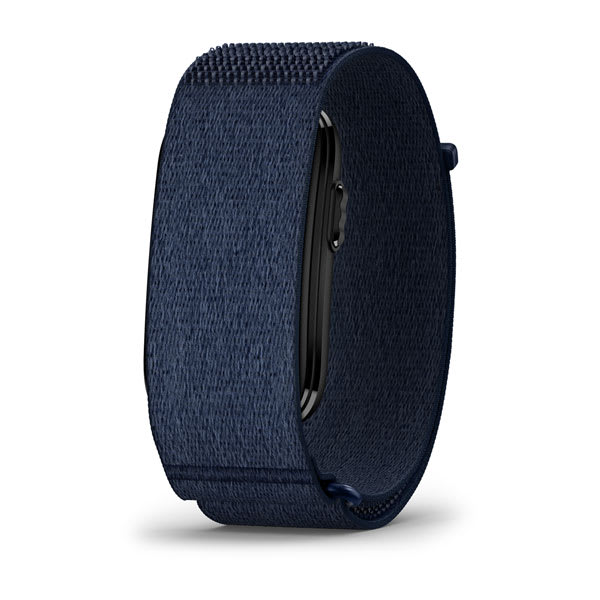
The official Amazfit Helio Armband (~$14.99–$19.99, Amazfit store only)
22mm wide, about 16.14 inches long, adjustable for upper arms from roughly 10.62 to 16.53 inches, in quick-dry nylon or a polyamide-spandex blend. The Charcoal Black and Light Gray versions run about $19.99 and the original Black about $14.99 at the time of writing — with the Black one showing as out of stock. The thing to know: it's sold through us.amazfit.com, not Amazon US (the original black version has turned up on Amazon UK). If you want the factory item, that's the checkout you're using.
TUDIA 2-in-1 wrist and armband case (~$16) — best Amazon option
A snap-on housing with a metal frame plus an elastic band that stretches from 4.7 to 14 inches, so it covers a wrist or a bicep and steps on over your hand with no buckle. Because it includes the case, your stock wrist band stays assembled — the point we made above. This is the one we'd order if we wanted arm wear this week without waiting on Amazfit's stock.
Stretchy bicep and ankle strap (~$9) — cheapest way to test the idea
A 15-inch one-piece nylon loop, 22mm fitting, listed for bicep or ankle use, and it fits Amazfit's watches too if you own one. Nine dollars is a cheap way to find out whether arm wear is something you'll stick with before paying twice that for the official version.
Can You Wear a Helio Strap on Your Ankle?
Physically, yes — and enough people ask that sellers now list ankle/arm/wrist straps for it, including a full-cover nylon version that wraps over the top of the tracker and fits circumferences from about 9.25 to 14.57 inches. Cyclists and spin regulars are usually the ones asking, along with anyone whose job means nothing on the wrists.
The honest limitation: Amazfit documents wrist and upper-arm wear, and nothing else. Zepp's algorithms are tuned for those two positions, so ankle heart rate and ankle step counts should be read as approximate rather than as training data. If you need reliable numbers from an unusual position, a chest strap paired to the app is the answer — the Helio Strap can broadcast and receive heart rate, so you're not locked out.
Don't Overlook the Charging Head
Worth knowing before you need to know it: the Helio Strap ships with the band assembled, a magnetic charging head and no USB cable, plus the manual. You supply the cable, and the magnetic head is a small object that lives loose in a drawer — the same design that has Oura owners hunting for replacement docks.
Amazfit lists Helio charging docks on its own store from around $9.99 at the time of writing. We couldn't verify a genuine Helio Strap charger on Amazon US, so if yours goes missing, order it from Amazfit rather than gambling on a listing that looks close enough. Generic "universal magnetic charger" cables are made for a dozen different pin spacings, and the wrong one simply doesn't charge.
Five Mistakes People Make Buying Helio Strap Bands
- Confusing "Amazfit Helio" with the Helio Ring. The ring is a different product with a different charger and no straps at all. If the listing photo shows a ring dock, it's not for you.
- Buying band-only when you wanted a second setup. No case means shuttling the frame every switch. Pay the extra few dollars once.
- Grabbing a generic 22mm watch strap. It'll attach, but the Core sits exposed on top instead of tucked under an overlay — more knocks, more snagging, and it stops looking like a screen-free tracker.
- Magnetic buckles on heavy lifting days. Easy to adjust, easier to shift when a bar or bench drags across them. Hook-and-loop or a step-in elastic loop holds better under load — the same lesson rings teach in the gym.
- Ignoring the size range. The stock band covers 145 to 205mm wrists. Outside that, go straight to an adjustable loop or an arm band rather than hoping.
A Note on Helio Strap Stock Right Now
One thing worth flagging, because it changes what this guide is for: as of July 30, 2026, Amazfit's own store lists the Helio Strap itself as Coming Soon, and the standard Amazon listing is showing as unavailable. The renewed listing is the in-stock option, around $95 at the time of writing — barely below the $99.99 the new one sells for, which is a poor trade.
So: if you already own a Helio Strap, everything above applies and the bands are all in stock. If you're shopping for the tracker itself, either wait for restock or read our Garmin Cirqa review — it's the screen-free band that's actually on shelves at the moment, and our full Helio Strap review explains where the two differ. Or skip the one-to-one comparison shopping and see how every screen-free option ranks on the full shortlist.
Amazfit Helio Strap Band FAQ
Does the Helio Strap really take standard 22mm bands?
Yes — 22mm width with quick-release pins, which is why straps sold for the Amazfit Balance, Balance 2, T-Rex 3 and Bip 5/6 list it as compatible. The difference is cosmetic: a generic watch band leaves the module on top rather than under a fabric overlay.
What does "band only" mean on these listings?
Fabric or silicone, nothing else — no tracker, no middle frame. The Core snaps into a frame the strap threads through, so band-only means moving your existing frame across each time. Buy one band with a case if you want two permanent setups.
Is the official arm band on Amazon?
Not in the US. Amazfit sells it through its own store at roughly $19.99 for the Charcoal Black and Light Gray versions ($14.99 for the original Black, currently out of stock). On Amazon, third-party bicep straps cover the same job for about $9 to $16.
Will arm wear actually give me better heart rate?
During hard training, yes — bicep placement removes the wrist flexion and grip tension that break up optical readings, which is exactly why Amazfit sells the extension. For interval precision a chest strap still wins; our accuracy guide breaks down the gap between positions.
Can I wear it on my ankle?
The straps exist and they fit. Amazfit only documents wrist and upper-arm wear, though, so the app's algorithms aren't tuned for an ankle — treat heart rate and steps from there as ballpark figures.
Do I need the official charging cable?
You need Amazfit's magnetic head; the box includes it but no USB cable. Replacement docks are on Amazfit's store from about $9.99. Generic magnetic chargers are built for other pin layouts and won't charge it.
Sources
- Amazfit — Helio Strap product page (US): 22mm band width, nylon hook-and-loop strap, 145–205mm wrist range, 20g, 5 ATM, 10-day battery, in-box contents ($99.99, listed Coming Soon at the time of writing).
- Amazfit — Helio Armband accessory: pricing, materials, 22mm width, 16.14in length, 10.62–16.53in arm range.
- Amazfit Support — Helio Strap wearing guidance: fit and tightness recommendations, sensor placement.
- the5krunner — New Helio Strap arm band lengths: colourway pricing and the 270–420mm fit range.
- Gadgets & Wearables — Helio Band gets an upper-arm option: why Amazfit added arm wear.