Polar Loop vs WHOOP: Sports-Science Sleep Tracking Without the Membership
Quick answer: The Polar Loop costs ~$169.99 once, weighs 29 grams, runs about 8 days per charge, and needs zero subscription, ever — not even an optional tier, unlike the Fitbit Air or Garmin Cirqa. WHOOP starts at ~$199/year and the band goes completely dark if you stop paying, up to ~$359/yr for the Life plan's real, FDA-cleared ECG, backed by a 14+ day battery. WHOOP wins on strain coaching, automatic workout detection (ranked first in third-party testing versus the Loop's last place) and that ECG; the Loop wins on Polar's genuine sports-science sleep pedigree and never billing you again after the initial purchase. They're not really chasing the same buyer — the Loop isn't trying to be a training tool. Budget-conscious shoppers who don't need Polar's specific sleep science should compare the cheaper Fitbit Air instead.
Most "X vs WHOOP" fights on this site are between a training tool and a training tool — one that bills you every year, one that doesn't. This one's different. Polar didn't build the Loop to out-strain WHOOP or steal its athletes. It built a screen-free band to carry its sleep-and-recovery science — the stuff it's been refining on runners and triathletes since before WHOOP existed — into a ~$170 fabric strap you never have to keep paying for. That it also happens to be cheaper than WHOOP over time is real, but it's a side effect, not the mission statement.
So this comparison is going to be honest about something the other ones don't need to be: these two aren't fighting for the same reason you'd buy either of them. Here's where that's true, where it isn't, and who actually wins your money.
- Buy the Polar Loop (~$169.99 once) if what you actually want is Polar's real sports-science sleep and recovery analytics — Nightly Recharge, SleepWise — with zero ongoing bill. It's a sleep-and-recovery specialist, not a strain-coaching rival.
- Buy WHOOP if you'll use its daily strain/recovery coaching — One (~$199/yr) for the core experience, or Life (~$359/yr) if the MG's FDA-cleared ECG matters to you. WHOOP also detects workouts automatically far more reliably than the Loop does, per third-party testing.
- One nuance worth knowing up front: the Polar Loop costs about $70 more than the Fitbit Air or Amazfit Helio Strap, the other two no-subscription picks in this category. You're paying more once for Polar's sleep pedigree, not for training depth.
Is the Polar Loop Even Trying to Replace WHOOP? (Short Answer: Not Really)
On our own homepage, we file the Polar Loop under "best for sleep-first minimalists" — not "best for training." That's not a hedge; it's the honest read on what Polar actually built. The Cirqa and the Helio Strap were designed with WHOOP's athletes specifically in mind. The Loop wasn't.
Polar's been making heart-rate hardware since the late 1970s — they invented the wireless HR monitor — and the Loop's entire pitch is putting that sleep-and-recovery pedigree into a screen-free band with no subscription, ever. the5krunner, one of the first outlets to put the Loop through real testing, said it plainly: the device "is not a direct Whoop competitor" and works best as "an excellent add-on for existing Polar watch customers," not a swap-in replacement for someone who lives inside WHOOP's daily coaching loop.1
That doesn't make this comparison pointless. The Loop and WHOOP genuinely compete for the same wallet — just not always the same use case. Someone shopping "screen-free tracker under $200, no subscription" will see both. What they get for that money is where this stops being close.
What Does the Polar Loop Actually Track, and What Does It Cost?
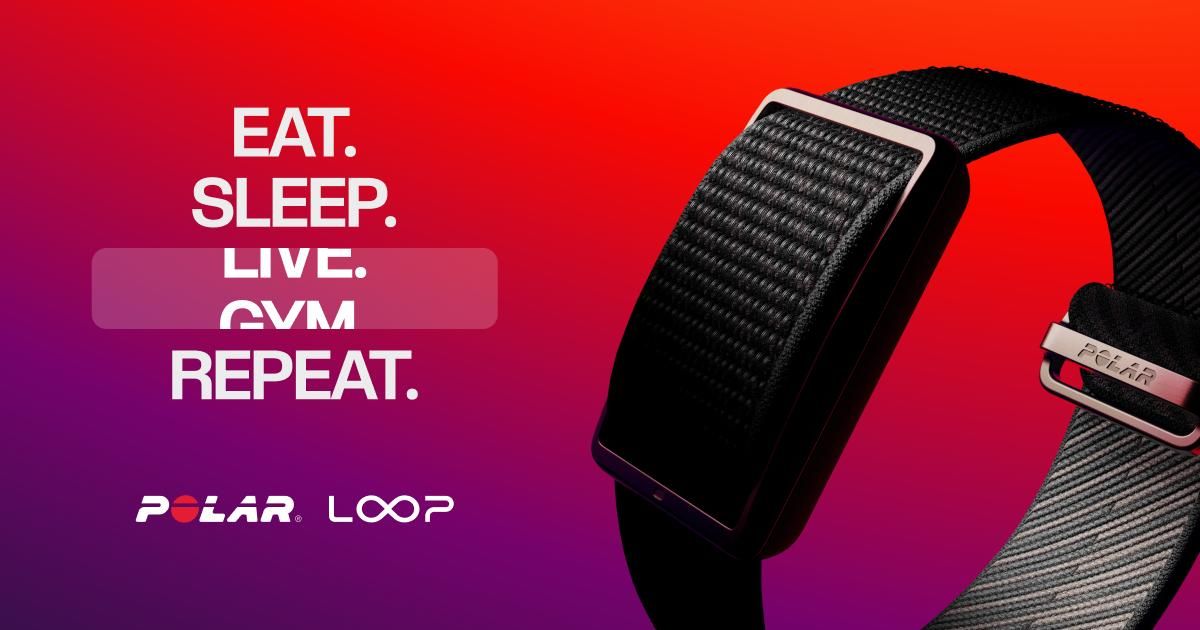
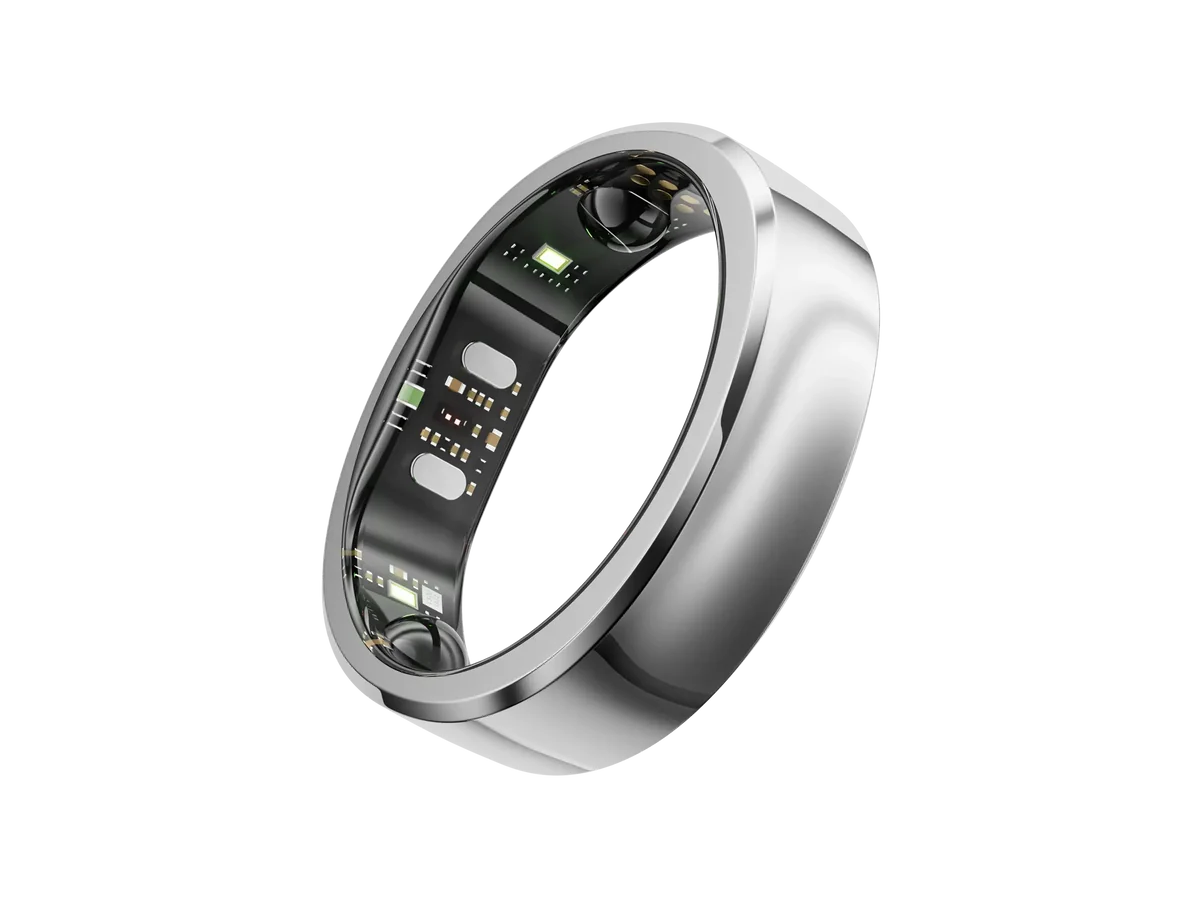
~$169.99 (reference price at the time of writing — check the live listing) buys a 29-gram band running Polar's Gen 3.5 optical heart-rate sensor (Polar calls it Precision Prime) plus an accelerometer — that's the full sensor list, confirmed on Polar's own product page. No SpO2 sensor, no skin-temperature sensor, no electrodes.3 Battery runs about 8 days over USB-C, and it's rated WR30, fine for showers and swimming laps.
What that sensor feeds is the actual reason to buy one: Nightly Recharge, which compares how hard your nervous system worked overnight against your own baseline and tells you whether you actually recovered, and SleepWise, which forecasts how alert you'll feel through the coming day. Add Sleep Plus Stages for sleep architecture and Training Load Pro for automatic training detection, and all of it lives free, forever, in the Polar Flow app — no premium tier exists to unlock more of it. That last part is genuinely rare in 2026, when Fitbit Air and Garmin Cirqa both have an optional paid tier sitting somewhere in their apps.
How Much Does WHOOP Cost? One vs Peak vs Life
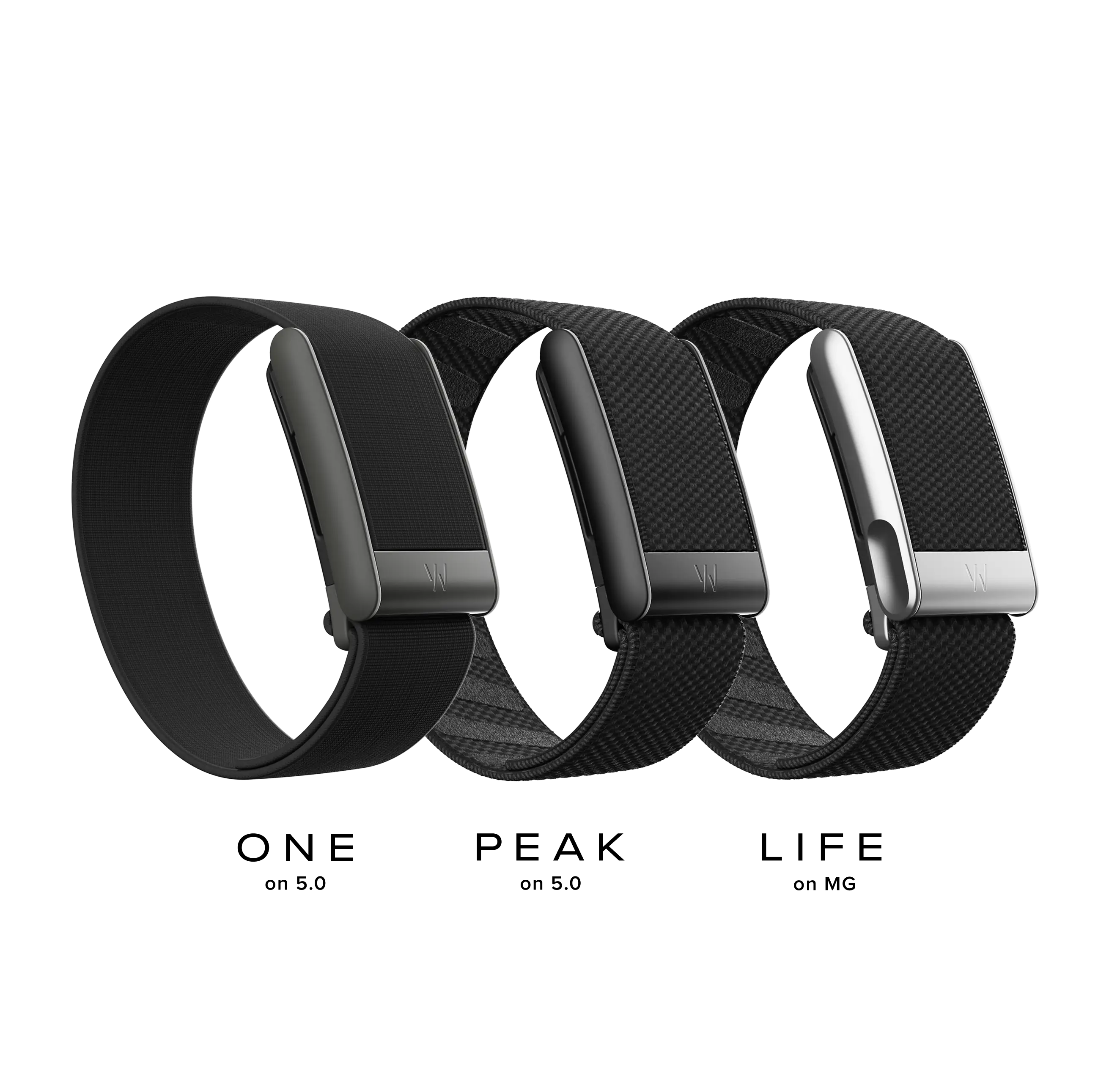
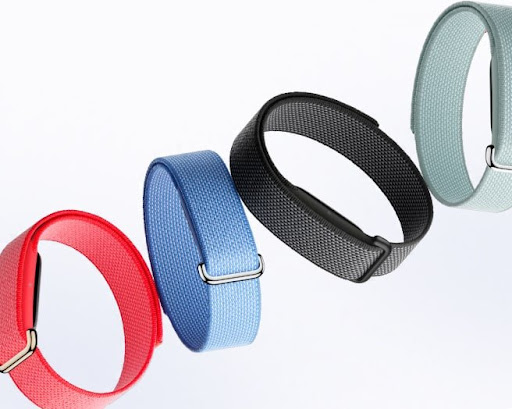
There's no one-time WHOOP. Every plan bundles hardware with a required annual membership:
| Plan (2026)* | Hardware | Per year | What you get |
|---|---|---|---|
| WHOOP One | WHOOP 5.0 | ~$199 | Sleep, strain, recovery, VO2 max, hormonal insights — the core experience |
| WHOOP Peak | WHOOP 5.0 | ~$239 | + Healthspan (WHOOP Age, Pace of Aging), real-time health alerts, stress tracking |
| WHOOP Life | WHOOP MG | ~$359 | + On-demand ECG (Heart Screener), Blood Pressure Insights, Luxe band |
*Reference pricing at the time of writing; WHOOP sets membership rates and they can change — check whoop.com or the live Amazon listing.4 Tier-by-tier breakdown of which upgrade is worth it: our WHOOP 5.0 vs WHOOP MG guide.
Every tier also outsenses the Loop: WHOOP tracks SpO2 and skin temperature around the clock in addition to heart rate and HRV, none of which the base Polar Loop measures. Stop paying, on any tier, and the band goes dark — no strain, no recovery, no sleep data, nothing.
Polar Loop vs WHOOP: What Do They Cost Over 3 Years?
This is the number that actually settles most purchases in this category, so here it is without rounding games:
| Cost over 3 years* | Polar Loop | WHOOP One | WHOOP Peak | WHOOP Life (MG) |
|---|---|---|---|---|
| Hardware | ~$169.99 | Included | Included | Included |
| Required fees × 3 yrs | $0 | ~$597 (~$199/yr) | ~$717 (~$239/yr) | ~$1,077 (~$359/yr) |
| Total | ~$169.99 | ~$597 | ~$717 | ~$1,077 |
| What you own after | The tracker | Nothing that works | ||
*Reference pricing at the time of writing; WHOOP sets membership rates and they can change.
Call it ~$427 to ~$907 saved over three years by choosing the Loop instead of WHOOP — a smaller gap than you'd see against the Fitbit Air or Helio Strap, purely because the Loop costs more to walk in the door, but still a wide margin. And unlike WHOOP, the Loop keeps working in year four, five and beyond at zero further cost.
Polar Loop vs WHOOP: Full Spec Comparison
| Feature | Polar Loop | WHOOP 5.0 / MG |
|---|---|---|
| Price | ~$169.99, once | Bundled with membership — no one-time option |
| Subscription | None, ever — no tier at all | Required — ~$199–$359/yr |
| Battery | ~8 days | 14+ days |
| Water rating | WR30 (~30m) | IP68, swim-safe to 10m for up to 2 hrs |
| Weight | 29g | 26.5g |
| Onboard GPS | ❌ Connected GPS via phone | ❌ Connected GPS via phone |
| HR sensor | Gen 3.5 optical (Precision Prime) | WHOOP proprietary optical |
| SpO2 / skin temperature | ❌ Neither | ✅ Both |
| ECG / AFib | ❌ None | ❌ 5.0: none · ✅ MG only (Life plan) |
| Auto workout detection | Weak — ranked last in third-party testing | Excellent — ranked #1 in third-party testing |
| Screen | None | None |
Sources: Polar (Loop specs), WHOOP (5.0/MG specs), DC Rainmaker (accuracy testing) — full list at the bottom.
Is the Polar Loop as Accurate as WHOOP at Detecting Workouts?
We haven't run these two side by side ourselves — this section leans on DC Rainmaker's August 2026 accuracy deep-dive, which put the WHOOP 5.0, Garmin Cirqa, Fitbit Air, Amazfit Helio Strap and Polar Loop through weeks of workouts, sleep and step tests, plus the5krunner's dedicated Polar Loop review (sources at the bottom).12
Start with the category DC Rainmaker calls arguably the most important for a screenless band: automatic workout detection. WHOOP came out on top of all five devices tested — "excellent, with very rare/few errors." The Polar Loop finished last, rated "barely passable," noted to often miss activities entirely and to not identify what type of workout it did catch even when it noticed something happening.2
the5krunner's own testing tells a similar story about the software wrapped around the sensor, not just the hardware. Its verdict on Polar Flow next to the WHOOP app: "nowhere near as capable... a major hurdle, as the app is key to the experience for this type of display-free product." WHOOP, by contrast, is "significantly more advanced, adding extra layers of insight and knowledge with its Coach and well-designed dashboard."1
None of this means the Loop's heart-rate data is bad. the5krunner's own sport-by-sport testing scored it well on steady running, HYROX-style circuits and trail runs — real weak spots only showed up in open-water swimming and hard upper-body gym efforts.1 What the testing actually shows is that the layer built on top of the data — deciding what you did, and coaching you on what to do next — is where WHOOP's decade-plus head start shows up clearly.
Does the Polar Loop Have an ECG or Detect AFib?
No. The Polar Loop's only sensor is that Gen 3.5 optical heart-rate module plus an accelerometer — no electrodes, no ECG, no SpO2 sensor and no skin-temperature sensor, confirmed directly on Polar's own product page.3 There's no rhythm-detection feature of any kind, on-demand or passive, at any price.
Only one version of WHOOP has this. The WHOOP MG — bundled specifically with the Life plan — has a real, FDA-cleared on-demand ECG called Heart Screener. Pinch the MG's conductive metal clasp for about 30 seconds and it records a genuine single-lead ECG, cleared by the FDA (510(k) K243236, decided April 4, 2025) after a validation trial that found 96.2% sensitivity and 99.4% specificity for classifying atrial fibrillation.56 The base WHOOP 5.0 — One and Peak plans — doesn't get this either; the feature is tied specifically to the MG's clasp hardware.
If heart-rhythm screening is a real reason you're shopping, that settles it on its own: the Polar Loop can't do it at any price, and only WHOOP's most expensive plan can. Our heart health and AFib guide covers how the MG's ECG compares across the whole screenless category.
Polar Flow or WHOOP — Whose App Do Owners Actually Trust?
Be honest about both sides here, because neither app is uniformly loved.
Polar Loop owner feedback has been genuinely mixed since its November 2025 launch — not about the hardware, which people generally like, but about setup and phone syncing in the first weeks of ownership. Polar has shipped several app updates since then and recent reports read better, but it's still worth reading the newest reviews on the listing before you buy rather than taking our word for it.
WHOOP's app has had years longer to sand its rough edges down, and it shows specifically in the coaching layer — the recovery percentage, strain targets and sleep coaching people actually renew their membership for. But it isn't flawless either: DC Rainmaker's testing found WHOOP's daily calorie totals ran surprisingly low compared to every other device tested, with step counts syncing on a roughly 10-minute lag.
Net read: WHOOP's app is more mature and its coaching layer is a real differentiator, but "more mature" isn't the same as "perfect" — and Polar's syncing complaints are a current, honest caveat, not old news that's been fully resolved.
Where WHOOP Still Wins
Strain and recovery coaching. WHOOP doesn't just show numbers, it tells you what to do with them — a morning recovery percentage, strain targets that stop you from junk-training into a hole, sleep coaching that actually nudges your bedtime. Polar's Nightly Recharge and SleepWise are genuinely good at describing your sleep; WHOOP's Coach goes further, layering daily guidance on top, and multiple independent reviewers rate that gap as real, not marketing.1
Automatic workout detection. Ranked #1 in DC Rainmaker's testing against the Loop's last-place finish. If you want a band that just knows what you did without you pressing anything, WHOOP is the one that actually delivers that today.2
The MG's real ECG. Covered above — nothing else in this comparison offers anything like it.
Battery and sensors. 14+ days versus the Loop's 8, plus SpO2 and skin-temperature tracking the Loop doesn't have at all.
Where the Polar Loop Wins
Zero subscription — not even an optional one. Fitbit Air has an optional Google Health Premium tier. Garmin Cirqa has an optional Connect+ tier gating one real feature. The Polar Loop has no tier of any kind to opt into. Everything it measures is free, permanently, in Polar Flow.
Real sports-science sleep pedigree. Nightly Recharge and SleepWise are the same analytics Polar ships on its sports watches — decades of physiology research behind a ~$170 fabric band, not a repackaged generic sleep score.
The long-run math, despite the higher entry price. Even paying ~$70 more than the Fitbit Air or Helio Strap up front, ~$169.99 once still beats WHOOP's cheapest year by a wide margin, and every year after that is free.
A calmer experience if coaching isn't what you want. No strain score nagging you, no daily target to hit — just an honest read on how recovered you are, which is genuinely all some people are shopping for.
Polar Loop vs WHOOP: Pros and Cons
Polar Loop
- ✓ Real sports-science sleep analytics — Nightly Recharge, SleepWise — free forever
- ✓ ~$169.99 once, no subscription of any kind, not even an optional one
- ✓ Comfortable 29g band, 8-day battery, USB-C, WR30
- ✓ Automatic training detection for walks, runs, rides
- ✕ ~$70 more upfront than the Fitbit Air and Helio Strap, the other no-sub picks
- ✕ Automatic workout detection ranked last in third-party testing
- ✕ No ECG, no SpO2, no skin-temperature sensor
- ✕ Mixed early owner feedback on setup and app syncing
WHOOP 5.0 / MG
- ✓ Best-in-class recovery and strain coaching
- ✓ Excellent automatic workout detection — ranked #1 in third-party testing
- ✓ MG's real, FDA-cleared on-demand ECG (Life plan)
- ✓ 14+ day battery, plus SpO2 and skin-temperature sensors
- ✕ ~$199–$359 every year, forever — no one-time purchase exists
- ✕ Band stops working completely if the membership lapses
- ✕ Base 5.0 has zero heart-rhythm feature — ECG is Life-plan only
- ✕ Calorie totals ran low and step sync lagged in DC Rainmaker's testing
Who Should Buy the Polar Loop — and Who Should Buy WHOOP?
Buy the Polar Loop if you…
- Want real sports-science sleep and recovery data without ever paying a subscription — not even an optional one
- Are already in the Polar ecosystem and want 24/7 data in the same Flow account as a Polar watch
- Care more about how you slept than how precisely a workout got logged
- Have decided the ~$70 premium over the Fitbit Air or Helio Strap is worth it specifically for Polar's sleep science
Buy WHOOP if you…
- Will genuinely read and act on a daily strain and recovery score
- Want the best automatic workout detection of any screenless band, hands-down
- Specifically need the MG's on-demand ECG (Life plan only)
- Have done the 3-year math and decided the coaching is worth it — a legitimate call, if you make it with open eyes
Neither Sounds Right? A Few More Doors
- Want a cheaper no-subscription entry point? → Fitbit Air vs WHOOP 5.0 puts the ~$99 band up against WHOOP directly.
- Want more training depth without a subscription? → Garmin Cirqa vs WHOOP.
- Want every no-subscription option in one place? → Best WHOOP Alternatives Without a Subscription.
Polar Loop or WHOOP? Bottom Line
Polar Loop and WHOOP aren't really fighting for the same buyer, and pretending otherwise would be dishonest. If what pulled you toward WHOOP was genuinely its coaching — the daily strain number, the automatic detection, the MG's ECG — the Polar Loop won't replace that, and third-party testing backs that up plainly. But if what you actually want is Polar's real sleep-and-recovery science, minus the bill, minus even an optional premium tier, the Loop does that job as well as anything in this category, and ~$169.99 once still beats WHOOP's cheapest year by a wide margin.
For most people who came here specifically comparing these two: buy WHOOP if you'll use the coaching, buy the Polar Loop if sleep is the whole reason you're shopping. Everyone in between should probably look at the Fitbit Air or Garmin Cirqa first.
Polar Loop vs WHOOP FAQ
Does the Polar Loop need a subscription like WHOOP does?
No. Everything the Loop tracks — including Nightly Recharge and SleepWise — is free forever in the Polar Flow app, and there's no premium tier at all, not even an optional one. WHOOP is the opposite: every plan requires an active membership, from about $199 to $359 a year, or the band stops working.
Is the Polar Loop as good as WHOOP for training, not just sleep?
No, and Polar doesn't really claim otherwise. The Loop's automatic workout detection ranked last in DC Rainmaker's third-party testing, and the5krunner's review found the Polar Flow app "nowhere near as capable" as WHOOP's for coaching. The Loop is built around sleep and recovery first, with training detection as a secondary feature.
Does the Polar Loop have an ECG or detect AFib?
No — the Loop has no electrodes, ECG, SpO2 sensor or skin-temperature sensor of any kind, confirmed on Polar's own spec page. Only the WHOOP MG, available on the Life plan (~$359/yr), has a real FDA-cleared on-demand ECG. The base WHOOP 5.0 doesn't have one either.
How much does WHOOP cost compared to the Polar Loop over time?
The Polar Loop is ~$169.99 once, with zero required fees after that. WHOOP has no one-time option: One runs about $199/year, Peak about $239/year, and Life (with the MG's ECG) about $359/year, every year. Over three years that's roughly $427 to $907 more than the Polar Loop, even though the Loop itself costs more upfront than the Fitbit Air or Amazfit Helio Strap.
Is Polar Loop's automatic workout detection reliable?
Not especially, per third-party testing. DC Rainmaker's 2026 accuracy deep-dive rated it "barely passable," noting it often misses activities entirely and doesn't identify what type of workout it did catch. WHOOP ranked first in the same test, described as "excellent, with very rare/few errors."
Polar Loop or WHOOP — which should I buy?
Buy the Polar Loop if real sports-science sleep and recovery data with zero subscription — ever — is genuinely what you want; it's not trying to be a training tool. Buy WHOOP if you'll actually use its daily strain coaching, want the best automatic workout detection in the category, or specifically need the MG's ECG. They're solving different problems more than they're competing head-to-head.
Sources
- the5krunner — Polar LOOP vs WHOOP: Review After Six Sports Tests: sport-by-sport accuracy scores, Polar Flow vs WHOOP app verdict, "not a direct Whoop competitor" framing.
- DC Rainmaker — Accuracy Deep-Dive: Cirqa vs Whoop 5.0, Fitbit Air, Helio, Polar Loop: automatic workout detection ranking, Polar Loop vs WHOOP findings.
- Polar — Polar Loop official product page: sensors, battery, weight, water rating, confirms no ECG/SpO2/skin-temperature sensor.
- WHOOP — Membership options: One/Peak/Life tier pricing and included hardware.
- WHOOP — Heart Screener: MG ECG feature description and Life-plan requirement.
- FDA 510(k) database via Innolitics — WHOOP ECG (electrocardiogram) Feature (1.0), K243236: Class II clearance, decision date, validation trial sensitivity/specificity.