Best Fitness Trackers With Long Battery Life (2026): Claimed vs. Real Days
Quick answer: WHOOP 5.0 and WHOOP MG claim the longest battery, 14+ days, and charge on the wrist. The RingConn Gen 3 ring claims 11 to 14 days with vibration off; the Amazfit Helio Strap and Garmin Cirqa claim up to 10. In reviews we read, DC Rainmaker logged about 7 days on the Fitbit Air and 6 to 7 on the Oura Ring 5.
Battery is the quiet reason people drop a wearable. A tracker that sits on a charger every third night stops tracking sleep, which is the one thing it was bought for. So this page ranks nine screenless trackers and smart rings by the days their makers claim, then shows where independent testers landed. Prices live in each linked review. For the full lineup, see our screenless fitness tracker rankings.
- Longest claim: WHOOP 5.0 / MG (14+ days), and it charges while you wear it
- Longest ring claim: RingConn Gen 3 (11 to 14 days, vibration off)
- Longest no-fee band claim: Amazfit Helio Strap and Garmin Cirqa (up to 10 days each)
- Fastest top-up: Google Fitbit Air (5 minutes for about a day)
Which Fitness Trackers Have the Longest Battery Life?
On manufacturer claims, WHOOP 5.0 and WHOOP MG lead at 14+ days, followed by the RingConn Gen 3 ring at up to 14 days with vibration off. Everything else claims 10 days or fewer for the device itself; Samsung's 14 days counts a full cradle charge. The table is sorted by the lowest number in each brand's claim, highest first, and the fourth column says what that number assumes.
| Tracker | Form | Brand-claimed battery | What the claim assumes | Charging | Independent check |
|---|---|---|---|---|---|
| WHOOP 5.0 / WHOOP MG | Band (wrist or arm) | 14+ days | No conditions stated on the pages we read | Wireless PowerPack on the wrist (about 110 min) or Basic Charger (about 152 min) | None found |
| RingConn Gen 3 | Ring | 11 to 14 days (vibration off); 10 to 12 days (vibration on) | Depends on settings, size and usage, per RingConn | Universal wireless case, ring charges in about 90 min | None we read |
| Amazfit Helio Strap | Band (wrist or arm) | Up to 10 days | "Typical use," not defined | Magnetic charging head; you supply the USB-C cable | None we read |
| Garmin Cirqa | Band | Up to 10 days | Pulse Ox and heart rate broadcast shorten it, no figure published | Garmin proprietary plug, USB-C on the other end; full charge up to 90 min | One reader comment says it falls short; no measured test yet |
| Polar Loop | Band | Up to about 8 days | "Typical usage" per Polar's FAQ | Polar Charge 2.0 cable, USB-C | None we read |
| Google Fitbit Air | Band | Up to 7 days | Google: "Actual battery life may be lower" | Proprietary cable; 5 min buys about a day, about 90 min for full | DC Rainmaker: about 7 days; TechGuySmartBuy: 4 to 5 days |
| Samsung Galaxy Ring | Ring | Up to 7 days; up to 14 days with one full cradle charge | Conditions not specified | Charging cradle with LED indicators | None we read |
| Garmin Index Sleep Monitor | Upper-arm sleep band | 7 nights | Assumes continuous Pulse Ox | Garmin charging cable | DC Rainmaker: roughly 8 to 9 days of sleep data |
| Oura Ring 5 | Ring | 6 to 9 days | Depends on ring size and usage | Size-specific dock, about 80 min; optional Charging Case sold separately | DC Rainmaker: 6 to 7 days (size 10) |
Brand figures as published on the sources listed at the bottom, read November 7, 2026. "Independent check" means a hands-on test by another publication, not ours. Kudomax has tested none of these nine.
Why Does Real Battery Life Differ From the Claim?
Because the claim is a best case, and the brands say so in small print. Google's Fitbit Air announcement footnotes that "actual battery life may be lower." Amazfit rates the Helio Strap at up to 10 days for "typical use" without defining it. Oura's store page says app settings, enabled features, activity and battery age all affect the result.
The specific levers matter more than the headline number:
- Sensors left on. Garmin rates the Index Sleep Monitor at 7 nights with continuous Pulse Ox. On the Cirqa, Garmin says Pulse Ox and heart rate broadcasting both reduce the 10 days and has not published a figure for either.
- Vibration alerts. RingConn's own table drops from 11 to 14 days to 10 to 12 days when vibration is on.
- Size and age. Oura says ring size changes the result. DC Rainmaker also notes Oura rings seem to lose battery over time, so a fresh unit flatters the first months.
- Workouts. DC Rainmaker's Fitbit Air week included 2 to 4 hours of workouts a day and still came out at about 7 days. His Oura Ring 5 logs, with 1 to 2 hours of daily workouts, came in at 6 to 7 days against a 6 to 9 day claim.
GPS is not the main lever here. Watches quote separate GPS-mode hours, and none of these nine is sold as a standalone GPS device. If you want a GPS watch, that is a different battery question. We can't promise any tracker will hit its claim, including the ones we link below.
How Do These Trackers Charge?
Five different ways, and the method decides how often you feel the battery. WHOOP is the only one here you can charge without taking the sensor off, using its Wireless PowerPack on the wrist; the5krunner lists about 110 minutes for the PowerPack and about 152 for the wired Basic Charger. The RingConn Gen 3 and Samsung Galaxy Ring use a case or cradle that doubles as storage and a power bank, which is where Samsung's 14-day figure comes from. The Oura Ring 5 uses a size-specific dock, with an optional Charging Case that Oura says gives a full day in 10 minutes.
On the band side, the Helio Strap uses a magnetic head and you supply the USB-C cable. The Garmin Cirqa uses Garmin's proprietary plug (the same port as its watches), and the Polar Loop uses a Polar Charge 2.0 cable. The Fitbit Air uses yet another new Fitbit cable, which DC Rainmaker flagged as a downside if you own older Fitbit chargers, but it charges fast: 5 minutes for about a day. We found no brand page that spells out pogo-pin versus magnet contacts beyond what is above, so we are not guessing at connector types.
One practical note: a proprietary charger is one more thing to lose. Our Oura Ring charger replacement guide shows what a lost dock costs.
Ring or Band: Which Gives You Fewer Charging Days?
Neither format wins on days alone. Brand claims for rings span 6 to 14 days and for bands 7 to 14. The real split is the routine. Our inference from the charge times above: a ring is off your finger for roughly 80 to 90 minutes per charge, so it suits a shower or a desk session, while a band like the Fitbit Air or WHOOP can top up in minutes or on the wrist. If sleep tracking is the point, pick the format you can charge during hours you're awake anyway. Our smart ring vs fitness band guide covers the comfort side of that choice.
The 9 Trackers, From Longest Claim Down
1. WHOOP 5.0 / WHOOP MG: 14+ days, charges on the wrist
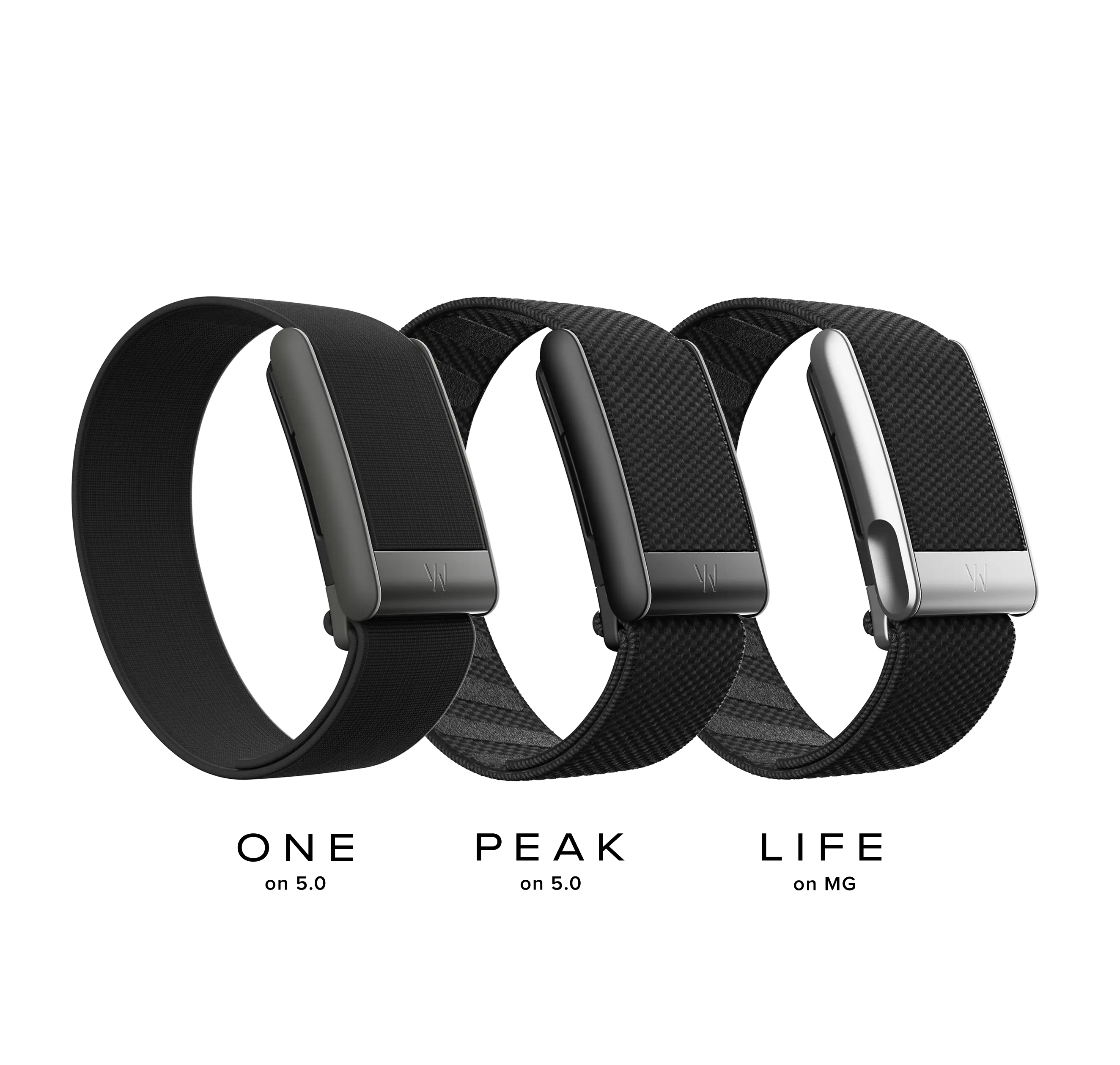
WHOOP says its 5.0 and MG sensors last 14+ days, nearly three times WHOOP 4.0, and the Wireless PowerPack lets you charge without taking the band off. The5krunner's spec sheet says the pack holds a charge for up to 30 days between its own USB-C recharges, though a WHOOP podcast summary gives a different figure, so treat the pack's reserve loosely. The catch: WHOOP is a membership product, so the battery is not the only recurring cost. Our WHOOP pricing guide and WHOOP 5.0 vs MG comparison cover that. We did not find an independent measured battery test to compare against the 14-day claim.
Related: WHOOP alternatives with no subscription.
2. RingConn Gen 3: the longest ring claim

RingConn publishes the most careful ring numbers here: 11 to 14 days with vibration off and 10 to 12 with it on, depending on settings, size and usage. The universal wireless case charges the ring in about 90 minutes. If you want vibration alerts, plan on the lower range. There is no required subscription. Our RingConn Gen 3 review has the price and owner-reported battery.
Also see the best smart rings with no subscription.
3. Amazfit Helio Strap: up to 10 days for about $100
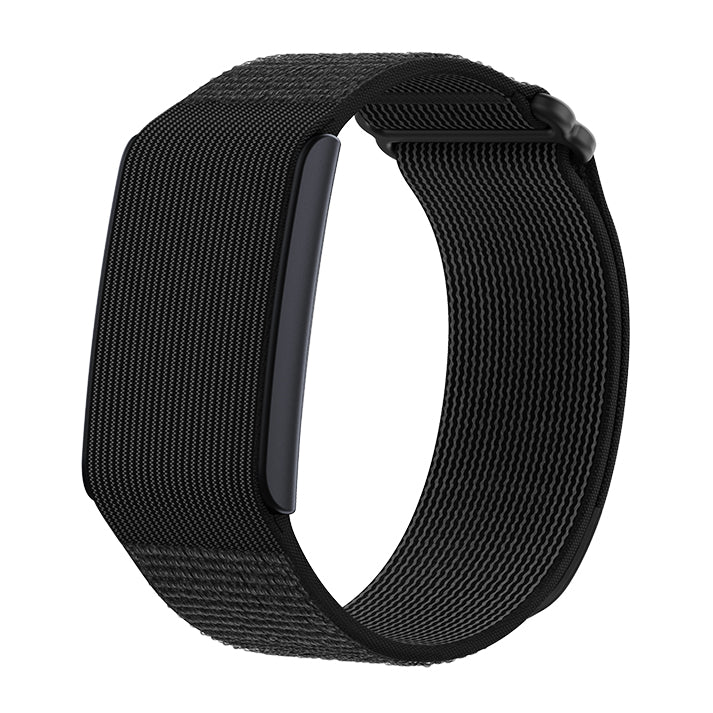
The Helio Strap's spec table says up to 10 days of typical use on a 232 mAh cell, charged through a magnetic head. A USB-C cable is required and not supplied, per the5krunner. The band weighs 20 g, launched at $99.99 and has no required subscription. Amazfit doesn't define typical use, so heavy workout days will likely shorten it (our inference). See our Amazfit Helio Strap review.
4. Garmin Cirqa: up to 10 days, with fine print
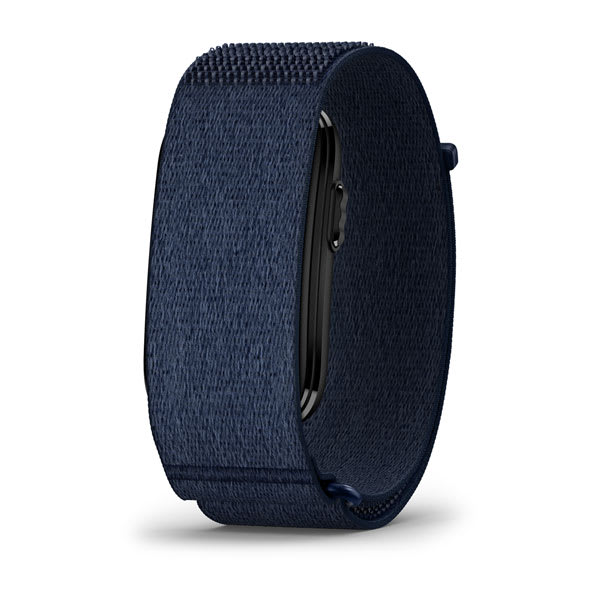
Garmin claims up to 10 days, says Pulse Ox and heart rate broadcasting shorten it, and has not published a figure for either. The charger is Garmin's proprietary plug with USB-C on the other end, and a full charge takes up to 90 minutes. One reader comment on DC Rainmaker's post says the band falls well short of 10 days, which is a single anecdote, not a test. Garmin's launch price was $199.99, with no required subscription. Our Garmin Cirqa review goes deeper.
5. Polar Loop: up to 8 days
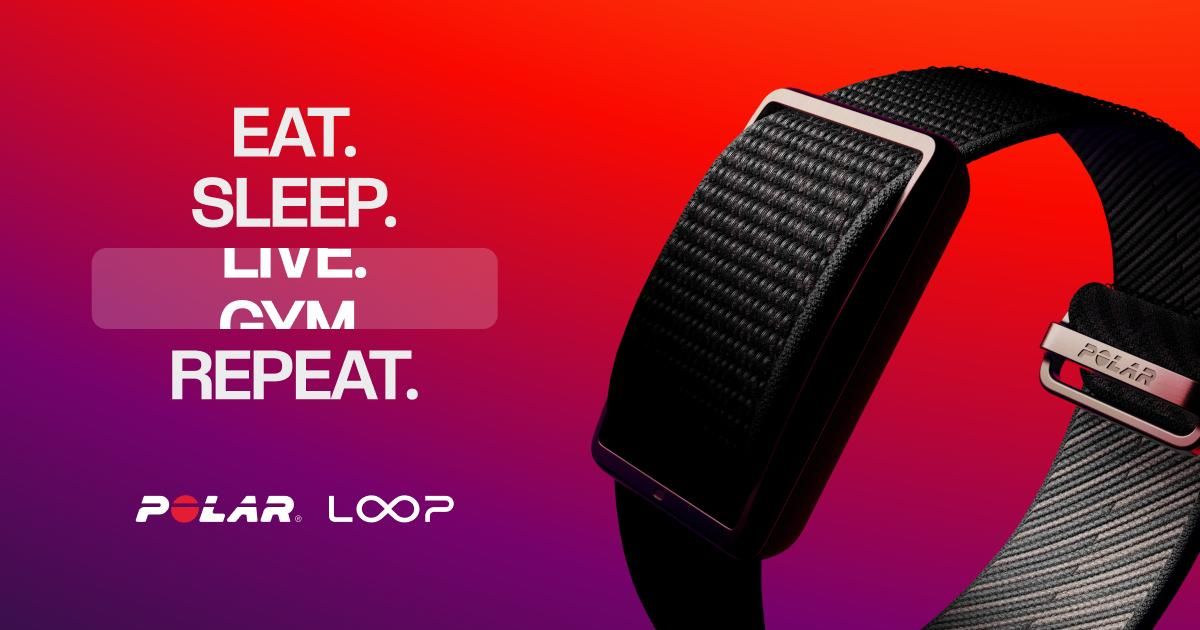
Polar says up to 8 days on a single charge, which its FAQ qualifies as typical usage, on a 170 mAh battery. It ships with the Polar Charge 2.0 cable. Polar lists it at $199.99. Eight days is fine, not special, and the Loop's case rests on Polar's recovery analytics more than its battery. Read our Polar Loop review.
6. Google Fitbit Air: 7 days claimed, and the fastest top-up
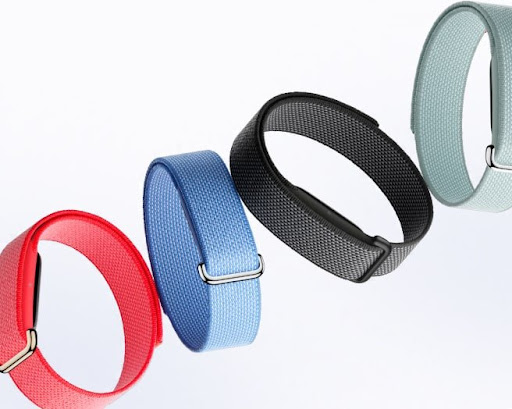
Google claims up to a week and a 5-minute fast charge for about a day; DC Rainmaker's spec list says about 90 minutes for a full charge. In his own week, with 2 to 4 hours of workouts a day, a unit charged to 95% was at 10% about seven days later, so the claim held for him. TechGuySmartBuy only got 4 to 5 days over two weeks, so results vary. It was announced at $99.99 with a 3-month Google Health Premium trial. Our Google Fitbit Air review covers the subscription question.
7. Samsung Galaxy Ring: 7 days, 14 with the cradle
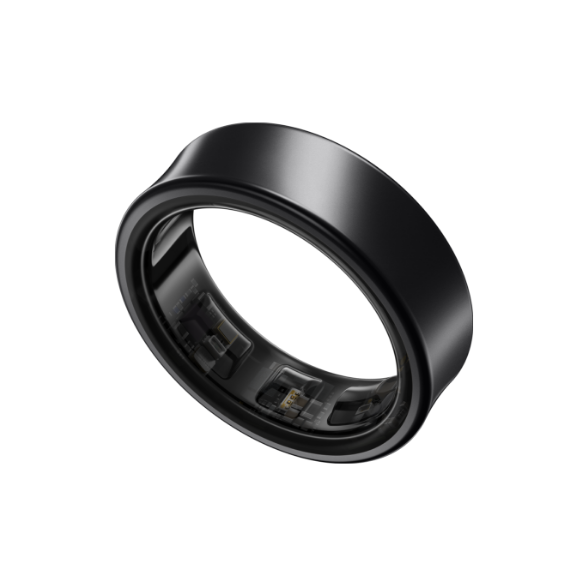
Samsung's page says you can use the Galaxy Ring for up to 14 days without an outlet when you count one full charge from the cradle, and it cites a seven-day figure for the ring itself without stating conditions. It works with Android phones only, and some long-term owners report fading battery, per our Samsung Galaxy Ring review. Samsung lists it from $299.99 before trade-in.
8. Garmin Index Sleep Monitor: 7 nights claimed, 8 to 9 days observed
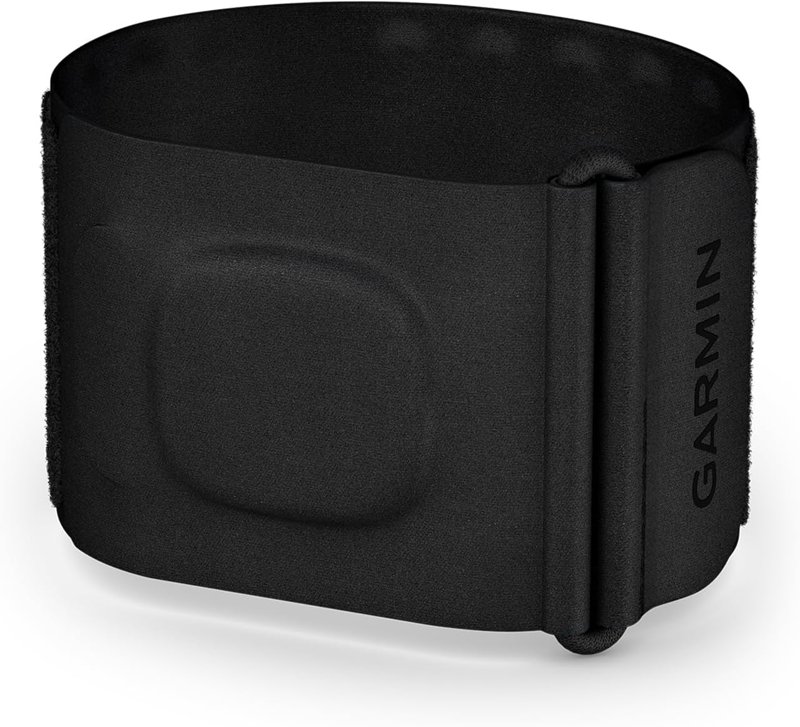
Garmin rates it at up to 7 nights with continuous Pulse Ox. DC Rainmaker saw roughly 8 to 9 days of sleep data per charge with typically 6 to 8 hours of wear a day, so the claim looks conservative for sleep use. It is a sleep-focused armband, not an all-day tracker. Garmin's launch price was $169.99. See our Garmin Index Sleep Monitor review.
9. Oura Ring 5: 6 to 9 days, with a case for fast top-ups

Oura claims 6 to 9 days depending on ring size and usage, about 80 minutes to charge, and a separate Charging Case that Oura says gives a full day in 10 minutes. DC Rainmaker logged 7, 6, 6 and roughly 6 days over four weeks on a size 10 with 1 to 2 hours of daily workouts, which he called within spec but not 9 days. Oura's store lists $399 for Silver and Black, and Oura charges a monthly membership. See our Oura Ring 5 review.
Who Should Pick What?
- You hate charging and accept a membership: WHOOP 5.0 / MG, for the 14+ day claim and on-wrist charging.
- You want a ring and the fewest charges: RingConn Gen 3, with vibration alerts off if you want the 14-day end.
- You want a no-fee band with 10 days claimed: Amazfit Helio Strap (cheaper) or Garmin Cirqa (more training data, more caveats).
- You'd rather top up fast than go long: Google Fitbit Air, 5 minutes for about a day.
- You only care about sleep nights: Garmin Index Sleep Monitor, where the one independent test beat the claim.
- You want deep ring analytics: Oura Ring 5, expecting 6 to 7 days in practice. The Galaxy Ring suits Android phones only.
The honest limit: a battery claim is the maker's best case, and your settings, ring size, workouts and the age of the cell decide the rest. Don't buy a tracker on the day count alone.
Fitness Tracker Battery Life FAQ
What fitness tracker has the longest battery life?
On brand claims, WHOOP 5.0 and WHOOP MG, at 14+ days per charge. The RingConn Gen 3 ring is next at 11 to 14 days with vibration off. The Amazfit Helio Strap and Garmin Cirqa both claim up to 10 days. These are manufacturer figures, and we have not tested any of them hands-on.
Which smart ring has the best battery life?
The RingConn Gen 3, by its maker's numbers: 10 to 12 days with vibration alerts on and 11 to 14 days with them off. The Oura Ring 5 claims 6 to 9 days, and the Samsung Galaxy Ring claims up to 7 days, or up to 14 days counting one full charge from its cradle.
Is a 14-day battery claim realistic?
Treat it as a ceiling. Brands use phrases like up to or typical use, and settings, ring size, sensors left on all night and battery age all cut into it. In the independent tests we read, the Fitbit Air matched its 7-day claim in DC Rainmaker's week but managed only 4 to 5 days in TechGuySmartBuy's two weeks, while a long-term Oura Ring 5 test logged 6 to 7 days against a 6 to 9 day claim.
Do ring or band trackers last longer on a charge?
Neither wins outright. Brand claims for rings run from 6 to 14 days and for bands from 7 to 14 days. Our inference: the bigger difference is how you charge. A ring leaves your finger for about 80 to 90 minutes, while WHOOP can charge on the wrist and the Fitbit Air adds a day of power in 5 minutes.
Does continuous heart rate or Pulse Ox drain the battery faster?
Yes. Garmin says enabling Pulse Ox and broadcasting heart rate to other devices both shorten the Cirqa's battery life, and it has not published a figure for either. RingConn's claim is also lower with vibration alerts on. Always read which settings a day count assumes.
Do any of these need a subscription to work?
WHOOP does: it is a membership product, so see our WHOOP pricing guide before you buy. Oura also charges a monthly membership for most features. Per each brand's pages and our reviews, the Fitbit Air, Helio Strap, Polar Loop, Garmin Cirqa, RingConn Gen 3, Galaxy Ring and Garmin Index Sleep Monitor work without a required subscription.
Sources
- WHOOP 5.0 and MG specs (the5krunner): the5krunner.com. 14+ day claim, Wireless PowerPack and Basic Charger charge times.
- WHOOP support: Unlock New with WHOOP 5.0: support.whoop.com. The 14+ day figure and charge times as WHOOP states them. This page would not load for us, so we relied on the5krunner above and on the snippet shown in search results.
- RingConn Gen 3: What's new: ringconn.com. 10 to 12 days with vibration on, 11 to 14 days with it off, wireless case, about 90 min ring charge.
- Amazfit Helio Strap specs (the5krunner): the5krunner.com. Up to 10 days typical use, magnetic head, USB-C cable not supplied.
- Garmin Cirqa launch press release: www.garmin.com. Up to 10 days of battery life, $199.99, no subscription.
- Garmin Cirqa specs (the5krunner): the5krunner.com. Pulse Ox and broadcast caveats, plug charger, up to 90 min charge.
- Garmin Cirqa (DC Rainmaker): www.dcrainmaker.com. 10 days claimed, proprietary charging port with USB-C at the other end.
- Polar Loop official page: www.polar.com. Up to 8 days, qualified as typical usage in the FAQ, Polar Charge 2.0 cable, $199.99.
- Google Fitbit Air announcement: blog.google. Up to a week of battery, five-minute fast charge for a full day, actual life may be lower, $99.99 at pre-order.
- Fitbit Air review (TechGuySmartBuy): techguysmartbuy.com. Two weeks of use, 4 to 5 days of battery against the 7-day claim.
- Fitbit Air review (DC Rainmaker): www.dcrainmaker.com. Spec list and one week of measured use against the 7-day claim.
- Samsung Galaxy Ring official page: www.samsung.com. Up to 14 days with a full cradle charge, charging cradle, from $299.99 before trade-in.
- Garmin Index Sleep Monitor launch press release: www.garmin.com. Up to 7 nights with continuous Pulse Ox tracking, $169.99 at launch.
- Garmin Index Sleep Monitor review (DC Rainmaker): www.dcrainmaker.com. Roughly 8 to 9 days of sleep data per charge in use.
- Oura Ring 5 store page: ouraring.com. 6 to 9 days, about 80 minute charge, Charging Case sold separately, $399 for Silver and Black.
- Oura Ring 5 in-depth review (DC Rainmaker): www.dcrainmaker.com. Four weeks of logged battery: 7, 6, 6 and about 6 days.