Garmin Cirqa vs WHOOP: The $199 One-Time Band vs the $199-a-Year Membership
Quick answer: Garmin Cirqa costs ~$199.99 once, weighs about 20 grams, and needs zero required fees, ever — Training Readiness, HRV status, Body Battery, VO2 max and 80+ activity profiles are all free forever in Garmin Connect, backed by a 10-day battery. WHOOP starts at ~$199/year and the band goes completely dark the moment you stop paying — Peak runs ~$239/yr, and Life (the only tier with a real, FDA-cleared ECG) runs ~$359/yr, with a 14+ day battery. WHOOP wins on recovery coaching, automatic workout detection and battery life; the Cirqa's one real caveat is that its live heart-rate graph during a workout needs the optional Garmin Connect+ tier. Most people leaving or avoiding WHOOP over cost should buy the Cirqa; those who'll actually use daily coaching, or specifically need the MG's ECG, should stick with WHOOP instead.
Garmin Cirqa costs about $199.99. WHOOP One costs about $199 a year. Whether that's a coincidence or a shot across WHOOP's bow, it's basically this entire comparison in two numbers: one company wants to be paid once, the other wants to be paid every year, indefinitely, or the wearable on your wrist stops doing anything at all.
Both are screen-free, both track sleep, heart rate, HRV and recovery around the clock, and both will disappear on your wrist in a way no smartwatch does. Past that, they're built to answer different questions. We haven't run these two side by side ourselves — this comparison leans on Garmin's and WHOOP's own specs, our own already-published reviews of each device, and DC Rainmaker's 2026 accuracy testing (sources at the bottom) — but the facts line up clearly enough to make a real call, not a shrug.
- Most people should buy the Garmin Cirqa (~$199.99 once, reference price at the time of writing) — the full Garmin training stack, free forever, with no bill arriving next year.
- Buy WHOOP if you'll actually use daily coaching — One (~$199/yr) for the core strain/recovery experience, or Life (~$359/yr) if the MG's real, FDA-cleared ECG matters to you specifically.
- One nuance before you decide: the Cirqa's hardware needs no subscription, but the live heart-rate graph during a workout is locked behind the optional Garmin Connect+ tier — the one asterisk on an otherwise subscription-free pitch.
What's the Real Difference Between the Cirqa and WHOOP? (You Buy One, You Rent the Other)
Strip away the sensors and the app screenshots, and this comparison comes down to a business model.
The Garmin Cirqa is a product. Pay $199.99 once (reference price at the time of writing — check the live listing) and Training Readiness, HRV status, Body Battery, sleep coaching, VO2 max and 80+ activity profiles are yours in Garmin Connect for as long as the hardware lasts. No bill next year. No bill ever, for that core experience.
WHOOP is a membership that happens to include a band. There is no version of WHOOP you buy outright. The 5.0 or MG hardware ships bundled with an active plan, and — this is the part that catches new shoppers off guard — stop paying and the band doesn't lose a few features. It stops working completely. No strain, no recovery, no sleep data, nothing. We covered exactly what that looks like day to day in our best WHOOP alternatives guide.
Both are screenless, which is the whole reason they're being compared here instead of against a Garmin Forerunner or an Apple Watch: nothing glowing on your wrist at 2 a.m., everything waiting in an app the next morning.
How Much Does the Garmin Cirqa Cost, and What's Actually Free?
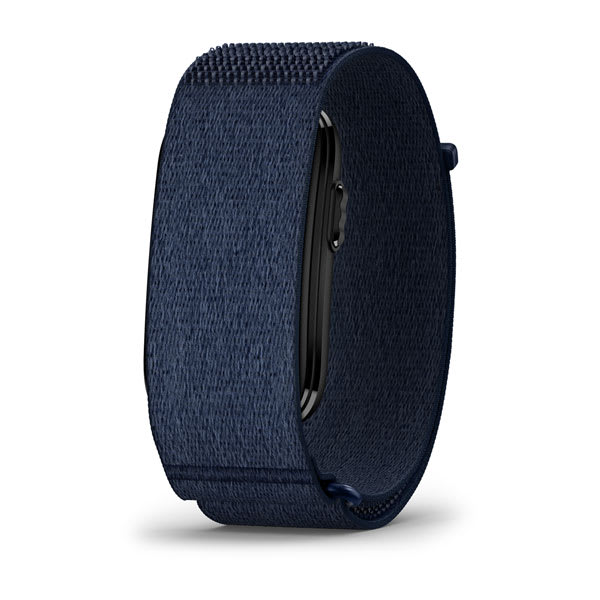
$199.99 is the whole price tag (reference price at the time of writing — check the live listing for what it's actually selling for today). For that, Garmin gives you the pod — 27 × 47 × 9mm, 14.8 grams, about 20 grams total with the woven nylon strap — running the Elevate Gen 4 optical sensor with skin temperature, Pulse Ox and an accelerometer, rated 5 ATM (showers, rain, pool laps — not open-water swimming, and there's no multisport profile). Battery is quoted at up to 10 days, and a full charge takes about 90 minutes through a proprietary four-pin cable.
Free, permanently, in Garmin Connect: Training Readiness, training load, Body Battery, HRV status, sleep score/stages/coach with nap detection, VO2 max (running only), recovery time, stress, respiration and 80+ activity profiles started from the band's own button. That's the deepest free feature set of any screenless band we've reviewed — see our full Cirqa review for the complete breakdown, including the launch bugs Garmin is still ironing out.
There's no onboard GPS (it uses your phone's, same as WHOOP), no altimeter, and no ECG of any kind — more on that below.
How Much Does WHOOP Cost? One vs Peak vs Life
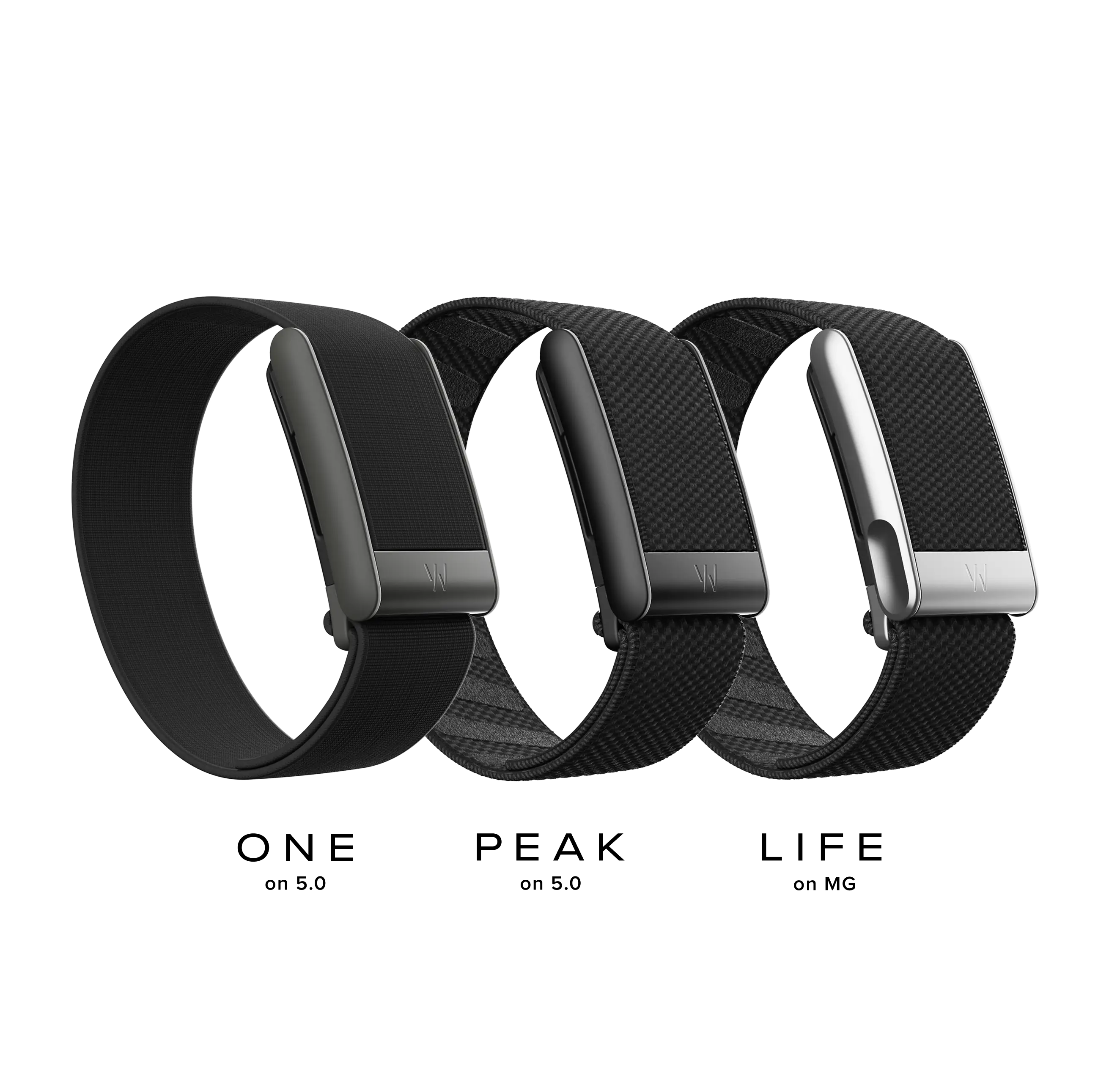
WHOOP doesn't have a version of this question with a single answer, because there's no one-time purchase at all. Every plan bundles hardware with a required annual membership:
| Plan (2026)* | Hardware | Per year | What you get |
|---|---|---|---|
| WHOOP One | WHOOP 5.0 | ~$199 | Sleep, strain, recovery, VO2 max, hormonal insights — the core experience |
| WHOOP Peak | WHOOP 5.0 | ~$239 | + Healthspan (WHOOP Age, Pace of Aging), real-time health alerts, stress tracking |
| WHOOP Life | WHOOP MG | ~$359 | + On-demand ECG (Heart Screener), Blood Pressure Insights, Luxe band |
*Reference pricing at the time of writing; WHOOP sets membership rates and they can change — check whoop.com or the live Amazon listing. Full tier-by-tier breakdown, including which upgrade is actually worth it: our WHOOP 5.0 vs WHOOP MG guide.
Under the hood, the 5.0 and MG share the same sensor platform. The real hardware jump this generation is battery — WHOOP quotes 14+ days, and both the 5.0 and MG carry an IP68 rating, swim-safe to 10 meters for up to two hours. Like the Cirqa, neither has onboard GPS; WHOOP has confirmed directly that outdoor route and pace data need your phone's connected GPS to work.
Garmin Cirqa vs WHOOP: What Do They Cost Over 3 Years?
This is the number that actually decides most of these purchases, so here it is with no rounding games:
| Cost over 3 years* | Garmin Cirqa | WHOOP One | WHOOP Peak | WHOOP Life (MG) |
|---|---|---|---|---|
| Hardware | $199.99 | Included | Included | Included |
| Required fees × 3 yrs | $0 | ~$597 (~$199/yr) | ~$717 (~$239/yr) | ~$1,077 (~$359/yr) |
| Total | ~$199.99 | ~$597 | ~$717 | ~$1,077 |
| What you own after | The tracker | Nothing that works | ||
*Reference pricing at the time of writing; WHOOP sets membership rates and they can change.
Call it $400 to $875 saved over three years by going with the Cirqa instead of WHOOP — and unlike WHOOP, that Cirqa keeps working in year four, five and beyond at zero further cost. The counter-argument is a real one, and we'll get to it: WHOOP's coaching is genuinely more sophisticated, and for the right person that's worth paying for every year. Just make the call knowing the number.
Does the Garmin Cirqa Really Need No Subscription at All?
Mostly, but not entirely — and it's worth being precise here, because it's the detail most "no subscription" headlines skip.
Every feature that makes the Cirqa worth buying — Training Readiness, HRV status, Body Battery, training load, sleep coaching, VO2 max, all 80+ activity profiles — works with zero payment required, forever. Garmin Connect+ is genuinely optional for the core pitch of this device.
But one specific, real feature sits behind that optional Connect+ tier: the live heart-rate graph shown in Garmin Connect while a workout is actually happening. Since the Cirqa has no screen of its own, your phone is the only place to see that number in real time — and DC Rainmaker's hands-on called the free version of that live-activity view "astonishingly disappointing." There's a genuinely good free workaround: the Cirqa broadcasts heart rate over ANT+ and Bluetooth, so any watch, bike computer or gym app can display it live without Connect+ at all. But needing a second device to see the number your first device is measuring is a strange asterisk on a band whose entire pitch is "no subscription required" — and it's the one place a buyer could reasonably feel misled if nobody mentioned it. We're mentioning it.
Garmin Cirqa vs WHOOP: Full Spec Comparison
| Feature | Garmin Cirqa | WHOOP 5.0 / MG |
|---|---|---|
| Price | $199.99, once | Bundled with membership — no one-time option |
| Subscription | None required (Connect+ optional) | Required — ~$199–$359/yr |
| Battery | ~10 days | 14+ days |
| Charge time | ~90 min (proprietary 4-pin cable) | 152 min (Basic) / 110 min (PowerPack) |
| Water rating | 5 ATM (pool-safe, not open water) | IP68, swim-safe to 10m for up to 2 hrs |
| Weight | ~20g (14.8g pod) | 26.5g |
| Dimensions | 27 × 47 × 9mm pod | 34.7 × 24 × 10.6mm |
| Onboard GPS | ❌ Connected GPS via phone | ❌ Connected GPS via phone |
| HR sensor | Elevate Gen 4 optical | WHOOP proprietary optical |
| HR broadcast to other devices | ✅ ANT+ & Bluetooth | ❌ Stays in the WHOOP app |
| ECG / AFib | ❌ None (basic HR threshold alert only) | ❌ 5.0: none · ✅ MG only (Life plan): FDA-cleared Heart Screener |
| Screen | None | None |
Sources: Garmin/the5krunner (Cirqa specs), WHOOP (5.0/MG specs) — full list at the bottom.
Which Is More Accurate — Cirqa or WHOOP?
We haven't lab-tested these two side by side ourselves, so we're leaning on DC Rainmaker's August 2026 accuracy deep-dive, which put the WHOOP 5.0, Garmin Cirqa, Fitbit Air, Amazfit Helio Strap and Polar Loop through weeks of workouts, sleep and step testing.
The Cirqa-vs-WHOOP findings specifically: indoor cycling was a wash — both "really good, no issues of concern." Outdoors is where they split. In cold-weather rides and hard running intervals, the Cirqa's wrist sensor struggled noticeably while WHOOP held its accuracy. On automatic workout detection — which DC Rainmaker calls arguably the most important category for a screenless wearable — WHOOP came back "excellent, with very rare/few errors," while the Cirqa was rated "good and getting better, but still a bit fuzzy," and specifically missed most moderate-intensity bike commutes that WHOOP caught every time. Sleep tracking, on the other hand, showed no meaningful difference between the two in 2026.
Translation: if a hard interval session or a bike commute is central to why you're buying either device, WHOOP's detection is the safer bet today. For daily heart rate, recovery trends and sleep, they're close enough that the subscription question should probably decide it instead.
Does Either the Cirqa or WHOOP Detect AFib?
Only one version of WHOOP, and it's worth being exact about which one. The WHOOP MG — the hardware bundled specifically with the Life plan — has a real, FDA-cleared on-demand ECG feature called Heart Screener. Pinch the MG's conductive metal clasp for about 30 seconds and it records a genuine single-lead ECG, cleared by the FDA (510(k) K243236, decided April 4, 2025) after a roughly 540-subject validation trial that found 96.2% sensitivity and 99.4% specificity for classifying atrial fibrillation.
The base WHOOP 5.0 — One and Peak plans — doesn't get any of this. No electrodes, no ECG, no passive rhythm notification either; the feature is tied specifically to the MG's clasp hardware.
And the Garmin Cirqa has no AFib feature at all, on any plan. Its only heart-rate alert is a basic, user-set high/low threshold — not a rhythm-detection algorithm — and it won't fire during your configured sleep window. Garmin's own spec sheet doesn't claim otherwise. If heart-rhythm screening is a real reason you're shopping, our heart health and AFib guide covers the entire screenless category device by device, including how the MG's ECG compares to an Apple Watch's.
Where WHOOP Still Wins
Being honest about this matters more than winning the argument for either side.
Recovery and strain coaching. WHOOP doesn't just show numbers, it tells you what to do with them — a morning recovery percentage, strain targets that stop you from junk-training into a hole, sleep coaching that actually nudges your bedtime. The Cirqa gives you Training Readiness and Body Battery, which are good, genuinely useful scores — but WHOOP's behavioral layer on top of similar data is still the most refined in the category, and it's the entire reason people pay for it.
The MG's real ECG. Covered above, and it's not a small thing. Nothing else in this comparison, including the Cirqa, offers anything like it.
More mature software. WHOOP's app has had years to get the rough edges out. The Cirqa launched July 24, 2026, and its first weeks came with the usual new-Garmin-product bugs: activity trimming that didn't work, Training Readiness scores swinging erratically, some activities failing to sync to third-party platforms, and auto-detected workouts needing manual confirmation. Garmin has already patched a number of these — see our full Cirqa review for the current state — but buying a brand-new Garmin category means accepting you're part of the shakedown period.
Battery. 14+ days versus the Cirqa's 10. Not decisive on its own, but it adds up over a year of charges.
Where the Cirqa Wins
Cost — specifically the shape of it. $199.99 once beats $199–$359 every year almost regardless of how you value WHOOP's coaching, unless you're certain you'll renew for years.
The full training stack, free. Training Readiness, HRV status, Body Battery, training load and VO2 max cost nothing extra on the Cirqa. On WHOOP, the deepest version of this coaching still depends on which membership tier you're paying for.
Heart-rate broadcasting. The Cirqa sends its heart rate over ANT+ and Bluetooth to any watch, bike computer, Peloton or gym app that accepts a strap. WHOOP has no equivalent — its data stays inside the WHOOP app and ecosystem.
It plugs into an existing Garmin history. If you already own a Garmin watch, the Cirqa's data folds into the same Garmin Connect account through Physio TrueUp, keeping your training-load continuity intact on rest days and overnight. WHOOP has no equivalent hook into a non-WHOOP ecosystem.
Garmin Cirqa vs WHOOP: Pros and Cons
Garmin Cirqa
- ✓ $199.99 once — no required subscription, ever
- ✓ Full training stack (readiness, load, HRV status, Body Battery) free
- ✓ Broadcasts heart rate over ANT+ and Bluetooth to other devices
- ✓ Folds into an existing Garmin Connect history
- ✕ Live workout heart-rate graph needs Garmin Connect+
- ✕ No ECG or AFib feature of any kind
- ✕ Rougher auto-detection and wrist accuracy in cold/intervals, per DC Rainmaker
- ✕ Launch-period software bugs; 10-day battery vs WHOOP's 14+
WHOOP 5.0 / MG
- ✓ Best-in-class recovery and strain coaching
- ✓ MG's real, FDA-cleared on-demand ECG (Life plan)
- ✓ 14+ day battery and excellent automatic workout detection
- ✓ Mature app athletes already trust
- ✕ ~$199–$359 every year, forever — no one-time purchase exists
- ✕ Band stops working completely if the membership lapses
- ✕ Base 5.0 has zero heart-rhythm feature — ECG is Life-plan only
- ✕ No heart-rate broadcasting to third-party devices
Who Should Buy the Cirqa — and Who Should Buy WHOOP?
Buy the Garmin Cirqa if you…
- Refuse to pay a recurring fee for hardware you already bought
- Want Garmin's training stack — readiness, load, HRV status — for free, forever
- Are leaving WHOOP specifically over cost, not over the coaching itself
- Already own a Garmin watch and want data feeding the same Connect account
Buy WHOOP if you…
- Will genuinely read and act on a morning recovery score and strain target daily
- Specifically want the MG's on-demand ECG (Life plan only)
- Value best-in-class automatic workout detection over saving money
- Have done the 3-year math and decided the coaching is worth it — a legitimate call, if you make it with open eyes
Neither Sounds Right? A Few More Doors
- Want the cheapest possible no-subscription band instead of the Cirqa? → Fitbit Air vs WHOOP 5.0 puts the $99 band up against WHOOP directly.
- Deciding between the Cirqa and something other than WHOOP? → Garmin Cirqa vs Fitbit Air.
- Already committed to leaving WHOOP and want every option, not just the Cirqa? → Best WHOOP Alternatives Without a Subscription.
Garmin Cirqa or WHOOP? Bottom Line
Garmin Cirqa costs $199.99 once. WHOOP costs $199 to $359 every single year and stops working the day you stop paying. For most people reading this — especially anyone who typed "WHOOP alternative" into a search bar because a renewal notice just landed — that math alone settles it: buy the Cirqa.
WHOOP survives this comparison in one specific lane: people who will actually use the coaching, and the smaller group who specifically need the MG's real ECG. If that's you, the subscription isn't a rip-off, it's the price of features that genuinely don't exist anywhere else in this comparison. Everyone else is paying every year for a training stack the Cirqa gives away for a single $199.99 payment. See how both compare against every other option in our side-by-side rankings of every screen-free tracker.
Garmin Cirqa vs WHOOP FAQ
Does the Garmin Cirqa need a subscription?
No. Sleep tracking, Body Battery, HRV status, Training Readiness, training load, VO2 max and all 80+ activity profiles work with zero required payment, ever. Garmin Connect+ is optional and mainly adds coached workouts and nutrition tracking — but it also happens to gate the live heart-rate graph during a workout, which is the one real asterisk on Cirqa's no-subscription pitch.
How much does WHOOP cost compared to the Garmin Cirqa?
The Cirqa is $199.99 once, and that's the whole bill. WHOOP has no one-time option: One runs about $199/year, Peak about $239/year, and Life (the only tier with the MG's ECG) about $359/year — every year, for as long as you want the band to keep working. Over three years that's roughly $597 to $1,077 for WHOOP against $199.99 total for the Cirqa.
Is the Garmin Cirqa or WHOOP more accurate?
They're close for the basics — DC Rainmaker's 2026 accuracy testing found both good for indoor cycling, with no meaningful gap on sleep tracking between recent-generation devices. WHOOP pulled ahead on automatic workout detection ("excellent, with very rare/few errors" versus the Cirqa's "good and getting better, but still a bit fuzzy") and held up better than the Cirqa's wrist sensor in cold-weather outdoor rides and hard intervals.
Does the Garmin Cirqa or WHOOP detect AFib?
Only one version of WHOOP does. The WHOOP MG, available on the Life plan, has an FDA-cleared on-demand ECG called Heart Screener. The base WHOOP 5.0 (One and Peak plans) has no ECG or AFib feature at all, and neither does the Garmin Cirqa — its only heart-rate alert is a basic user-set high/low threshold, not a rhythm-detection algorithm.
What happens if I stop paying for WHOOP?
The band goes dark. WHOOP's hardware is inert without an active membership — no strain, no recovery, no sleep data, nothing. That's different from the Cirqa, which keeps working exactly as it does today whether or not you ever touch Garmin Connect+.
Garmin Cirqa or WHOOP — which should I buy?
Buy the Cirqa if you want Garmin's training data with no ongoing bill, ever — it's the better deal for most people, especially anyone leaving WHOOP over cost. Buy WHOOP if you'll actually use its deeper strain/recovery coaching daily, or if the MG's real ECG matters to you specifically — in that case the Life plan is the only device in this comparison that gives you it.
Sources
- DC Rainmaker — Garmin Cirqa hands-on: Connect+ boundaries, live-activity view, launch bugs.
- DC Rainmaker — Accuracy deep-dive: Cirqa vs WHOOP 5.0 head-to-head heart-rate, sleep and auto-detection findings.
- the5krunner — Garmin Cirqa specifications: dimensions, weight, sensors, 5 ATM rating, charge time.
- WHOOP — Membership options: One/Peak/Life tier pricing and included hardware.
- WHOOP — Heart Screener: MG ECG feature description and Life-plan requirement.
- FDA 510(k) database via Innolitics — WHOOP ECG (electrocardiogram) Feature (1.0), K243236: Class II clearance, decision date, validation trial sensitivity/specificity.