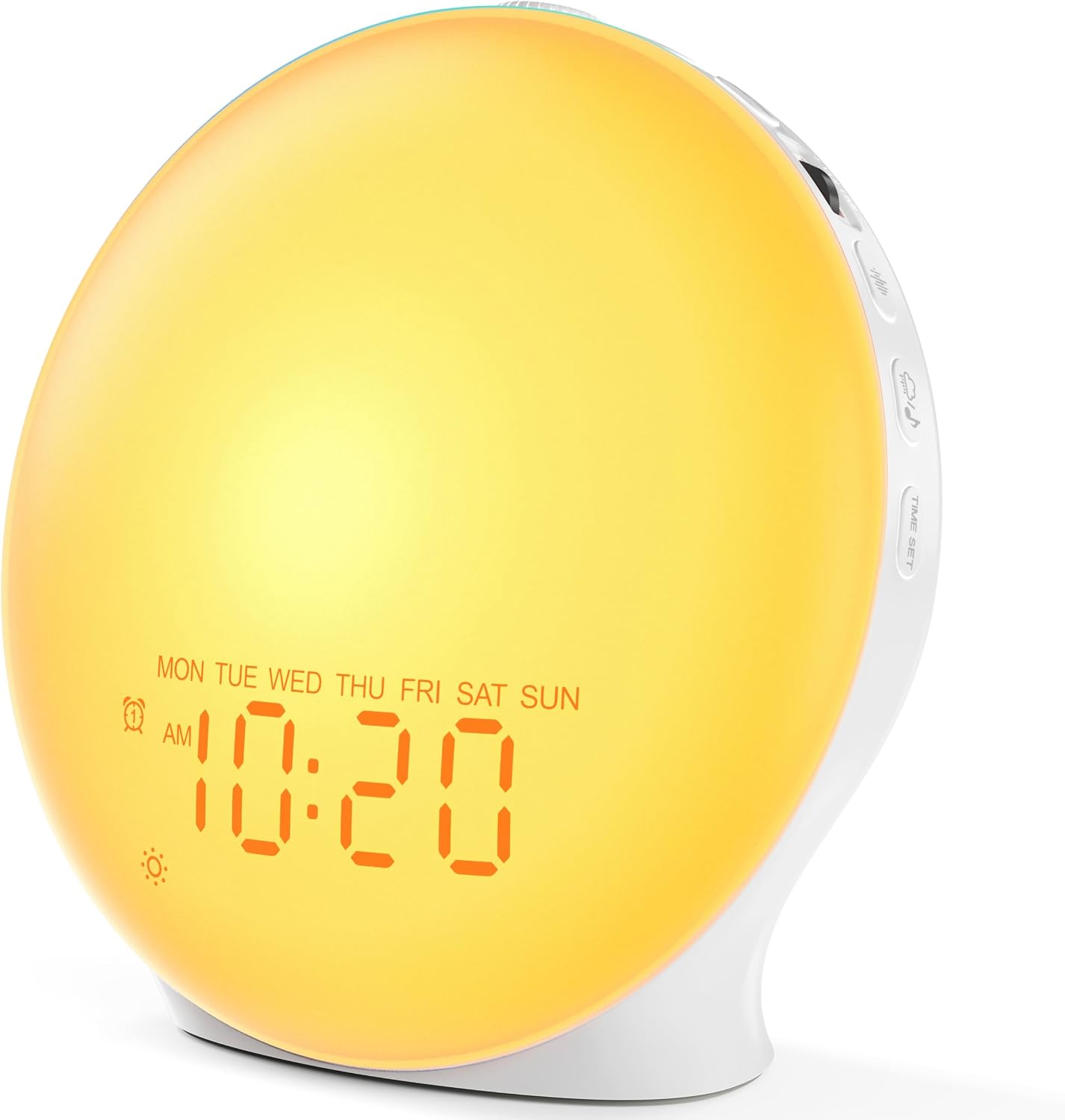
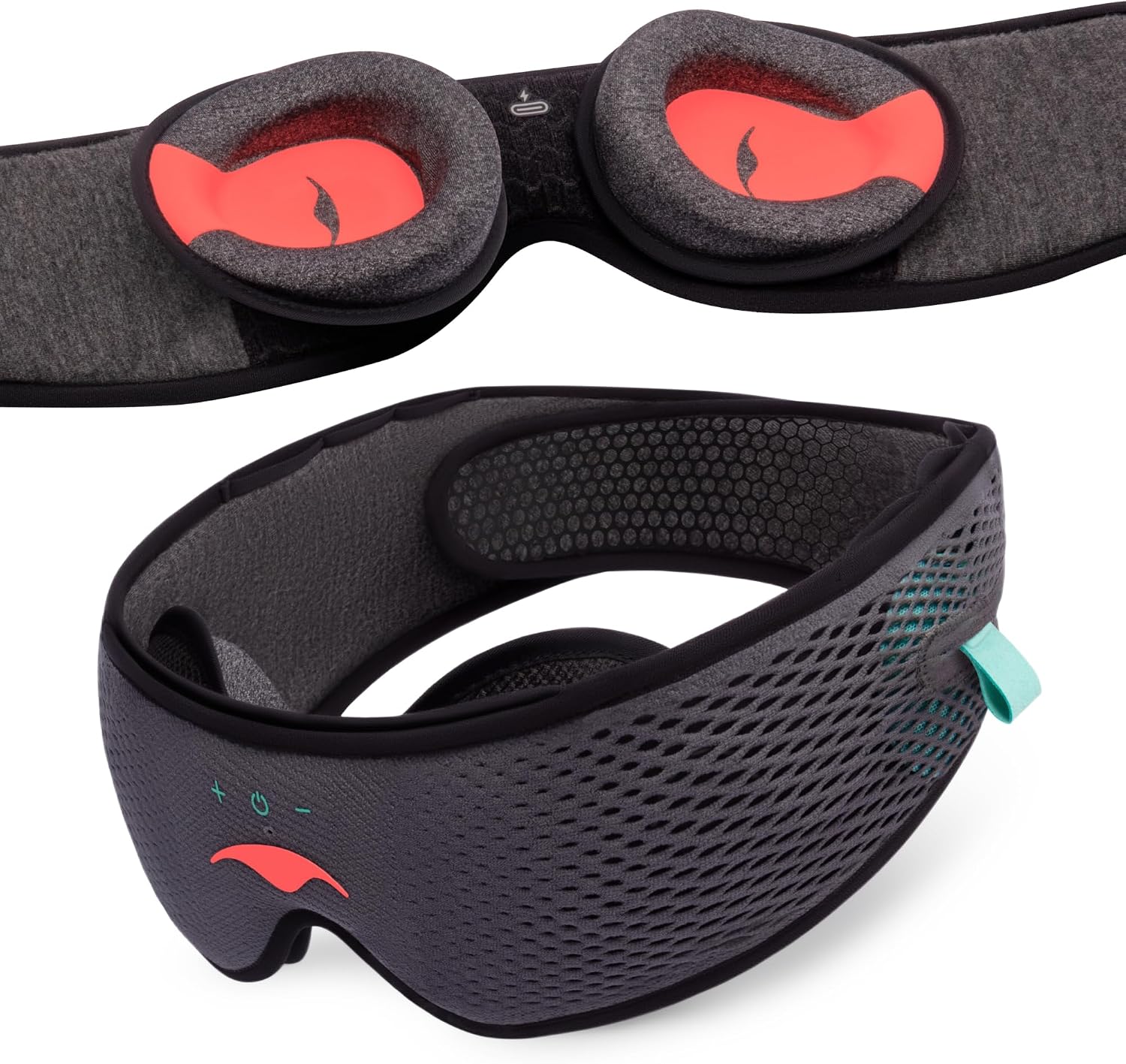
Garmin Index Sleep Monitor vs Cirqa: Which to Buy, and What Happens If You Own Both
Quick answer: Pick the Index Sleep Monitor ($169.99) if you already own a Garmin watch and want a sleep-only band to feed it sleep data. Pick the Cirqa ($199.99) if you don't own a Garmin watch, you nap, or you want one band that covers your day too. Already have a Cirqa? Owners report the Index works alongside it, as long as the Cirqa comes off at bedtime.1, 2, 6
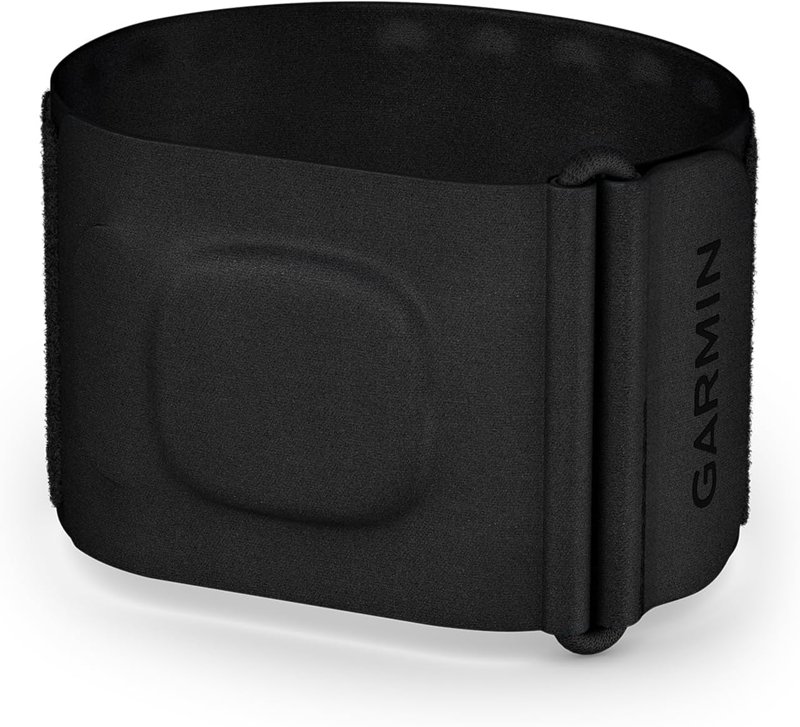
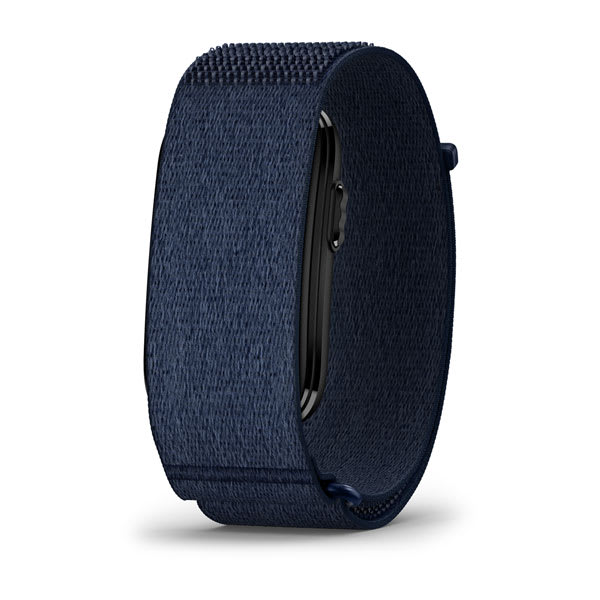
Paid links · The Index link opens the S–M size; the Cirqa link opens L–XL in Black. Images: Garmin.
Garmin now sells two screenless bands that can go on your upper arm at night, $30 apart at list price. The Index Sleep Monitor (June 2025) does one job. The Cirqa (July 21, 2026) tracks your whole day and moves to your arm with a $59.99 band.4, 5, 3 On paper the Cirqa wins. In practice it turns on things spec sheets skip: whose sleep Garmin Connect believes when both are on your account, a 2.5-inch sleeve versus a skinny strap at 3 a.m., and the wait Garmin quoted for most Cirqas on October 5. For the basics, see our Garmin Index Sleep Monitor review or our Garmin Cirqa review.
- Index: cheaper, softer and sleep-only, for Garmin watch owners who won't wear the watch to bed.
- Cirqa: the only one of the two that's complete on its own, with naps, steps and workouts.
- Both can share one account, owners report: set the Cirqa as your primary wearable, take it off at night, and wear the Index to bed.
- Shipping may decide it: on October 5, garmin.com quoted 1 to 3 business days for the Index and mostly 8 to 12 weeks for the Cirqa.
How Do the Index Sleep Monitor and the Cirqa Compare on Paper?
The Index is the cheaper, thinner, sleep-only band; the Cirqa adds naps, all-day tracking and a 10-day battery claim.1, 2, 3
| Index Sleep Monitor | Cirqa | |
|---|---|---|
| Garmin list price (Oct 5, 2026) | $169.99, either size | $199.99 on the wrist band; $259.98 with the Upper Arm band |
| Where it goes at night | Upper arm only | Wrist, or upper arm with the $59.99 band |
| Module size and weight | 41.7 × 37.6 × 7.8 mm, 14.5 g; 30.3 g with the S–M sleeve | 27 × 47 × 9 mm, 14.8 g; 20.7–21.2 g on the wrist band |
| Optical sensor (per reviewers) | Elevate Gen 5 | Elevate Gen 4 with skin temperature added |
| Battery (Garmin's claim) | Up to 7 nights (8 hours a night, Pulse Ox on) | Up to 10 days |
| Charge time | Up to 2 hours | Up to 90 minutes |
| Smart Wake vibrating alarm | Yes, 30-minute window; adjustable strength | Yes, 30-minute window; Quiet Start ramp |
| Snooze and stop | Double-tap; tap four times | Press the button; hold it |
| Nap detection | No | Yes |
| Sleep alignment | Only with a compatible wearable on the same account | Yes, on its own |
| Body Battery and Training Readiness on its own | No; needs a compatible primary wearable | Yes |
| Steps, workouts, heart-rate broadcast | No | Yes |
| Water rating | 5 ATM | 5 ATM |
| Subscription | None; Connect+ optional | None; Connect+ optional |
| garmin.com shipping estimate (Oct 5) | 1–3 business days | 5–8 weeks to 3–4 months by color and size; arm band 8–12 weeks |
✓ marks the spec edge for that row from Garmin's published specs, support pages and store, checked Oct 5, 2026. It isn't a lab test. Sensor generations come from DC Rainmaker and the5krunner, since Garmin doesn't list them; charge times from Garmin support (Index) and the CIRQA owner's manual.1, 2, 3, 6, 9, 10, 13, 15, 18, 19, 20, 24
Which Is Better for Sleep, the Index or the Cirqa?
The Index wins on comfort and, on paper, on sensor; the Cirqa wins on features, from naps to a real alarm button and sleep alignment without a watch. Nobody has tested the two side by side for accuracy.
Alarms and Smart Wake
Both vibrate and offer Smart Wake, which can wake you up to 30 minutes early with the regular alarm still firing at your set time.9, 10 The Index has no button: double-tap to snooze, tap four times to stop, and the band has to be awake and connected just to set an alarm. In 2025, DC Rainmaker found its first snooze also ended the night's recording; we couldn't confirm a later fix.9, 13 The Cirqa has a button (press to snooze, hold to stop) and a Quiet Start that builds from soft. But the5krunner lists a widely reported, unfixed bug where its smart alarm fires on an unscheduled day and resets its repeat schedule.10, 21
Naps, odd hours and ending the night
The Index skips naps and works best near your set schedule; nights under three hours or far off-schedule may not record. Garmin says taking it off is the best way to mark the end of the night, so scrolling in bed with it on can count as sleep.6, 7 The Cirqa detects naps, well lying down and less so slumped in a chair, per DC Rainmaker.2, 17 It still watches for sleep during your normal sleep hours, and some forum owners whose Cirqa missed the start of the night fixed it by moving the schedule earlier.10, 23 Shift workers should set it carefully on either band.
What happens while you're awake
The Cirqa tracks your whole day. The Index can stay on, but DC Rainmaker's 24-hour test got heart rate, stress and SpO2 with no steps, at about 1% battery an hour.14
Which is more accurate for sleep?
The Index uses Garmin's newer Elevate Gen 5 sensor; the Cirqa uses Gen 4 with skin temperature added, which Garmin's product manager reportedly put down to module size.13, 15, 19 Nobody has shown that matters for sleep. Wear position might: DC Rainmaker found the Cirqa on the biceps often 10 to 20 minutes off on sleep timing, because it counted reading or phone time in bed, and he says bicep-worn bands from every brand he's tested tend to do the same, so the Index, which also sits on your upper arm, may too.16, 17 His Index nights a year earlier had bedtimes within minutes, but that was a different test.13 If you read or scroll in bed, his advice for the Cirqa is the wrist for sleep and the arm for workouts.17 On both, read stage minutes as estimates and watch the trend.18
Index Sleep Monitor vs Cirqa Arm Band: Which Is Better on Your Arm at Night?
If your arm is where it'll live at night, the Index is the more purpose-built choice: a sleeve 63.5 mm (2.5 in) wide against the Cirqa Upper Arm band's 24 mm strap, for $90 less than a Cirqa with that band. The Cirqa band fits a wider range of arms and is the only one that can move to your wrist.1, 3, 10
| Index sleeve | Cirqa + Upper Arm band | |
|---|---|---|
| Garmin price (Oct 5, 2026) | $169.99 complete | $259.98, or $59.99 if you already own a Cirqa |
| Fits upper arms | S–M 20–29 cm (8.0–11.7 in) · L–XL 26–42 cm (10.5–16.6 in) | S–M 20–32 cm (7.9–12.6 in) · L–XL 28–45 cm (11.0–17.7 in) |
| Band size | 326 or 452 × 63.5 × 0.55 mm | 360 or 500 × 24 × 2 mm |
| Material and closure | 70% nylon, 30% spandex; hook-and-loop | Stretchy fabric, blend not listed; hook-and-loop |
| Weight on the arm | 30.3 g (S–M) or 34.5 g (L–XL), module included | Pod 14.8 g; Garmin doesn't publish the arm band's weight |
| Washing | Module out; gentle machine cycle up to 40°C (104°F), mesh bag | Same instructions |
| Wrist option | No | Yes, swap straps with the quick-release pins |
The Index sleeve is more than two and a half Cirqa straps wide. Wareable's reviewer thought it wider than it needs to be, but several owners in a Garmin forum thread who have both wear the Index to bed, and one who slept in a wrist-worn Cirqa when the Index's battery died found it noticeable in a way the Index isn't. DC Rainmaker, for his part, found the Cirqa's arm band stretchy and comfortable.17, 22, 23
Moving the Cirqa to your arm means setting its wear location in Garmin Connect, and Garmin lists wheelchair push tracking, automatic rep counting and Natural Cycles syncing as wrist-only.2, 10, 17 With one pod, wrist by day and arm by night means swapping straps twice a day. Garmin says the pod isn't compatible with third-party bands; the5krunner found it fits an old WHOOP 4.0 bicep sleeve, but that's off-label.10, 18 Our Cirqa accessories guide covers the bands.
Index vs Cirqa With a Garmin Watch: Whose Sleep Counts?
Whichever device you set as your primary wearable, which Garmin Connect treats as the priority source for daily data like steps and sleep. The Cirqa can be a primary wearable; as far as we can find, the Index still can't.10, 14, 15
Garmin's CIRQA manual describes the Primary Wearable and Primary Training Device settings, and DC Rainmaker found that with a watch on the account, Garmin Connect follows whichever device is set as primary, merging Body Battery, HRV status and sleep through Physio TrueUp, though watches launched before 2025, other than the Fenix 8 series, don't refresh Body Battery on the watch itself.10, 15 The Index couldn't be set as primary in DC Rainmaker's 2025 test, and Garmin says it doesn't need to be, though Index Body Battery still needs a primary wearable with Body Battery TrueUp.7, 14, 24
The rule that trips people up: wear your primary device and the Index to bed, and Garmin takes the night from the primary device.6 So the watch or the Cirqa has to come off at bedtime; the routine is below.8
Can You Wear the Index and the Cirqa Together?
Yes, just not to bed at the same time. The setup that makes sense is the Cirqa by day as your primary wearable and the Index at night.23
By Garmin's rules it should work: the Index wants a primary wearable with Body Battery TrueUp, and the Cirqa has TrueUp and can be primary.2, 7, 15 Garmin hasn't documented this pairing, so that's our reading, not a promise. In a September 2026 forum thread, several owners ran exactly this, some with a Forerunner or Fenix too, and reported no conflicts.23 Not every report is that clean: in August 2026, an owner commenting on the5krunner's bug list said the Index's overnight HRV average and the sleep part of Training Readiness went blank once they put the Cirqa on in the morning.21 If you run both:
- Set the Cirqa (or your watch) as Primary Wearable in Garmin Connect.
- At bedtime, put the Cirqa on its charger, sensor uncovered, and leave it powered on for at least 15 minutes so the two sync.8
- Wear the Index on bare skin above the elbow.
- In the morning, take the Index off near your phone with Garmin Connect running.
The combo costs $369.98 and stacks quirks: the same bug list has three reports of HRV status resetting after a switch to the Cirqa, and a widely reported, unfixed issue where steps, Body Battery and Training Readiness stop updating with the Cirqa as primary.21 Owner reports don't show how common either is.
What Does Each One Feed Into Garmin Connect, With and Without a Watch?
On its own, the Index gives you a full sleep report but leaves Body Battery and Training Readiness blank. The Cirqa fills in everything by itself. Add a compatible Garmin watch to the Index and most of the gap closes.1, 2, 7, 14
| In Garmin Connect | Index on its own | Index + compatible Garmin watch | Cirqa on its own |
|---|---|---|---|
| Sleep score, stages, overnight heart rate, HRV average, SpO2, respiration, breathing variations | Yes | Yes | Yes |
| HRV status | After 3 weeks of nights | From night one if the watch has a baseline | Yes |
| Body Battery | Needs a primary wearable with Body Battery TrueUp | Yes | Yes |
| Training Readiness, training status | No | Yes, once the watch syncs | Yes |
| Sleep coach | Yes | Yes | Yes |
| Sleep alignment | No; Garmin says it needs a compatible wearable on the same account | Yes, if the watch is compatible | Yes |
| Naps | No | Only from the watch | Yes |
| Health Status | Yes, listed as beta | Yes | Yes |
| Skin temperature for period predictions and past ovulation estimates | Yes | Yes | Yes; Natural Cycles syncing on the wrist only |
| Steps and workouts | No | From the watch | Yes |
From Garmin's product pages, support articles and owner's manuals and DC Rainmaker's 24-hour Index test, read October 5, 2026.1, 2, 6, 7, 9, 10, 14, 24
Neither needs Garmin Connect+ ($6.99 a month or $69.99 a year, October 5, 2026); on the Cirqa it adds coaching, live activity graphs and nutrition tracking.2, 11 All of these sleep and health numbers are wellness features, not a diagnosis.
How Long Does the Battery Last on the Index vs the Cirqa?
Garmin claims up to 7 nights for the Index and up to 10 days for the Cirqa, and testers got less from both.1, 2
Reviewers got about 8 to 9 nights from the Index (DC Rainmaker) and about 4 (Wareable).13, 22 DC Rainmaker's Cirqa used around 20% a day, roughly 5 to 7 days, while the5krunner cleared a week with Pulse Ox off.17, 18 A full charge takes up to 2 hours for the Index and up to 90 minutes for the Cirqa.6, 10 Garmin doesn't publish a figure for wearing the Cirqa only at night, so we won't guess one.
What Do the Index and the Cirqa Cost Over 3 Years?
Just the sticker price, since neither requires a subscription. The only question is which setup you need.1, 2, 3
| Setup (Garmin list prices, Oct 5, 2026) | Upfront | After 3 years | What you get at night |
|---|---|---|---|
| Index Sleep Monitor | $169.99 | $169.99 | Sleep only |
| Garmin watch you already own + Index | $169.99 added | $169.99 added | The full Garmin picture, watch off at night |
| Cirqa, wrist band | $199.99 | $199.99 | Day and night on the wrist |
| Cirqa + Upper Arm band | $259.98 | $259.98 | On the arm, or swap straps daily |
| Cirqa + Index | $369.98 | $369.98 | Cirqa by day, Index by night |
Where Can You Buy the Index and the Cirqa, and How Fast Do They Ship?
Both are sold at garmin.com and on Amazon. On October 5, 2026, Garmin's store showed both Index sizes shipping in 1 to 3 business days; the Cirqa ranged from 5 to 8 weeks (Mauve L–XL) to 3 to 4 months (French Gray S–M), with most options and both arm band sizes at 8 to 12 weeks.1, 2, 3 Estimates move, so check first. Garmin refunds garmin.com orders in original condition within 30 days of shipping; Amazon or store purchases follow that seller's policy.12 On Amazon, check that the seller is Garmin or Amazon, and compare with Garmin's $199.99 before paying more for a Cirqa.
Index or Cirqa: Which Should You Buy?
Buy the Index if a Garmin watch already runs your training; buy the Cirqa if it'll be your only Garmin. Weighing a Cirqa against a subscription band instead? See our Garmin Cirqa vs WHOOP comparison.
- Wide, thin sleeve owners say they forget
- Cheapest way to get Garmin sleep data from your arm
- Newer Elevate Gen 5 sensor, per reviewers
- No naps; leans on your sleep schedule
- Body Battery and readiness need a Garmin watch
- Works best taken off to end the night and sync
- Complete on its own, day and night
- Nap detection, plus a button to snooze
- Up to 10 days claimed; wrist or arm
- Arm band is $59.99 extra and a 24 mm strap
- About 5–7 days of battery in DC Rainmaker's testing
- Open bug reports on alarms and primary-device syncing
Pick the Index if…- A Garmin watch already tracks your days and training.
- You want the softest thing Garmin makes for your arm at night.
- You own a Cirqa but hate sleeping in it; keep the Cirqa as primary wearable.
Pick the Cirqa if…- You don't own a Garmin watch.
- You nap or work shifts; set its sleep schedule carefully.
- Your upper arm is over 42 cm around, past the Index L–XL.
Paid links · Index link opens the S–M size (L–XL here).
A tracker tells you how you slept; it won't fix it. If either band keeps handing you scores in the 50s, our guide to what to buy when your sleep score is bad covers the fixes that tend to move the number.
Garmin Index Sleep Monitor vs Cirqa FAQ
Is the Garmin Index Sleep Monitor still worth it now that the Cirqa is out?
Yes, for Garmin watch owners who won't sleep in their watch: it's $30 less than the Cirqa, $90 less than a Cirqa with the Upper Arm band, and on October 5, 2026 it shipped from garmin.com in 1 to 3 business days. Without a Garmin watch, get the Cirqa.1, 2, 3
Cirqa vs Index: which is more comfortable to sleep in?
In a Garmin forum thread, owners who have both wear the Index to bed, and one who slept in a wrist-worn Cirqa for a night noticed it in a way they don't notice the Index. Comfort is personal, though, and DC Rainmaker found the Cirqa's arm band stretchy and comfortable.1, 10, 17, 23
Can you use the Garmin Cirqa as a sleep monitor on your upper arm?
Yes, with the $59.99 CIRQA Upper Arm Band in S–M (20 to 32 cm) or L–XL (28 to 45 cm); set the wear location in Garmin Connect. Rep counting, wheelchair push tracking and Natural Cycles syncing are wrist-only, and DC Rainmaker, who saw looser sleep timing on the biceps, suggests the wrist for sleep.2, 3, 10, 17
Can the Index Sleep Monitor be your primary wearable?
Not as far as we can find, and Garmin says it doesn't need to be. DC Rainmaker found it couldn't be set as one in June 2025, and Garmin's support pages say Body Battery data from the Index needs a separate primary wearable with Body Battery TrueUp. The Cirqa can be a primary wearable.7, 14, 15, 24
What happens if I wear my Cirqa and Index Sleep Monitor to bed together?
Garmin takes the sleep data from your primary device, so if the Cirqa is your primary wearable, Garmin Connect uses its night instead of the Index's. Take the Cirqa off at bedtime, put it on the charger with the sensor uncovered, and leave it powered on so the two sync.6, 8
Do the Index Sleep Monitor or the Cirqa need a subscription?
No. Every sleep metric on both is free in Garmin Connect. Garmin Connect+ ($6.99 a month or $69.99 a year, October 5, 2026) is optional and mostly adds coaching and workout extras on the Cirqa.2, 11
Which Garmin is best for sleep tracking?
With a Garmin watch you won't sleep in, the Index Sleep Monitor; without one, the Cirqa, which adds naps, sleep alignment, Body Battery and Training Readiness on its own. Both are wellness trackers, not medical devices.1, 2, 7
Sources
- Garmin: Index™ Sleep Monitor product page, checked October 5, 2026. $169.99 for S–M and L–XL; module 41.7 × 37.6 × 7.8 mm and 14.5 g; sleeve 326 or 452 × 63.5 × 0.55 mm, 15.8 g (S–M) or 20.0 g (L–XL), 70% nylon and 30% spandex; up to 7 nights with SpO2 (8 hours of sleep); 5 ATM; smart wake alarm; Health Status "currently available in beta"; both sizes "Available to ship in 1–3 business days."
- Garmin: CIRQA™ Smart Band product page, checked October 5, 2026. $199.99 for all eight color and size options; pod 27 × 47 × 9 mm and 14.8 g, 20.7 g (S–M) or 21.2 g (L–XL) with the wrist band; up to 10 days; spec list including nap detection, smart wake alarm, sleep coach, sleep alignment, Health Status, training readiness, TrueUp and Physio TrueUp; wheelchair push tracking and automatic rep counting "wrist only"; Natural Cycles syncing "when worn on your wrist"; shipping estimates of 5–8 weeks (Mauve, L–XL), 3–4 months (French Gray, S–M) and 8–12 weeks (all other options).
- Garmin: CIRQA™ Accessory Bands, checked October 5, 2026. CIRQA Upper Arm Band in Black, S–M and L–XL, $59.99; arm sizing 200–320 mm (S–M) and 280–450 mm (L–XL); wrist sizing 120–200 mm and 145–240 mm; both arm band sizes "Available to ship in 8–12 weeks."
- Garmin Newsroom: Meet CIRQA Smart Band (July 21, 2026). Announcement, $199.99, up to 10 days of battery, wrist or arm band wear, nap detection.
- Garmin Newsroom: Rest easy with the Index Sleep Monitor (June 18, 2025). Launch and $169.99 price.
- Garmin Support: Top FAQs About the Index Sleep Monitor, read October 5, 2026. "If you wear both your primary Garmin device and the sleep band to bed, the sleep data will come from your primary device"; no naps; best used at or near the set sleep schedule; no heart-rate broadcast, activities or steps; sleep data updates recovery time and training readiness; up to 2 hours to charge.
- Garmin Support: Sleep Tracking with the Index Sleep Monitor, read October 5, 2026. Metrics recorded; HRV status after 3 weeks unless a primary wearable already has a baseline; Body Battery requires "a primary wearable compatible with Body Battery TrueUp"; reasons a night isn't recorded (under 3 hours, far outside the sleep schedule and others); removing the band best captures the end of sleep.
- Garmin Support: Best Practices When Wearing the Index Sleep Monitor, read October 5, 2026. Remove the primary device at bedtime with its sensor lights off; leave it powered on for at least 15 minutes; keep the phone in range of both.
- Garmin: Index™ Sleep Monitor Owner's Manual (v3, September 2025), read October 5, 2026. Alarms need the band awake and connected; Smart Wake in the 30 minutes before the alarm; double-tap to snooze, tap four times to stop; adjustable vibration level, with higher levels using more battery; sleep schedule used as a guide; sleep coach; sleep data syncs to a paired watch.
- Garmin: CIRQA™ Owner's Manual (v1, July 2026), read October 5, 2026. Primary Wearable "sets the priority data source for daily health metrics like steps and sleep"; Smart Wake in the 30 minutes before the alarm and Quiet Start; press the button to snooze, hold to stop; sleep detected during your normal sleep hours; wear location setting; arm band 36.0 or 50.0 × 2.4 × 0.2 cm; 24 mm bands with 14 mm quick-release pins, not compatible with third-party bands; machine washing the band with the module removed; a full charge can take up to 90 minutes.
- Garmin: Garmin Connect+, checked October 5, 2026. $6.99 a month or $69.99 a year.
- Garmin Support: Returning a Garmin Order for Refund, read October 5, 2026. Garmin.com orders (US and Canada) in original condition may be returned for a refund within 30 days of shipping; retail and online store purchases go back to the seller.
- DC Rainmaker: Garmin Index Sleep Monitor In-Depth Review (Ray Maker, June 18, 2025). Elevate Gen5 sensor; usable without a watch; 31 g weighed (S–M); snoozing ended the night's sleep recording; bedtimes within minutes of his actual times; about 8–9 nights per charge.
- DC Rainmaker: The Index Sleep Monitor Actually Works 24 hours a Day? (June 21, 2025). Couldn't be set as a primary wearable; Training Readiness appeared only after his watch synced; daytime heart rate, stress, SpO2 and respiration but no steps; about 1% battery an hour.
- DC Rainmaker: Garmin Cirqa Hands-On: Everything You Need to Know (July 21, 2026). Elevate Gen4 with an added skin temperature layer; with a watch, it defaults to whichever device is set as primary; Physio TrueUp including Body Battery, HRV status and sleep; watches launched before 2025 (except Fenix 8) don't update Body Battery or stress on-device; biceps band more elastic than the wrist strap.
- DC Rainmaker: Garmin Cirqa Accuracy Deep-Dive (August 3, 2026). Bicep-worn devices "a bit less accurate for sleep," often counting reading or phone time in bed.
- DC Rainmaker: Garmin Cirqa In-Depth Review (After 30 Days) (August 23, 2026). About 20% battery a day, roughly 5–7 days; bicep sleep timing about 10–20 minutes off; nap detection good lying down, weaker sitting up; rep counting off on the biceps; arm band stretchy and comfortable.
- the5krunner: Garmin CIRQA Review (August 19, 2026, updated October 3, 2026). Gen 4.1 sensor against the Index's Gen 5; at least a week of battery with Pulse Ox off; sleep stages without consistent agreement across devices; the pod fits an old WHOOP 4.0 bicep sleeve.
- the5krunner: The Thin Sensor Explanation Does Not Add Up (July 27, 2026, updated October 3, 2026). Index uses Elevate Gen 5 (no ECG feature) at 7.8 mm thick, Cirqa Gen 4/4.1 at 9 mm; cites Garmin product manager Chrissy Wheeler telling Forbes the reason was the size of the module.
- the5krunner: Garmin CIRQA spec sheet (updated October 3, 2026). Elevate Gen 4 with skin temperature sensing, which the site labels Gen 4.1; a full charge up to 90 minutes; arm band weight not listed separately.
- the5krunner: Garmin CIRQA Bugs: Every Issue Reported So Far (updated October 3, 2026). Unfixed: steps, heart rate, Body Battery and Training Readiness not updating with the Cirqa set as primary (widely reported); smart alarm resetting its repeat schedule (widely reported); HRV status resetting after switching from a watch (three reports). Fixed in firmware 3.20 (September 3, 2026): bedtime notification timing and snooze vibration confusion. A reader comment (August 6, 2026) reports the Index's overnight HRV average and Training Readiness sleep data going blank after switching to the Cirqa in the morning.
- Wareable: Garmin Index Sleep Monitor review (Conor Allison, September 17, 2025). About four nights per charge at 7–9 hours a night.
- Garmin Forums owner threads, paraphrased, read October 5, 2026: ISM > CIRQA (September 2026: Cirqa by day and Index by night on one account, comfort); Garmin Circa gets Sleep Alignment but not Index Sleep Monitor? (August 2026: sleep alignment appearing once a compatible device is on the account); Cirqa sleep tracking isn't even close (August 2026: missed starts of the night, moving the sleep schedule earlier).
- Garmin Support: Sleep Tracking, read October 5, 2026. Device list: Index Sleep Monitor "Sleep Score and Insights | Sleep Coach | Sleep Alignment," footnoted "Requires a compatible wearable paired to the same account"; the Index "does not need to be set as the Primary Wearable." The same list doesn't yet show sleep alignment for the CIRQA, which its product page lists.