Fitbit Edge vs Fitbit Air: What Does the Extra $80 Buy?
Quick answer: Pick the Google Fitbit Edge if you want a screen, built-in GPS and an ECG app. Pick the Google Fitbit Air if you want the lightest screenless band for sleep. Google lists $179.99 against $99.99 (November 5, 2026), and both claim up to 7 days of battery with the same 2-second heart-rate storage.1, 3, 6
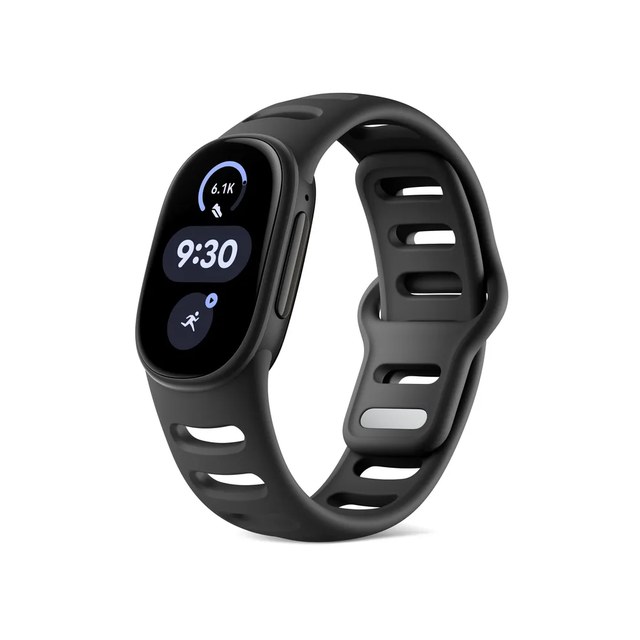
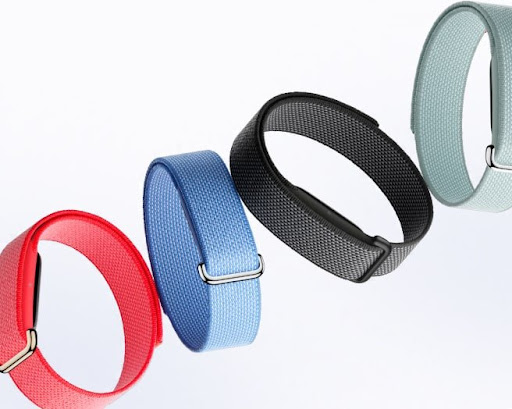
Paid links · Images: Google. The Edge button goes to an Amazon search, not one product page: we haven't confirmed a single Edge listing, so check price and stock there.
Google now sells two Fitbits that look nothing alike, $80 apart. The Edge is a band with a bright screen, GPS and a battery you can replace. The Air is the no-screen pebble that launched in May. They share an app, and the5krunner says they share a heart-rate sensor and a charger too.6, 7
So the extra $80 isn't buying better heart data. It's buying a screen, GPS, ECG and a longer update promise, and it's costing you 20 grams. We cover each product alone in our Fitbit Edge review and Fitbit Air review. This page is the head-to-head, with the three-year cost and the update dates neither review spells out.
- Fitbit Edge if you run or ride and want pace and heart rate on your wrist, GPS without your phone, texts and a timer, or an ECG app. Google says its battery is user-replaceable.
- Fitbit Air if sleep and all-day data are the point, you hate wearing anything that glows at night, or $99.99 beats $179.99. It's 12 grams with its band.
- Money: $80 upfront. Premium is the bigger swing: about $300 over three years on either one if you subscribe.
- Updates: Google guarantees the Edge's security updates until at least October 2028 and the Air's until at least May 2028.
Fitbit Edge vs Fitbit Air: Which Is Better?
Neither wins across the board. The Edge takes the screen, GPS and sensors; the Air takes price and comfort, and the rest is a draw.1, 3
For most people it comes down to two rows: do you want GPS and a screen, or the lightest band you'll forget at night? Everything else is close or follows from that.
How Do the Fitbit Edge and Fitbit Air Compare on Paper?
Same app, same heart-rate hardware, same charging speed. The differences are the screen, the GPS and ECG, the weight and the price.1, 3, 6
| Fitbit Edge | Fitbit Air | |
|---|---|---|
| Google Store price (Nov 5, 2026) | From $179.99 (Curry SE $219.99 per Google's announcement) | From $99.99 |
| Launched | Announced Oct 12, 2026; on sale Oct 27 (Droid-Life) | Announced May 7, 2026 |
| Display | 1.3 in AMOLED, always-on option, Gorilla Glass 3 | None; a status light |
| Weight with band | 32 g | 12 g |
| Tracker without band | 17.7 g | 5.2 g |
| Thickness | 11.6 mm (Google's announcement says 11.5) | 8.3 mm |
| Battery (maker's claim) | Up to 7 days; user-replaceable, 65 mAh | Up to 7 days |
| Charging | About 90 min to full; 5 min gives up to a day | 90 min to full; 5 min gives a day |
| GPS | Built-in, GPS and Galileo; altimeter | Uses your phone's GPS; no altimeter listed |
| Heart-rate sensor and storage | Optical (PPG); stored every 2 seconds | Optical; stored every 2 seconds |
| ECG | ECG app, select countries, not for under 22 | None listed; irregular rhythm notifications |
| SpO2 | Red and infrared sensors | Red and infrared sensors |
| Temperature sensing | Two temperature sensors (wrist and display) | One device temperature sensor |
| Water | 5 ATM and IP68 | Water resistant to 50 m |
| Wrist notifications, timer, Maps | Yes (quick replies Android-only) | None |
| Workouts | 50+ modes with live stats; auto-detects up to 100 workouts (Google) | Start in the app or auto-detected; no live stats on the band |
| Wrist size | Small 130-170 mm and large 170-210 mm bands in the box | Woven band 130-210 mm in the box |
| Bluetooth | 5.4, no Wi-Fi | 5.0 |
| NFC / tap to pay | Not listed; the5krunner says no contactless payments | Not listed |
| Premium trial | 3 months | 3 months |
| Security updates guaranteed to | At least October 2028 | At least May 2028 |
✓ marks the spec edge for that row from Google's published specs, checked Nov 5, 2026. It isn't a lab test. Sources: Google Store spec pages, Google's security-update page and the5krunner.1, 3, 5, 6, 9
Fitbit Edge vs Fitbit Air Sensors: What Does Each One Have?
Both carry an optical heart-rate sensor, an accelerometer and gyroscope, and red and infrared sensors for SpO2. The Edge adds GPS, an altimeter, ECG-capable electrodes, an ambient light sensor and a second temperature sensor.1, 3
What that gets you is specific. The altimeter gives elevation and floors climbed, which the5krunner says the Charge 6 couldn't do.7 Built-in GPS and Galileo give route and pace without your phone. The electrodes support Google's ECG app, which checks for signs of atrial fibrillation; Google says it's available in select countries and isn't for people under 22.1, 4 The Air isn't left out of heart-rhythm checks: it sends irregular rhythm notifications from its optical sensor, which Google says are analyzed when you sync and can miss episodes.13
What it doesn't get you is better heart-rate readings. Google's spec pages list 2-second storage for both, and the5krunner calls the Edge's sensor "the same prior-gen" hardware as the Air's, adding that anyone doing hard intervals should still think about a chest strap.1, 3, 6 Our chest strap vs armband vs wrist guide covers when that matters. We haven't found an independent test of either one's accuracy yet.
Is the Fitbit Edge Worth $80 More Than the Air?
Only if you'll use the screen, the GPS, the ECG app or the replaceable battery. The sticker gap is $80, which is 44% of the Edge's price. But if you'll pay for Premium, the same $80 is about 17% of a three-year bill.1, 3, 10, 11
Premium is the part people skip. Both trackers include three months of Google Health Premium.2, 3 Google's Air launch post says it renews at $9.99 a month after the trial, Android Authority reports $99.99 a year, and the5krunner gives $9.99 a month for the Edge.7, 10, 11 The free tier covers the basics; the Gemini-based Google Health Coach needs Premium.2
| Setup (Google Store prices, Nov 5, 2026; before tax) | Tracker | Premium over 3 years | 3-year total |
|---|---|---|---|
| Fitbit Air, free tier | $99.99 | $0 | $99.99 |
| Fitbit Edge, free tier | $179.99 | $0 | $179.99 |
| Fitbit Air + Premium, yearly after the trial | $99.99 | $299.97 | $399.96 |
| Fitbit Edge + Premium, yearly after the trial | $179.99 | $299.97 | $479.96 |
| Fitbit Air + Premium, monthly after the trial | $99.99 | $329.67 | $429.66 |
| Fitbit Edge + Premium, monthly after the trial | $179.99 | $329.67 | $509.66 |
How we counted: three free months, then three yearly payments of $99.99 or 33 monthly payments of $9.99. Tax, bands and a second charger excluded. Neither tracker has a replacement-battery price from Google yet.
Google's list prices were unchanged when we checked on November 5. If you're timing a purchase around Black Friday, our fitness tracker Black Friday guide has the price targets we use.
Which Has Better Battery Life, the Fitbit Edge or the Fitbit Air?
On paper, a tie: Google claims up to 7 days for both. The catch is how the Edge gets there.1, 3 Google says its figure came from pre-production testing with a battery-saver profile and that real life may be lower, and TechMyMoney, quoting Google's setup guide, puts it at about two days with the always-on display on.4, 8
The Air's 7 days has outside support: Tom's Guide said its Air matched 7 days, and DC Rainmaker got about a week.15, 16 We haven't found an independent battery test of the Edge. Charging is the same on paper, about 90 minutes to full and a day from 5 minutes, and the5krunner says the Edge uses the Air's charger.1, 3, 7 The Edge's trump card is that Google calls it its first repairable Fitbit tracker, with a user-replaceable battery.1, 4 We found no such claim for the Air.
Fitbit Edge vs Fitbit Air for Sleep: Which Is Better?
The Air, mostly for comfort. Google lists it at 12 grams with its band and 8.3 mm thick, against 32 grams and 11.6 mm for the Edge.1, 3
Both track sleep, and Google's Edge page lists smart-wake alarms (the Air pages we read mention only silent alarms). With the same heart-rate hardware we'd expect similar overnight numbers. That's our inference from the specs, not a test, and we haven't found a lab or independent comparison of the two.1, 3 What Google's pages don't say is how the Edge's screen behaves in bed. The always-on mode is optional, per the5krunner, so check the settings before you rely on a dark room.7
Fitbit Edge vs Fitbit Air for Running and Workouts: Which Is Better?
The Edge. It has built-in GPS, 50+ exercise modes, live stats on the screen and, per Google, automatic recognition of up to 100 workouts.1, 4 The Air uses your phone's GPS, so you carry the phone, and it has no live stats because it has no screen.6, 14
Auto-detection is another gap. Google lists seven auto-detected activity types for the Air, and DC Rainmaker found about five worked reliably; our Fitbit Air workout tracking guide has the breakdown.15 Google says the Edge's GPS chip and antenna make it up to 40% more accurate than previous Fitbit generations, but that's a claim against older models, not against the Air, and we haven't found an independent GPS test.4, 6
One caveat: both store heart rate every 2 seconds, which the5krunner flags for interval work.6 If you train to heart-rate zones, a chest strap or a Garmin fits better than either Fitbit.
Which Fitbit Will Get Updates Longer, the Edge or the Air?
The Edge, by about five months. Google guarantees security updates until at least October 2028 for the Fitbit Edge and until at least May 2028 for the Fitbit Air, and marks both dates as ones that may be extended.5
Google's policy is at least two years of updates after a device is last sold on Fitbit.com or the Google Store, so both dates can move out. A guarantee covers security patches, not new features. On features, Google's Edge store page lists monthly blood pressure and insulin resistance trends, while Google's September 24 post says Air owners get those trends with Premium "later this year." Google calls them general-wellness trends, not diagnoses.1, 12 Combined with the replaceable battery, the Edge is the better bet for someone who wants one tracker for three or more years, though Google hasn't priced the replacement battery.
Should You Upgrade From the Fitbit Air to the Edge?
Only if you keep wishing the Air had a screen or GPS. You'd gain a screen, GPS, an altimeter, ECG, a replaceable battery and about five more months of guaranteed updates. You'd lose 20 grams of comfort, 3.3 mm of thickness and the invisible-at-night feel, and you'd pay $179.99 for something that shares the Air's heart-rate sensor.1, 3, 5
The Edge ships with its own Active Band, and the5krunner says its attachment is new. We haven't seen Google say Air bands fit it, so don't count on reusing them; our Fitbit Air bands guide covers the Air's three.1, 7 If you occasionally want GPS, your phone already does it for the Air. If you're still on a Charge 6, our Fitbit Air vs Charge 6 comparison and Fitbit Edge review cover that jump. For a cheaper screen, see Fitbit Air vs Inspire 3.
Fitbit Edge or Fitbit Air: Which Should You Buy?
Buy the one that matches what you do with your wrist. Our Google Health app explainer covers the app both use.
Pick the Edge if…- You run or ride outdoors and want pace and heart rate on your wrist.
- You want GPS without carrying your phone.
- You like glancing at the time, texts and a timer.
- You want ECG, or a battery you can replace, and updates to at least October 2028.
Pick the Air if…- Sleep and all-day data matter most and you read them in the app.
- You want the lightest band: 12 g with its band, 8.3 mm thick.
- You'd rather save $80, or spend it on Premium.
- Your phone is always on you, so its GPS is fine.
Paid links
- Screen, built-in GPS and altimeter
- ECG app (select countries) and a second temperature sensor
- User-replaceable battery; updates guaranteed to at least Oct 2028
- Same 5-minute-for-a-day fast charge as the Air
- $80 more, and 32 g with its band
- Same 2-second heart-rate storage as the Air
- Up to 7 days is a battery-saver figure; about 2 with always-on
- 12 g with band, nothing glowing at night
- From $99.99 at the Google Store
- 7-day claim backed by Tom's Guide and DC Rainmaker
- Irregular rhythm notifications and SpO2 at the lower price
- No screen, no wrist notifications, no live workout stats
- Phone's GPS only; no altimeter or ECG
- Security updates guaranteed to May 2028, five months earlier
Fitbit Edge vs Fitbit Air FAQ
Is the Fitbit Edge better than the Fitbit Air?
Not across the board. The Edge adds a screen, built-in GPS with an altimeter, an ECG app and a user-replaceable battery. The Air is $80 cheaper, 20 grams lighter with its band, and has no screen to light up in bed. Both claim up to 7 days of battery and store heart rate every 2 seconds (Google Store, November 5, 2026).
What is the difference between the Fitbit Edge and the Fitbit Air besides the screen?
Built-in GPS and an altimeter, an ECG-capable sensor, a second temperature sensor, a user-replaceable battery and a longer security-update guarantee (at least October 2028 against May 2028). The Air is lighter and thinner. Both have the same 2-second heart-rate storage and the same 3-month Premium trial.
Does the Fitbit Air have the same sensors as the Fitbit Edge?
Partly. Both list an optical heart-rate sensor, an accelerometer and gyroscope, and red and infrared SpO2 sensors. The Edge adds an altimeter, GPS, ECG-capable electrodes, an ambient light sensor and a second temperature sensor. The Air's spec sheet lists none of those (Google Store, November 5, 2026).
Do the Fitbit Edge and Fitbit Air need a subscription?
No for the basics on either one. Google Health Premium adds the Gemini-based Google Health Coach and costs $9.99 a month, with $99.99 a year reported by Android Authority; both trackers include a 3-month trial. Over three years, Premium adds roughly $300 to $330 to either one.
Is the Fitbit Edge worth $80 more than the Fitbit Air?
Only if you'll use what the $80 buys: a screen, GPS without your phone, ECG or a replaceable battery. If you mostly want sleep and all-day data, the Air covers that for less. The extra $80 does not buy better heart-rate data, since both store it every 2 seconds on a sensor the5krunner calls the same.
Which is better for sleep, the Fitbit Edge or the Fitbit Air?
The Air, mainly for comfort: Google lists it at 12 grams with its band and 8.3 mm thick, against 32 grams and 11.6 mm for the Edge. Both track sleep; Google's Edge page lists smart-wake alarms, while the Air pages we read mention only silent alarms. We have not found a lab test comparing their sleep data.
Can you charge the Fitbit Edge with the Fitbit Air charger?
Per the5krunner, yes: the Edge uses the Air's charger, which connects at the sensor array the two share. Google lists both at about 90 minutes for a full charge and a day of battery from 5 minutes. Check Google's support page for your region before buying a spare.
Sources
- Google Store: Google Fitbit Edge tech specs, checked November 5, 2026. From $179.99; 1.54 x 1 x 0.46 in (39.2 x 25.6 x 11.6 mm); 17.7 g without band, 32 g with band; 1.3 in always-on AMOLED display, Gorilla Glass 3; Bluetooth 5.4; GPS and Galileo; 65 mAh battery, up to 7 days, 90 minutes to full, 5 minutes for up to a day; heart rate stored at 2-second intervals; altimeter, accelerometer, gyroscope, red and infrared SpO2 sensors, multipurpose electrical sensors compatible with the ECG app, optical heart-rate sensor, ambient light sensor, two temperature sensors; 50+ exercise modes; monthly insulin resistance and blood pressure trends; 5 ATM and IP68; small band 130-170 mm and large 170-210 mm in the box; user-replaceable battery.
- Google Store: Google Fitbit Edge product page, checked November 5, 2026. From $179.99 or $15.00 a month with 12-month financing; three months of Google Health Premium included; Gemini-built Google Health Coach included with a Premium membership; small and large Active Band in the box.
- Google Store: Google Fitbit Air tech specs, checked November 5, 2026. From $99.99; 34.9 x 17 x 8.3 mm; 5.2 g without band, 12 g with band; up to 7 days of battery, 90 minutes to full, 1 day from 5 minutes; Bluetooth 5.0; optical heart-rate monitor, 3-axis accelerometer and gyroscope, red and infrared SpO2 sensors, device temperature sensor, vibration motor; heart rate stored at 2-second intervals; water resistant to 50 m; textile band 130-210 mm; iOS 16.4 or Android 11 or newer.
- Google: Meet the Google Fitbit Edge (October 12, 2026), read November 5, 2026. $179.99; 11.5 mm; built-in GPS up to 40% more accurate than prior generations; up to 7 days of battery tested pre-production with a battery-saver profile; first repairable Fitbit tracker; ECG app in select countries, not for under 22; up to 100 workouts auto-recognized; Health Guardian trends are general wellness, not diagnosis.
- Google: Security updates for Google Fitbit devices, read November 5, 2026. Guaranteed security updates until at least October 2028 for the Fitbit Edge and May 2028 for the Fitbit Air, both marked as dates that may be extended while the devices are sold; policy of at least two years after a device is last sold on Fitbit.com or the Google Store.
- the5krunner: Fitbit Edge vs Fitbit Air: Which to Buy (published October 12, updated October 27, 2026). Same heart-rate hardware, stored at 2-second intervals; the Air relies on connected GPS; ECG on the Edge only; suggests a chest strap for interval work; $179 and $99.99. Its own verdict favors the Edge for most fitness buyers; ours differs because it depends on whether you want a screen.
- the5krunner: Fitbit Edge: price, release date and features (October 12, 2026). Altimeter and floors climbed (Charge 6 couldn't); no NFC, no Google Wallet; EDA sensor removed; uses the Fitbit Air's charger; new band attachment, so Charge 6 bands don't fit; $9.99 a month Premium after trial; Quick replies Android-only.
- TechMyMoney: Google Fitbit Edge price and features (October 13, 2026). About two days of battery with the always-on display on, quoting Google's setup guide.
- Droid-Life: You can buy the Fitbit Edge today, should you? (October 27, 2026). On sale October 27 from $179.99; buy links to Amazon, Best Buy and the Google Store.
- Google: Introducing the new Google Fitbit Air (May 7, 2026). From $99.99; three-month Premium trial that renews at $9.99 a month after the trial.
- Android Authority: Fitbit Premium is now Google Health Premium and it'll cost more (May 7, 2026). $9.99 a month or $99.99 a year.
- Google: Our new health and safety tools are live in the Google Health app (September 24, 2026). "Fitbit Air users will be able to see their insulin resistance and blood pressure trends with a Google Health Premium subscription later this year."
- Google Health Help: How do Google Irregular Rhythm Notifications check for AFib?, read October 5, 2026 (not rechecked November 5). Supported devices include the Fitbit Air; readings analyzed when you sync, not in real time; may miss episodes; not for under 22 or people with a prior AFib diagnosis.
- Google Health Help: Get started with Google Fitbit Air, read October 5, 2026 (not rechecked November 5). A status light instead of a screen; workouts started in the app; silent alarms set in the app.
- DC Rainmaker: Fitbit Air In-Depth Review (Ray Maker, May 26, 2026). About 7 days of battery per charge; auto-detection of workouts reliable for about five activity types.
- Tom's Guide, syndicated on Yahoo Tech: Fitbit Air vs Fitbit Inspire 3: which $99 fitness tracker wins? (June 10, 2026). The Air matched its 7-day battery claim in their testing.