Fitbit Edge Review: $179.99 Specs, Catches, and Who Should Buy
Quick answer: The Google Fitbit Edge is the screen-equipped Fitbit that replaces the Charge 6. Google prices it at $179.99 in the US (Stephen Curry Special Edition $219.99), and it went on sale October 27, 2026. You get a bigger display, built-in GPS with an altimeter, up to 7 days of battery, a user-replaceable battery and three months of Google Health Premium. You lose NFC payments and the EDA stress sensor. Buy it if you want a Fitbit with a screen and phone-free GPS and you're fine without wrist payments. Keep your Charge 6 if it works, and take the Fitbit Air if you don't want a screen at all. Droid-Life published a hands-on review on launch day, October 27, but we haven't tested it ourselves, so the battery and GPS figures below are Google's, not ours.
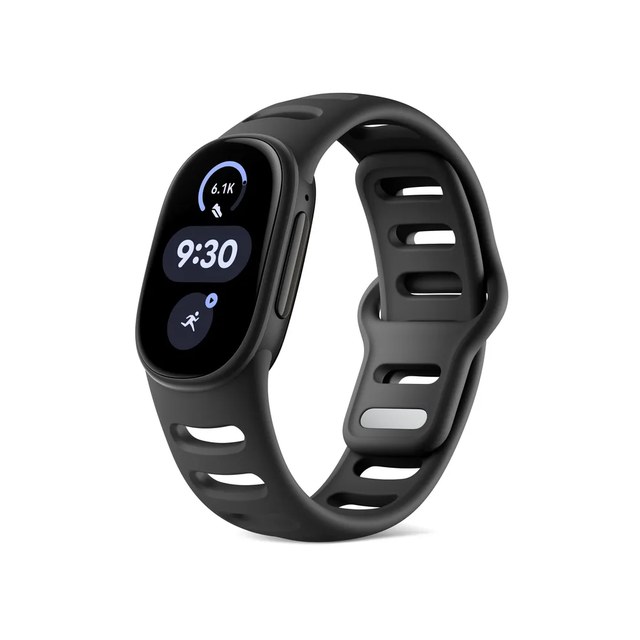
- Best for: Charge 6-style buyers who want a bigger screen, better GPS and a battery they can swap
- Standout: built-in GPS plus altimeter in a tracker Google says is 11.5 mm thin
- Biggest drawback: no NFC, so no tap-to-pay on the wrist (the5krunner)
- Price: $179.99 US per Google, checked November 5, 2026; the Coach feature needs Premium after the 3-month trial
- Our score: none yet. We don't score products nobody has tested.
Stock note: Google lists the Edge at $179.99 and it has been on sale since October 27, 2026. We have not confirmed a specific Amazon listing, so the button above goes to an Amazon search, not a single product page. Check the price and stock shown there before you buy. Want the no-screen option instead? Read our Fitbit Air review.
What Is the Fitbit Edge, and Is It the Charge 7?
Google announced the Fitbit Edge on October 12, 2026. It's a band-style tracker with a screen, sitting between the screenless Fitbit Air and the Pixel Watch line. Google never calls it the Charge 7, but the5krunner's headline does, and the pricing and form factor line up: the5krunner puts it $20 above what the Charge 6 cost at launch. If you came from our Fitbit Air vs Charge 6 comparison, treat the Edge as the new version of the Charge side of that choice.
One naming wrinkle: Google calls the display "hybrid OLED," while the5krunner lists a 1.34-inch AMOLED. Early coverage uses both terms. We use Google's wording when quoting Google and the5krunner's number for the size.
How Much Does the Fitbit Edge Cost, and When Can You Buy It?
Per Google's announcement, checked November 5, 2026: $179.99 in the US, on sale since October 27 per Droid-Life (Google's own post still describes pre-orders and an October 27 shelf date). The Stephen Curry Special Edition is $219.99. The5krunner reports £159.99 in the UK and €179.99 in Europe. Some outlets round the US price to $179, but Google's own post says $179.99, so that's what we use. Bands are sold separately, and Google hasn't given a replacement-battery price.
The subscription is the part to read carefully. Google includes three months of Google Health Premium. Basic tracking works without it, but the Gemini-based Google Health Coach requires Premium, sold separately. The5krunner reports the post-trial price as $9.99 a month. We couldn't match that to a Google page for the Edge specifically, so confirm it in the Google Health app before you count on it. If you kept Premium for three years at that rate, it would add roughly $360 on top of the device, which is why the free tier matters more than the headline.
What Does the Fitbit Edge Track, and What's New Over the Charge 6?
| Spec | Fitbit Edge | Source |
|---|---|---|
| US price | $179.99 (Curry SE $219.99) | |
| Availability | On sale since Oct 27, 2026 | Droid-Life |
| Display | Hybrid OLED, 46% more viewing area than earlier Fitbit trackers; 1.34 in, always-on option | Google; the5krunner (size) |
| Weight / thickness | 17.7 g without band; 11.5 mm | the5krunner; Google |
| GPS | Built-in, up to 40% more accurate than prior generations, plus altimeter | |
| Battery | Up to 7 days (about 2 with always-on); user-replaceable; a day of charge in about 5 minutes (30W adapter sold separately) | Google; TechMyMoney |
| Sensors | Optical heart rate, ECG app (select countries, not for under 22), skin temperature (not everywhere), SpO2 | Google; the5krunner |
| Water | 5 ATM and IP68 (Google says not waterproof or dust proof) | |
| Phone support | Android 11+, iOS 16.4+; Bluetooth 5.4, no Wi-Fi | Google; the5krunner |
| Missing | NFC / contactless payments, EDA sensor | the5krunner |
Checked November 5, 2026. Manufacturer figures come from pre-production testing; real-world results will differ.
Training and GPS
This is the main upgrade. Google says the Edge has built-in GPS that works without your phone, up to 40% more accurate than previous Fitbit generations, with an integrated altimeter for elevation. The5krunner notes the Charge 6 couldn't track floors climbed, so that's a real addition. Google lists automatic recognition of up to 100 workouts. Compare that with the Air's much narrower list in our Fitbit Air workout tracking guide. Both the "40% more accurate" and the auto-detect numbers are Google's. We haven't found a side-by-side GPS or heart-rate accuracy test against a Garmin or Polar yet.
Health features
Continuous heart rate, HRV and sleep stages with a morning recovery score, plus an on-wrist ECG app in select countries. Google's "Health Guardian" feature tracks blood pressure and insulin resistance trends and flags high or low heart rate, with availability varying by region. Google labels these as general wellness, not medical diagnosis. Treat the blood pressure and insulin trend items as unproven until someone independent validates them.
Battery and the replaceable cell
Seven days is the headline, but Google says that's with a battery-saver profile and that real life may be lower. Always-on display drops it to about two days. The user-replaceable battery is the interesting part: Google calls the Edge its first repairable Fitbit tracker. That matters for a device people keep for three years, but there's no replacement-battery price yet, so we can't tell you what a repair costs.
What Are the Fitbit Edge's Catches?
1. No NFC. The5krunner confirms there are no contactless payments. If you tap to pay with a Charge 6 now, you'll lose that.
2. Same heart-rate sensor as the Air. The5krunner reports a prior-generation sensor with 2-second storage intervals, where the Charge 6 stored 1-second data during exercise. That may matter for intervals, and the author suggests a chest strap if accuracy is the goal. We'd wait for a side-by-side test before calling it a downgrade, but you should know it going in.
3. Old bands won't fit. The5krunner says the attachment is new, so Charge 6 bands are out. The Fitbit Air's charger does work, which helps.
4. The best coaching is a subscription. Same story as the Air. If Coach is why you're buying, price it in. We cover the app side in The Fitbit App Is Now Google Health.
5. Some features aren't here yet. The5krunner says Google Maps turn-by-turn, coach-built workouts started from the tracker, and Health Guardian alerts arrive later this fall. Don't buy for a feature that isn't shipping on day one.
Fitbit Edge vs Fitbit Air vs Charge 6: Which One Fits You?
| Fitbit Edge | Fitbit Air | Fitbit Charge 6 | |
|---|---|---|---|
| Screen | Yes | No | Yes |
| Built-in GPS | Yes, plus altimeter | No | Yes, no altimeter |
| NFC payments | No | No | Yes |
| Battery | Up to 7 days, replaceable | Up to 7 days | Not rechecked here |
| Launch price | $179.99 | $99.99 | About $20 less than the Edge (the5krunner) |
Pick the Edge if you want live pace and heart rate on your wrist and GPS without carrying your phone. Pick the Fitbit Air if you mostly care about sleep and all-day data and don't want a screen at night; it launched about $80 cheaper. Keep the Charge 6 if you use wrist payments daily and its GPS is already good enough. If you're torn between a screen and no screen at a similar price, our Fitbit Air vs Inspire 3 piece walks through that same trade-off. For the Edge and the Air side by side, with the three-year cost and Google's update dates, see our Fitbit Edge vs Fitbit Air comparison.
Fitbit Edge Pros and Cons
- ✓ Bigger display and built-in GPS with altimeter
- ✓ User-replaceable battery
- ✓ Works with iPhone and Android
- ✓ Three months of Premium included
- ✓ Uses the Fitbit Air charger
- ✕ No NFC or tap-to-pay
- ✕ No side-by-side accuracy or battery tests we could find yet
- ✕ Coach needs a paid Premium plan after the trial
- ✕ Charge 6 bands don't fit
- ✕ Some promised features arrive later this fall
Should You Buy the Fitbit Edge Now or Wait?
It has been on sale since October 27 (Droid-Life's launch-day review is titled "You can buy the Fitbit Edge today"), so buying now is reasonable if you want a screen and phone-free GPS. Read a hands-on review such as Droid-Life's before paying. Before paying $179.99, check reviews for real GPS tracks next to a Garmin or Polar, an honest battery number with always-on turned on, and whether the 2-second heart-rate storage hurts interval work. If you're shopping around Black Friday anyway, our fitness tracker Black Friday guide covers whether older Fitbits are worth waiting on.
Fitbit Edge FAQ
How much is the Fitbit Edge?
Google lists the Fitbit Edge at $179.99 in the US, and the Stephen Curry Special Edition at $219.99 (Google blog, checked November 5, 2026). The5krunner reports £159.99 in the UK and €179.99 in Europe.
When does the Fitbit Edge come out?
Google announced it on October 12, 2026, and it went on sale on October 27, 2026 at the Google Store and retail partners.
Does the Fitbit Edge need a subscription?
No for the basics. Heart rate, sleep, workouts and the on-wrist features work without Google Health Premium. The Gemini-based Google Health Coach does require Premium, and Google includes three months with purchase. The5krunner reports the price after that as $9.99 a month in the US.
Is the Fitbit Edge the Charge 7?
Not by name, but functionally yes. Coverage including the5krunner treats it as the Charge 6 successor, with a larger screen, GPS with an altimeter and a replaceable battery. It drops NFC payments and the EDA stress sensor.
Does the Fitbit Edge have a screen?
Yes. It is a screen-equipped band with a hybrid OLED display that Google says has 46% more viewing area than previous Fitbit trackers. The5krunner lists it as 1.34 inches with an always-on option. If you want no screen at all, see the Fitbit Air.
Does the Fitbit Edge work with iPhone?
Yes. It needs Android 11 or higher, or iOS 16.4 or higher, plus a Google Account and the Google Health app. Quick replies to notifications are Android-only, per the5krunner.
Does the Fitbit Edge have NFC or Google Wallet?
No. Neither Google's announcement nor the5krunner's spec rundown lists NFC, and the5krunner states plainly that there are no contactless payments. If tap-to-pay on your wrist matters, this is a real downgrade from the Charge 6.
How long does the Fitbit Edge battery last?
Google says up to seven days on a single charge, tested pre-production with a battery-saver profile, so real life may be lower. Turning on the always-on display cuts that to about two days, according to Google's setup guide as quoted by TechMyMoney. We haven't found an independent battery test yet.
Sources
- Google — Meet the Google Fitbit Edge: price, ship date, display, GPS, battery, sensors, Premium trial. Checked November 5, 2026.
- the5krunner — Fitbit Edge: price, release date and features: display size, weight, no NFC, sensor details, later-fall features.
- TechMyMoney — Google Fitbit Edge price and features: always-on battery figure, US pricing.
- Droid-Life — You can buy the Fitbit Edge today, should you?: launch-day hands-on review, on-sale date. Checked November 5, 2026.