Screenless Fitness Tracker vs Smartwatch: Which One Should You Buy?
Quick answer: Buy a screenless fitness tracker like the Google Fitbit Air ($99.99, 12 grams, up to 7 days of battery) if sleep and recovery data matter more than a wrist display. Buy a screen device, such as the Fitbit Charge 6 or Apple Watch Series 12 ($399), if you need built-in GPS, payments and notifications.
The question behind this search is usually not "which is better." It is "do I give up my screen, and what does that cost me?" This guide answers it with published specs, list prices and six questions you can answer in a minute. Everything here is a synthesis of manufacturer pages and independent reviews. We have not worn any of these devices ourselves.
- Screenless tracker: 7 to 10 days of battery, 12 to 29 grams, $99.99 to $199.99 up front, with sleep and recovery in a phone app.
- Smartwatch or screen-equipped band: built-in GPS, a display, notifications and payments, but up to 24 hours of battery on an Apple Watch Series 12 and a higher price.
- Keep your watch if you run phone-free, pay with your wrist or live on notifications.
- Add a screenless band if your watch is on the charger at night or too bulky to sleep in.
What Is the Difference Between a Screenless Fitness Tracker and a Smartwatch?
A screenless fitness tracker is a wrist or arm sensor with no display. It records heart rate, sleep and activity around the clock and shows everything in a phone app. A smartwatch has a screen, usually built-in GPS, and apps, notifications and payments on the wrist. The sensing hardware is similar; the interface and the battery are what differ.
| Spec | Google Fitbit Air | Amazfit Helio Strap | Polar Loop | WHOOP 5.0 | Fitbit Charge 6 | Apple Watch Series 12 |
|---|---|---|---|---|---|---|
| Screen | None | None | None | None | AMOLED | Yes |
| Battery (maker claim) | Up to 7 days | Up to 10 days | Up to 8 days | 14+ days (claim) | Up to 7 days | Up to 24 hours |
| Weight | 12 g with band | About 20 g | 29 g with SoftWeave band | Not verified | 30 g | Not verified |
| Built-in GPS | No | No | No | No | Yes | Yes |
| Payments | No | No | No | No | Google Wallet | Not checked |
| Subscription | None required | None | None | Membership required | None required | None required |
| List price (USD) | $99.99 | $99.99 | $199.99 | $199 a year | $159.95 | $399 (42mm) |
Specs from the maker pages and reviews listed in Sources, read November 7, 2026. Prices are list or launch prices, not today's Amazon prices, and sales change them. "Not verified" or "Not checked" means we could not confirm the figure from a page we could open.
Which One Lasts Longer on a Charge?
The screenless trackers win on battery by a wide margin. Google rates the Fitbit Air at up to 7 days, and DC Rainmaker's unit went from 95% to 10% over about a week with 2 to 4 hours of daily workouts.13 Amazfit rates the Helio Strap at 10 days and Polar rates the Loop at up to 8 days.45 Apple rates the Series 12 at up to 24 hours of normal use.12
That gap changes how you live with the device. A weekly charge is easy to fit in. A daily one has to be fitted around your sleep, which brings up the next question. Apple does list a fast charge: 15 minutes adds up to 12 hours.12
Which Is Better for Sleep Tracking?
A screenless band is the easier device to sleep in, mostly because it never has to leave your wrist for a charger at night. The Google Fitbit Air weighs 12 grams with its band and tracks sleep stages and heart rate, with SpO2 estimates during sleep where available.23 The Polar Loop adds a nightly recovery score called Nightly Recharge.4
Smartwatches can track sleep well too. Apple's Series 12 gives a nightly sleep score and sleep apnea notifications, and the SE 3 page lists an 18-hour battery.1213 The catch is practical, not technical: if the watch has to charge for part of the night, your data has gaps. Our inference from the battery figures is that a watch owner has to choose between a top-up before bed and a bulkier device on the wrist overnight. We have not measured how often that costs people nights of data. For a longer look at wearing both, see our Fitbit Air vs Apple Watch guide.
Do Screenless Trackers Really Cut Distraction?
They remove the screen, so they remove the glance-check, the buzzing notification and the temptation to read a message at 2 a.m. Whether that improves your day is personal, and we found no published data that measures it for these products. Treat it as a design intent, not a proven outcome.
Google pitches the Fitbit Air as a way to stay notification-free, and the Polar Loop page states "No buzzing. No beeping."14 The flip side is that you also lose useful screens: the time, a lap timer, a heart rate you can read mid-set. If you glance at your wrist ten times a workout, a screenless band will feel like a downgrade, not a relief. That is why question 1 in the checklist below matters.
What Do You Give Up Without a Screen?
You give up built-in GPS, on-wrist workout data, notifications and payments. None of the four screenless bands in the table has built-in GPS; the Fitbit Air and Polar Loop use your phone's GPS for outdoor routes.34 DC Rainmaker also reported that manually started GPS workouts on the Fitbit Air repeatedly failed to record during his review, which Fitbit said it was working to fix.3
The Fitbit Charge 6 is the clearest example of what a screen buys. Google lists built-in GPS, Google Wallet payments and an ECG app on it, and the ECG feature is limited to select countries and not intended for people under 22.10 The Fitbit Air offers irregular-rhythm notifications but cannot take an on-demand ECG.13 Neither is a diagnostic tool, and anyone with a heart concern should talk to a clinician rather than rely on a consumer wearable. Our Fitbit Air vs Charge 6 comparison goes through that split in detail.
What Does Each One Cost Over Three Years?
Three-year cost runs from $99.99 for a screenless band with no subscription to $597 for WHOOP One, with screen-equipped options in between. The big swing is WHOOP, where the band comes bundled with a $199-a-year membership.78
| Device | Upfront | Required yearly cost | 3-year total (USD) |
|---|---|---|---|
| Amazfit Helio Strap | $99.99 | $0 | $99.99 |
| Google Fitbit Air | $99.99 | $0 (Premium optional) | $99.99, or $396.99 with Premium at $99 a year |
| Fitbit Charge 6 | $159.95 | $0 (Premium optional) | $159.95, or $456.95 with Premium at $99 a year |
| Polar Loop | $199.99 | $0 | $199.99 |
| Apple Watch Series 12 (42mm) | $399 | $0 (cellular needs a carrier plan) | $399 |
| WHOOP One | Included | $199 | $597 |
Kudomax calculation from list prices in Sources: 3 x $99 = $297, so $99.99 + $297 = $396.99 and $159.95 + $297 = $456.95; 3 x $199 = $597. Excludes taxes, spare bands, chargers and sales. Premium pricing ($9.99 a month or $99 a year) is from Google's Google Health launch post and DC Rainmaker's Fitbit Air review; we assumed the same price applies on the Charge 6.
If you want the full WHOOP math, including the 24-month price and the free-trial trap, read how much WHOOP costs in 2026.
Which Should You Buy? Six Questions
Answer these six honestly. If you say yes to two or more of questions 1 to 4, buy a device with a screen. If your yeses are mostly on 5 and 6, a screenless band probably fits.
- Do you check your wrist mid-workout? Pace, heart rate zone, a lap timer. Screenless bands show none of it.
- Do you run or ride without your phone? Only the screen-equipped devices here have built-in GPS.
- Do you pay or answer messages from your wrist? The Charge 6 has Google Wallet; the four screenless bands have no payments or message display.
- Do you want an on-demand ECG or fall detection? The Charge 6 lists an ECG app and Apple lists Fall Detection on the SE 3. The Fitbit Air offers neither.
- Will you really charge a watch every day? If your honest answer is no, a 7 to 10 day battery may matter more than any feature above.
- Do you want less screen time, not more data? If a quiet wrist sounds like a feature, a screenless band is built for you.
Split results are common, and that is fine. Many people land on "watch for the day, screenless band for the night," which costs about $100 on top of the watch you already own.
Which Screenless Fitness Trackers Are Worth a Look?
These four cover the main types of buyer. We have not tested them hands-on; the picks reflect published specs, independent reviews and our own judgment of fit, not a performance ranking. Follow the links for a full review of each.
Google Fitbit Air: the low-cost default
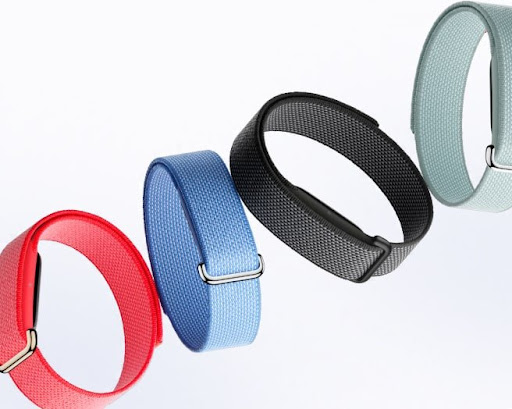
The Google Fitbit Air is 12 grams with its band, lists at $99.99 and needs no required subscription. Battery is rated up to 7 days, with a 5-minute charge for about a day.13 The catches: it has no GPS of its own, the deeper AI coaching sits behind optional Google Health Premium, and DC Rainmaker saw GPS workouts fail to record during his review. See our Fitbit Air review. The standard Obsidian listing showed buy options on Amazon at our November 7, 2026 check.
Amazfit Helio Strap: the gym-leaning pick
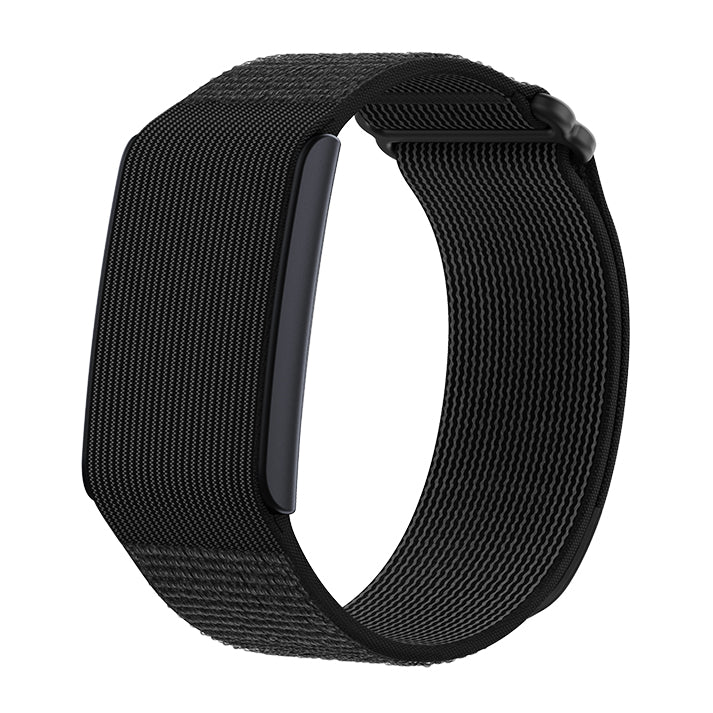
Amazfit rates the Helio Strap at 10 days. It weighs about 20 grams, carries a 5 ATM rating and had a $99.99 launch price with no subscription.56 You can wear it on the wrist or on the upper arm with a separate band, which helps with lifting. It has no built-in GPS. Amazfit has since added a Helio Strap Pro, so read our Helio Strap review before choosing.
Polar Loop: the no-fee training-science option
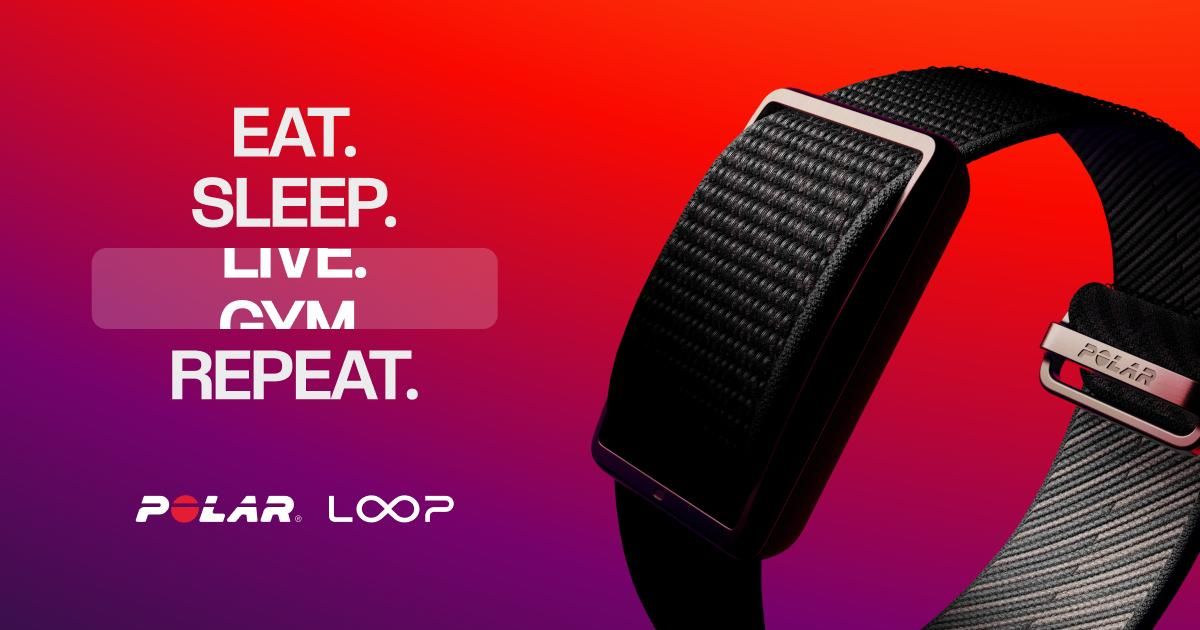
The Polar Loop lists at $199.99 on Polar's US page, with up to 8 days of battery, a 29 gram SoftWeave band, WR30 water resistance and "no monthly fees."4 It tracks 24/7 heart rate, nightly HRV and sleep, and gives a Nightly Recharge recovery score. The catches are the price against a $99.99 Fitbit Air, no built-in GPS, and a single Bluetooth connection used only for Polar Flow, so it cannot broadcast heart rate to other gear. Read our Polar Loop review.
WHOOP One: the coaching-first membership
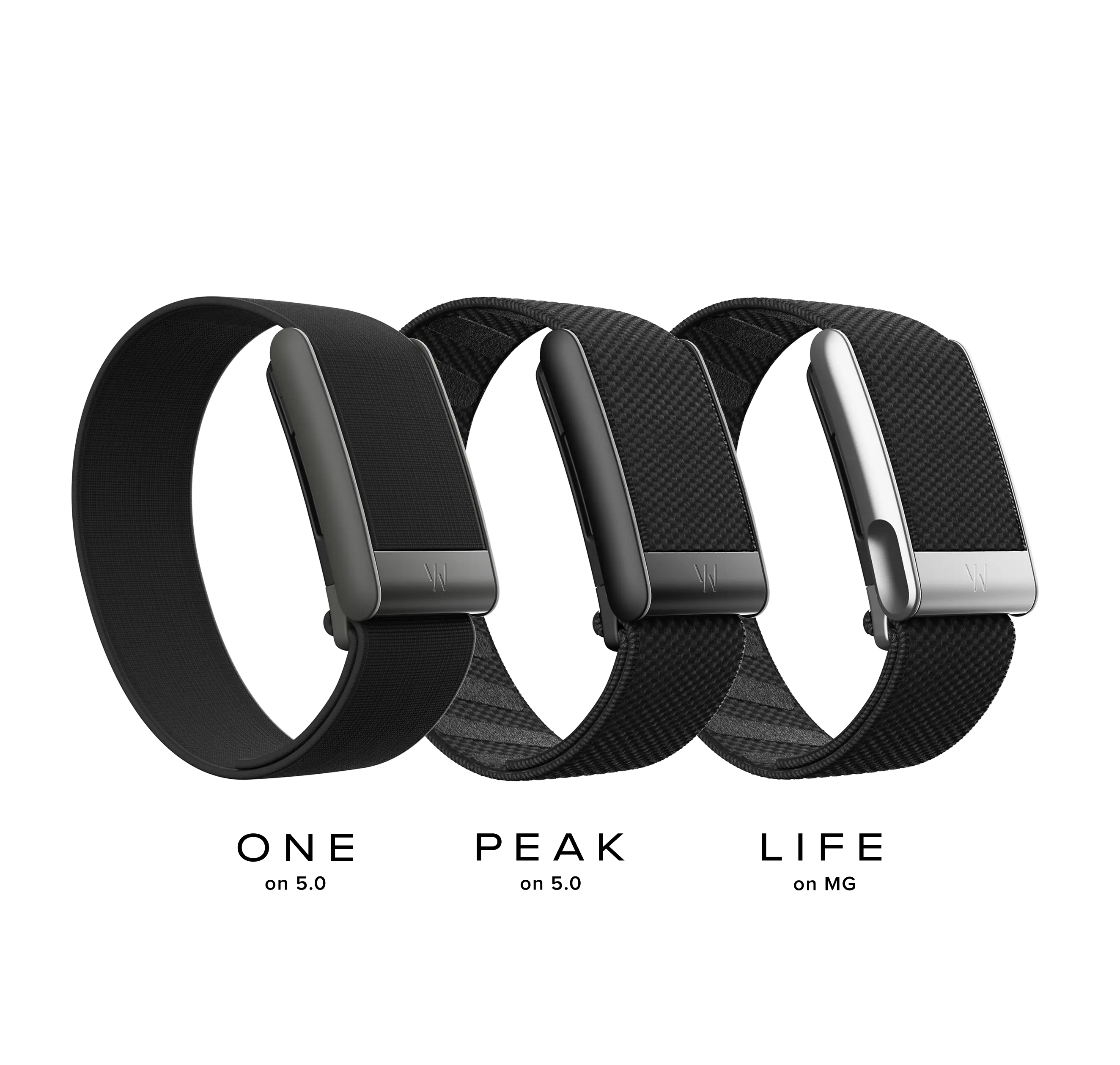
WHOOP has no screen and no built-in GPS, claims 14 or more days per charge, and sells a membership with the band included: WHOOP One is $199 a year.789 It makes sense if you want recovery and strain coaching and accept an ongoing bill. If you mostly want steps and sleep, the cheaper bands above cover that for less. Compare the alternatives in our best WHOOP alternatives guide.
Which Smartwatch or Screen Option Should You Compare?
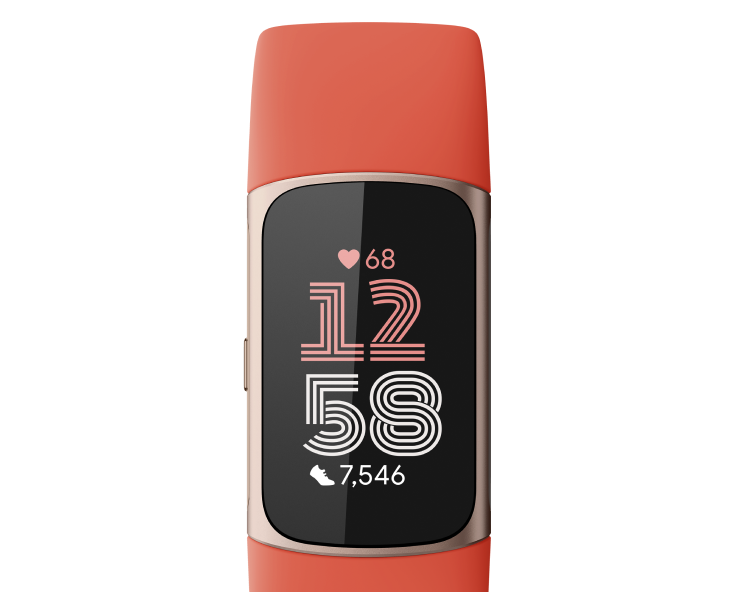
If you decide you want a screen, start with the Fitbit Charge 6 and look at the Apple Watch if you use an iPhone. The Charge 6 lists built-in GPS, Google Wallet and an ECG app, weighs 30 grams and is rated for up to 7 days, at a $159.95 list price.1011 Reviewers have called its GPS unreliable, so do not buy it as a precision running watch.
The Apple Watch Series 12 lists up to 24 hours of battery and GPS models, with a 42mm example price of $399 on Apple's page; the cheaper SE 3 lists 18 hours and Fall Detection.1213 Garmin's watches sit in the same group for people who want deeper training data. We don't link a specific Apple Watch or Garmin watch here because we haven't checked those listings; our Fitbit Air vs Apple Watch and Garmin Cirqa review cover the neighboring options. If you are weighing rings against bands instead, that is a separate question, answered in smart ring vs fitness band.
Who Should Pick What?
You mostly want sleep and recovery data, on a budget. The Google Fitbit Air or Amazfit Helio Strap at $99.99 each. No required subscription, a week or more of battery.
You train with structure and want no fees. The Polar Loop at $199.99, or a Helio Strap worn on the arm. Add a chest strap or armband for sessions where accuracy has to be right.
You want coaching and don't mind a membership. WHOOP One at $199 a year, about $597 over three years.
You run phone-free, pay with your wrist or live on notifications. A screen-equipped device: the Fitbit Charge 6 for a cheap, long-lasting band, or an Apple Watch if you use an iPhone.
You already own a watch you like. Keep it and consider a screenless band for nights only. Our Fitbit Air workout tracking guide shows what it does and doesn't capture. For the full category, start from our screenless fitness tracker home page.
Screenless Tracker vs Smartwatch FAQ
Is a screenless fitness tracker worth it?
It is worth it if you mainly want sleep, resting heart rate and daily activity trends without a screen or a daily charger. At $99.99 for the Google Fitbit Air or the Amazfit Helio Strap, the entry cost is low. It is not worth it if you run with GPS and no phone, pay with your wrist or want texts on a display, because none of the screenless bands do those things.
Is a screenless tracker better than a smartwatch?
Neither is better in general. A screenless tracker wins on battery (7 to 10 days against up to 24 hours for an Apple Watch Series 12), weight and price. A smartwatch wins on built-in GPS, an on-wrist display, notifications and payments. Pick by which trade you can live with, not by which category sounds more modern.
Can a screenless tracker replace my smartwatch?
Only if you used the watch mostly for health data. Screenless bands have no display, no on-device GPS and no payments. Many people keep the watch for the day and wear a screenless band at night, a pattern we summarized from owner threads in our Fitbit Air vs Apple Watch guide.
Do screenless fitness trackers need a subscription?
It depends on the brand. The Fitbit Air, Amazfit Helio Strap and Polar Loop work without a required subscription, though the Fitbit Air offers optional Google Health Premium at $9.99 a month or $99 a year. WHOOP is the exception: the band comes with a membership that starts at $199 a year for WHOOP One.
Do screenless trackers track workouts without a screen?
Yes, but you start and review sessions in a phone app instead of on your wrist. The Fitbit Air and Polar Loop have no built-in GPS and use your phone for outdoor routes. DC Rainmaker reported that manually started GPS workouts on the Fitbit Air repeatedly failed to record during his review, so treat GPS routes as the weak spot.
Which is better for sleep, a screenless tracker or a smartwatch?
A screenless band is easier to sleep in and does not need an overnight charge, so it is more likely to record every night. An Apple Watch Series 12 also gives a nightly sleep score, but Apple rates it at up to 24 hours of normal use, so owners must plan around charging. That last point is our inference from Apple's battery figures.
Sources
- Google, Fitbit Air launch post (price, Premium terms, battery claim), May 2026. blog.google
- Google Help, Fitbit Air overview (no screen, sensors, status light, silent alarms, Premium for coach). support.google.com
- DC Rainmaker, Fitbit Air review vs WHOOP, May 2026 (12 g with band, battery test, no GPS, Premium $9.99 or $99). www.dcrainmaker.com
- Polar, Loop product page (price, 8-day battery, 29 g SoftWeave, no subscription, no GPS, WR30). www.polar.com
- Notebookcheck, Amazfit Helio Strap launch (10-day rating, about 20 g, 5 ATM, screenless). www.notebookcheck.net
- the5krunner, Amazfit Helio Strap review (US$99 RRP, about a week of battery). the5krunner.com
- WHOOP, press center, WHOOP 5.0 and MG membership pricing. www.whoop.com
- WHOOP Support, Membership Pricing. support.whoop.com
- the5krunner, WHOOP 5.0 and MG review (no screen, no built-in GPS, 14-day battery claim). the5krunner.com
- Google Help, Fitbit Charge 6 (GPS, Google Wallet, ECG app, display). support.google.com
- the5krunner, Fitbit Charge 6 specs (up to 7 days, 30 g, 5 ATM, $159.95 RRP). the5krunner.com
- Apple, Apple Watch Series 12 (24-hour battery, 15-minute charge, sleep score, $399 42mm example). www.apple.com
- Apple, Apple Watch SE 3 (18-hour battery, fall detection, GPS). www.apple.com