How Accurate Is WHOOP? What Independent Studies Actually Show
Quick answer: WHOOP is accurate for what it is built for: overnight resting heart rate (about 3% average error against ECG in a 2025 study of WHOOP 4.0) and HRV (about 8%). It is weaker at wrist heart rate during intervals and lifting, and at sleep stages, where four-stage agreement with a sleep lab was about 64%.13
Search "is WHOOP accurate" and you get two camps. One is WHOOP's own pages and owners who swear by it. The other is forum threads where someone's WHOOP read 30 beats low on a deadlift. Both can be telling the truth, because WHOOP is several measurements wearing one logo, and they do not all have the same quality of evidence.
This is a synthesis of studies and reviews we read, not a test we ran. We haven't worn or tested a WHOOP ourselves. Where a number comes from a small study or a single reviewer, we say so. Where we are guessing, we say "our inference."
How Accurate Is WHOOP Overall?
WHOOP is most trustworthy for overnight resting heart rate and HRV, decent for sleep versus wake, and least trustworthy for wrist heart rate under load, sleep stage minutes and calories. That ranking follows the published evidence below, and it matches how optical wrist sensors behave in general.5
| What WHOOP measures | Best independent evidence we found | Result | Our read |
|---|---|---|---|
| Resting heart rate (overnight) | Dial 2025, WHOOP 4.0 vs ECG, 13 adults, 536 nights | CCC 0.91, 3.00% mean error | Good (the authors rated it moderate) |
| HRV (overnight) | Same study | CCC 0.94, 8.17% mean error (wide spread) | Good for trends (the authors rated it moderate) |
| Sleep vs wake | Miller 2020, 12 adults, 86 sleeps vs polysomnography | 89% agreement, 51% of wake detected | Good at sleep, misses wake |
| Sleep stages | Same study | 64% four-stage agreement, kappa 0.47 | Moderate, treat as rough |
| Heart rate, wrist, intervals and rides | DC Rainmaker 2026, the5krunner | Visible errors on intervals and a trainer ride | Mixed |
| Heart rate, bicep | DC Rainmaker 2026, the5krunner | "Near-perfect" and "undoubtedly accurate" | Good |
| Calories | None found | No peer-reviewed validation found | Unproven |
| ECG (WHOOP MG) | FDA 510(k) K243236, April 4, 2025 | Cleared; screening, not diagnosis | Cleared |
| Blood Pressure Insights | FDA closeout letter, June 17, 2026 | Not cleared; needs cuff calibration | Estimate only |
Sources 1 to 9 below. Most validation work used WHOOP 4.0 or older hardware. Evidence for the WHOOP 5.0 and MG sensor is thin. The5krunner treats the two as the same sensor.
How Accurate Is WHOOP's Resting Heart Rate and HRV?
In the best recent test we found, WHOOP 4.0 matched ECG closely for overnight resting heart rate (about 3% average error) and HRV (about 8%), but it finished behind the Oura rings in the same study.1 That is the cleanest independent evidence for a current-era WHOOP strap.
The study, published in Physiological Reports in August 2025, put five wearables against an ECG reference: Garmin Fenix 6, Oura Gen 3, Oura Gen 4, Polar Grit X Pro and WHOOP 4.0. Thirteen healthy adults wore them for 536 nights. Agreement is reported as Lin's concordance correlation coefficient (CCC, where 1.0 is perfect) plus mean absolute percentage error.1 The authors described WHOOP's agreement as moderate and acceptable, not excellent. The study was funded by the Air Force Research Laboratory, and the authors declared no competing interests.
| Device (vs ECG, overnight) | Resting HR CCC | Resting HR error | HRV CCC | HRV error |
|---|---|---|---|---|
| Oura Gen 4 | 0.98 | 1.94% | 0.99 | 5.96% |
| Oura Gen 3 | 0.97 | 1.67% | 0.97 | 7.15% |
| WHOOP 4.0 | 0.91 | 3.00% | 0.94 | 8.17% (+/- 10.49) |
| Polar Grit X Pro | 0.86 | 2.71% | 0.82 | 16.32% |
Dial et al., Physiological Reports, August 2025. The Garmin Fenix 6 was excluded from the resting heart rate analysis by the authors and scored HRV CCC 0.87 (10.52% error). Table shows the four devices with complete data.
What does 3% mean in beats? At a resting rate of 50 to 60 bpm it works out to roughly 1.5 to 2 beats (our arithmetic). The HRV error is the one to respect: the 8.17% average carries a wide spread, so one night's HRV can be off by more than the average suggests. That is a good reason to read WHOOP's recovery number as a trend over weeks, which is how low recovery scores are best handled anyway.
An older, smaller study agrees on direction. Bellenger and colleagues tested WHOOP 2.0 against ECG over 15 sleeps in six young adults and found heart rate bias under 0.4% and HRV bias of about 1.7%.2 Two caveats: it is tiny, and the authors disclosed that a researcher's position in their group is sponsored by WHOOP (the sponsorship began after data collection).
The5krunner added a useful reality check. Comparing overnight HRV from a WHOOP MG with 31 morning readings from a Polar H10 and an HRV app, the reviewer found weak day-to-day agreement with the waking reading (correlation 0.30) and no useful agreement on baseline.5 That is one person over about a month, so it is an anecdote with data, not a validation. It does fit a known pattern: overnight HRV and a two-minute morning reading are different measurements and need not match.
Is WHOOP Accurate for Sleep Tracking?
WHOOP is good at separating sleep from wake and only moderate at naming stages. In a 12-person lab study against polysomnography (the sleep-lab standard), it agreed 89% of the time on sleep versus wake but just 64% on four stages.3
The numbers behind that, from Miller and colleagues in the Journal of Sports Sciences (2020): across 86 sleeps, WHOOP overestimated total sleep time by about 8 minutes, a difference that was not statistically significant. Wake detection was the weak part, at roughly 51% specificity. The authors' conclusion was that WHOOP is a reasonable option when polysomnography is impractical, especially for two-stage scoring and when bedtimes are entered accurately.3 A second study on WHOOP 2.0 (six adults, 54 sleeps) landed in the same place: 63% four-stage agreement in automatic mode, and slow-wave sleep underestimated by about 15.5 minutes.4
Two things to keep in mind. First, those were lab sleeps in healthy young adults, and the WHOOP hardware was older. Second, the same research group's papers carry the WHOOP sponsorship disclosure noted above. The sleep numbers are not alarming, but they are not a green light for deep-sleep minutes either.
The5krunner's 30-night comparison shows how far stage minutes can drift between devices: WHOOP MG averaged 131.8 minutes of deep sleep, Oura 63.9 and Eight Sleep 77.9. The reviewer suspects the MG overestimates deep sleep.5 We can't say who is right, only that three consumer devices cannot all be. Our inference: use total sleep time and consistency, and ignore any single night's deep or REM minutes. If sleep stages are the main reason you are shopping, our WHOOP vs Oura comparison covers the other differences.
Is WHOOP Accurate During Workouts, Lifting and HIIT?
On the wrist, WHOOP's heart rate is fine for steady cardio and shaky for intervals, rides with fast changes and lifting. On the bicep it is much better. Both the5krunner and DC Rainmaker land on that split.56
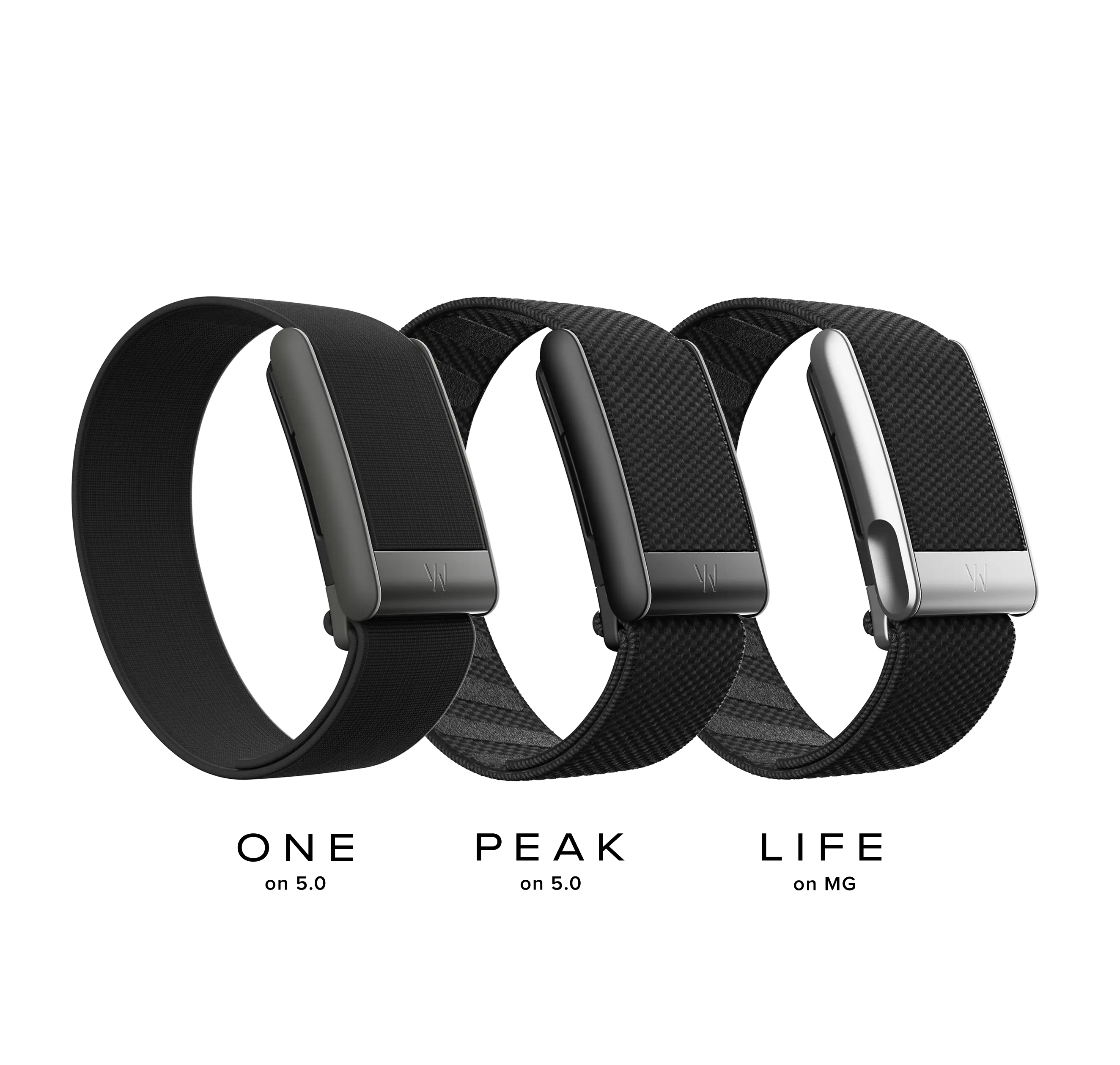
- Runs and trainer rides: in DC Rainmaker's May 2026 Fitbit Air review, tested against a Garmin HRM-600 chest strap, WHOOP on the wrist came out ahead of the Fitbit Air overall. It still showed "plenty of errors" early in an hour-long interval run, and the indoor trainer ride showed more issues, especially in the last interval.6
- Outdoor riding: he called the result "pretty darn good," with both devices struggling on the same fast downhill sections where speed rose and heart rate fell quickly.6
- Bicep wear: DC Rainmaker reports "near-perfect accuracy" on the bicep. The5krunner rated bicep WHOOP above a Garmin Elevate 5 and a faulty HRM-Pro Plus but below a Polar Verity Sense, across HYROX sims, cycling, running and open-water swimming.56
- Strength training: the5krunner calls heart-rate-based strain unreliable here and says WHOOP's separate motion-based approach for strength workouts is more accurate than other everyday wearables.5 This matches the general wrist-sensor problem: gripping flexes the tendons under the sensor. Our guide to chest strap vs armband vs wrist accuracy explains the physics.
WHOOP computes strain from time in heart rate zones, so a wrong max heart rate or a few missed beats can shift your strain score.5 A small heart rate error that stays inside the right zone barely matters. A big error that moves you from zone 3 to zone 5 matters a lot. If you lift, our smart ring comparison for weight lifting shows why other wearables have the same limits.
How Accurate Are WHOOP's Calories and Strain?
We could not find a peer-reviewed study that checks WHOOP calorie estimates against indirect calorimetry, so the honest answer is that no independent validation turned up in our search as of November 7, 2026. Strain is a derived score, not a measurement, so there is nothing to validate it against.
Our inference: because WHOOP builds strain from heart rate zones, any heart rate error flows through into strain, and calories likely behave the same way. Use both for trends. If you are doing precise calorie math for a cut, a kitchen scale for calorie tracking will beat any wrist estimate.
Is the WHOOP MG's ECG Accurate and FDA Cleared?
Yes, the ECG on the WHOOP MG is FDA cleared. The FDA database lists "WHOOP ECG (electrocardiogram) Feature (1.0)" from Whoop, Inc. with a decision date of April 4, 2025, under product code QDA, electrocardiograph software for over-the-counter use.7
FDA's decision letter describes a single-channel recording qualitatively similar to a Lead I ECG, taken as a 30-second spot check. It classifies atrial fibrillation (AFib), normal sinus rhythm, low heart rate (under 50 bpm) or high heart rate (100 bpm and up) on a readable waveform. It is cleared for adults 22 and older, is not recommended for people with other known arrhythmias, and is labeled for informational use: FDA's indication says users should not take clinical action on the output without consulting a qualified healthcare professional. Clearance is not a diagnosis.
On independent use, the5krunner did four manual ECGs on both wrists and WHOOP read normal rhythm each time. No AFib event occurred, so that review cannot speak to AFib detection, and the ECG is on-demand only, not passive.5 If you want passive rhythm alerts instead, our guide to trackers for heart health and AFib compares the options. An ECG result of any kind is a reason to talk to a clinician, not to self-diagnose.
The MG is also the pricier membership tier. For the plan math, see how much WHOOP costs, and for the hardware question see WHOOP 5.0 vs WHOOP MG.
How Accurate Is WHOOP Blood Pressure Insights?
Blood Pressure Insights (BPI) is an estimate, not a cuff reading. It is not FDA cleared, WHOOP asks you to calibrate it against a home cuff, and the one hands-on review we found called it "in the right ballpark but slightly overestimated by a few points."59 We can't give a validated error figure because we didn't find a published independent study.
The regulatory history is worth knowing. FDA sent WHOOP a warning letter on July 14, 2025 saying it viewed BPI as a regulated medical device. WHOOP disagreed and called it a wellness feature.9 On June 17, 2026, FDA closed that letter, saying it "does not intend to enforce the device statutory and regulatory requirements" for BPI as modified, after WHOOP changed the feature and its labeling and FDA updated its General Wellness guidance. The closeout covers only the modified feature.8 In plain terms: no enforcement, but also no clearance and no accuracy endorsement.
If blood pressure matters to your health, use a clinically validated upper-arm cuff (the validatebp.org list is a good start), and talk to a clinician. Do not adjust medication based on a WHOOP estimate.
What Does WHOOP Say vs What Independent Studies Show?
WHOOP's accuracy claims are stronger than the independent evidence for the current hardware, mostly because the studies behind them used older straps and small groups.
| WHOOP's position | What we could verify |
|---|---|
| An independent Central Queensland University study ranked WHOOP the most accurate wearable for heart rate and HRV against ECG (per WHOOP's site) | We couldn't open WHOOP's page, so we only have this from search summaries. The CQU-group papers we could read tested WHOOP 2.0 in six people, and the group discloses WHOOP sponsorship.24 |
| BPI is a wellness feature, not a medical device | FDA closed its warning letter on June 17, 2026 for BPI as modified. No clearance.89 |
| ECG on the MG is FDA cleared | Confirmed in FDA's database, K243236, April 4, 2025.7 |
| A wrist strap is enough for strain and recovery | Mostly fair for recovery inputs at night. Weaker for hard intervals and lifting; the5krunner advises a chest strap for pacing endurance efforts.5 |
None of this means WHOOP is inaccurate. It means the strongest evidence is for the overnight metrics, and the evidence thins out as you move toward workouts, calories and the newest hardware.
How Can You Check If Your WHOOP Is Accurate?
Wear it next to a Polar H10 chest strap for a few sessions and compare. The H10 reads the heart's electrical signal and is the usual reference in validation work, so it settles most arguments in about a week. This is our suggested method, not a published protocol.
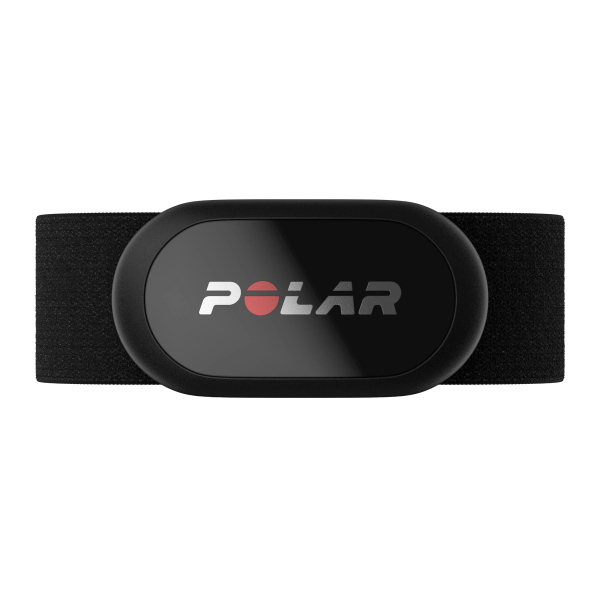
- Wet the strap electrodes and wear the H10 under your shirt. Record it in a free app or on a watch, separate from WHOOP.
- Do three sessions: 30 minutes of steady cardio, an interval workout, and a lifting or circuit session.
- Compare after the session: look at average and max heart rate, then at time in each zone, then at the shape of the graph. Matching the shape matters more than matching every beat.
- Try both placements: repeat the interval session with WHOOP on the bicep instead of the wrist.
- Judge by zone, not by bpm: a few beats apart in the same zone is fine. A repeat 20 bpm gap in a lifting or interval session is the pattern the research warns about.
Heads up: the5krunner notes that WHOOP's cloud cleans up workout data, so the heart rate graph in the app can differ from the live broadcast signal.5 Compare like with like. For overnight HRV, the H10 can give you a two-minute morning lying reading in an HRV app, but expect it not to match WHOOP's overnight number, as above. For more on strap fit and electrode care, see the Polar H10 battery and strap guide.
Who Should Pick What?
Verdicts below are based on the published evidence above, not our own testing.
- You want sleep, recovery and trends: WHOOP's strongest ground. The WHOOP One membership is the cheapest way in; see current WHOOP pricing before you buy.
- You do intervals, lifting or HYROX and care about exact heart rate: wear WHOOP on the bicep, or pair it with a Polar H10 for those sessions.
- You want on-demand ECG: the MG hardware on a Life membership. Talk to a clinician about what the results mean.
- You care most about resting HR and HRV accuracy: the 2025 study favored Oura. Our WHOOP vs Oura and best WHOOP alternatives pages cover that route, including bands and accessories for WHOOP owners.
- You need blood pressure numbers: use a validated cuff, not any wearable.
Amazon sells WHOOP memberships with the device, and Amazon pricing can differ from WHOOP.com, which is why we don't print an Amazon price here. If a subscription is a dealbreaker, start with our best screenless fitness tracker rankings.
Heart Rate Accuracy FAQ
Is WHOOP accurate?
Mostly yes for overnight resting heart rate and HRV, mixed for everything else. A 2025 study of WHOOP 4.0 against ECG found about 3% average error for resting heart rate and about 8% for HRV. Wrist heart rate in intervals and lifting is the weak spot, and sleep stages are only moderately accurate. We found no peer-reviewed validation of the WHOOP 5.0 or MG hardware itself.
Is WHOOP more accurate on the wrist or the bicep?
The bicep. The5krunner found WHOOP accurate as a heart rate source on the biceps and saw clear deterioration on the wrist, and DC Rainmaker reported near-perfect accuracy on a bicep. If you do intervals, HYROX-style circuits or hard rides, move the band to your upper arm or add a chest strap.
Is WHOOP accurate for sleep tracking?
Good at telling sleep from wake, moderate at naming the stages. In a 12-person lab study, WHOOP agreed with polysomnography 89% of the time on sleep versus wake but only 64% on four stages, and it caught just 51% of wake time. Treat total sleep and trends as useful, and treat deep and REM minutes as rough.
Is the WHOOP MG ECG accurate and FDA cleared?
The ECG feature is FDA cleared. FDA's database lists WHOOP ECG Feature 1.0 under 510(k) K243236, with a decision date of April 4, 2025. One independent reviewer's four manual recordings read as normal, but no AFib event occurred, so real-world AFib detection is untested by that review. Talk to a clinician about any heart rhythm concern.
Is WHOOP blood pressure accurate?
Treat it as a trend estimate, not a measurement. WHOOP Blood Pressure Insights is not FDA cleared, needs calibration against a cuff, and one reviewer found it in the right ballpark but slightly high. FDA closed its 2025 warning letter on June 17, 2026 for the feature as modified. Use a validated cuff for decisions and ask a clinician about blood pressure.
How accurate are WHOOP calories?
Unproven. We found no peer-reviewed study comparing WHOOP calorie estimates with indirect calorimetry. Because WHOOP builds strain from heart rate zones, calorie and strain numbers inherit any heart rate error, which is largest on the wrist during lifting and intervals. Use calories for trends, not for exact food math.
How does WHOOP accuracy compare with Oura or Apple Watch?
In the 2025 nocturnal study, Oura Ring Gen 4 beat WHOOP 4.0 on resting heart rate (1.94% vs 3.00% average error) and HRV (5.96% vs 8.17%). We found no head-to-head published test of WHOOP 5.0 against Apple Watch, so we can't rank them on workout heart rate.
Sources
- Dial MB, et al. Validation of nocturnal resting heart rate and heart rate variability in consumer wearables. Physiological Reports, August 2025. PubMed (PMID 40834291) · DOI
- Bellenger CR, et al. Wrist-Based Photoplethysmography Assessment of Heart Rate and Heart Rate Variability: Validation of WHOOP. Sensors, 2021. PubMed Central
- Miller DJ, et al. A validation study of the WHOOP strap against polysomnography to assess sleep. Journal of Sports Sciences, 2020. PubMed (PMID 32713257)
- Miller DJ, et al. A Validation Study of a Commercial Wearable Device to Automatically Detect and Estimate Sleep. Biosensors, 2021. PubMed Central
- the5krunner. Is Whoop 5 / MG Accurate? A Definitive Answer. Published July 5, 2025; page shows last update October 3, 2026. Single reviewer. the5krunner.com
- DC Rainmaker. Fitbit Air In-Depth Review: A True Whoop Competitor for $99? May 2026. dcrainmaker.com
- U.S. FDA. 510(k) K243236, WHOOP ECG (electrocardiogram) Feature (1.0). Decision date April 4, 2025. FDA 510(k) database
- U.S. FDA. Whoop, Inc. close-out letter, Blood Pressure Insights, June 17, 2026. fda.gov
- WHOOP Community. WHOOP Update: Blood Pressure Insights, July 15, 2025. community.whoop.com
