Garmin Connect+ Food Logging Isn't Worth $69.99/Year — Here's the Free Way to Track Calories
Quick answer: Garmin added AI-powered food logging to Connect+ ($6.99/month or $69.99/year) in January 2026, and independent testing found it missed most of a real test breakfast, failed all 10 barcode scans tried against UK groceries, and took roughly 100 screen taps to log a single meal — the5krunner rated it 2 out of 5. You don't need it. A $21–$31 Bluetooth kitchen scale (we've re-verified the Etekcity and RENPHO models below are both in stock) paired with the free tier of MyFitnessPal or Cronometer gets you a bigger food database and a barcode scanner that already works, for nothing — while your Garmin, Fitbit, Oura or WHOOP keeps doing the job it's actually good at: tracking what you burn, not what you ate.
Garmin didn't sneak this one in quietly. When Connect+ launched in 2025 as a paid tier sitting on top of hardware people had already bought, a boycott-the-service post on r/Garmin picked up 10,000 upvotes — that's not a number that happens over a feature nobody cares about. Then, in January 2026, Garmin used its CES stage to add AI food and nutrition logging to that same $69.99/year subscription. The reviews that followed weren't kind, and they're worth reading closely before you decide whether to pay for any of this.
- $69.99/year (or $6.99/month) — what Garmin charges for Connect+, the tier required for food logging.
- 2 out of 5 — the5krunner's rating of Garmin's AI food logging after real-world testing.
- 0 of 10 — UK supermarket barcodes the Connect app correctly identified in that same test.
- ~$25 and free — a Bluetooth kitchen scale plus MyFitnessPal or Cronometer's free tier, doing the same job.
What Is Garmin Connect+, and Why Did It Start With a Boycott?
Connect+ is Garmin's premium software tier, layered on top of watches and bands you've already paid full price for. It bundles AI-powered coaching insights, live workout data pushed to your phone, more advanced training dashboards and some social features, for $6.99 a month or $69.99 a year. Garmin has kept that pricing stable since launch — there's no confusion about the number.
What there is plenty of confusion, and anger, about is the principle. A post calling for a boycott of the service on the r/Garmin subreddit gathered 10,000 upvotes, with commenters saying the paywall would put them off buying another Garmin watch in the future, worried it was the first of many features to get locked behind a subscription rather than the last. That backlash was already running hot when Garmin announced, at CES in January 2026, that food and nutrition logging — global food database, barcode scanning, camera-based AI meal recognition, daily and weekly macro reports — would land inside Connect, gated behind the same $69.99/year tier. It's a genuinely useful-sounding feature list. Whether it actually works is a separate question.
Does Garmin's New AI Food Logging Actually Work? What the5krunner Found
the5krunner ran the feature against an ordinary breakfast — toast, jam, butter and a coffee — and the result is the single most useful data point in this whole story:
"Garmin found: 1 slice of white bread toast with a tablespoon of jam. Garmin missed: butter, the coffee and the other three pieces of toast."
That wasn't a one-off miss. Across a wider ingredient-identification test, Garmin's AI correctly matched ingredients about 40% of the time — the same as ChatGPT and Grok managed, but well behind Gemini's 80%. On a separate plate, the app overestimated a 25g portion of salmon as roughly 100g, a 300% miss in the wrong direction. Barcode scanning fared worse: testing against 10 everyday UK supermarket products, the review reports zero were correctly identified, despite the reviewer's profile being set to a UK region.
Then there's the friction. Logging that one breakfast to the reviewer's satisfaction took around 100 screen taps — a number that makes the whole point of "AI-powered" logging feel backwards. And portion control has a hard floor: the app wouldn't let the reviewer log anything below a 100g minimum, which meant a 50g satsuma had to be logged as double its actual weight, no way to correct it downward. the5krunner's final call was 2 out of 5, describing the feature as unusable for practical daily nutrition tracking as it currently stands.
Is $69.99/Year at Least a Good Price? What DC Rainmaker Found
To be fair to Garmin, DC Rainmaker's own testing found real strengths, with one important catch. His Garmin account's region was set to the United States even though he actually lives in Spain, and barcode scanning simply failed — not one item scanned — until he corrected that setting to match where he was actually shopping. That's the same regional dependency the5krunner ran into with UK products, just from the opposite direction: the feature has to know your real region before it works at all, which is a real problem if you travel. Once he fixed the setting, though, scanning was fast and reliable — nearly everything in his kitchen and fridge scanned successfully in under a second, with only a carton of eggs failing to match. The AI photo recognition impressed him too, correctly identifying a full dinner plate and, in one aside, most of an entire grocery-store shelf at a glance.
On price, DC Rainmaker's own verdict was that Connect+ is "at least competitive with MyFitnessPal" — he didn't put exact numbers side by side in his review, but for reference, MyFitnessPal's own Premium tier (the one that includes barcode scanning) runs $19.99/month or $79.99/year. Some readers commenting on his review reported real gaps of their own: a database thin on regional cuisines like Korean food, no recipe builder with per-serving calculations, meal categories limited to the standard breakfast/lunch/dinner/snacks buckets, and no way to share a log with a nutritionist, a coach, or export it to a platform like TrainingPeaks. DC Rainmaker's own closing take was more upbeat than the5krunner's: he called Connect+ nutrition, for the first time since the tier launched, "a mildly compelling case to subscribe to Connect+ if you were previously subscribed to MyFitnessPal" — while also being upfront that he doesn't personally do much day-to-day food logging, so his review reads more like a first impression than a deep side-by-side test. For anyone starting from zero, you're paying full price for a food database built from scratch by a GPS-watch company — not the 20-plus-year head start MyFitnessPal already has.
The Free Fix: A Cheap Kitchen Scale Plus an App That Already Has the Food Database
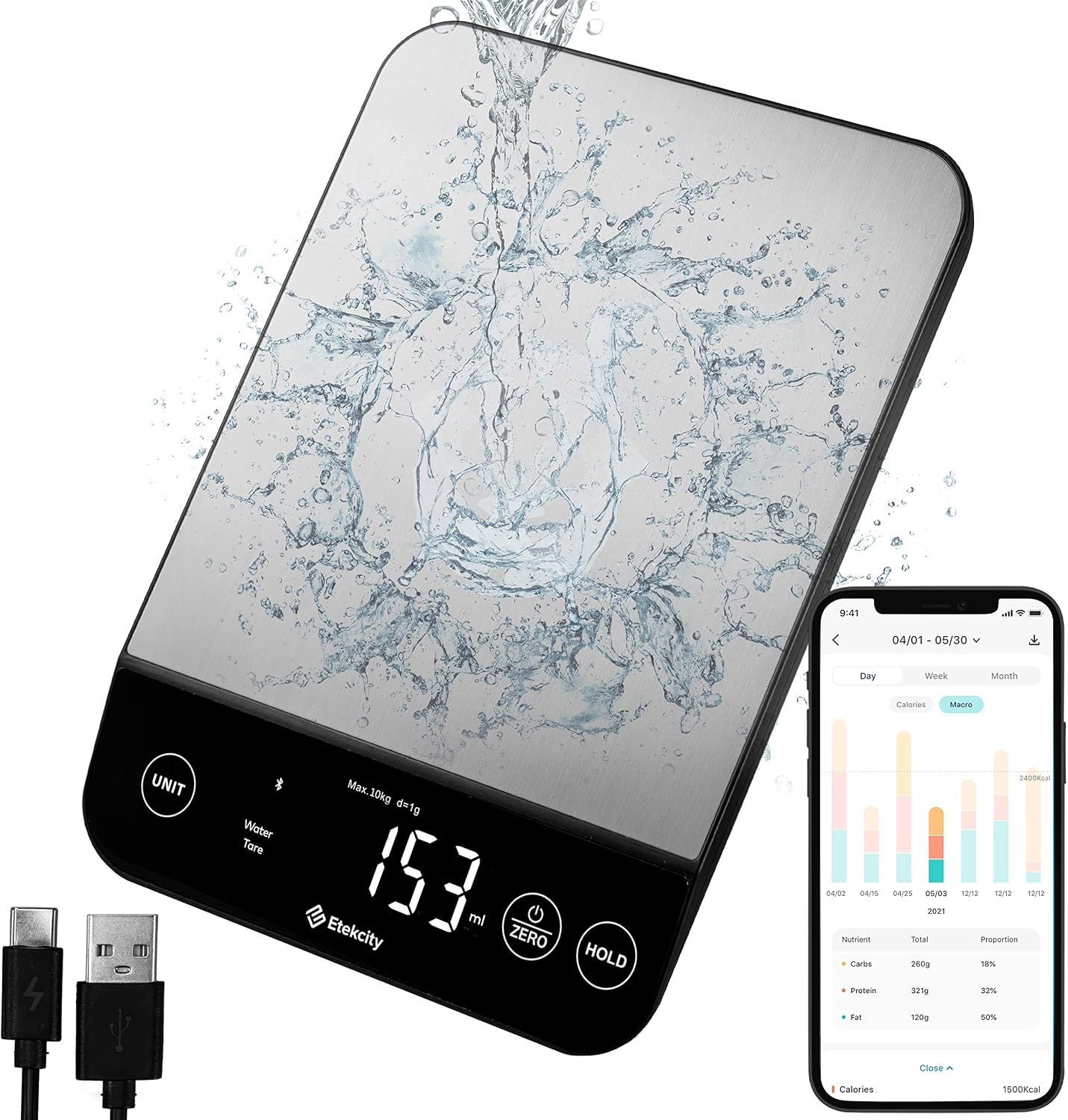
Here's the part that surprised us doing the research for this piece: a kitchen scale doesn't really "sync to MyFitnessPal" in any direct, meaningful sense, and MyFitnessPal's own community discussions confirm that's just not how it typically works. So the fix isn't finding some magic scale with a MyFitnessPal logo on the box — it's simpler than that. You weigh the food, the scale gives you an accurate number in grams, and you type that number into MyFitnessPal's or Cronometer's own food search or barcode scanner. Both apps already have their own enormous food databases and their own logging tools, completely independent of whatever the scale's companion app happens to connect to.
That means the scale's job shrinks to one thing: give you a number you can trust. Our full kitchen scale roundup verified three options in depth, and the Etekcity 22lb Food Nutrition Scale (~$31, still in stock as of this writing) is the one we'd point to here — 2g precision, 22lb capacity, and per Etekcity's own listing it happens to also sync into Apple Health and Fitbit through the free VeSync app, which is a nice bonus if you're on those platforms but genuinely optional for this workflow.
If you want to spend less, the RENPHO Smart Food Scale (~$21, also in stock) does the same core job — 1g precision, its own app with a USDA food database, and a one-touch tare button — at roughly two-thirds the price. You don't need either scale's app for what this guide is about; you just need an accurate gram reading.
Which free app you pair it with matters more than which scale you buy, and it's worth being precise here rather than treating "MyFitnessPal or Cronometer" as interchangeable. MyFitnessPal's crowd-sourced database is older and larger — built up since 2005 — which helps if you eat a lot of restaurant or packaged food. But MyFitnessPal quietly moved barcode scanning behind its Premium paywall ($19.99/month or $79.99/year) back in October 2022, according to MyFitnessPal's own community forum; free-tier barcode scanning on MyFitnessPal isn't a thing anymore. Cronometer went the other way: per Cronometer's own support documentation, barcode scanning is included in its free Basic tier, with a smaller but more curated database that leans stronger on whole foods and micronutrients. If paying nobody, ever, is the whole point, Cronometer's free tier is the one that actually gets you scanning barcodes today.
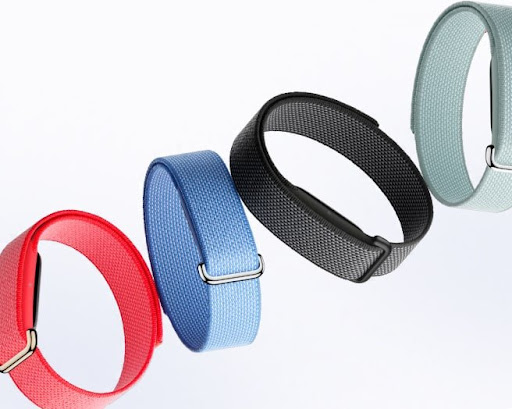
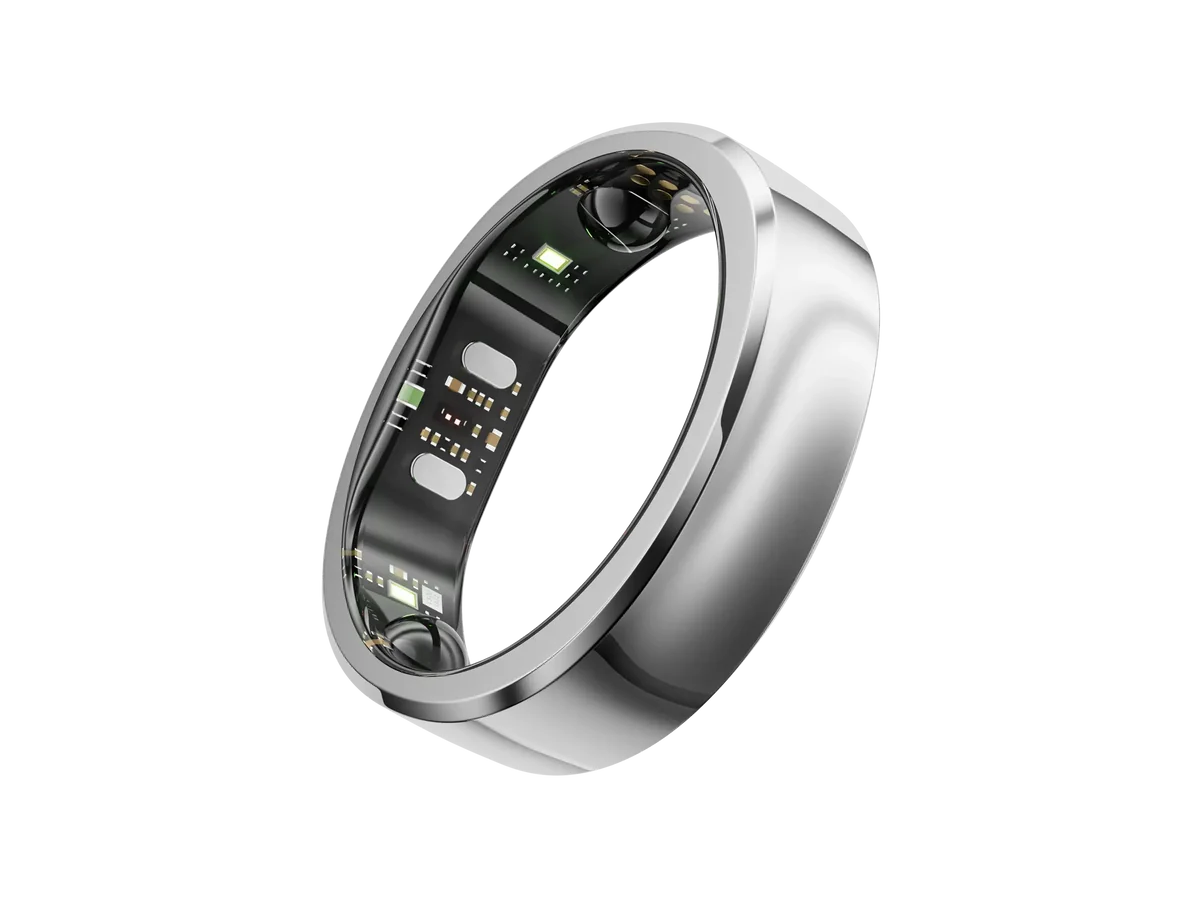
Either way, the arrangement is the same: your kitchen scale handles "how much," a free app handles "what and how many calories," and your Garmin, Fitbit Air, Oura ring or WHOOP band keeps handling activity, sleep and heart rate — exactly what it was already good at, with nothing new to subscribe to.
How to Weigh Liquids and Powders Without a Mess: Sequential Taring
The one real skill a kitchen scale rewards is using the tare button properly, and it's the kind of practical detail Garmin's app can't teach you because it never touches your counter. A technique that comes up repeatedly in MyFitnessPal's own community forum, describing how people weigh a protein shake, works like this:
- Put the empty cup or blender glass on the scale and hit tare — it zeroes out, ignoring the container's weight.
- Pour in your milk or liquid. Log that number if you're tracking it separately.
- Hit tare again to zero the scale back out with the liquid still in the cup.
- Add your protein powder or other dry ingredient. Whatever number shows up now is that ingredient's weight alone, with zero math required.
The same sequence works for a bowl of cereal and milk, a salad with dressing, or any meal built in layers — tare between each addition and every number you log is exact, instead of a total you have to subtract by hand.
When You Don't Need to Weigh Anything: The Palm-Size Shortcut
Not everyone wants to weigh every meal, and that's a reasonable position, not a failure of discipline. For days when a scale isn't practical, Precision Nutrition's hand-portion method is a decent stand-in: roughly one palm-sized portion of cooked meat, fish or tofu works out to about 20–30 grams of protein, and a full cup of Greek yogurt or cottage cheese lands in that same range. It's not going to catch a 300% overestimate the way a scale would, and it's not precise enough for someone cutting weight to a tight number — but for general tracking, it beats pure guessing by a wide margin, and it costs nothing at all.
Is This Just a Garmin Problem? The Fitbit-to-Google-Health Lesson
It would be easy to read all of this as a Garmin-specific complaint, but the underlying risk is bigger than one brand: the more of your health data lives inside a single company's app, the more that data is subject to that company's roadmap, not yours. Fitbit is the clearest recent example, and it isn't a hypothetical — it already happened. Starting May 19, 2026, the Fitbit app became the Google Health app, and Fitbit-account logins stopped working entirely. In the transition, Google removed direct messages, Groups and the Community Feed, and permanently retired badges; some of those community features had already started going dark in stages before that, with Open Groups and Challenges disabled in late March 2026. Accounts that weren't migrated to a Google Account by July 15, 2026 faced deletion. None of that touched the hardware on anyone's wrist — the trackers kept recording the whole time — but years of community history and app features some people used daily didn't survive the switch. We covered the full timeline, including what to do if you missed the deadline, in our Fitbit app to Google Health guide.
We're not accusing Garmin or Google of doing anything underhanded here — feature sunsets and platform rebuilds happen to every software company eventually. The point is narrower and more useful: when you can choose to keep a piece of your health data outside any single hardware maker's app — like food logging, which has nothing to do with what sensors are in your watch — doing so is a small hedge against a decision you don't get a vote on. That's true whether you're on a Garmin Cirqa, a Fitbit Air, an Oura ring or a WHOOP band. Our Garmin Cirqa review and Fitbit Air workout tracking guide both cover what these bands are actually built to do well — none of it is food logging, and that's fine.
Garmin Connect+ Nutrition vs. Scale + Free App, Side by Side
| Feature | Garmin Connect+ Nutrition ($69.99/yr) | Kitchen scale + free app |
|---|---|---|
| Annual cost | $69.99 (or $6.99/mo) | $0 ongoing — ~$21–$31 one-time for the scale |
| Food database | New; readers commenting on DC Rainmaker's review reported gaps in regional cuisines (e.g. Korean food) | MyFitnessPal: 18M+ foods since 2005; Cronometer: smaller, curated |
| Barcode scanning | 0 of 10 UK products recognized per the5krunner; fast once the account's region is set correctly, per DC Rainmaker | Cronometer: free and included; MyFitnessPal: Premium-only since Oct. 2022 |
| Portion accuracy | No adjustment below 100g; salmon overestimated 300% in testing | Scale reads to 1–2g; accuracy depends only on your taring |
| Effort to log a meal | ~100 taps for one breakfast, per the5krunner | Weigh, then one search or barcode scan per item |
| Keeps your tracker for activity | Yes — this only affects the food side | Yes — completely separate from your Garmin/Fitbit/Oura/WHOOP |
Reference prices at the time of writing; Amazon's price at checkout governs. Garmin/MyFitnessPal figures per the sources cited throughout and in the Sources section below.
No-Subscription Food Logging FAQ
Is Garmin Connect+ worth it for food logging?
Based on independent testing, no. the5krunner rated Garmin's AI food logging 2 out of 5 after it missed most of a real test breakfast (identifying only 1 of 4 items), matched ingredients correctly just 40% of the time versus Gemini's 80%, failed all 10 UK barcode scans attempted, and required roughly 100 screen taps to log a single meal. DC Rainmaker's own test was more upbeat about the mechanics - barcode scanning was fast and accurate once he corrected his account's region setting to match where he actually shops - but even he found the feature has to know your exact region before scanning works at all, which is awkward if you travel. For most people, paying $69.99/year for a feature the5krunner rated 2 out of 5 and called unusable isn't a good trade.
Do I need Connect+ to log meals on Garmin?
Yes, per Garmin's own announcement — the AI-powered nutrition and food logging feature launched in January 2026 exclusively for Connect+ subscribers ($6.99/month or $69.99/year). Without Connect+, Garmin Connect doesn't offer a comparable in-app calorie or macro logging tool. That's exactly why the workaround in this guide - a standalone kitchen scale plus a free app like MyFitnessPal or Cronometer - exists: it logs food independently of Garmin Connect entirely, while your watch or Cirqa keeps tracking activity, sleep and heart rate the way it always has.
What's a kitchen scale that syncs with MyFitnessPal instead of my tracker's app?
Honestly, none of them sync to MyFitnessPal directly in a meaningful way - per MyFitnessPal's own community discussions, that isn't really how kitchen scales work. The practical fix is simpler: any accurate Bluetooth scale (we've verified the Etekcity 22lb Food Nutrition Scale and the RENPHO Smart Food Scale are both in stock) gives you a precise gram reading, and you type that number into MyFitnessPal's or Cronometer's own food search or barcode scanner - both apps already have their own large food databases, independent of whatever the scale's companion app does. The scale's job is just the number; the app's job is everything else.
Is MyFitnessPal or Cronometer better if I don't want to pay for anything?
For barcode scanning specifically, Cronometer's free Basic tier includes it, per Cronometer's own support documentation. MyFitnessPal removed barcode scanning from its free tier back in October 2022 and now reserves it for Premium ($19.99/month or $79.99/year), according to MyFitnessPal's own community forum. MyFitnessPal's food database is larger and older (crowd-sourced since 2005), which matters if you eat a lot of restaurant or packaged food; Cronometer's smaller, more curated database is stronger on whole foods and micronutrients. If barcode scanning without paying anyone is the deciding factor, Cronometer's free tier is the one that actually includes it today.
Does this mean I should stop using Garmin, Fitbit, Oura or WHOOP entirely?
No - the point isn't to abandon your tracker, it's to stop expecting it to own every part of your health data. Your Garmin, Fitbit Air, Oura ring or WHOOP band is still the right tool for steps, sleep, heart rate and workouts; none of that changes. What this guide argues against is paying an annual subscription specifically so a single company's app can also handle food logging, when a $21-$31 scale and a free nutrition app already do that job with a bigger database and a barcode scanner that works.
Sources
- Garmin — Stay on top of nutrition goals in Garmin Connect: official announcement of Connect+ food/nutrition logging, January 2026.
- the5krunner — Garmin Food Logging - Nutrition Tracking Tested, Failed: real-world breakfast test, barcode failure rate, tap count, 2/5 rating.
- DC Rainmaker — Garmin Adds Food and Nutrition Logging to Connect+: Worth It?: hands-on test of barcode scanning and photo recognition, region-lock behavior, price comparison with MyFitnessPal; reader comments on the post also flag database and feature gaps.
- Tom's Guide — Garmin sparks outrage with Connect+ subscription paywall: r/Garmin boycott post and 10,000-upvote figure.
- TechRadar — Furious Garmin users revolt over new subscription service: community reaction to Connect+ launch.
- Droid Life — Fitbit Switched to Google Health and People are Pissed: user reaction to the May 2026 Fitbit-to-Google Health rebrand.
- TechRadar — Your Fitbit is getting rid of community features to make way for Google tech: Open Groups/Challenges/Adventures phase-out ahead of the full switch.
- Precision Nutrition — How to Do Hand Portion Math to Track Your Macros: palm-portion protein estimates used in the "no scale needed" section.
- MyFitnessPal Community — Whey protein powder scoop vs. food scale?: sequential-taring technique for liquids and powders.
- MyFitnessPal Community — Can you still use the barcode scanner without Premium?: confirms barcode scanning moved behind Premium in October 2022.
- Cronometer Support — Subscription Types: confirms barcode scanning is included in the free Basic tier.
- Etekcity — Smart Nutrition Scale ESN00 official product page: scale specs and optional Fitbit/Apple Health sync via VeSync.