Best Insulated Food Jars for Hitting Your Tracker's Protein Goal at Work (Not Another Shake)
Quick answer: If your Fitbit/Google Health, Garmin Connect+, or a food-logging app like MyFitnessPal or Cronometer has you chasing a daily protein number that another shake won't fix — or whey just doesn't agree with you — a real insulated food jar carries an actual cooked meal to work at a safe temperature instead. The Stanley Adventure To-Go Food Jar + Spork (24oz, ~$38) holds the most food and, per Stanley's own spec, keeps it hot or cold for 10 hours either way, which makes it the pick for a full chicken-and-rice bowl (this exact colorway was showing as temporarily out of stock on Amazon at publish time — see the availability note in its section below). The Thermos Stainless King (16oz, ~$29) is built for the longest cold hold — 14 hours per Thermos's own numbers — if lunch is a make-ahead salad or an overnight bean bowl. The Zojirushi Stainless Steel Food Jar (17oz, ~$36) is the only one of the four that publishes an actual temperature after 6 hours (147°F from a 203°F start) instead of a round "hours" claim. And the Bentgo Stainless Steel Insulated Food Container (19oz, ~$28) is the budget pick with a built-in carry handle, though Bentgo's own site doesn't put a number on how long it holds temperature.
Your tracker doesn't know what your lunch looks like — it just keeps nudging you toward the same blunt instruction. Garmin Connect+ now has an actual protein target inside its food-logging tier; Fitbit's nutrition tracking lives inside the Google Health app now; Cronometer and MyFitnessPal both let you set a protein goal regardless of which wearable you strap on. What none of them solve is how you actually get 40-plus grams of it into your body at 1 p.m. without either standing over a blender or reheating something sad from the office fridge. We already covered the blender-and-shake side of that problem in our kitchen gear roundup, and the "how much did I actually eat" side in our kitchen scale guide. This one is for a different crowd: people who can't or won't drink their protein.
That's not a small group. Lactose intolerance — the small intestine not producing enough of the enzyme lactase to break down milk sugar, per Mayo Clinic — makes standard whey a bad daily habit for plenty of people, and plenty more just prefer eating an actual meal to sipping one. A real insulated food jar is the low-tech answer to that: no app, no sync, no subscription, just double-wall vacuum insulation doing a job it's been doing since before "wearable" meant anything.
- Best for a full meal: Stanley Adventure To-Go Food Jar + Spork (~$38) — 24oz, 10h hot / 10h cold, per Stanley — check current stock
- Best cold hold: Thermos Stainless King (~$29) — 16oz, 9h hot / 14h cold, per Thermos
- Most precise heat data: Zojirushi Stainless Steel Food Jar (~$36) — 17oz, 147°F after 6h from 203°F, per Zojirushi
- Budget pick with a handle: Bentgo Stainless Steel Insulated Food Container (~$28) — 19oz, hours not quantified by Bentgo
1. Stanley Adventure To-Go Food Jar + Spork — Best for a Full Meal
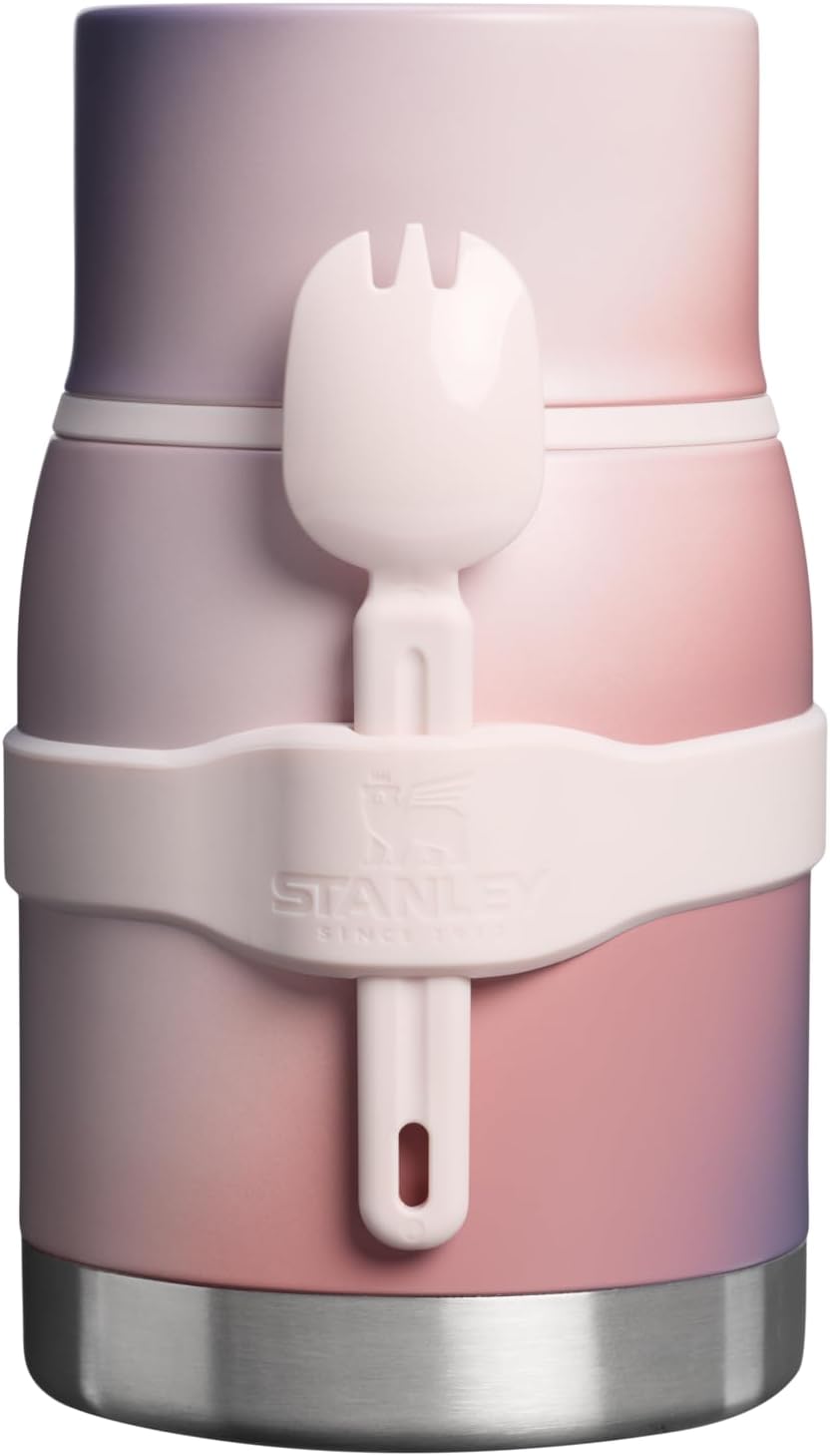
Around $38 (September 2026) · 24oz · hot 10 hours / cold 10 hours, per Stanley's own spec
This is the one to reach for when lunch is an actual full meal — chicken thighs and rice, a hearty chili, pasta with meatballs — not a snack. At 24oz it's the biggest jar in this lineup, and per Stanley's own product page, it keeps hot food hot for 10 hours and cold food cold for another 10, whichever direction you need. The insulated lid doubles as a bowl if you'd rather eat out of that than lean into the jar itself, and the whole thing ships with a spork clipped into the silicone boot wrapped around the base — one less thing to remember on your way out the door.
The honest limit: at 5 x 4 x 7 inches and 1.2 lb before you've added a single ounce of food, this is the heaviest, bulkiest jar here — it's not sliding into a small bag next to a laptop the way the smaller jars will. And Stanley doesn't publish the same lab-style temperature-after-6-hours figure Zojirushi does; "10 hours" is Stanley's own marketing claim, not an independently measured benchmark.
Availability note (September 2026): As of publish time, Amazon lists this Dawn Spiral colorway as temporarily out of stock with no restock date given — click through for the current status before you plan a lunch around it. If you need a Stanley food jar that's in stock today, Stanley's Classic Legendary Large Food Jar, 24oz (paid link) is a same-brand, same-capacity alternative sold directly by Amazon — its own published retention spec is a shorter 7 hours hot or cold rather than the Adventure To-Go's 10.
2. Thermos Stainless King Food Jar — Best Cold Hold for Next-Day Prep
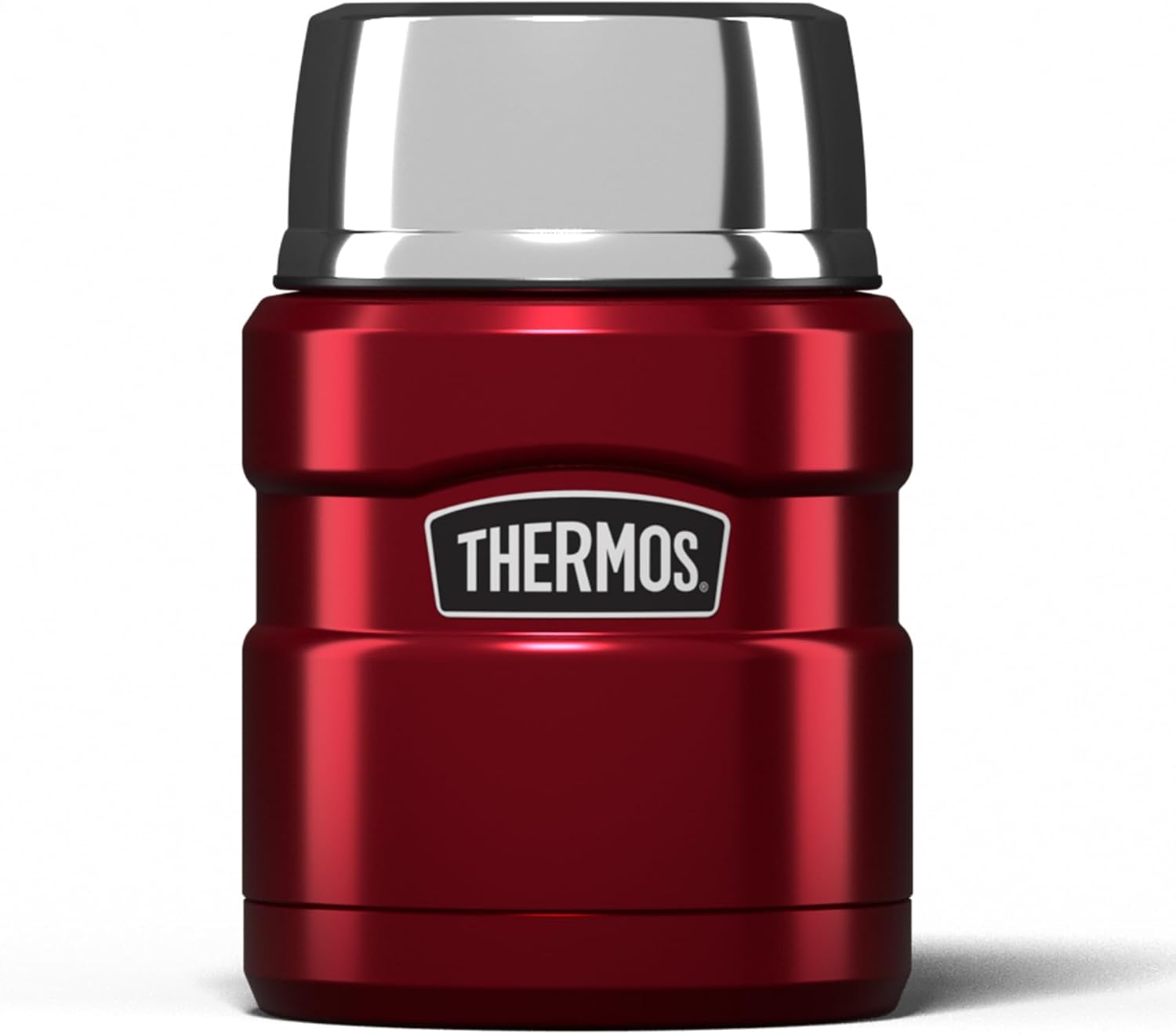
Around $29 (September 2026) · 16oz / 470ml · hot 9 hours / cold 14 hours, per Thermos's own spec
If your meal-prep routine is "cook a big batch on Sunday, portion it into jars, grab one every morning," the number that matters most isn't hot-hold time — it's how long the jar keeps something cold before you've even left the fridge that morning. Thermos's own spec sheet gives this jar 14 hours of cold retention against 9 hours hot, the widest gap of anything in this roundup, which makes it the pick for a make-ahead chicken-and-quinoa salad or an overnight bean bowl that just needs to survive the commute and a morning at your desk before lunch. It ships with a stainless folding spoon and a pressure-relief stopper — worth actually using, since it lets built-up pressure escape before you twist the lid all the way off a jar of hot soup.
The trade-off: at 16oz it's the second-smallest jar here, sized more for a solid single lunch than a family-size dinner portion. And like the Stanley, the 9/14-hour figures are Thermos's own claim rather than a published lab temperature curve.
3. Zojirushi Stainless Steel Food Jar — Most Precise Heat-Retention Data
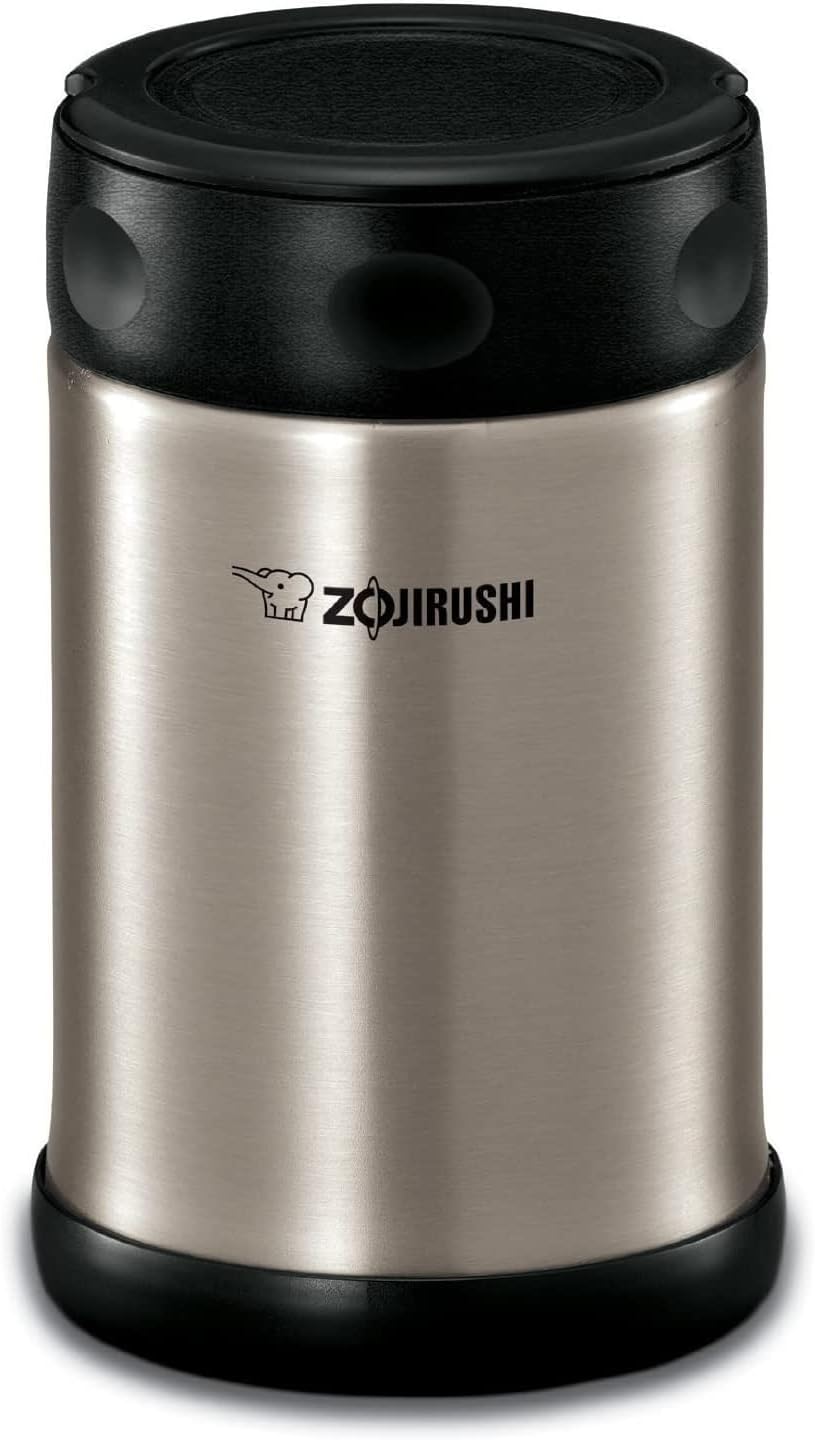
Around $36 (September 2026) · 17oz / 0.5L · 147°F after 6 hours, from a 203°F start, per Zojirushi's own spec sheet
Every other jar in this roundup advertises a round number of hours; Zojirushi is the one brand that actually publishes what that means in degrees. Per its own spec sheet, fill this jar with water at 203°F (just off a boil) in a 68°F room, and it's still measuring 147°F six hours later — comfortably clear of the 140°F hot-holding line food safety agencies use (more on that below). That's a genuinely more specific claim than "10 hours," and it's why we'd point anyone who wants an actual benchmark, rather than a marketing round number, toward this one. The wide 2.5-inch opening is designed so you can eat straight out of the jar with a spoon — no bowl needed — and the lid has a pressure-release vent for the same reason the Thermos ships with a stopper. Notably, it's also selling on Amazon for around a third less than Zojirushi's own $52.99 list price.
The catch: at $36 it's priced above the Bentgo and the Thermos for a smaller capacity (17oz) than the Stanley, and Zojirushi's own listing doesn't mention a spoon or spork included — bring your own.
4. Bentgo Stainless Steel Insulated Food Container — Budget Pick With a Built-In Handle
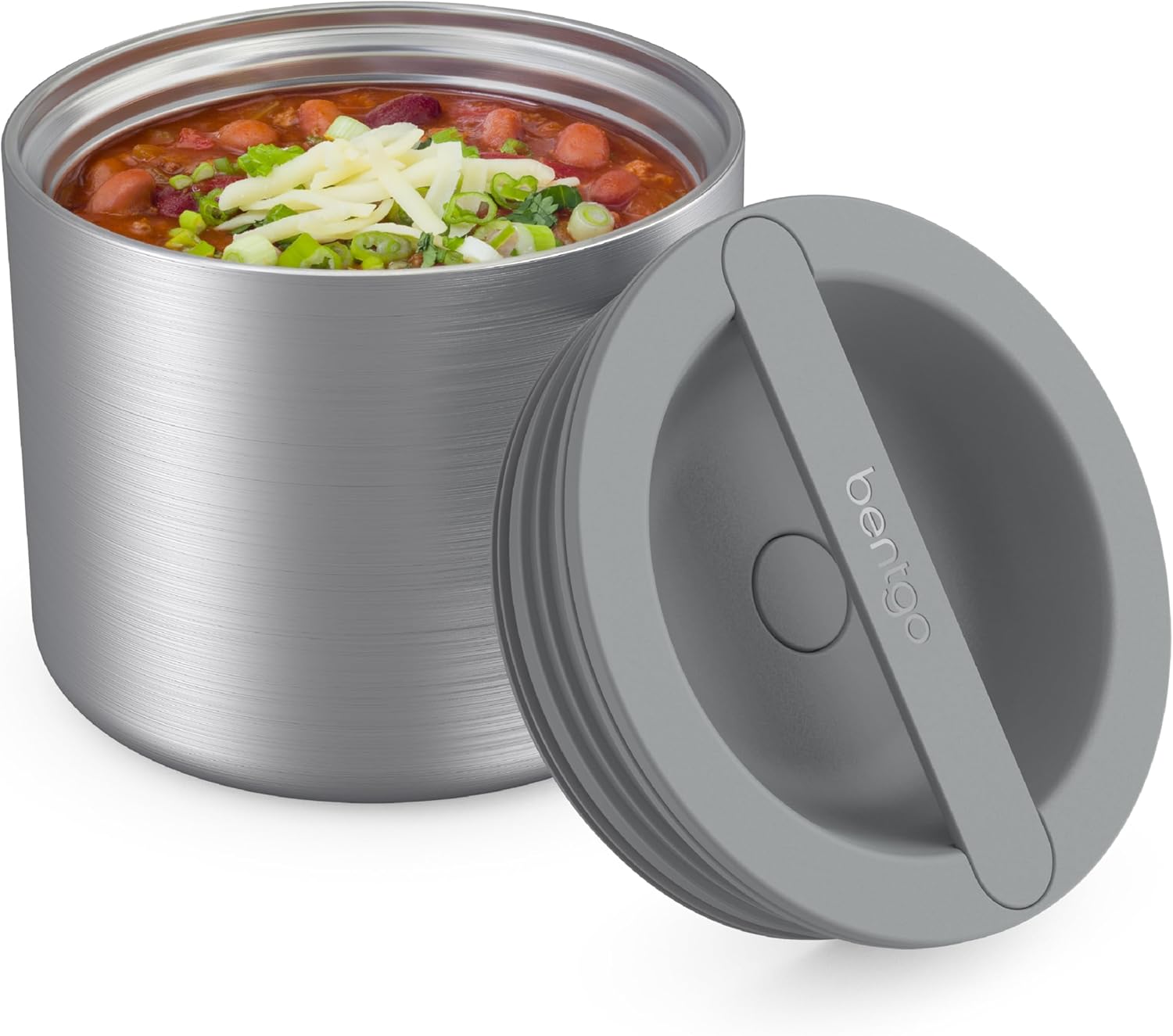
Around $28 (September 2026) · 19oz / 2.4 cups · triple-layer insulation; Bentgo doesn't publish a specific hot/cold-hour claim
This is the cheapest jar in the lineup and the only one built with an actual carry handle molded into the lid, which matters more than it sounds like it should when you're juggling a bag, a laptop and a coffee on the way out the door. Per Bentgo's own product page, the insulation is "triple-layer" — double-walled stainless steel, a copper coating, and vacuum insulation between the walls — and the wide-mouth lid has a pressure-release valve built for exactly the chili-with-toppings kind of meal Bentgo photographs it holding.
Here's the honest gap: unlike Stanley, Thermos and Zojirushi, Bentgo's own site doesn't put a number on how many hours — or what temperature — this jar holds. No "9 hours hot," no "147°F after 6 hours," just "keeps food warm or cool for hours." That's not necessarily a sign it performs worse, but it does mean you're taking the retention claim more on faith than with the other three picks here.
The 4 Food Jars Side by Side
| Product | Price (Sept 2026)* | Capacity | Retention claim | Best for |
|---|---|---|---|---|
| Stanley Adventure To-Go + Spork | ~$38 | 24oz | 10h hot / 10h cold (Stanley) | Full meals |
| Thermos Stainless King | ~$29 | 16oz | 9h hot / 14h cold (Thermos) | Make-ahead cold lunches |
| Zojirushi Stainless Steel Food Jar | ~$36 | 17oz | 147°F after 6h from 203°F (Zojirushi) | Precise hot-hold data |
| Bentgo Insulated Food Container | ~$28 | 19oz | Not quantified (Bentgo) | Budget + carry handle |
*Reference prices at the time of writing; Amazon's price at checkout governs.
How Much Protein Actually Fits in One of These Jars?
None of these four brands advertise a gram-of-protein capacity, for the obvious reason that it depends entirely on what you put in the jar — but the math is worth doing once, since it's the actual point of this roundup. Cooked, skinless chicken breast runs about 31 grams of protein per 100 grams, per USDA FoodData Central. Pack roughly 150-180 grams of chicken (a little over 5 to 6 ounces) into a jar alongside rice, beans or vegetables to fill out the rest of a 16-19oz jar, and the meat alone works out to about 46-56 grams of protein — before whatever's in the rice or beans adds more. Size up to the 24oz Stanley and there's room for closer to 200 grams of chicken, pushing past 60 grams of protein from the protein source alone, plus a real serving of carbs and vegetables that a shake never gives you.
For comparison, a standard scoop of whey protein isolate runs about 24-25 grams of protein — so a jar built around 150-180g of a lean protein isn't just an alternative to a shake, it can outright beat a single scoop of one while also containing an actual meal. This is napkin math, not a lab measurement, and it changes with every recipe. For a real number specific to what you're actually eating, our kitchen scale roundup covers weighing the food itself before you seal the lid, and our free calorie-tracking guide covers where to log the number once you have it.
Does an Insulated Jar Actually Keep Food Safe for a Full Workday?
Here's the part the marketing copy on all four of these products skips: the "keeps food hot for 9-10 hours" claims are all measured starting from food that's already properly hot — or, for cold claims, already properly cold. Think just-off-the-stove or straight-from-the-fridge, not lukewarm leftovers that sat on the counter while you packed your bag. That distinction matters because of what the USDA's Food Safety and Inspection Service calls the "Danger Zone": the range between 40°F and 140°F where bacteria can double in as little as 20 minutes, and where the agency's own guidance says perishable food shouldn't sit for more than two hours total — or more than one hour if the food or the surrounding air is above 90°F (32°C), the kind of heat a car dashboard or a sunny desk can easily hit. FoodSafety.gov's own four-step food safety guidance repeats the same two numbers — keep hot food at or above 140°F, cold food at or below 40°F — and the same two-hour (or one-hour, above 90°F) ceiling.
What that means in practice: if you cook chicken and rice for dinner, refrigerate it once it's cooled, then pack it into a jar the next morning straight from the fridge, you're starting from genuinely cold — exactly the condition these jars are built for, and the retention-hour claims should roughly hold. If you instead let a hot meal sit on the counter for an hour, pack it lukewarm, and expect 9-10 hours of "hot," you're starting the clock from a worse position than any manufacturer tested against. None of the four jars here change the two-hour rule — they just buy you more of that safe-temperature time before food crosses into the Danger Zone, provided you seal the lid while the food is still genuinely hot or genuinely cold.
Insulated Food Jars for Protein Goals FAQ
Does an insulated food jar work as well as a protein shake for hitting a daily protein goal?
For grams of protein per container, a well-packed jar can beat a shake outright. A standard scoop of whey protein isolate runs about 24-25 grams of protein, while roughly 150-180 grams of cooked chicken breast (about 31 grams of protein per 100 grams, per USDA FoodData Central) packed into one of these jars works out to 46-56 grams of protein from the meat alone, before rice, beans or vegetables add more. The trade-off is convenience and shelf life - a shake takes 30 seconds to make and doesn't need refrigeration before you drink it, while a jar means cooking (or batch-cooking) an actual meal in advance. Neither is objectively better; it depends on whether you can tolerate whey and whether you'd rather drink lunch or eat it.
Which of these food jars keeps food hot the longest?
By the numbers each brand publishes, it's close between the Stanley Adventure To-Go (10 hours hot, per Stanley's own spec) and the Thermos Stainless King (9 hours hot, per Thermos). The Zojirushi doesn't give a round 'hours' number at all - it publishes an actual temperature, 147°F after 6 hours starting from 203°F, which is a more specific but harder-to-compare claim. Bentgo's own site doesn't quantify hot-hold time for its Stainless Steel Insulated Food Container. If cold retention matters more to your routine than hot, the Thermos is the standout at a claimed 14 hours.
Which food jar is best if I can't drink whey protein because of lactose?
Any of the four works equally well for this, since none of them are protein-specific - they're just insulated containers for whatever you cook. Lactose intolerance, per Mayo Clinic, comes down to the small intestine not producing enough lactase to break down the sugar in milk, which is why whey (a dairy protein) causes symptoms for some people regardless of brand. The practical fix in this guide isn't a specific jar, it's the category itself: cooking a real protein source - chicken, beans, tofu, eggs - and carrying it to work hot or cold in one of these, instead of relying on a dairy-based shake.
How much protein can I actually fit in a 16-24oz food jar?
It depends entirely on what you pack, but a reasonable estimate: 150-180 grams of cooked chicken breast (about 31 grams of protein per 100 grams, per USDA FoodData Central) fits comfortably in a 16-19oz jar alongside rice or vegetables, working out to roughly 46-56 grams of protein from the meat alone. The 24oz Stanley has room for closer to 200 grams of chicken, pushing past 60 grams of protein from the protein source before counting whatever's in the rest of the meal. This is a rough calculation, not a manufacturer spec - for an exact number, weigh your actual ingredients; our kitchen scale roundup covers how.
Is an insulated food jar actually food-safe for a full 8-hour workday?
Only if you pack it correctly. Per the USDA's Food Safety and Inspection Service, perishable food shouldn't sit in the 'Danger Zone' between 40°F and 140°F for more than two hours total - or more than one hour if the food or the air around it is above 90°F (32°C) - and FoodSafety.gov's own guidance repeats the same limits. The manufacturer retention claims on these jars (9-10 hours hot, 10-14 hours cold) are measured from food that starts genuinely hot or genuinely cold - straight off the stove, or straight out of the fridge - not lukewarm leftovers packed after sitting out. Seal the lid while food is at the right starting temperature and any of these four jars should comfortably carry a meal through a normal workday; skip that step and you're gambling with the same two-hour window (one hour in hot weather) regardless of which jar you bought.

Sources
- Stanley 1913 — Adventure To-Go Food Jar + Spork, 24oz, official product page: capacity, 10h hot/10h cold retention claim, dimensions and materials.
- Thermos — 16oz Stainless King Food Jar, official product page: capacity and 9h hot/14h cold retention claim.
- Zojirushi — 17oz Stainless Steel Food Jar SW-EAE50, official store page: capacity, dimensions, and the 147°F-after-6-hours heat retention spec.
- Bentgo — Stainless Steel Insulated Food Container, official product page: capacity, triple-layer insulation description, materials and price.
- USDA Food Safety and Inspection Service — "Danger Zone" (40°F - 140°F): bacterial growth range and the two-hour rule for perishable food.
- FoodSafety.gov — 4 Steps to Food Safety: hot-food/cold-food temperature thresholds and the two-hour ceiling.
- USDA FoodData Central — Chicken breast, roasted, meat only: protein content used for the per-jar protein estimates in this guide.
- Mayo Clinic — Lactose intolerance - Symptoms & causes: definition and cause of lactose intolerance referenced in the FAQ.
- Google Health Help Center — Explore the Google Health app: confirms the app tracks personalized protein/carb/fat macronutrient ranges, referenced in the intro and cross-sell.