Best Pressure Cookers for Batch-Cooking a Week of High-Protein Meals — When Your Tracker Sets the Target (2026)
Quick answer: If your WHOOP, Oura, Fitbit or Garmin app is asking for 120-160+ grams of protein a day, cooking that from scratch every single night isn't realistic — batch-cooking it once a week in a pressure cooker is. Three 6-quart electric pressure cookers cover this at three price points: the COSORI 6-Qt 9-in-1 (~$81, the cheapest way to test whether batch-cooking sticks), the Instant Pot Duo 6-Qt 7-in-1 (~$110, the one with the longest track record), and the Instant Pot Duo Plus 6-Qt 9-in-1 (~$160, adds a sous vide mode for precisely-cooked protein). None of them sync to your tracker's app or calculate protein for you — what they do is let you cook 3-4 pounds of chicken, a dozen eggs, or a pot of beans in one 20-30 minute session, banking enough protein to cover several days without touching the stove again.
Every major tracker has, at this point, decided it's not enough to just measure what you burn. WHOOP's Journal asks about your macros and ties protein timing to Recovery. Garmin Connect+ hands you a personalized protein number in grams. Fitbit's redesigned Google Health app sets a macronutrient range you can log against by voice. Even Oura, which resists hard numeric targets almost on principle, now rates every logged meal's protein as low, medium or high. All of that is genuinely useful. None of it cooks anything. A tracker can tell you you're 40 grams short of your protein target at 8pm on a Tuesday — it has no opinion on what you're supposed to do about that, especially if the honest answer is "cook something from raw meat in the next 20 minutes before you're too hungry to bother."
That's the actual case for a pressure cooker here, and it has nothing to do with the appliance being trendy. A 6-quart electric pressure cooker turns 3-4 pounds of raw chicken breast, a dozen eggs, or two pounds of dried beans into finished food in 15-30 minutes of active pressure time — which means the weekly protein problem your tracker keeps flagging can get solved once, on a Sunday, instead of getting re-solved from scratch every night you're too tired to cook. This guide isn't trying to crown a general "best pressure cooker" — plenty of sites already do that job well. It's narrower: three 6-quart pressure cookers, picked and price-tiered specifically for batch-cooking enough protein in one sitting to carry a WHOOP, Oura, Fitbit or Garmin protein target through most of a week.
- Cheapest way to start: COSORI 6-Qt 9-in-1 (~$81) — 13 programs including sous vide, ceramic-coated pot per the Amazon listing
- Longest track record: Instant Pot Duo 6-Qt 7-in-1 (~$110) — 13 one-touch programs, the pressure cooker most recipe sites and roundups are already built around
- Best for precise doneness: Instant Pot Duo Plus 6-Qt 9-in-1 (~$160) — adds sous vide and sterilize functions, 15 one-touch programs
This Isn't a "Best Instant Pot" Ranking — Here's the Narrower Problem We're Solving
If you've searched for a general pressure cooker roundup before, you've probably run into Wirecutter's pick. The New York Times outlet has tested multi-cookers since 2016 and has landed consistently on the Instant Pot Rio — with the pricier Instant Pot Pro as its step-up option — based on browning performance, interface and overall cooking versatility. "The Instant Pot is probably the most well-known electric pressure cooker, and out of all the brands we've tested since 2016, it's still the best," per Wirecutter's own account. That's a completely reasonable pick for someone who wants one pressure cooker that does everything well.
It's not what this guide is optimizing for. The question we're answering is narrower: which pressure cooker actually lets you cook enough protein in one batch to matter, at a price that doesn't require becoming a serious home cook to justify? That reframes the decision around capacity and fill-line math more than sauté-pan performance — which is why our three picks below skew toward proven 6-quart capacity and a real price spread, rather than trying to out-brown Wirecutter's Rio at general cooking.
What Protein Number Is Your Tracker Actually Asking For?
Worth being specific here, because "eat more protein" isn't the same instruction on every platform. Per WHOOP's own guidance, a reasonable baseline is 0.75 to 1.0 grams of protein per pound of body weight, the starting point WHOOP uses to help members calculate their macro targets. Garmin Connect+ generates a personalized macro target in grams based on your stats and goals, per Garmin's own announcement of the feature. Fitbit's redesigned Google Health app does something similar — a personalized macronutrient range you can log against with a typed or spoken "add 30 grams of protein," per Google Health's own support documentation.
Oura is the outlier, deliberately. Per Oura's own description of its Meals feature, each component of a logged meal is rated low, moderate or high rather than measured against a specific gram target, because the feature is built to "de-emphasize strict quantification" rather than have you "fixate on hitting daily targets." For general context outside any single app, the 2025-2030 Dietary Guidelines for Americans recommend 1.2-1.6 grams of protein per kilogram of body weight per day — 50-100% higher than the previous 0.8g/kg minimum, according to both Harvard's T.H. Chan Nutrition Source and a Journal of Nutrition perspective covered by the American Society for Nutrition. Run either the WHOOP or the DGA math for a 170lb (77kg) adult and you land somewhere between roughly 95 and 170 grams of protein a day — a range wide enough to vary by app, but consistently large enough that "cook it fresh every night" stops being realistic for most people.
1. COSORI 6-Qt 9-in-1 Pressure Cooker — Cheapest Way to Start Batch-Cooking
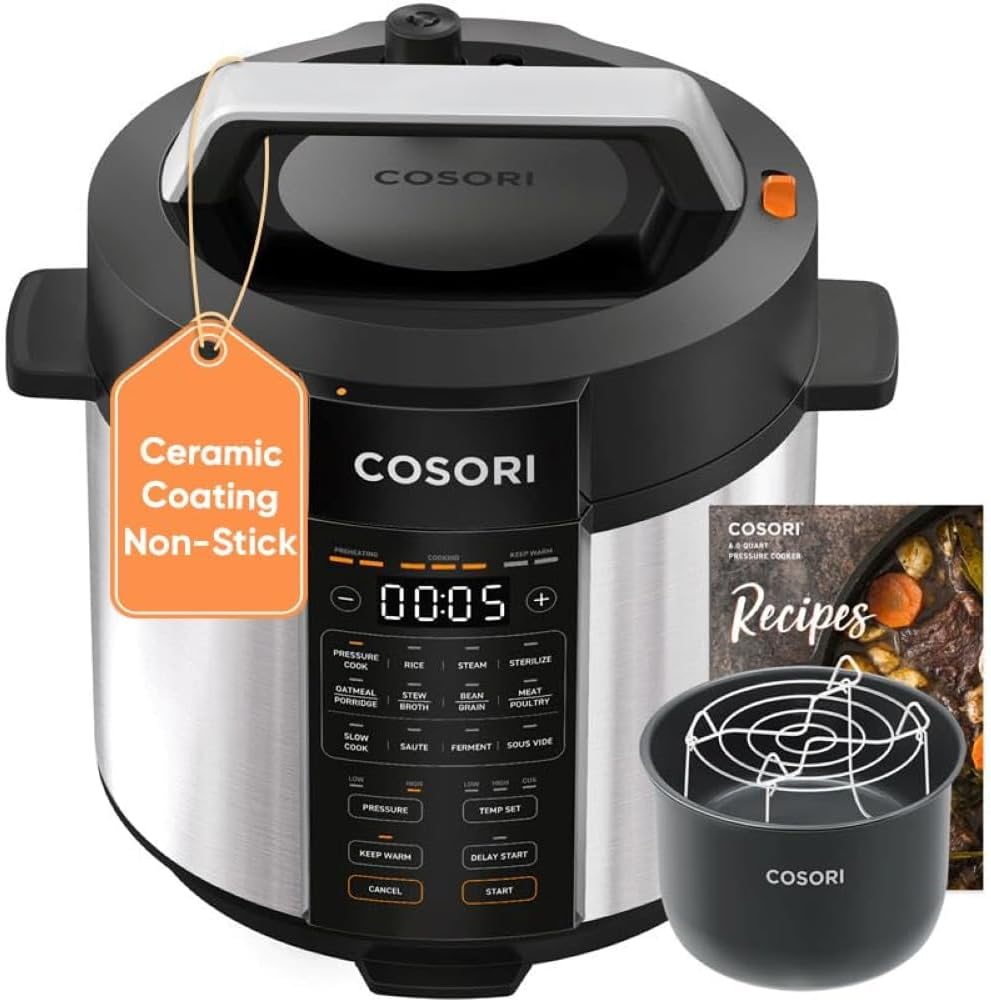
Around $81 (September 2026) · 6 quarts / 1100W · 13 cooking programs
This is the pick if you're not yet sure batch-cooking protein is a habit that'll stick, and don't want to spend $110-plus to find out. Per COSORI's own product page, it runs 13 cooking programs — including sous vide, sauté, slow cook and a sterilize setting — on a 1100-watt motor, with a "comprehensive 9-point safety system" covering automatic pressure control and overheat protection. The Amazon listing describes the inner pot as ceramic-coated; COSORI's own site is less specific, calling it simply a nonstick pot without confirming the ceramic composition, so treat "ceramic-coated" as the retailer's characterization rather than a spec we could verify against the brand's own language.
It also runs on VeSync — the same app ecosystem behind the Etekcity food scale we've recommended elsewhere on this site. Don't read too much into that: VeSync handles recipes and device settings for the COSORI, not fitness or nutrition syncing, and there's no Fitbit or Apple Health connection claimed anywhere in its documentation. The honest limitation is track record — Instant Pot has a decade-plus head start in recipe communities and troubleshooting forums that COSORI doesn't match yet. For a first pressure cooker bought specifically to test batch-cooking protein, that gap matters less than the $29-$79 you save.
2. Instant Pot Duo 6-Qt 7-in-1 — The One With the Longest Track Record
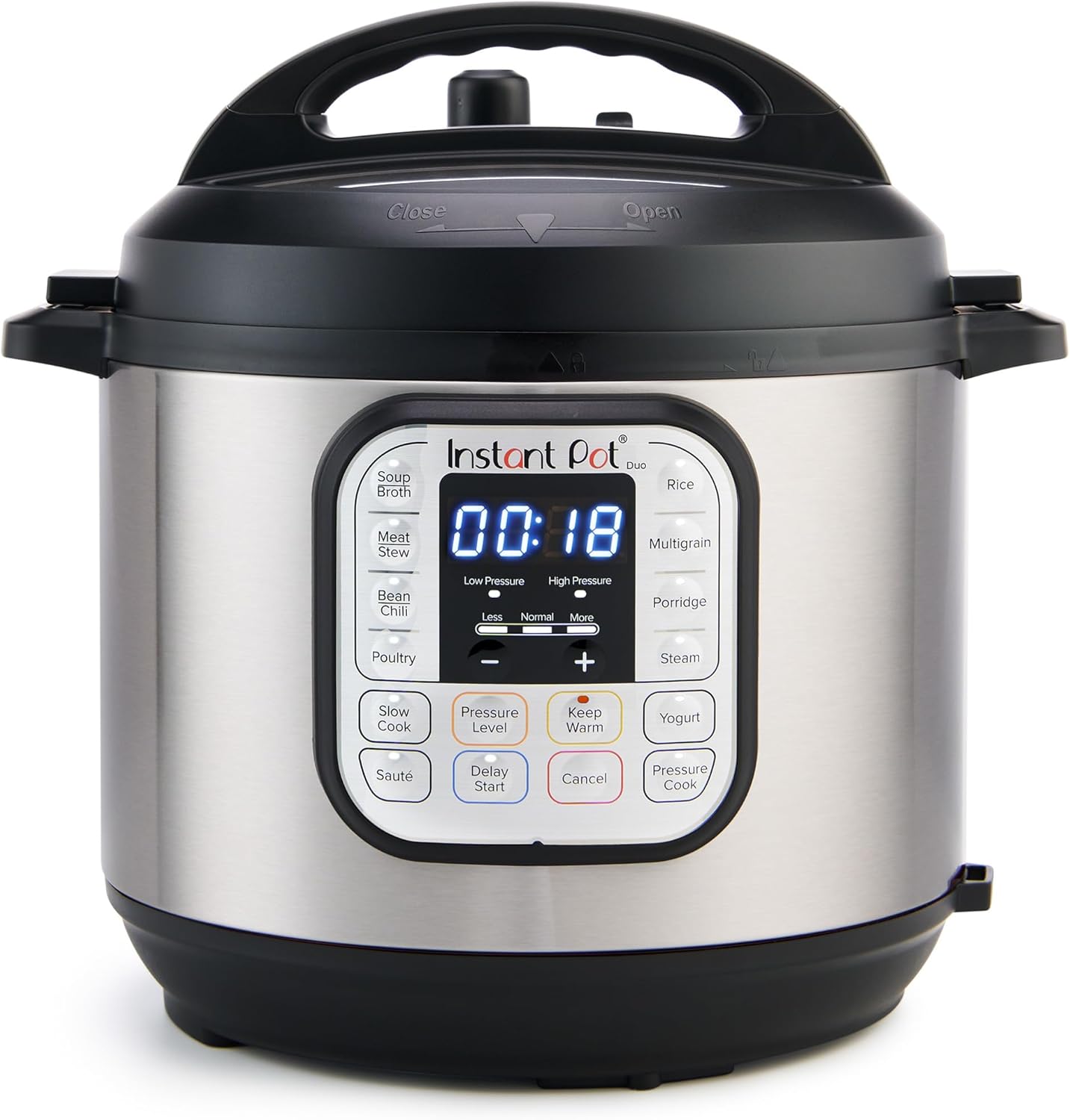
Around $110 (September 2026) · 6 quarts / 1000W · 13 one-touch programs
Per Instant Pot's own product page, the Duo runs 7 core functions — pressure cook, slow cook, sauté, steam, rice, yogurt and keep warm — across 13 customizable one-touch programs, on a 1000-watt motor with a tri-ply stainless steel inner pot and over 10 built-in safety mechanisms. There's a practical reason to default to this one over a lesser-known brand: it's the model the enormous volume of "high-protein Instant Pot recipes" content already online — cook times, liquid ratios, the works — was written and tested for, which matters more than it sounds like it should when you're trying a new batch recipe for the first time on a Sunday with limited patience.
Real limitations, not marketing ones: only two pressure levels (high and low), no sous vide mode, and the Instant Connect app is genuinely just recipes and timers — it doesn't log or sync protein data anywhere, same as the other two picks here. If straightforward pressure cooking at the lowest price for a trusted name is what you want, this is it; if precise doneness on protein specifically matters more to you, the Duo Plus below is the better $50 upgrade.
3. Instant Pot Duo Plus 6-Qt 9-in-1 — Sous Vide Mode for Precision Protein
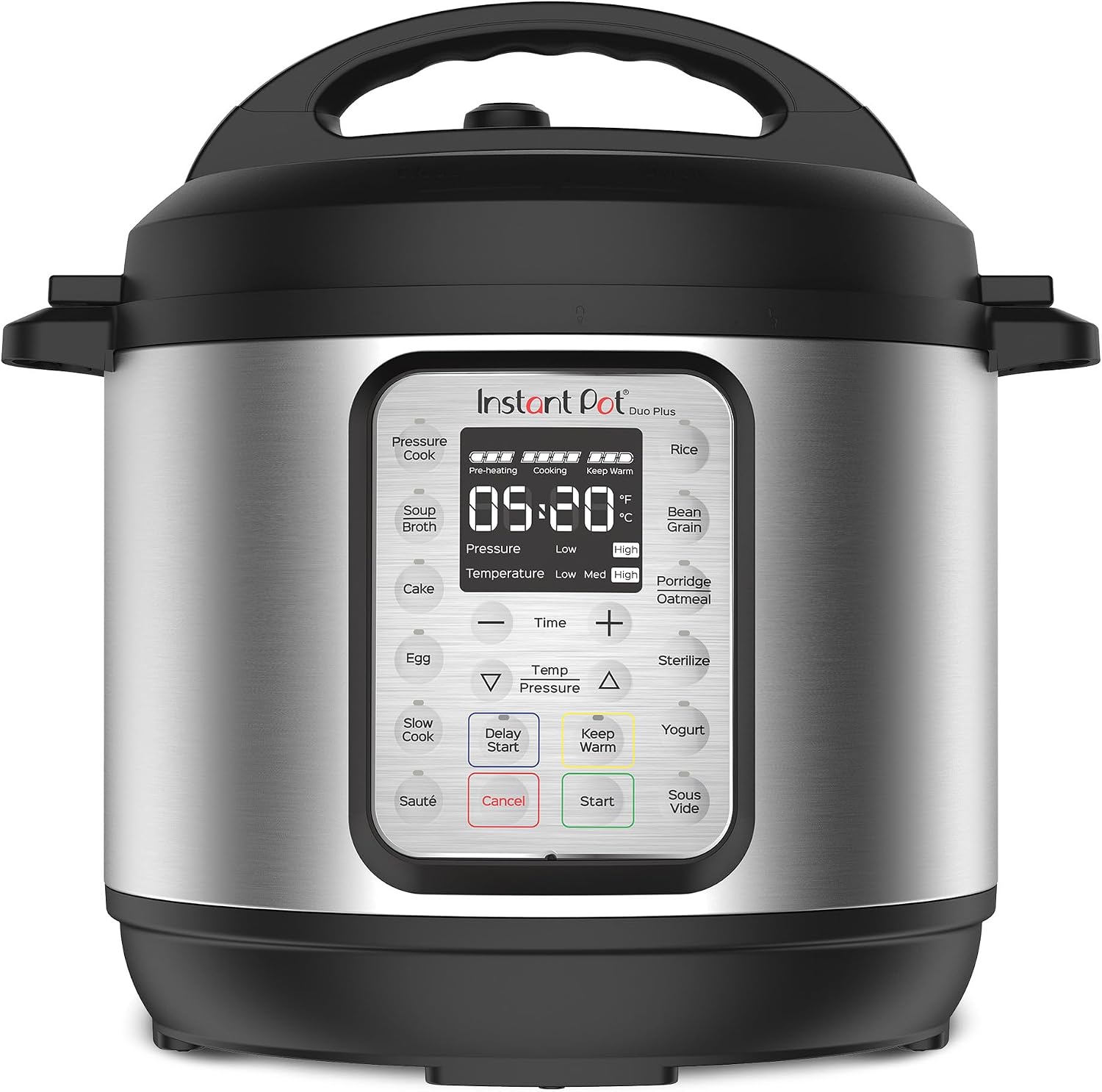
Around $160 (September 2026) · 6 quarts / 1000W · 15 one-touch programs
Per the Amazon listing and Instant Pot's own specs for this exact model, the Duo Plus adds sous vide and a sterilize setting on top of the base Duo's line-up for a 9-in-1 total, with 15 customizable one-touch programs (up from the base Duo's 13). Worth flagging: this is the classic Duo Plus, not Instant Pot's newer WhisperQuiet-branded redesign — this version doesn't have that newer model's cake function, egg function, or quieter steam release, so don't buy it expecting those. For protein batch-cooking specifically, sous vide is the upgrade that actually matters here: it holds an exact water-bath temperature, which is the difference between chicken breast that's cooked through and chicken breast that's dry and chalky by day three of eating from the same batch — a real reason batch-cooked protein stops being sustainable for a lot of people.
The honest math: it costs about 45% more than the base Duo for one function most protein-focused cooks won't touch weekly (sterilize) plus the one that does matter (sous vide) — and it's still the same 6-quart capacity, so the actual batch-size ceiling doesn't change at all versus the cheaper Duo. Buy this one specifically because overcooked protein has been the problem, not because "9-in-1" sounds better than "7-in-1" on the box.
How Much Protein Actually Fits in One 6-Qt Batch?
This is the number that makes "batch-cook once a week" either a real plan or wishful thinking, so it's worth doing the math instead of guessing. Instant Pot's own FAQ page is explicit about the ceiling: never fill the inner pot past the 2/3 max-fill line marked inside it for pressure cooking, or past the 1/2 line for foods that expand, like rice, beans or dried grains — overfilling risks clogging the steam release and building excess pressure. Translated into actual food: commonly published Instant Pot chicken breast recipes, including Wholesome Yum's, put the practical ceiling for a 6-quart pot at around 4 pounds of raw boneless chicken breast in one batch.
Cooked, that 4 pounds loses some weight to moisture and lands around 3 to 3.2 pounds (roughly 1,400 grams). At approximately 32 grams of protein per 100 grams of cooked chicken breast, per USDA FoodData Central, that one batch works out to somewhere around 400-450 grams of total protein. If your tracker's asking for 130 grams a day, that's more than three full days covered from a single Sunday session, before you've touched eggs, beans or a second protein source. We're building this estimate from published capacity guidance and USDA nutrition data, not from weighing a batch ourselves — treat it as a real planning number, not a lab result.
One more honest point, since it applies to all three picks above: none of these pressure cookers do any of this math for you, and none of them send a single gram of it to WHOOP, Oura, Fitbit or Garmin. You're still weighing or estimating portions and logging them yourself — which is exactly the job a kitchen scale and a free app handle well, as we covered in our no-subscription calorie tracking guide. The pressure cooker solves the cooking bottleneck; the scale and app solve the logging bottleneck. They're not the same problem, and no single device here claims to solve both.
The 3 Picks Side by Side
| Product | Price (Sept 2026)* | Functions | Sous Vide? | Best for |
|---|---|---|---|---|
| COSORI 6-Qt 9-in-1 | ~$81 | 13 programs, 1100W | Yes | Testing batch-cooking cheaply |
| Instant Pot Duo 6-Qt 7-in-1 | ~$110 | 13 one-touch programs, 1000W | No | Most-tested recipes online |
| Instant Pot Duo Plus 6-Qt 9-in-1 | ~$160 | 15 one-touch programs, 1000W | Yes | Precise, non-dry protein |
*Reference prices at the time of writing; Amazon's price at checkout governs. All three verified 6-quart capacity and Home & Kitchen category listings at time of writing.
Pressure Cooker or Slow Cooker for Weekly Protein Batching?
For batch-cooking protein specifically, a pressure cooker wins on time: 15-30 minutes of active pressure time versus 6-8 hours for a slow cooker doing the same cut of meat. That matters most if meal prep has to fit inside one free hour on a Sunday rather than running in the background all day while you're out of the house anyway. A slow cooker still has a real edge for genuinely hands-off, all-day cooking when time isn't the constraint — a pot roast that goes in before you leave and is done when you're back has nothing to do with the batch-protein math in this guide. If the actual obstacle to batch-cooking protein has been finding a block of free time, the pressure cooker's shorter active window is the more realistic fit for most weekly schedules, which is the specific problem all three picks above are built around.
Pressure Cooker for High-Protein Meal Prep FAQ
Do any of these pressure cookers sync with WHOOP, Oura, Fitbit or Garmin?
No. None of the three pressure cookers in this guide connect to a fitness tracker, calculate protein, or send any data anywhere. The Instant Pot Duo and Duo Plus use the Instant Connect app for recipes only, and the COSORI runs on the VeSync app (the same app family as the Etekcity food scale we've recommended elsewhere on this site) for device control and recipes, not fitness syncing. What these appliances do is let you cook a large batch of protein in one session; you still weigh or estimate portions yourself and log them in whatever app your tracker actually uses, the same way you would with food cooked any other way.
How much protein can a 6-quart pressure cooker actually batch-cook in one session?
Based on Instant Pot's own maximum-fill guidance (don't fill past the 2/3 line marked on the inner pot) and commonly published Instant Pot chicken breast recipes, a 6-quart pot can comfortably handle about 4 pounds of raw boneless chicken breast in one batch. Cooked, that's roughly 3 to 3.2 pounds after moisture loss - and at approximately 32 grams of protein per 100 grams of cooked chicken breast per USDA FoodData Central, that works out to somewhere around 400-450 grams of protein from a single Sunday batch. This is a planning estimate built from published capacity and nutrition data, not something we personally weighed and tested ourselves - treat it as a starting point, not a lab-grade number.
What's the real difference between the Instant Pot Duo and Duo Plus?
Per Instant Pot's own specs and the Amazon listing for this specific model, the Duo is a 7-in-1 with 13 one-touch programs and two pressure levels (high and low). The Duo Plus adds sous vide and a sterilize setting for a 9-in-1 total, with 15 one-touch programs. Note this is the classic Duo Plus, not Instant Pot's newer WhisperQuiet-branded redesign, so it doesn't have that newer model's cake function, egg function or quieter steam release. For protein batch-cooking specifically, sous vide is the meaningful upgrade - it holds a precise water-bath temperature, which matters if overcooked, dry chicken is the reason batch-cooked protein hasn't stuck as a habit for you. If that's not a problem you have, the base Duo does the same core pressure-cooking job for about 30% less.
How much protein does WHOOP, Oura, Fitbit or Garmin actually recommend per day?
It varies by platform, and not all of them give you a hard number. WHOOP's own guidance suggests starting around 0.75 to 1.0 grams of protein per pound of body weight as a baseline for calculating your macro targets. Garmin Connect+ and the redesigned Fitbit/Google Health app both generate a personalized macronutrient target in grams based on your stats and goals, per their own documentation. Oura is the outlier: per Oura's own blog, its Meals feature deliberately skips a numeric protein target and instead rates each logged meal's protein as low, moderate or high, to avoid encouraging users to fixate on hitting an exact number. For general context, the 2025-2030 Dietary Guidelines for Americans recommend 1.2-1.6 grams of protein per kilogram of body weight per day, 50-100% higher than the old 0.8g/kg minimum, per Harvard's T.H. Chan Nutrition Source and the American Society for Nutrition.
Is a pressure cooker or slow cooker better for weekly protein meal prep?
For batch-cooking protein specifically, a pressure cooker wins on time: 15-30 minutes of active pressure time versus 6-8 hours for a slow cooker doing the same cut of meat. That matters most if meal prep has to fit inside a single free hour on a Sunday rather than running in the background all day. A slow cooker still has an edge for genuinely hands-off, all-day cooking when you're out of the house anyway and time isn't the constraint. If the real obstacle to batch-cooking protein has been finding a block of free time, the pressure cooker's shorter active window is the more realistic fit for most weekly schedules.

Sources
- WHOOP — How to Count Macros: A Guide to Recovery and Fueling: baseline protein-per-pound guidance.
- WHOOP — What are Macronutrients? How to Optimize Daily Nutrition: protein-per-pound baseline and best food sources by macro.
- Oura — Oura Meals: Understand How Your Food Fuels You: qualitative (low/moderate/high) protein rating, no numeric target.
- Garmin — Stay on top of nutrition goals in Garmin Connect: personalized macro/protein targets in Connect+.
- Google Health — Track your nutrition and hydration with the Google Health app: Fitbit's personalized macronutrient ranges post-rebrand.
- Harvard T.H. Chan Nutrition Source — Dietary Guidelines for Americans 2025-2030: protein hype: 1.2-1.6g/kg protein figure.
- American Society for Nutrition — New Perspective in The Journal of Nutrition Reviews Protein Recommendations: corroborates the 50-100% increase over prior guidance.
- Instant Pot — Instant Pot Duo 6QT official product page: 7-in-1 functions, 13 programs, 1000W spec.
- Instant Pot — Instant Pot Duo Plus 6QT official product page: 9-in-1 functions, sous vide, sterilize, 15 one-touch programs.
- Instant Pot — Frequently Asked Questions: 2/3 and 1/2 max-fill line safety guidance.
- COSORI — 6.0-Qt Pressure Cooker & Multicooker official product page: 13 programs, 1100W, VeSync app, safety system.
- Wholesome Yum — Instant Pot Chicken Breast (Fresh Or Frozen): practical 6-quart batch capacity for chicken breast.
- USDA FoodData Central (via MyFoodData) — Nutrition Facts for Cooked Lean Chicken Breast: ~32g protein per 100g cooked.
- NYT Wirecutter — The Best Electric Pressure Cooker Is an Instant Pot: Wirecutter's own general-purpose pick (Instant Pot Rio, with the Instant Pot Pro as upgrade pick), and why this guide's narrower criteria differ.