Best Sunrise Alarm Clocks (2026): 5 Picks, Plus Whether They Really Work
Quick answer: For most people the Philips SmartSleep HF3520 is the best sunrise alarm clock: an adjustable sunrise, five sounds and FM radio, no app, around $125. Pick the Hatch Restore 3 if you also want bedtime routines, the JALL if you want to spend under $50, or the Lumie Luxe 700FM for the longest sunrise ramp.
A sunrise alarm clock is a bedside lamp that brightens slowly before your alarm, so you drift up toward waking instead of getting yanked out of sleep. That is the whole trick, and it is why they get recommended so often. It is also why it matters to know what they can and cannot do. They will not help you fall asleep, and the research on whether they make mornings easier is real but small. We cover that below, after the picks.
- Best for most people: Philips SmartSleep HF3520 (about $125) - adjustable sunrise, radio, no app
- Best for routines and sound: Hatch Restore 3 ($169.99 at Hatch) - needs the app and Wi-Fi; Hatch+ is optional
- Brightest, no app: Philips SmartSleep HF3650 ($199.99 list) - sunset mode, RelaxBreathe
- Best budget: JALL Sunrise Alarm Clock (under $50) - buttons only, white noise built in
- Longest sunrise ramp: Lumie Bodyclock Luxe 700FM (priciest here) - 15 to 90 minutes
What Are the Best Sunrise Alarm Clocks Side by Side?
Five models, and the specs that actually differ between them. Prices are US list or reported prices on the dates shown, not Amazon's live price.
| Model | Price | Sunrise length | Brightness | Sound | App / Wi-Fi | Subscription |
|---|---|---|---|---|---|---|
| Philips SmartSleep HF3520 | $124.99 (Nov 6, 2026) | 20 to 40 min, adjustable | Up to 300 lux | 5 sounds + FM radio | None listed | None |
| Hatch Restore 3 | $169.99 (Nov 7, 2026) | You choose | No lux published | 45 sleep + 26 alarm sounds free | App + 2.4 GHz Wi-Fi | Optional Hatch+ $5.99/mo |
| Philips SmartSleep HF3650 | $199.99 (Nov 6, 2026) | 30 min | Up to 310 lux | 7 wake-up sounds or FM radio | None | None |
| JALL Sunrise Alarm Clock | Under $50 (Reviewed listed $39.99 in Sept 2026) | 10 to 60 min (listing) | Not published | Built-in sounds + Bluetooth speaker | None (buttons) | None |
| Lumie Bodyclock Luxe 700FM | $259.00 (Lumie US store via Dupple, Nov 6, 2026) | 15 to 90 min (Lumie listing) | Lumie prints no lux | FM radio + Bluetooth | None stated | None |
Sources: Philips data sheet and product page, Hatch store and membership pages, Dupple (Nov 6, 2026), Reviewed (Sept 16, 2026). Lux is measured differently by each brand and none says at what distance, so use it to rank within a brand, not across brands.
Which Sunrise Alarm Clock Is Best for Most People?
1. Philips SmartSleep Wake-Up Light HF3520: The Default Pick
$124.99 (Nov 6, 2026, per Dupple) · Colored sunrise and sunset · No subscription
Reviewed (September 16, 2026) calls this its best overall, praising the realistic sunrise and sunset and the nature sounds, and its only complaint is that it lacks special features. That reads like a good sign. A sunrise alarm should not need many features.
Per Philips's data sheet you get five natural wake-up sounds, FM radio, a sunset simulation for winding down, and tap snooze. Philips's manual and Dupple's table list a sunrise you can set between 20 and 40 minutes and a peak of 300 lux. It will not play music from your phone, so if you want your own audio this is the wrong one. In one owner thread we read, the buttons are hard to read in the dark and you cannot set different alarms for different days. That is a fair knock on a clock that costs this much less than a Hatch.
2. Hatch Restore 3: Best If Bedtime Is Half the Job

$169.99 at Hatch (Nov 7, 2026) · Optional Hatch+ at $5.99 a month · Needs app and Wi-Fi
The Restore 3 is a sound machine, a bedside light and a sunrise alarm in one box, with physical buttons so you are not squinting at your phone at midnight. Reviewed lists the Restore 3 among the clocks it evaluated rather than as a top pick. It liked the style, easy setup and routines, but marked it down for features that require payment and for needing more sounds and flexibility.
Here is the subscription math, which matters more than the spec sheet. Hatch's membership page lists $5.99 a month after one free month, and Dupple's November 6 table lists $59.99 a year. Without Hatch+, the sunrise alarm, the sunrise light scenes, 45 sleep sounds and 26 alarm sounds stay, per Hatch's support center (our full Hatch Restore 3 review goes through it). Three years with yearly Hatch+ is $169.99 plus $179.97, or $349.96. The catches: setup needs the Hatch Sleep app and a 2.4 GHz Wi-Fi network, there is no battery backup, and it is not a Bluetooth speaker for your own podcasts.
3. Philips SmartSleep HF3650: Brightest, Still No App
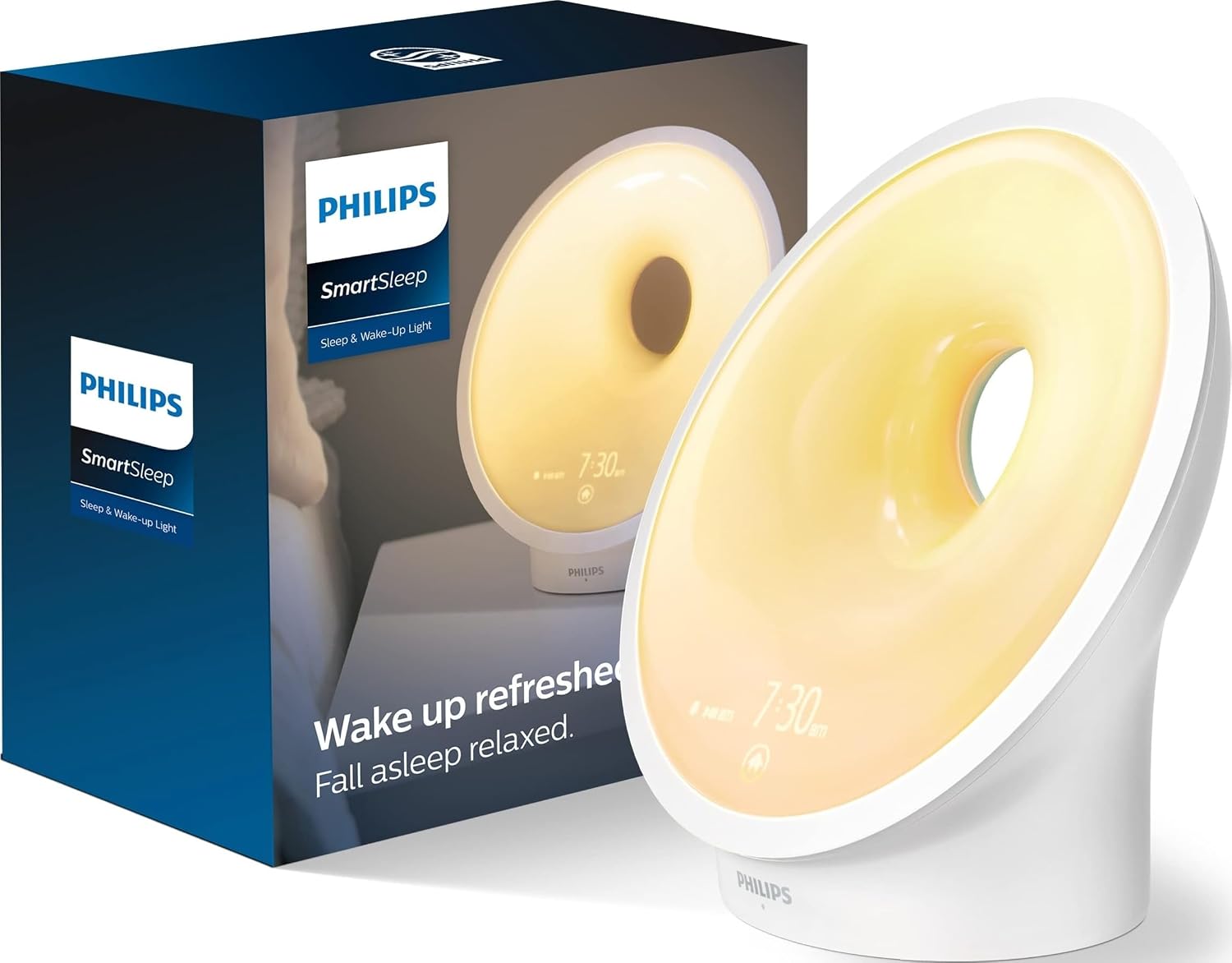
$199.99 list (Nov 6, 2026, per Dupple) · 30-minute sunrise · No subscription
This is the donut-shaped one. Philips's leaflet, as we quoted it in our Hatch review, lists a 30-minute sunrise from red to yellow, 25 brightness steps up to 310 lux, 7 wake-up sounds, FM radio, a sunset mode and RelaxBreathe, a light-guided breathing exercise. No app, no phone control.
You are paying $75 more than the HF3520 for the sunset-and-breathing wind-down and a slightly brighter peak (310 lux versus 300, a difference you will not see). If you mostly want to wake up, the cheaper Philips does that. We saw this model at $179.99 on Philips's store on October 3, and Dupple lists $199.99 now, so check before you buy.
4. JALL Sunrise Alarm Clock: The Under-$50 Test Run
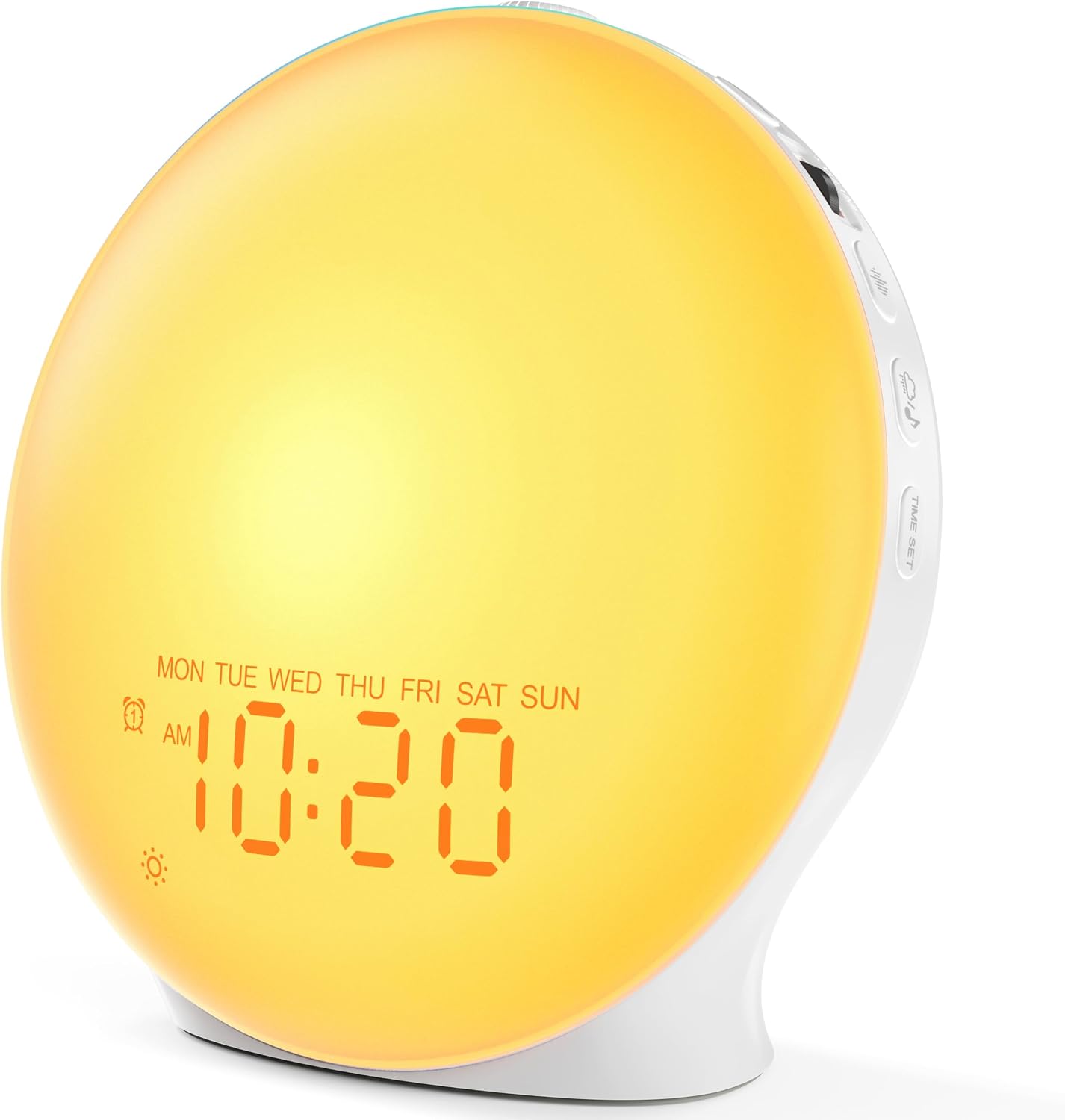
Under $50 · Buttons only · White noise and Bluetooth speaker
Reviewed names the JALL its best value, with good light quality and a variety of light options, and says plainly that it feels cheap, the sound quality is poor and the buttons take getting used to. Per JALL's listing there is no app or Wi-Fi, the sunrise runs 10 to 60 minutes, the display can turn fully off, and a Bluetooth speaker plays your own audio. Tom's Guide reviewed a slightly different version of this clock, so listings and reviews do not always describe the same unit.
Our take: if you are not sure a sunrise alarm will work for you, this is the cheap way to find out. If it clearly helps, you can upgrade to one of the Philips models later. If it does not, you are out less than the cost of a Hatch+ year.
5. Lumie Bodyclock Luxe 700FM: Longest Ramp, Highest Price
$259.00 (Lumie US store, via Dupple, Nov 6, 2026) · 15 to 90 minute sunrise · No subscription
Lumie is a UK light-therapy brand, and its listing gives a sunrise and sunset you can set from 15 to 90 minutes, with FM radio and Bluetooth. That long ramp is the reason to look at it: if you want a very slow, 60-minute-plus dawn, none of the others do it. Lumie does not print a lux number for the light, so we cannot tell you how it compares on brightness. It is the most expensive pick here and, going by the reviews we read, it is a purchase for people who already know they like the idea.
Do Sunrise Alarm Clocks Really Work?
Sometimes, for some people, and the evidence is thin. We read four studies. None is a large trial of ordinary sleepers, and we could not find one that tested heavy sleepers on their own.
- The positive small study (2014): Eight people who reported difficulty waking got a simulated dawn during the last 30 minutes of sleep. Afterward, perceived sleep quality was 1.16 points higher (p = 0.01) and alertness was higher throughout testing (p = 0.04) compared with a control night. The authors call it the first evidence of this kind. With 8 participants, treat it as a hint.
- The cortisol study (2004): In 12 healthy adults, a bedside light rising to about 250 lux over 30 minutes raised total cortisol in the first 45 minutes after waking and increased reported arousal.
- The mood evidence (2005): A meta-analysis found dawn simulation helped seasonal affective disorder (5 studies, effect size 0.73), but the authors also warned that many light-therapy reports lack rigorous designs. If you think you have SAD, talk to a clinician; a wake-up light is not a diagnosis or a treatment plan.
- The cautionary one (2024): In 29 adults over four lab nights, a smart alarm that combined rising light (to 300 lux), warmer room temperature, rising blackout shades and sounds made little overall difference to alertness tests compared with a beeping alarm. Sleep efficiency was lower on the smart-alarm nights (83.97% versus 86.65%). It tested a bundle, not light alone, the groups were small, and the study was funded by Delos Living, a company whose employees were among the authors.
Our read: a sunrise alarm may make waking feel gentler, and it probably helps most if you start from a dark bedroom and let it run about 30 minutes. It does not make you sleep longer or fall asleep faster, and it is not a fix for being under-slept. For the bedtime side of the same question, see our weighted blanket vs sunrise alarm clock comparison.
How Do You Choose a Sunrise Alarm Clock?
Five things separate these clocks. Ignore the "clinically proven" badges and check these.
- Sunrise length you can set. The studies above used about 30 minutes. A range from 20 to 40 minutes (Philips HF3520) or 10 to 60 (JALL) lets you adjust once you know how you react.
- A sound backup. If you sleep through things, light alone is a gamble. All five picks have a sound alarm, so set it for a few minutes after the light peaks.
- App and Wi-Fi. The Hatch needs both for setup and for changing routines. The Philips, JALL and Lumie models are button-driven. An app is not a flaw, but it is one more thing that can break at 6 a.m.
- Subscription math. Only the Hatch has one, and it is optional. Count it over three years, not one month.
- Display and room light. A bright clock face defeats the point in a dark room. Check that the display dims or turns off, and plan on blackout curtains if streetlight leaks in.
Which Sunrise Alarm Clock Should You Pick?
Pick the Philips HF3520 if you want one dependable wake-up light with radio and no setup headaches. It is where most buyers should start.
Pick the Hatch Restore 3 if you also want bedtime routines and white noise in one device, you are fine with an app and Wi-Fi, and you will not feel cheated by an optional $5.99 monthly plan. Read the Hatch review first.
Pick the Philips HF3650 if you want a sunset wind-down and a guided breathing exercise without an app.
Pick the JALL if you are trying the idea for the first time or buying for a kid's or guest room, and you can live with cheaper build and sound.
Pick the Lumie Luxe 700FM if you want a long, slow dawn and have the budget for it.
Skip all of them if your actual problem is that you cannot fall asleep or you simply do not sleep enough. Our guide to what to buy when your sleep score is low sorts which gadget goes with which problem.
Can a Fitness Tracker's Smart Alarm Replace a Sunrise Alarm Clock?
Not exactly. They wake you by different routes, and you can use both. A wrist or ring alarm buzzes you, often timed to a lighter sleep stage. A sunrise clock uses light in the room. Our inference: if you wear a screenless fitness tracker overnight, the vibrating alarm is the quiet backup and the light is the gentle part. We cover that side in our Fitbit Air alarm guide, and the Garmin Cirqa review lists its smart wake alarm. Neither one changes how much light is in your room, which is the thing a sunrise alarm does. If a low score is why you are here, the WHOOP alternatives page covers trackers that report sleep without a monthly fee.
Is a Sunrise Alarm Clock a Good Gift?
Yes, for someone who complains about mornings and has a dark-ish bedroom. It is a better gift than another gadget that needs an account. For a non-techy recipient, a Philips or the JALL is the safer choice because there is nothing to set up on a phone. A Hatch makes sense for someone who already uses sleep sounds. Our sleep tech gift guide shows where a sunrise lamp fits next to a weighted blanket and a white noise machine.
Sunrise Alarm Clock FAQ
Does a sunrise alarm clock really work?
Sometimes, and the evidence is small. In a 2014 crossover study of 8 people who struggle to wake up, a simulated dawn in the last 30 minutes of sleep raised alertness after waking. A 2024 lab study of 29 adults found little overall difference from a normal beeping alarm. Dawn simulation has stronger support for seasonal affective disorder, where a 2005 meta-analysis found an effect size of 0.73.
Do sunrise alarm clocks work for heavy sleepers?
We found no trial that tests heavy sleepers on their own, so treat any promise as unproven. Our inference: light alone may not be enough if you sleep through alarms, so pick a model with a loud sound backup (the Philips models, JALL and Lumie all have one) and set it to go off after the light peaks.
What is the best sunrise alarm clock without a subscription?
The Philips SmartSleep HF3520 and HF3650, the JALL and the Lumie Bodyclock Luxe 700FM all work with no subscription. The Hatch Restore 3 works without one too, but Hatch+ ($5.99 a month) unlocks its bigger sound and meditation library, and setup needs the Hatch Sleep app and 2.4 GHz Wi-Fi.
What is the best sunrise alarm clock with a sound machine?
The Hatch Restore 3 has the best sound-machine side, with 45 sleep sounds and 26 alarm sounds free. The JALL also doubles as a white noise machine for much less money. The Philips HF3650 has 7 wake-up sounds, FM radio and a guided breathing exercise.
Is a sunrise alarm clock worth it?
It is worth it if mornings, not bedtime, are your problem and you are willing to keep the room fairly dark. It will not help you fall asleep or sleep longer. If a $40 JALL fixes your mornings you never needed a $200 model, and if it does not, you can stop there.
How long should a sunrise alarm clock ramp up?
About 30 minutes is the safe default, because that is the window used in the dawn simulation studies we read. Most models here let you change it: 20 to 40 minutes on the Philips HF3520, 10 to 60 on the JALL per its listing, and 15 to 90 on the Lumie Luxe 700FM per Lumie's listing.
Can I use my own music or podcasts on a sunrise alarm clock?
Not on every model. Hatch says the Restore 3 is not a Bluetooth speaker and only plays Hatch content. The JALL and Lumie Luxe 700FM list Bluetooth. The Philips HF3520 plays its built-in sounds and FM radio only, and we could not confirm a line-in or Bluetooth input on the HF3650, so check its manual if you need one.
Sources
- Philips - HF3520/60 data sheet: five natural wake-up sounds, FM radio, sunset simulation and tap snooze. The 300 lux and 20 to 40 minute figures also appear in Dupple's table below and in retailer listings of Philips's manual.
- Philips - SmartSleep HF3650/60 product page: 30-minute sunrise, sunset mode, FM radio and natural sounds, two-year warranty badge. The 310 lux, 25 brightness steps, 7 wake sounds figures come from Philips's HF3650 leaflet as quoted in our Hatch Restore 3 review.
- Hatch - Restore 3 store page: $169.99 list price, checked November 7, 2026.
- Hatch - Hatch+ membership page: $5.99 a month after a free first month, checked November 7, 2026. The $59.99 yearly price is from Dupple's November 6, 2026 table.
- Dupple - Best Sunrise Alarm Clock in 2026: Six Compared by US Price: a spec-and-price comparison from November 6, 2026 that says it was not tested hands-on. We used it for Philips, Hatch and Lumie prices, the Lumie sunrise range and the Philips lux and sunrise-length figures.
- Reviewed - The best sunrise alarm clocks: updated September 16, 2026; names the Philips SmartSleep its best overall and the JALL its best value, with the JALL's weak points.
- Thompson et al. 2014 - Effects of dawn simulation on markers of sleep inertia and post-waking performance: 8 participants, crossover, dawn simulation in the last 30 minutes of sleep.
- Thorn et al. 2004 - The effect of dawn simulation on the cortisol response to awakening: 12 healthy adults, about 250 lux over 30 minutes.
- Golden et al. 2005 - The efficacy of light therapy in the treatment of mood disorders: meta-analysis; dawn simulation in seasonal affective disorder, 5 studies, effect size 0.73.
- Campanella et al. 2024 - A multimodal bedroom-based smart alarm and sleep inertia: 29 adults, 4 lab nights, light plus temperature plus shades plus sound.