Weighted Blanket or Sunrise Alarm Clock: Which One Actually Fixes Your Sleep Problem?
Quick answer: They fix different things, and neither one is a general-purpose "sleep gadget." A weighted blanket applies deep pressure across your body, which the best trial evidence links to calmer, less anxious bedtimes and better insomnia scores in adults — though the most rigorous pediatric trial found no objective increase in measured sleep time despite kids and parents liking it. A sunrise alarm clock doesn't touch how you fall asleep at all; it ramps up light before your alarm to ease the transition out of sleep, with strong evidence for seasonal depression specifically and smaller but real evidence for ordinary morning grogginess. If your problem is at bedtime, get the blanket. If your problem is the hour after you wake up, get the lamp. If it's both, they don't conflict — you can run both.
Every "sleep tech gift guide" on the internet lumps a weighted blanket and a sunrise lamp into the same list, right next to a white noise machine and a $12 eye mask, as if they're interchangeable ways to spend $80 on better sleep. They're not. One works by putting pressure on your nervous system while you're trying to fall asleep. The other works by manipulating the light your eyes see in the last half hour before you wake up. Those are two completely different problems, on two completely different ends of the night, and buying the wrong one for your actual complaint is how a $150-300 purchase ends up folded in a closet.
We dug into the actual clinical literature behind both — not marketing copy — because "science-backed" gets printed on the box of nearly everything in this category whether the backing is a large randomized trial or a single uncontrolled pilot study. Here's what's real, what's overstated, and which one solves the problem you actually have.
- Bedtime problem — can't wind down, racing mind, restless: Bearaby Cotton Napper (~$307) — the deep-pressure mechanism with the better trial evidence behind it.
- Wake-up problem — brutal mornings, hate the alarm, feel groggy for an hour: Philips SmartSleep Wake-Up Light (~$165) — dawn simulation, the light-based approach with decades of published research behind the underlying mechanism.
- Both problems: nothing stops you from owning both — they don't overlap or compete for the same job.
Which Problem Are You Actually Solving?
Before picking a product, name the actual complaint. These two devices sit at opposite ends of an 8-hour night and don't touch each other's job.
If the problem is falling asleep — you lie there with a racing mind, feel physically restless, or just can't downshift out of the day — that's a bedtime problem, and it's what the weighted blanket is built for. Nothing about a sunrise lamp addresses this; it doesn't even turn on until you're already asleep.
If the problem is waking up — the alarm feels like an assault, you're groggy and foggy for the first hour of your day regardless of how many hours you slept — that's a different mechanism entirely, tied to how abruptly your body exits sleep. That's the sunrise lamp's actual job, and a weighted blanket does nothing for it.
A lot of people have both problems and assume one gadget should cover both. It won't — they're solving opposite ends of the same night, which is exactly why this comparison exists instead of a straight "vs" review.
What Does a Weighted Blanket Actually Do?

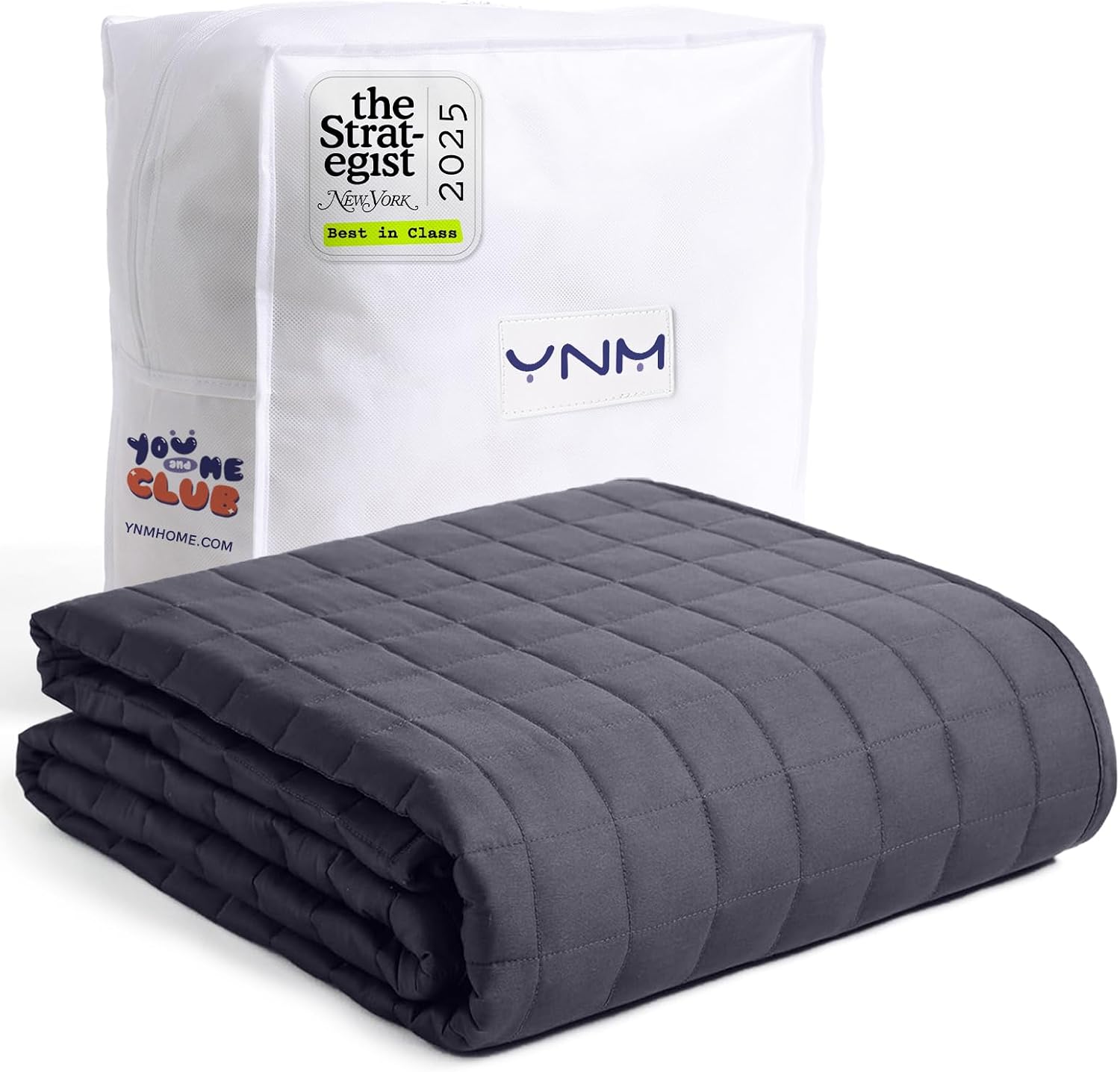
A weighted blanket is exactly what it sounds like: a blanket filled with evenly distributed weight — usually glass beads sewn into a quilted grid, or in Bearaby's case, dense hand-knitted cotton with no filling at all — designed to apply gentle, even pressure across your body while you lie under it. The mechanism has a name in occupational therapy: deep pressure stimulation, the same broad category of input as a firm hug or a swaddle, and it's theorized to nudge the nervous system toward a calmer, more parasympathetic state.
The trial evidence is more encouraging here than most sleep gadgets get. A 2020 randomized controlled study published in the Journal of Clinical Sleep Medicine put 120 adults with major depressive disorder, bipolar disorder, generalized anxiety disorder or ADHD on either a weighted chain blanket or a matched lightweight control blanket for 4 weeks. The weighted group showed a significantly larger drop in Insomnia Severity Index scores, plus improvements in daytime fatigue, depression and anxiety symptoms — a genuinely large effect size for a non-drug intervention.
The honest caveat: the highest-quality pediatric trial tells a more complicated story. A 2014 randomized crossover trial in autistic children, using objective actigraphy to measure total sleep time, found no significant difference between the weighted blanket and a matched control blanket on how long or how well kids actually slept — even though both the children and their parents subjectively preferred the weighted one. Put those two studies together and the fair summary is: real, measurable benefit in adults with anxiety-linked insomnia; a comforting, preferred experience without proven objective sleep gains in at least one well-designed pediatric trial. That's a "may help you feel calmer and fall asleep easier," not a cure for insomnia.
What Does a Sunrise Alarm Clock Actually Do?
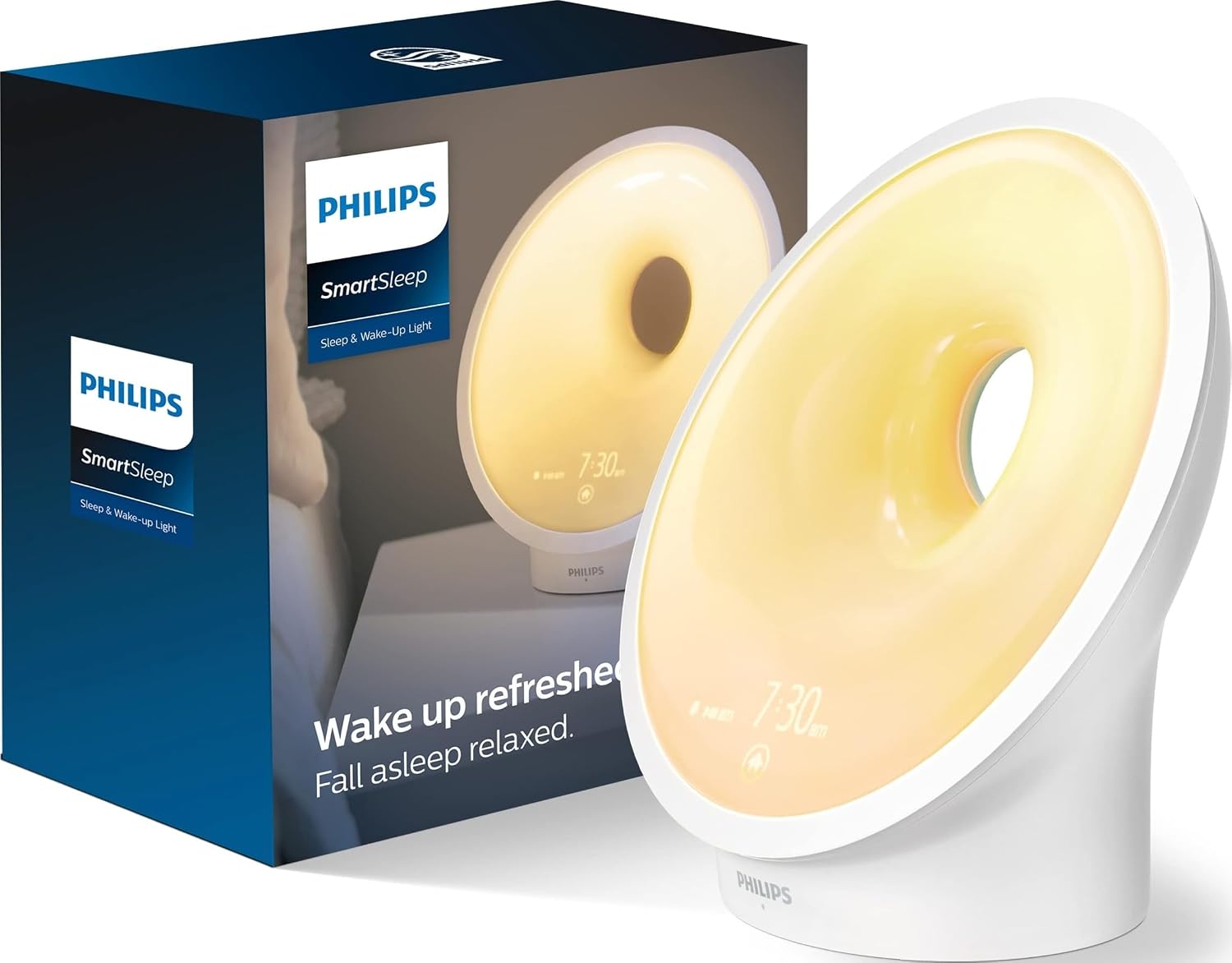
A sunrise alarm clock, also called a wake-up light or dawn simulator, gradually brightens a light source over roughly 20 to 40 minutes before your set alarm time, mimicking an actual sunrise instead of jolting you awake with sound alone. The theory is straightforward: gradually rising light hitting your eyes — even through closed eyelids — starts easing the fall in melatonin and nudging cortisol upward before you're consciously awake, so the alarm sound (if it even needs one) lands on a body that's already partway out of sleep instead of one that's been yanked out of it.
This isn't a new or fringe idea. Researchers were studying dawn simulation back in 1989, and by now there's a real evidence base — strongest for seasonal affective disorder (SAD). A 2005 meta-analysis in the American Journal of Psychiatry, pooling multiple controlled trials, found dawn simulation produced a significant reduction in depressive symptoms with an effect size in the same range as conventional bright-light box therapy — genuinely comparable to some antidepressant trial effect sizes, and more convenient than sitting in front of a light box every morning.
For ordinary morning grogginess in people without SAD, the evidence is smaller in scale but points the same way. A controlled study exposing participants to a simulated dawn during their last 30 minutes of sleep found significantly higher subjective alertness and better post-waking cognitive and physical performance compared with a normal abrupt wake-up — the first real evidence that light exposure timed to the end of sleep, not just after it, changes how rough your mornings feel.
What it will not do: help you fall asleep faster, reduce anxiety, or act as a treatment for chronic insomnia. It's a wake-up tool, full stop — it changes how you exit sleep, not whether or how well you enter it.
Weighted Blanket vs Sunrise Alarm Clock, Side by Side
| Weighted Blanket | Sunrise Alarm Clock | |
|---|---|---|
| What it targets | Falling asleep, bedtime anxiety | Waking up, morning grogginess |
| Mechanism | Deep pressure stimulation | Gradual light exposure (dawn simulation) |
| Strongest evidence for | Insomnia in adults with anxiety/depression/ADHD | Seasonal affective disorder (SAD) |
| Weaker evidence for | Objective sleep-time gains in children (autism RCT) | Everyday grogginess in people without SAD (smaller studies) |
| When it acts | The moment you get into bed | The 20–40 min before your alarm |
| Not a treatment for | Sleep apnea, chronic medical insomnia | Falling asleep, anxiety, general insomnia |
| Typical price (Sep 2026)* | ~$307 (Bearaby); budget options ~$40–60 | ~$165 (Philips Home & Kitchen listing); budget options ~$39 |
| Safety note | ~10% of body weight; not for infants or young children | No known safety concerns for typical use |
*Reference prices at the time of writing; check live listings for current pricing.
So — Which One Should You Buy?
- You lie awake with a racing mind or feel physically wound up at bedtime → weighted blanket. This is the complaint the evidence most directly supports.
- Mornings are the miserable part, not falling asleep → sunrise alarm clock. It won't touch bedtime, but it's built exactly for this.
- You track a sleep score on a wearable and it's consistently mediocre → figure out which half of the night is actually the problem before buying either — a low score from restless sleep onset needs the blanket, a low score paired with brutal mornings needs the lamp. They're not interchangeable fixes for the same number.
- You have SAD or notice your mood dips hard in winter → the sunrise lamp has the strongest published evidence of anything in this comparison, on par with light-box therapy.
- Budget is tight and you can only try one → match it to your specific complaint using the list above rather than picking whichever is cheaper. A gadget that doesn't address your actual problem is a worse deal at any price.
Can You Use Both?
Yes, and there's no real reason not to if both problems apply to you. A weighted blanket's job ends the moment you're asleep — it has nothing left to do overnight. A sunrise lamp's job doesn't start until the final 20 to 40 minutes before your alarm. They occupy completely separate windows of the night and don't compete for the same job the way, say, two different white noise machines would. If you're a person who both dreads getting into bed and dreads getting out of it, that's not a sign you need a fancier single gadget — it's a sign you have two separate problems that happen to both be sleep-related.
Trackers already nudge you toward this kind of thinking. A band like the Garmin Cirqa ships with sleep score, stages, nap detection, sleep coach and a smart wake alarm that times a gentle vibration to your lightest sleep stage — the same underlying idea as a sunrise lamp, just delivered as a buzz on your wrist instead of light in the room. Neither the tracker's smart alarm nor a sunrise lamp changes how you fell asleep in the first place, which is the whole reason this comparison exists: your wearable can tell you the score moved, but it can't tell you which half of the night to fix.
The Honest Limitations of Each
- Best trial evidence is in adults with existing anxiety, depression or ADHD diagnoses — not the general population
- The most rigorous pediatric (autism) trial found no objective sleep-time gain despite strong subjective preference
- Not appropriate for infants, young children who can't remove it themselves, or certain respiratory/circulatory conditions
- Heavy — expect to hand-wash or spot-clean rather than toss it in a standard machine
- Does nothing for falling asleep, anxiety or general insomnia — it's a wake-up tool only
- Strongest evidence is specific to seasonal affective disorder, not everyday tiredness
- Needs a dark bedroom to work as intended — a room with streetlight or curtains that don't block light dilutes the effect
- Doesn't help if your actual problem is not enough total sleep — it changes how you wake up, not how much you slept
Bottom Line
Neither of these is a fix-all "sleep tech" purchase, and any list that presents them as interchangeable is skipping the part that actually matters: what time of night is broken for you. A weighted blanket has real randomized-trial evidence behind calming your body down at bedtime, with the caveat that the effect is best documented in adults with anxiety-linked insomnia, not proven as an objective sleep-time booster across the board. A sunrise alarm clock has decades of research behind gradual light exposure easing you out of sleep, at its strongest for seasonal depression and present but smaller for ordinary morning grogginess. Buy the one that matches your actual complaint — and if both halves of your night are rough, there's nothing stopping you from owning both.
Weighted Blanket vs Sunrise Alarm Clock FAQ
Do weighted blankets actually work for sleep?
The evidence is mixed but leans positive for specific groups. A 2020 RCT of 120 adults with depression, bipolar disorder, GAD or ADHD found a weighted chain blanket significantly improved insomnia severity, fatigue and daytime anxiety over 4 weeks. But the most rigorous pediatric trial, in autistic children, found no objective increase in actigraphy-measured sleep time, despite kids and parents preferring it subjectively. Real calming effect for many, weaker proof it changes measured sleep time for everyone.
Do sunrise alarm clocks actually improve your circadian rhythm?
For seasonal affective disorder specifically, yes — a meta-analysis found dawn simulation produced a significant reduction in depression symptoms, with an effect size comparable to bright-light box therapy. For ordinary grogginess without SAD, a smaller controlled study found light exposure in the last 30 minutes of sleep improved subjective alertness and post-waking performance versus a normal alarm.
Can I use a weighted blanket and a sunrise alarm clock together?
Yes — they act at opposite ends of the night with no overlap. The blanket matters at bedtime; the lamp only matters in the last 20–40 minutes before your alarm. Plenty of people who struggle with both falling asleep and waking up own both.
Which is better for anxiety, a weighted blanket or a sunrise lamp?
The weighted blanket — deep pressure stimulation is the mechanism studied for calming, anxiety-linked bedtime effects. A sunrise lamp isn't designed to treat anxiety directly; its evidence is about mood and light exposure, strongest for seasonal affective disorder.
Is a weighted blanket safe for everyone?
No. The common guideline is around 10% of body weight, and weighted blankets aren't recommended for infants, young children who can't remove them independently, or people with certain respiratory, circulatory or claustrophobia-related conditions. Check with a doctor if you have a relevant medical condition.
Which one should I buy first if I can only afford one?
Match it to your actual complaint. Trouble falling asleep or a racing mind at bedtime points to the weighted blanket, which has the more direct evidence and mechanism for that. Fine falling asleep but brutal, groggy mornings points to the sunrise lamp instead. They don't substitute for each other.
Sources
- Ekholm B, Spulber S, Adler M — A randomized controlled study of weighted chain blankets for insomnia in psychiatric disorders, Journal of Clinical Sleep Medicine (2020): insomnia severity, daytime symptom improvements in adults with MDD/bipolar/GAD/ADHD.
- Gringras P, et al. — Weighted Blankets and Sleep in Autistic Children — A Randomized Controlled Trial, Pediatrics (2014): actigraphy-measured total sleep time, subjective preference data.
- Golden RN, et al. — The Efficacy of Light Therapy in the Treatment of Mood Disorders: A Review and Meta-Analysis of the Evidence, American Journal of Psychiatry (2005): dawn simulation and bright-light therapy effect sizes for seasonal affective disorder.
- Thompson A, Jones H, Gregson W, Atkinson G — Effects of dawn simulation on markers of sleep inertia and post-waking performance in humans, European Journal of Applied Physiology (2014): alertness and cognitive/physical performance after simulated dawn.