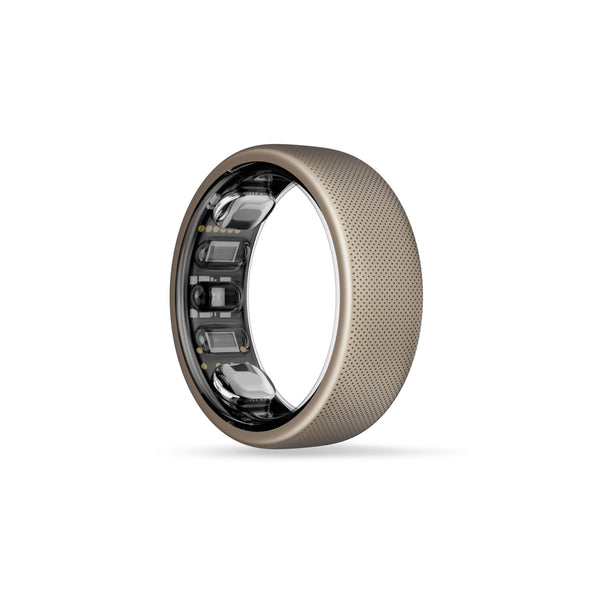
RingConn Gen 3 vs Gen 2 Air: Which No-Subscription Ring Is Worth It?
Quick answer: Both the RingConn Gen 3 (around $349) and the Gen 2 Air (around $199) skip the subscription entirely, so this isn't a fees argument like Oura vs RingConn — it's a straight features-for-money question. The extra $150 on the Gen 3 buys sleep apnea pattern insights, Vascular Health Insights, a vibration motor for silent alerts, one more size at the top of the range, and a charging case that actually stores backup power. If you just want solid sleep and recovery tracking with zero bill, ever, the Gen 2 Air is a genuinely complete ring. If you snore, care about the vascular trend feature, or want the ring to tap you on the finger instead of making you check an app, the Gen 3 earns its price.
These aren't competing products so much as the same company selling you two different amounts of ring. RingConn has spent three generations building a case against monthly fees, and both of these wear that case equally well — the Gen 2 Air isn't a stripped-down trial version with a paywall waiting behind it, it's just fewer sensors and a simpler dock for $150 less. That makes this one of the more honest comparisons in the category: no membership math, no "unlocks later" catch, just two price points doing different jobs.
- Best for most first-time ring buyers: RingConn Gen 2 Air — the same sleep, HRV, SpO2 and cycle tracking as the flagship, for $150 less, with nothing behind a fee.
- Best if you snore or want the deeper feature set: RingConn Gen 3 — the only one of these two with sleep apnea screening, Vascular Health Insights and vibration alerts, plus a longer real-world runway between charges.
- Deal-breaker check: suspect sleep apnea, or want it monitored? The Gen 2 Air doesn't do this at all — that alone should decide it.
Same No-Fee Policy, Different Amount of Ring
Neither of these rings has ever had a subscription, so unlike our Oura Ring 5 vs RingConn Gen 3 comparison, there's no membership math to run here. Sleep staging, HRV, SpO2, activity and menstrual-cycle prediction ship free and permanent on both rings. The Gen 2 Air launched as the budget entry point into the RingConn lineup — same core sensors as the standard Gen 2, a simpler charging dock, and no sleep apnea feature. The Gen 3, which arrived at the end of May 2026, is the current flagship: RingConn's first ring with a vibration motor, the debut of Vascular Health Insights, and the sleep apnea pattern insights carried over from the Gen 2 line.
So the real question isn't "which one avoids the fee" — they both do. It's whether the extra $150 buys you features you'll actually use, or just ring you'll never notice.
RingConn Gen 2 Air: What $199 Gets You
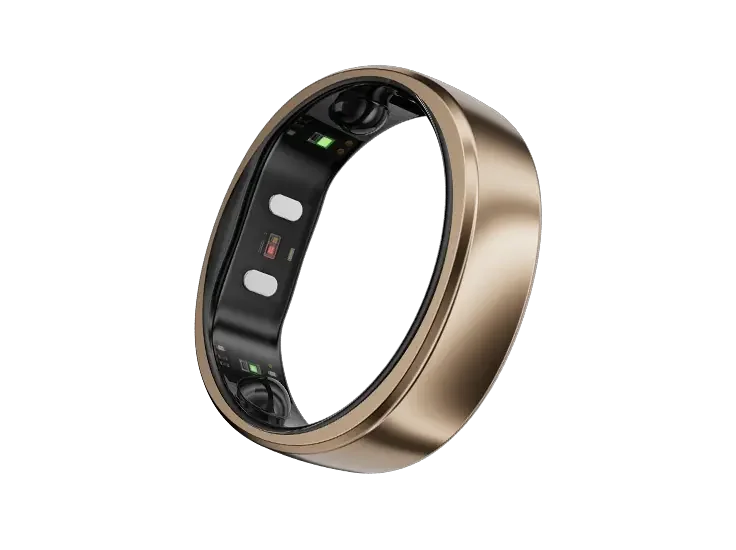
The Gen 2 Air is RingConn's answer to "what if I just want the sleep tracking without paying flagship money." It's 2mm thick, 6.8mm wide, and 2.5–4 grams depending on size — RingConn lists the shell as titanium steel with a medical-grade epoxy-resin core and a PVD coating; hands-on reviewers at Gadgets & Wearables noted it sits a shade heavier on the finger than a pure-titanium build, though the difference is barely noticeable day to day. It covers sizes 6 through 14 and carries the same IP68 (100m) water rating as the rest of the lineup.
Sensor-wise it's not actually cut down much: heart rate, HRV, sleep staging, SpO2, skin temperature, stress and menstrual-cycle prediction all run on the same underlying hardware as the standard Gen 2. RingConn quotes up to 10 days of battery, and Gadgets & Wearables' real-world testing landed right around that number. The catch is charging — the Gen 2 Air comes with a basic USB-C magnetic dock, not a case. It charges the ring fine sitting on a desk, but there's no stored backup power for a trip, so a week away means packing the dock and a cable.
The honest gaps: no sleep apnea feature at all, no Vascular Health Insights, and no vibration motor — the ring can't tap you for anything, which means every alert lives inside the app. Gadgets & Wearables' review put it plainly: "heart rate tracking during high intensity exercise is not great," which tracks with basically every optical ring at this price. None of that makes it a bad ring. It makes it a ring that does fewer things, on purpose, for $150 less.
RingConn Gen 3: What the Extra $150 Buys
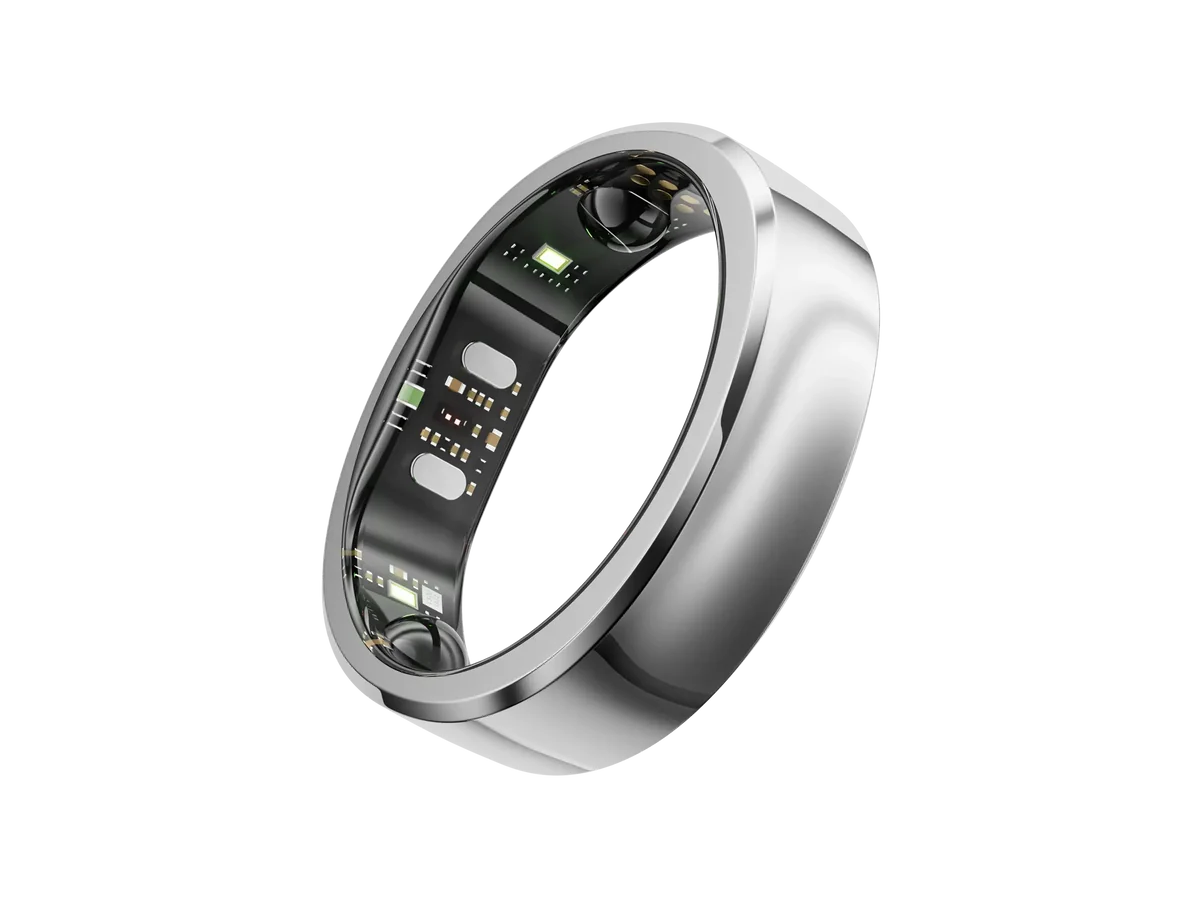
We covered the Gen 3 in full in our RingConn Gen 3 review (scored 8.8/10), so here's the short version of what separates it from its cheaper sibling. It's 2.3mm thick, titanium with an epoxy-resin inner shell, runs sizes 6 through 15 — one size wider than the Air — and RingConn quotes up to 14 days of battery, though Techlicious's hands-on testing with alerts running landed closer to 10 days, which puts real-world battery life a lot closer between the two rings than the spec sheets suggest.
Where the Gen 3 actually separates itself is the feature list. It's the first RingConn with a vibration motor, tapping your finger for stress spikes, sitting reminders and low battery instead of making you open the app. It carries forward sleep apnea pattern insights from the Gen 2 line — screening, not a diagnosis, but a real early-warning feature the Air simply doesn't have. And it debuts Vascular Health Insights, which builds long-term cardiovascular trend lines from heart rate, SpO2, temperature and manual inputs — again, a trend nudge toward a real checkup, not a clinical measurement, but something with no equivalent on the Air at all.
The charging case is the other quiet upgrade: it's included, wireless, and holds multiple backup charges, so a two-week trip needs zero cables — a genuine convenience the Air's plain dock can't match. RingConn also offers a trade-in program worth up to $90 credit toward the Gen 3 if you're sending in an older RingConn ring, which can meaningfully close the price gap if you're upgrading from an Air rather than buying cold.
RingConn Gen 3 vs Gen 2 Air: Spec Comparison
| RingConn Gen 3 | RingConn Gen 2 Air | |
|---|---|---|
| Price (list)* | $349 | $199 |
| Subscription | None — ever | None — ever |
| Sizes | US 6–15 | US 6–14 |
| Thickness / weight | 2.3mm, 2.5–3.5g | 2mm, 2.5–4g |
| Materials | Titanium, epoxy-resin inner shell | Titanium steel, PVD coating, epoxy-resin core |
| Battery (claimed) | Up to 14 days | Up to 10 days |
| Battery (real-world) | ~10 days with alerts on | ~10 days |
| Charging accessory | Wireless case, stores backup charges | Basic USB-C magnetic dock (no stored charge) |
| Vibration alerts | ✅ Smart Vibration Alerts | ❌ None |
| Sleep apnea insights | ✅ Yes | ❌ None |
| Vascular Health Insights | ✅ Yes | ❌ None |
| Women's health tracking | ✅ Full-cycle predictions | ✅ Cycle prediction |
| Waterproof | IP68 | IP68 (100m) |
| HSA/FSA eligible | ✅ Via RingConn's Flex option | Check current listing |
| Phones | ✅ iPhone + Android | ✅ iPhone + Android |
*Manufacturer list prices at the time of writing (September 2026) — check live listings. Amazon's price at checkout governs.
The Sleep Apnea Gap: Why It Only Exists on the Gen 3
This is the difference most comparisons bury, and it shouldn't be buried. Sleep apnea pattern insights live on the Gen 2 and the Gen 3 — not the Gen 2 Air. RingConn's own comparison guide states it directly, and independent testing backs it up: Gadgets & Wearables listed "No sleep apnea tracking" as one of the Gen 2 Air's defined cons versus the standard Gen 2, and the same gap carries through to how the Air compares against the newer Gen 3.
To be precise about what this feature actually is: it's pattern-based screening, not a diagnosis. RingConn's own disclaimer is explicit that its products "are not intended to diagnose, treat, cure, or prevent any disease or medical condition." What it does do — on the Gen 3 and the standard Gen 2, not the Air — is flag irregular breathing patterns overnight that are worth mentioning to a doctor, potentially the nudge toward a real sleep study that a $199 ring otherwise can't give you. If that's the reason you're shopping, the decision is already made: buy the Gen 3, or step down to the Gen 2 rather than the Air.
Battery and Charging: The Gap Is Smaller Than the Spec Sheet Says
On paper, 14 days beats 10 by a wide margin. In practice, it's closer. Techlicious's hands-on with the Gen 3 running vibration alerts landed around 10 days, and Gadgets & Wearables measured the Gen 2 Air at roughly the same. Turn off the Gen 3's alerts and you'll likely see more separation, but for most people wearing either ring normally, the day-to-day charging rhythm ends up similar.
Where the real gap shows up is travel. The Gen 3's charging case is wireless and stores multiple backup charges, so a week away needs nothing but the ring itself. The Gen 2 Air's charging dock is a plain USB-C puck with no stored power — pack it, pack a cable, and plan to charge in place like you would a watch. It's a small thing until you're mid-trip on day six with a ring at 15% and no outlet nearby.
Which RingConn Should You Actually Buy?
Buy the RingConn Gen 2 Air if you…
- Want reliable sleep, HRV, SpO2 and cycle tracking without spending flagship money
- Have no reason to suspect sleep apnea and don't care about vascular trend data
- Are new to smart rings and want to find out if you'll actually wear one before committing $349
- Don't mind a plain charging dock instead of a travel-ready case
Buy the RingConn Gen 3 if you…
- Snore, or a partner has flagged it — sleep apnea pattern insights alone can justify the upgrade
- Want a passive vascular health trend line without another gadget to remember
- Want the ring to tap you directly for alerts instead of relying on the phone
- Travel often and want a charging case that actually holds spare power
RingConn Gen 3 vs Gen 2 Air: Bottom Line
Most first-time ring buyers should start with the Gen 2 Air. It shares the same core sleep, HRV, SpO2 and cycle-tracking hardware as the pricier ring, has zero subscription like every RingConn ever made, and costs $150 less for people who just want to know how they slept without paying flagship prices to find out. It's our value pick among no-subscription smart rings for exactly that reason.
The Gen 3 earns its price for a specific buyer, not everyone. If sleep apnea screening, the Vascular Health Insights trend feature, or vibration alerts matter to you, the Air simply doesn't offer them at any price — that's not a polish difference, it's a hardware and firmware difference. Pick the ring that matches what you actually plan to use, not the one with the bigger number on the box. Either way, see how both compare against the rest of the field in our complete ring rankings.
RingConn Gen 3 vs Gen 2 Air FAQ
What's the real difference between the RingConn Gen 3 and Gen 2 Air?
About $150. That gets you sleep apnea pattern insights, Vascular Health Insights, vibration alerts, one extra size (up to 15 instead of 14), and a charging case that stores backup power instead of a plain dock. Core sleep, heart rate, HRV, SpO2 and cycle tracking are the same on both rings.
Does the RingConn Gen 2 Air have sleep apnea monitoring?
No. RingConn reserves sleep apnea pattern insights for the Gen 2 and Gen 3 models. The Gen 2 Air ships with the same core sleep sensors but without that specific feature — confirmed on RingConn's own Gen 2 Air vs Gen 2 comparison page and in independent reviews.
Is the RingConn Gen 3's battery actually longer than the Gen 2 Air's?
On the spec sheet, yes — up to 14 days versus up to 10. In real-world use with alerts and full tracking on, hands-on testing has landed both rings closer to 10 days. The bigger practical gap is the charging case: the Gen 3's case stores multiple backup charges for travel, while the Gen 2 Air's magnetic dock only charges the ring in place.
Can I upgrade from a Gen 2 Air to a Gen 3 later?
Yes. RingConn runs a trade-in program offering up to $90 credit toward a new purchase when you send in an older RingConn ring (or a qualifying competitor ring) through its own store, which narrows the effective price gap if you outgrow the Air.
Do either of these rings require a subscription?
No. Neither the Gen 3 nor the Gen 2 Air has ever had a paid tier — every feature each ring supports is included in the app for free, permanently.
Sources
- RingConn — Gen 3 official product page: $349 list price, up-to-14-day battery claim, vibration alerts, sleep apnea pattern insights, Vascular Health Insights, sizes 6–15, HSA/FSA eligibility, trade-in program.
- RingConn — Gen 2 Air official product page: $199 list price, up-to-10-day battery, materials, dimensions, sizes 6–14, IP68 rating, no sleep apnea or vascular feature listed.
- RingConn — Gen 2 Air vs Gen 2 comparison guide: explicit confirmation that sleep apnea insights are exclusive to the standard Gen 2 (and, per the Gen 3 page, the Gen 3), plus charging-case vs dock difference.
- Gadgets & Wearables — RingConn Gen 2 Air review: real-world ~10-day battery, missing sleep apnea detection, USB-C dock limitation, exercise heart-rate accuracy notes.
- Techlicious — RingConn Gen 3 hands-on: ~10-day real-world battery with alerts on, haptics behavior, launch pricing.