Best Matter Smart Plugs 2026: Which Ones Actually Work With Alexa, Google Home AND Apple HomeKit?
Quick answer: Yes — the Kasa Matter Smart Plug KP125MP4, the meross Matter Smart Plug, and Eve Energy are all Matter-certified, and all three genuinely can be added to Alexa, Google Home and Apple Home. What "Matter-certified" doesn't tell you is whether that happens with zero extra hardware, and the honest answer is: it depends on the ecosystem, not the plug. Kasa and meross run on plain Wi-Fi — for Alexa and Apple Home, they connect with nothing extra required. For Google Home, though, Google's own support documentation lists "a Matter-enabled hub for Google Home" as a baseline requirement, a detail meross's own setup FAQ independently confirms. Eve Energy is the real outlier: it runs on Thread instead of Wi-Fi, so it needs a Thread Border Router — a HomePod mini, Apple TV 4K, or a compatible Echo, eero, or Google/Nest device — to fully work with any of the three ecosystems, not just Apple's.
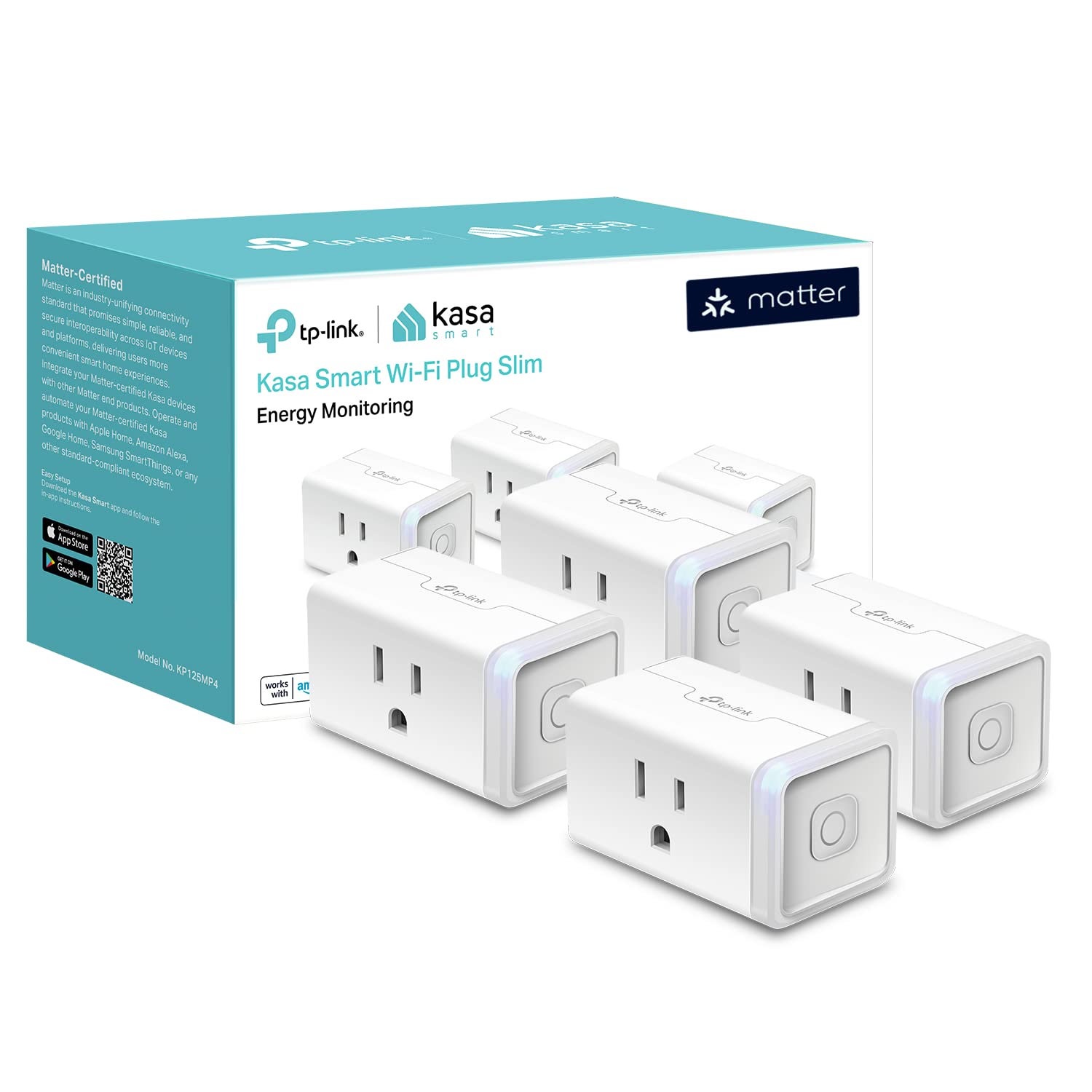
For most mixed households — some iPhones, some Android phones, an Echo speaker in the kitchen — that makes the Kasa KP125MP4 (~$37.99 for 4) the simplest buy: Wi-Fi only, no Thread hardware to shop for, and the one Google Home "catch" below is something most households already have covered without buying anything new. If you're specifically after the honest cost/energy-monitoring math instead of the ecosystem question, that's a different page — our Kasa vs Emporia vs Eve comparison covers that side in depth.
- Best overall: Kasa KP125MP4 — Wi-Fi only, zero extra hardware for Alexa or Apple Home
- Nearly identical: meross Matter Smart Plug — same compatibility profile, same Google Home catch
- Works with all three, but needs a hub for all three: Eve Energy — Thread-based, requires a Thread Border Router regardless of which app you use
- The catch that applies to Kasa AND meross: Google Home's own documentation lists a Matter-enabled hub as a requirement — Apple and Alexa don't ask for one
- What Matter buys you: one device, addable to multiple ecosystems via "multi-admin" — but only one app actively controls it at a time
What Does "Matter-Certified" Actually Mean for Compatibility?
It means the device has passed certification to speak Matter, the shared smart-home protocol built by the Connectivity Standards Alliance — and that it supports a specific Matter feature called multi-admin. Google's own support documentation defines it plainly: "The Matter Multi-Admin feature allows you to use Matter-enabled devices simultaneously in different Matter-certified apps like Google Home, Apple Homekit, Amazon Alexa, and more."8 That's the actual headline benefit of buying Matter over an older Wi-Fi-only smart plug — one device, shareable across whichever apps different people in your house already use, instead of being locked to a single ecosystem forever.
Two details in that same Google documentation are worth knowing before you assume "Matter badge" means "works everywhere with nothing else to buy." First: "While the Matter Multi-Admin feature allows you to control from multiple smart home platforms, only one platform can actively control the device at a given moment" — in practice a non-issue for most households, since two people rarely fight over the same light switch at the same second, but it means multi-admin is about shared access, not simultaneous dual control. Second, and more relevant to shopping: Google's documentation lists "one Matter-certified smart home hub for each Matter-certified app that you want to control the Matter-enabled device from" as part of what multi-admin setup needs.8 Whether that's a real cost to you depends entirely on what hardware you already own — which is exactly what the rest of this guide breaks down, ecosystem by ecosystem.
Kasa vs meross vs Eve Energy — Ecosystem Compatibility at a Glance
| Kasa KP125MP4 (4-Pack) | meross Matter Plug (4-Pack) | Eve Energy (2-Pack) | |
|---|---|---|---|
| Price (Sept 2026)* | ~$37.99 | ~$49.99 | ~$69.95 |
| Connectivity | Wi-Fi (2.4GHz) | Wi-Fi (2.4GHz) | Thread |
| Works with Alexa, no extra hardware? | Yes6 | Yes26 | No — needs a Thread Border Router35 |
| Works with Apple Home, no extra hardware? | Yes (iOS 18+ for local control)7 | Yes27 | No — needs a Thread Border Router35 |
| Works with Google Home, no extra hardware? | No — Google lists a Matter-enabled hub as required8 | No — same catch, confirmed in meross's own FAQ2 | No — needs a Thread Border Router (on top of the hub above)35 |
| Needs a Thread Border Router? | No | No | Yes — for every ecosystem345 |
| Account / cloud | Kasa account | Meross account | No account, no cloud — fully local3 |
*Reference prices at the time of writing; check live listings — Amazon prices change frequently.
Kasa Matter Smart Plug KP125MP4 — Works Everywhere, No Extra Hardware
TP-Link's own product page states the KP125M is "Matter Certified" and supports "Voice Control" through "Amazon Alexa, Apple Siri®, or Google Assistant."1 What that page doesn't spell out — because it's a platform-level detail, not a Kasa-specific one — is that Alexa and Apple Home will pair with it directly, no hub required, while Google Home wants its own Matter-enabled hub device present regardless of which brand of Wi-Fi plug you're adding. That's not a Kasa limitation; it's true of any plain Wi-Fi Matter plug on Google's platform, this one included.
Practically, this is still the easiest of the three to recommend for a mixed household. It joins your existing 2.4GHz Wi-Fi network, shows up in the Kasa app within a couple of minutes, and — once paired — its on/off and basic scheduling controls are reachable from Alexa or Apple Home with nothing extra to buy. If your household also runs Google Home, check the Google Home hub note two sections down before assuming that side is automatic too.
meross Matter Smart Plug — Same Compatibility, Same Google Home Catch
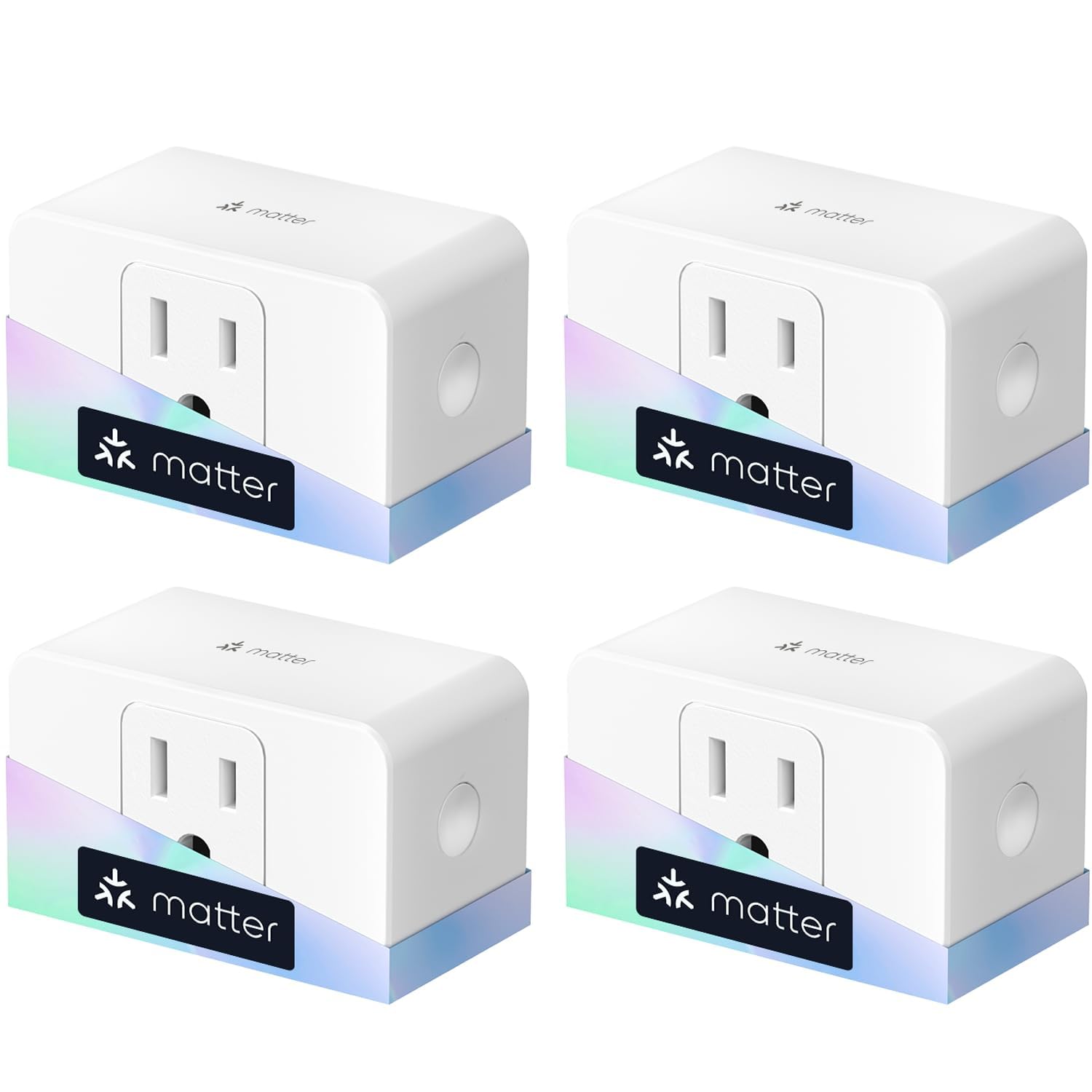
Where meross actually helps clear things up is that its own setup FAQ spells out the hub question by platform instead of leaving it implied. Walking through Alexa and Apple HomeKit, the guide lists pairing steps with no hub mentioned at all. For Google Home, it's explicit: "ensure that you have a Matter-enabled hub configured" before adding the plug.2 That's an independent confirmation of the exact same requirement Google's own documentation lists — two different companies' own support material agreeing on the same catch, which is a stronger signal than either one alone.
Beyond that one shared detail, meross is functionally the same plug as the Kasa pick: 15A/1800W rating, plain Wi-Fi, Matter-certified. Buy it as a same-spec backup if Kasa's four-pack is sold out, or if you'd simply rather split your smart-home devices across two brands for redundancy — not because it solves the Google Home hub question any differently.
Eve Energy — Works With All Three, But Only If You Already Have a Thread Hub
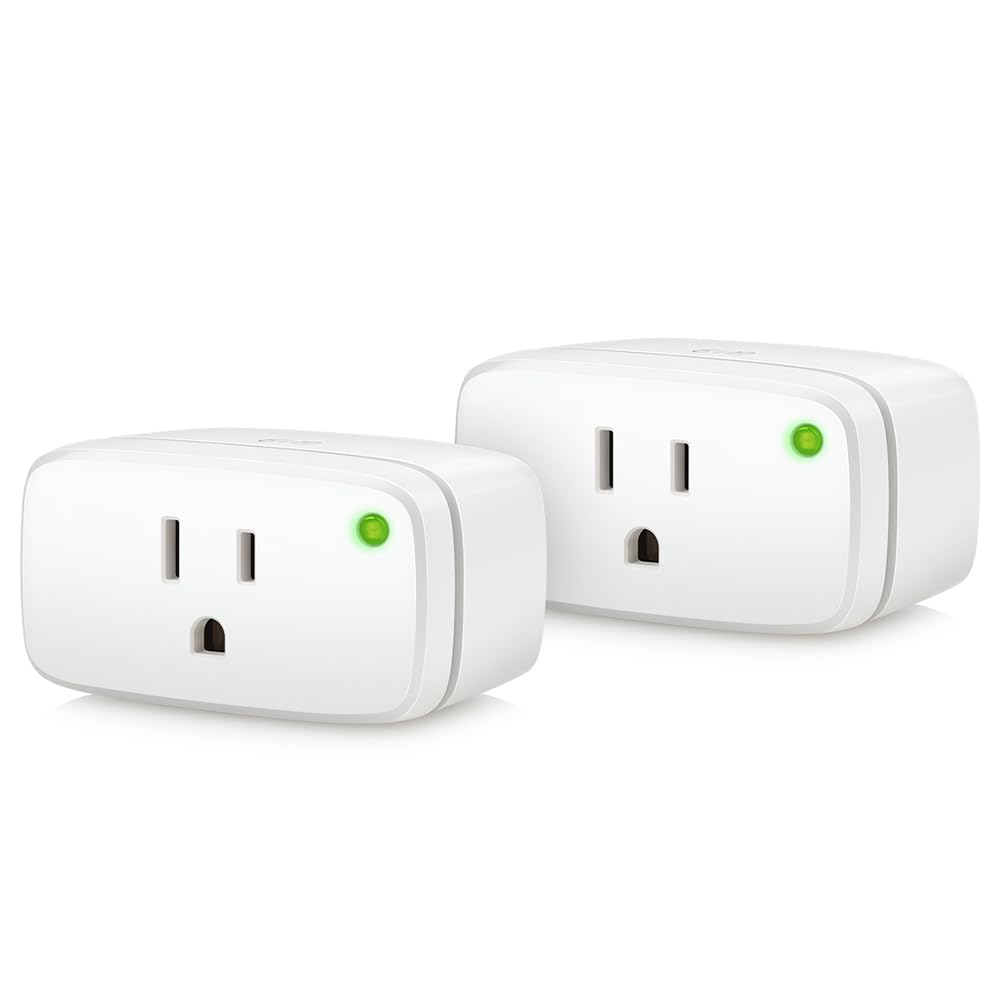
Eve's own product page is actually the most generous of the three about ecosystem compatibility, listing "Apple Home, Samsung SmartThings, Amazon Alexa, Google Home and Home Assistant" by name.3 The part that trips people up — especially anyone who assumes Eve is "the Apple one" and therefore simplest for an Apple-first household — is that this device runs over Thread, not Wi-Fi. Eve's page is direct about it: "this Matter-enabled device requires a hub that supports both Thread and Matter."3 Amazon's own listing for this exact 2-pack states the same thing right in the product title — "Thread Border Router requ[ired]"4 — and the Home Assistant community independently confirms the same real-world requirement5 — users trying to add Eve as a Matter device hit a wall without a Thread Border Router present. The qualifying hardware itself comes from each platform's own documentation: Apple's support page names a HomePod mini, an Apple TV 4K, or a compatible third-party Thread border router7, and Amazon's developer documentation names Thread-enabled Echo and eero devices for that same job6.
The distinction that actually matters when you're shopping: that Thread Border Router requirement applies on top of whatever each individual app separately wants — so an Apple Home user still needs a Thread-capable HomePod mini or Apple TV, a Google Home user still needs the border router and Google's own Matter-enabled hub, and so on. What you get in exchange is genuinely different from the other two: Eve's page advertises "no subscription, no registration" and "no Eve cloud,"3 meaning the device runs entirely on your local network instead of phoning home to a manufacturer's server. That's worth the roughly $30-per-outlet premium only if local-only operation is something you're specifically shopping for — not simply because it happens to say "Apple" the most in its marketing.
Does Alexa Need a Hub for a Matter Smart Plug?
Not for a Wi-Fi Matter plug like Kasa or meross. Amazon's own developer documentation is specific here: for Matter over Wi-Fi, "smart home devices can connect directly to Alexa without a separate hub or smart home add-on" — you just need compatible Alexa hardware and a working home network.6 The requirement only shows up for Matter-over-Thread devices, where Amazon's documentation says "a Thread Border Router must commission Thread-based smart home devices" before they'll pair, and notes that "Thread-enabled Amazon Echo and eero devices act as border routers" for that job.6 In plain terms: Kasa and meross are a non-issue on Alexa; Eve Energy needs one of those Thread-capable Echo or eero devices present.
Does Apple Home Need a Hub for a Matter Smart Plug?
Mostly no for a plain Wi-Fi plug, with a recommendation attached. Apple's own support page states that with iOS 18 or later, you can add and control Matter accessories from the Home app without a home hub. It also adds a softer recommendation on top of that: "For the best experience set up a home hub to add supported Matter and thread-based accessories to the Home app."7 That "best experience" language mostly covers things a bare Wi-Fi plug doesn't need — remote access away from home, more reliable background updates — so Kasa and meross work fine without one for local, at-home control. Where Apple's requirement turns firm is Thread specifically: "Thread-based accessories require a Thread-enabled home hub such as Apple TV 4K, HomePod (2nd generation), HomePod mini, or a compatible third-party Thread border router."7 That's the line Eve Energy falls on — not the Wi-Fi plugs.
Does Google Home Need a Hub for a Matter Smart Plug? (The One Nobody Expects)
Yes — and this is the detail most "best Matter smart plug" roundups skip, because the assumption is usually that Apple is the strict one and Google, Android's own platform, would be the easy one. Google's own support documentation lists requirements under a "What you need" section, and it's unambiguous: "A Matter-enabled hub for Google Home" appears as its own bullet point, separate from — and in addition to — the network and account requirements.8 The page doesn't carve out an exception for Wi-Fi-only devices; the hub requirement is listed as a general prerequisite for Matter setup with Google Home, full stop.
That's not a theory pieced together from one source, either. meross's own setup FAQ, written independently of Google's documentation, describes the exact same requirement for its own plug: "ensure that you have a Matter-enabled hub configured" specifically for the Google Home section of its pairing steps2 — with no equivalent line in its Alexa or Apple HomeKit instructions. Two companies' own support material, describing two different products, landing on the same answer for the same platform is about as solid as this kind of claim gets without an in-house lab test.
The practical upside: for a lot of households, this isn't actually a new purchase. A Nest Hub, Nest Hub Max, or a Google TV streamer already sitting in the living room typically qualifies as that Matter-enabled hub. The point isn't "budget for Google Home" — it's "don't assume a Matter badge means Google Home is automatically covered with literally nothing else in the house," which is exactly the assumption this guide exists to correct.
Can One Plug Really Run on All Three Apps at Once?
Yes, with the one nuance Google's own documentation is upfront about: "only one platform can actively control the device at a given moment."8 In everyday use that's rarely something you'll notice — a smart plug isn't usually being toggled by two apps in the same second — but it's worth understanding what multi-admin actually promises versus what it doesn't. It promises that anyone in the house can open their preferred app (Alexa, Google Home, or Apple Home) and control the same physical plug, instead of everyone being forced onto one ecosystem because of who set the device up first. It doesn't promise true simultaneous dual-control, and it doesn't waive each platform's own setup requirements — you still need whatever hub that specific app calls for, as covered section by section above.
Ecosystem Compatibility or Energy Monitoring — Which Question Are You Actually Asking?
If what brought you here is "will this plug even show up in my Google/Apple/Alexa app," everything above should answer it. But these same three products get searched a completely different way too — "which one actually cuts my electric bill" — and that's a separate question with a separate answer, because it comes down to per-outlet pricing and how each brand's app (or lack of one) reports watts and kWh, not which ecosystem hub you own. Want the deeper energy-monitoring cost breakdown instead? See our Kasa vs Emporia vs Eve comparison, which covers price-per-outlet, where each brand actually shows you real energy data, and why "Emporia" in that search doesn't mean a plug at all.
So Which Matter Smart Plug Should You Buy?
For a household mixing Alexa, Android phones, and iPhones — which describes a lot of homes — the Kasa KP125MP4 is the least complicated buy: Wi-Fi only, no Thread hardware to shop for, and the one real catch (Google Home wanting its own hub) is something most households have already solved without knowing it, thanks to a Nest Hub or Google TV streamer already in the living room. meross is a legitimate same-spec backup if Kasa's stock runs out, with the identical Google Home caveat confirmed in its own documentation. Eve Energy earns its higher price only if fully local, no-cloud operation is something you're specifically shopping for — and only if you're either starting with a Thread Border Router already in place or are fine adding one, since that requirement applies across all three ecosystems, not just Apple's.
Best Matter Smart Plugs FAQ
Do Matter smart plugs work with Alexa, Google Home, and Apple HomeKit at the same time?
Yes — Matter's "multi-admin" feature lets a certified plug be added to all three apps. Google's own documentation confirms devices can be used "simultaneously in different Matter-certified apps like Google Home, Apple Homekit, Amazon Alexa, and more," though only one app actively controls it at any given moment, and each app generally wants its own compatible hub set up.
Does a Matter smart plug need a separate hub?
Depends on the platform. Wi-Fi Matter plugs like Kasa and meross connect directly to Alexa (per Amazon's own docs) and to Apple Home on iOS 18+ with no separate hub. Google Home is the exception — Google's own support page lists a Matter-enabled hub as required, confirmed independently by meross's own setup FAQ.
Do I need a Thread Border Router for the Kasa or meross plug?
No. Both connect over plain 2.4GHz Wi-Fi, not Thread, so neither needs a Thread Border Router for any ecosystem. That requirement is specific to Thread-based devices like Eve Energy.
Why does Google Home ask for a "Matter-enabled hub" but Alexa doesn't?
It's a platform-level design difference. Amazon's documentation says Wi-Fi Matter devices connect directly to Alexa hardware with no separate hub, while Google's own support page lists a Matter-enabled hub as a baseline Google Home requirement regardless of Wi-Fi or Thread. Kasa, meross and Eve can't opt out of either platform's design.
Is Eve Energy compatible with Alexa and Google Home, or just Apple?
All three — Eve's own product page lists Apple Home, SmartThings, Alexa, Google Home and Home Assistant as compatible. But since it runs on Thread, it needs a Thread Border Router (HomePod mini, Apple TV 4K, or a compatible Echo/eero/Google device) to fully work with any of them, not just Apple's.
Which Matter smart plug should I buy for a mixed Alexa/Google/Apple household?
The Kasa KP125MP4 (or meross as a backup) if you don't already own Thread hardware — Wi-Fi only, no extra gear for Alexa or Apple Home, and the Google Home hub requirement is something most households already have. Eve Energy is worth the extra cost specifically for local-only, no-cloud operation if you already have a Thread Border Router.
Sources
- TP-Link — KP125M official product page: Matter certification and voice-control compatibility with Alexa, Siri and Google Assistant.
- Meross — How to setup Matter device with Amazon Alexa, Google Assistant, Apple HomeKit: official setup steps confirming a Matter-enabled hub is required specifically for Google Home (and SmartThings), not Alexa or Apple HomeKit.
- Eve Systems — Eve Energy official product page: ecosystem compatibility list, Thread Border Router requirement, no-cloud/no-subscription claims.
- Amazon — Eve Energy (Matter) 2-Pack listing: product title states "Thread Border Router requ[ired]."
- Home Assistant Community — "Thread border router required" with Eve and Matter: real-world user thread confirming Eve Energy will not commission as a Matter device without a Thread Border Router present.
- Amazon Developer Documentation — Connect Your Device to Alexa with Matter: official confirmation that Wi-Fi Matter devices connect directly to Alexa without a separate hub, and that Thread devices need a Thread Border Router (Echo/eero).
- Apple Support — Pair and manage your Matter accessories: official guidance on adding Matter accessories without a home hub on iOS 18+, the "best experience" home-hub recommendation, and the Thread-accessory home-hub requirement.
- Google Home and Nest Help — Set up, manage, and control Matter-enabled devices with Google Home: official "What you need" list including a Matter-enabled hub for Google Home, and the Matter Multi-Admin explanation.