How Many Smart Plugs Do You Need for Christmas Lights?
Quick answer: You need one smart plug per zone, not one per string. A zone is any group of lights you want switched on and off together, which works out to about 4 plugs for a small display, about 6 for a medium one and about 12 for a big one (counting each socket on a two-socket outdoor plug separately). Plug count isn't what causes trouble, though. A smart plug adds no capacity to a circuit, so the real limit is watts: plan on staying under roughly 1,440 W on a 15-amp circuit. And know that Kasa's own spec pages call the outdoor EP40's 15 amps a total across both sockets, while Amazon's listing says "for each." At Sept 25, 2026 prices, the Kasa EP10P4 4-pack (~$23.99) was the lowest per outlet of the packs we checked (about $6.00), and the Kasa EP40 (~$17.28) covers two outdoor zones per plug.
Plenty of what you'll find on this question is really about how many lights you can plug in, which isn't the same thing. A smart plug doesn't care whether it's switching one string or six. It cares how many separate schedules you want and how many watts pass through it. We haven't wired up a 12-plug display for this guide: everything here comes from manufacturer spec pages, the Amazon listings we read on Sept 25, 2026, and guidance from ESFI, the Department of Energy and ENERGY STAR. Where a listing and a manufacturer disagree, we go with the more cautious number.
- Count zones. About 4 plugs for a small display, 6 for medium, 12 for large.
- Then add watts. Keep one 15-amp circuit under roughly 1,440 W (a rule of thumb, sourced below).
- Indoor pick: Kasa EP10P4 4-pack (~$23.99, checked Sept 25, 2026), lowest per outlet among the packs we checked.
- Outdoor pick: Kasa EP40 (~$17.28, checked Sept 25, 2026), IP64, two sockets, 15A shared between them.
How many smart plugs do I need for Christmas lights?
Count zones, not strings. Walk the display, inside and out, and write down every spot that gets lights: the tree, the mantel, the porch rail, the roofline, the bushes by the door. Group the spots you'll always want on and off together. Each group gets one plug, or one socket on a two-socket outdoor plug. That number is your answer.
Two things push the count up: wanting the roofline on until midnight while the yard inflatable shuts off at 9, or wanting to kill the tree without touching the rest. Two pull it down: LED strings sip power, so several can share a plug if each tag and the plug's rating allow it, and a two-socket outdoor plug like the Kasa EP40 covers two zones.
| Display size | What it usually looks like | Zones to plan for | Kasa combo we priced |
|---|---|---|---|
| Small | A tree, a mantel or window, a couple of outdoor strings | about 3-4 | 1x EP40 + 1x EP10P2 |
| Medium | Tree, mantel, porch rail, roofline, a bush or two | about 5-8 (we priced 6) | 1x EP40 + 1x EP10P4 |
| Large | Several indoor spots, full roofline, yard pieces, wreaths | about 9-12+ (we priced 12) | 2x EP40 + 2x EP10P4 |
These ranges are our own planning shorthand, not survey data, and the combos are paper math, not a tested setup.
If your display doesn't fit those three, the zone method still works. A plug can also feed a power strip for strings that always run together; keep the strip's load inside the plug's rating and don't chain strips or cords, since ESFI is blunt about not overloading outlets.1 And one zone on the same hours every night? A plain plug-in timer does that with no Wi-Fi to fight. Smart plugs earn their keep with per-zone schedules, sunset tracking or phone control.
How do I add up the wattage of my display?
Multiply volts by amps to get watts, then add up your tags. A U.S. outlet is about 120 volts, so a 15-amp circuit tops out near 1,800 watts (15 x 120). Kasa's EP40 page lists 1,875 W, which works out to 15 amps at 125 volts,5 and its EP10 page lists 1,800 W.9 At a real outlet, use 1,800.
Why we plan for 1,440 W instead of 1,800 W
The National Electrical Code says a circuit feeding a "continuous load," one expected to run three hours or more, needs a breaker rated for at least 125 percent of that load. Flip it around and you get the 80 percent rule: keep continuous load under 80 percent of the breaker rating. On a 15-amp circuit that's 12 amps, or 1,440 W (15 x 120 x 0.8).2 A display running from dusk to bedtime fits the three-hour definition.
That's a rule electricians use to size circuits, not a violation you commit by adding one more string, so we treat 1,440 W as a planning ceiling, a rule of thumb. We also haven't read the NEC text itself. The wording above comes from IAEI, the electrical inspectors' association magazine, quoting the 2014 edition, so consider it a secondary source.
Getting the real number for your strings
Read the tag on each string (usually near the plug end) or the box. It should give watts or amps and, for strings that link end to end, how many sets you can connect. ESFI's list also says to look for a UL, CSA or Intertek (ETL) label and never to connect more than three strings of incandescent lights.1
LEDs change the math a lot. The Department of Energy says LED strands use about 70 percent less energy than conventional incandescent ones.3 ENERGY STAR-certified strings are capped at 0.2 W per bulb, so a 100-bulb certified string draws 20 W at most (our arithmetic), and ENERGY STAR's own comparison is that one 7-watt incandescent bulb uses about as much power as 140 LEDs.4 Take that 7 W figure and a string of 50 old-style bulbs at 7 W each: 350 W, about 2.9 amps. Four strings like that is 1,400 W, right at the ceiling. That's an estimate from ENERGY STAR's example number; your bulbs may differ, so the tag wins.
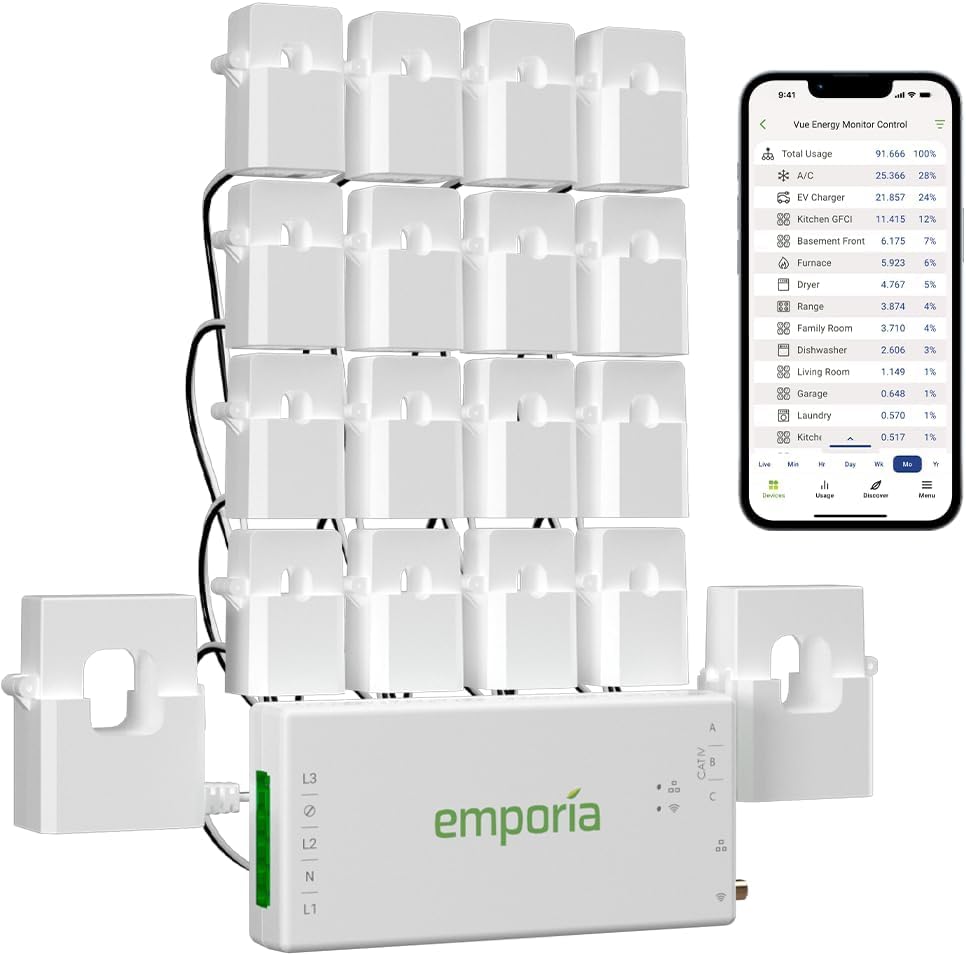
So with LED strings, plug count is set by zones and schedules. With older incandescent strings, wattage runs out first. For a bin of unlabeled strings from the garage, a metering plug is the honest way to find out what they pull; we compare those in Kasa vs Emporia vs Eve. Also find out what else shares your outdoor outlet's breaker: plug a lamp into that outlet, flip breakers until it goes dark, and see what else died with it. Whatever shows up counts against the same circuit.
Does a smart plug add circuit capacity?
No. A smart plug sits between the outlet and your lights and adds a switch, a Wi-Fi radio and its own limit. The breaker still trips at whatever the circuit is rated for, and four plugs on one circuit still share that circuit's amps. Two limits apply at once, the plug's and the circuit's, and the lower one wins. (Whether the plug itself uses power while it waits is covered in Do Smart Plugs Actually Save Electricity?) Here are the ratings as each source states them.
| Plug | Rating as stated | Source | We plan on |
|---|---|---|---|
| Kasa EP10P4 / EP10P2 | 15A; 1,800 W max (general use, resistive load) | Kasa page9 | 1,800 W per plug |
| Kasa EP40 | "15A maximum load in total"; 1,875 W | Kasa page5, TP-Link datasheet6 | 15A shared by both sockets |
| Kasa EP40A | "15A maximum load in total" (Kasa); "Maximum Load 15A, 1875W" with no "in total" (TP-Link's page) | Kasa7, TP-Link8 | 15A shared |
| GHome outdoor | Listing: "15A/1800W Max for each" | Amazon listing; we couldn't find a GHome spec page that states one | 15A shared (unconfirmed) |
| Govee and Amazon Basics 4-packs | Listings: 15A (Govee also says 120V); neither gives a watt figure | Amazon listings12 | 1,800 W (our arithmetic) |
| GHome Mini 4-pack (not linked) | Listing: "rated at 10A, 1200W" | Amazon listing12 | 1,200 W, lower than the rest |
The EP40 wording that trips people up
Amazon's EP40 listing says "Individual Control of 2 IN 1 Outlets ... 15A/1875W Max for each," which sounds like each socket can carry a full 15 amps. Kasa's own pages say "Output: 15A maximum load in total,"56 and the datasheet gives the plug an input rating of 15A. That fits: one cord goes to the wall and 15 amps come in, so the plug can't sensibly hand out a full 15 amps twice. Amazon's "for each" may just describe each socket's own rating, but we can't see inside the plug, so we plan on Kasa's number. It matters: two 8-amp loads on one EP40 put you over its limit even though each socket looks fine on paper. With LED strings you'll never notice. With incandescent strings you might.
The cheap pack that's only rated 10 amps
Not all 4-packs are alike. The GHome Smart Plug Mini 4-pack's listing says it's "rated at 10A, 1200W, and 120V." That's fine for LED strings and a poor match for anything hungrier. We're not linking it, only flagging it: when you compare packs on price, check the amp rating first.
Which multi-pack costs the least per outlet?
Among the packs we checked on Sept 25, 2026, the Kasa EP10P4 4-pack was the lowest per outlet. Divide the price by the number of independently switched outlets and you get the number that matters when a display has lots of zones.
| Plug | Outlets | Price (checked Sept 25, 2026)* | Per outlet | Outdoor rating stated? |
|---|---|---|---|---|
| Kasa EP10P4 4-pack | 4 | ~$23.99 | ~$6.00 | Not stated |
| GHome Mini 4-pack (10A, not linked) | 4 | ~$25.68 | ~$6.42 | Not stated |
| Amazon Basics 4-pack | 4 | ~$25.99 | ~$6.50 | Not stated |
| Kasa EP10P2 2-pack | 2 | ~$13.95 | ~$6.98 | Not stated (Amazon spec table: IP00) |
| Govee 4-pack | 4 | ~$31.99 | ~$8.00 | Not stated |
| Kasa EP40 | 2 sockets | ~$17.28 | ~$8.64 | IP64 |
| Kasa EP40A | 2 sockets | ~$19.99 | ~$10.00 | IP64 |
| GHome outdoor | 2 sockets | ~$20.99 | ~$10.50 | IP64 (per listing) |
| Kasa EP40M, Matter (not linked) | 2 sockets | ~$23.99 | ~$12.00 | IP64 |
| Kasa KP401 (not linked here) | 1 | ~$16.99 | ~$16.99 | IP64 |
*Approximate, and Amazon prices change often. The formula is price divided by outlets, so redo it with the live price. Per-outlet figures are our arithmetic.
Treat the order as a snapshot. Since our Sept 7 check, the Amazon Basics 4-pack moved from about $23 to about $26, the Govee pack from about $28 to about $32 and the Kasa KP401 from about $12 to about $17, while GHome's outdoor plug dropped from about $23 to about $21. That's why we reworded a label in our Christmas-light plug roundup. One more caveat: when we read the pages, Amazon's page data tagged most of the Kasa listings we priced (the 4-pack, the 2-pack, the EP40 and the EP40A) and the GHome outdoor plug as a "limited-time deal," so some of these prices may be temporary. If the Kasa 4-pack goes back to its regular price, the Amazon Basics pack could come out lower per outlet.
Per-outlet price also ignores things that matter. The GHome Mini is second-lowest in the table and the only 10-amp pack, and the Amazon Basics pack is close on price but Alexa-only. Outdoor sockets cost more each because you're paying for the weatherproofing, and single-socket outdoor plugs are the priciest route to extra zones, unless two zones are too far apart for one plug to reach.
Which plugs are actually rated for outdoors?
Only the ones whose maker says so. The Kasa EP40 and EP40A list IP64 on Kasa's own pages,57 and the GHome outdoor plug and Kasa KP401 list it in their Amazon titles or bullets. The 4-packs (Kasa, Amazon Basics, Govee, GHome Mini) don't state an outdoor rating in their listings; Kasa's EP10 page lists none, and the Amazon spec table for the EP10P2 says IP00, meaning no rated protection. Keep those indoors.
IP64 means protected against dust and against water splashed from any direction, which is how TP-Link puts it for the EP40.6 It isn't a submersion rating, and the datasheet says the sockets should stay capped when not in use.6 Kasa lists an operating range of -4°F to 122°F for the EP40;5 if your winters get colder, the plug is outside its spec. The EP40 ships with a 6-inch cable and a clamp and screw,6 and Kasa claims up to 300 feet of Wi-Fi reach in open areas;5 walls cut that down, so check your phone's signal at the spot first.
GFCI, briefly. Kasa's EP40 page says the plug must go into a GFCI receptacle if used outdoors or in wet locations.5 Our longer write-up of GFCI and IP ratings, with the ESFI and NFPA references, is in Best Smart Plugs for Christmas Lights. The short version: a weather rating and a GFCI outlet do two different jobs, and outdoors you want both.
GHome outdoor plug: the backup if Kasa is sold out
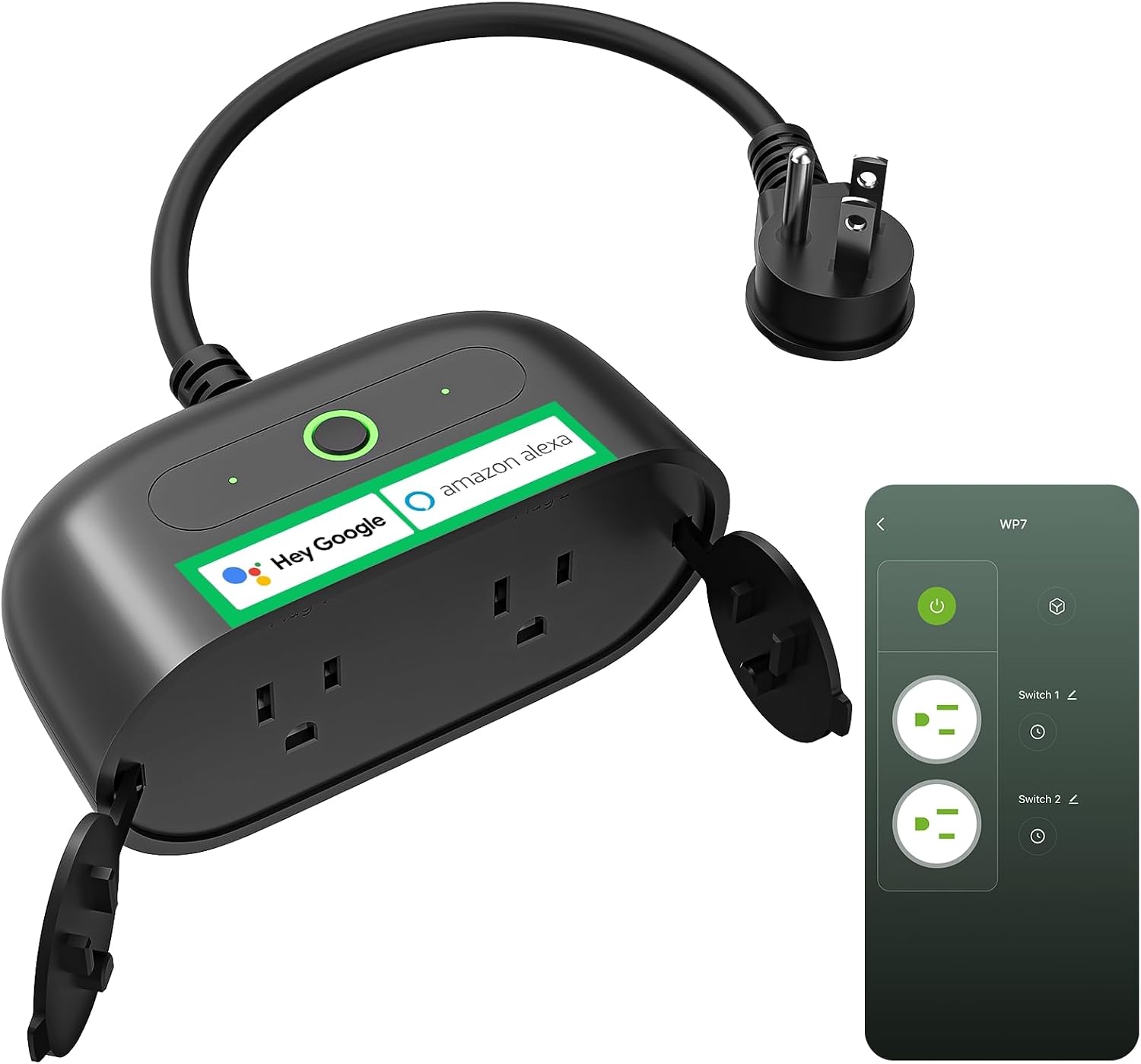
Same idea as the EP40: two sockets, IP64 and sunset/sunrise scheduling per its listing, about $20.99 on Sept 25. The catch is in the ratings table: the listing says "15A/1800W Max for each" and we couldn't confirm that with GHome, so plan on 15 amps shared. It lists Alexa and Google in its bullets (SmartThings only in the title), with no Apple Home mention. We'd buy Kasa first and keep this for the week the EP40 is out of stock.
Do I need a hub, and will it work with Alexa, Google or Apple?
No hub for any of these. Each one joins your home Wi-Fi directly. The catch is that Kasa, Govee and GHome all state they're 2.4 GHz only, so if setup fails, check that first. The bigger trap with multi-packs is which app and assistant a pack is built around.
Amazon Basics 4-pack: Alexa only
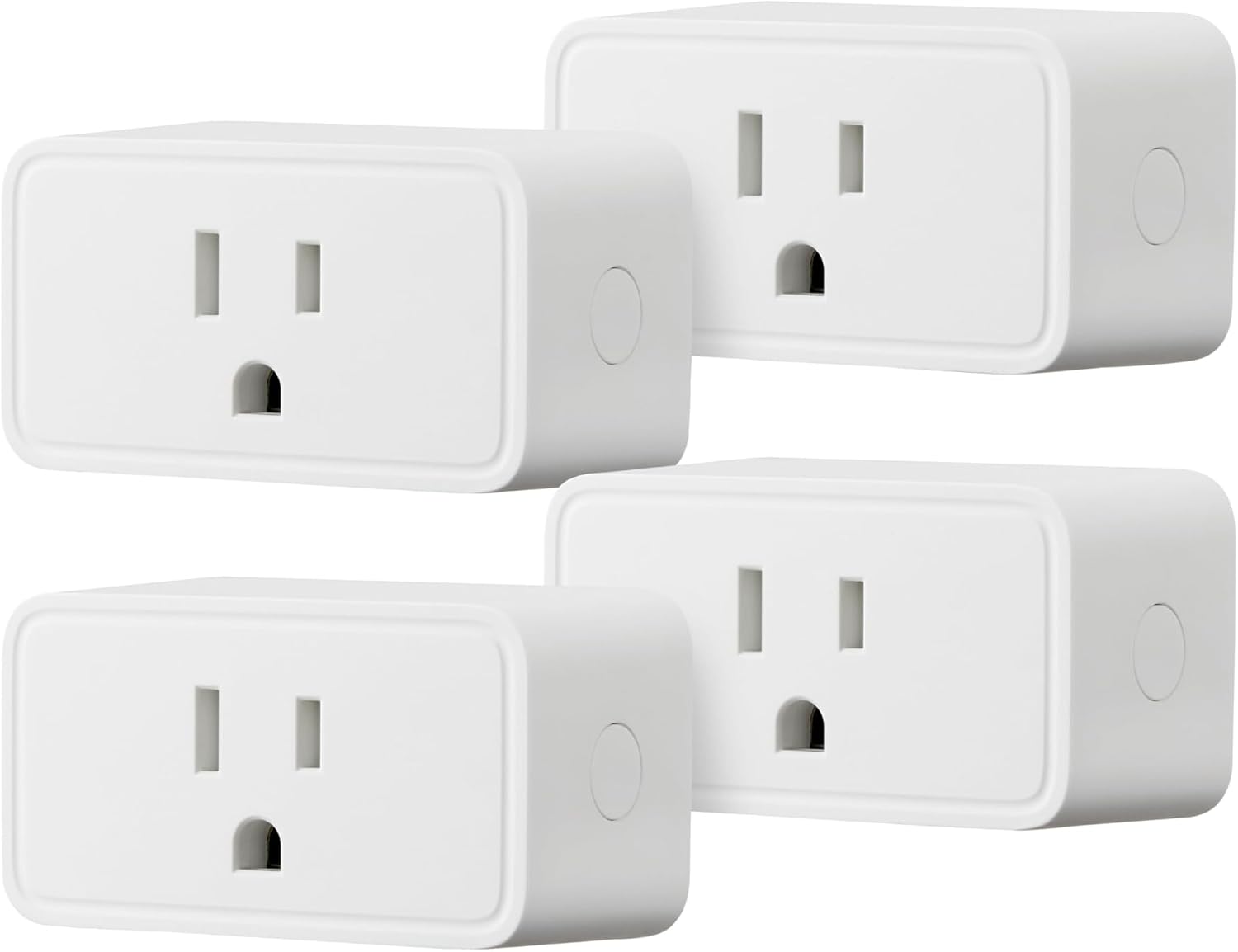
The title says "Works with Alexa Only," and the listing says setup and control happen in the Alexa app with no third-party apps, with sunrise and sunset scheduling under Alexa routines. If your house runs on Echo speakers, that's simple. If anyone lives in Google Home or Apple Home, it's the wrong pack. It cost more per outlet than the Kasa 4-pack on Sept 25, so the reason to pick it is Alexa-native setup, not price. No outdoor rating is stated; keep it indoors.
Govee 4-pack: you'll need a Govee account
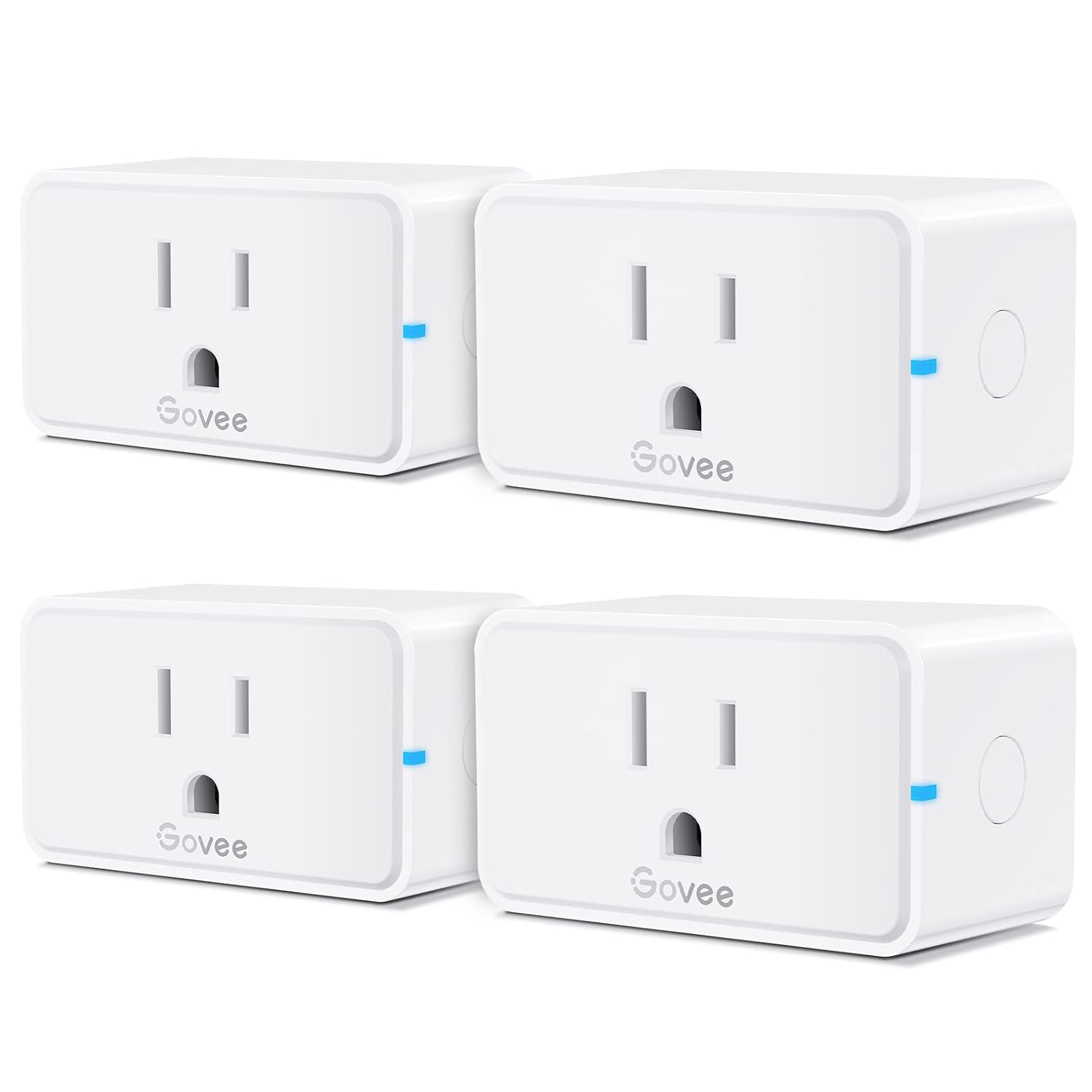
Govee's listing says you must create a Govee Home account or be logged into one, and scheduling lives in that app. Alexa and Google Assistant are in the title; we saw no Apple Home or Matter mention. At about $8.00 per outlet against about $6.00 for the Kasa pack, it makes the most sense if Govee Home is already the app on your phone. No outdoor rating is stated.
GHome Mini 4-pack: app first, and only 10 amps
The one we're not linking. Its listing says to connect it to the GHome app first because it "cannot link directly to Alexa/Google Home," and it's the 10A, 1,200 W pack from the ratings table. Fine for LED strings if you already own it, but we wouldn't buy it for a display that might grow.
Apple Home: mostly the outdoor Kasa plugs
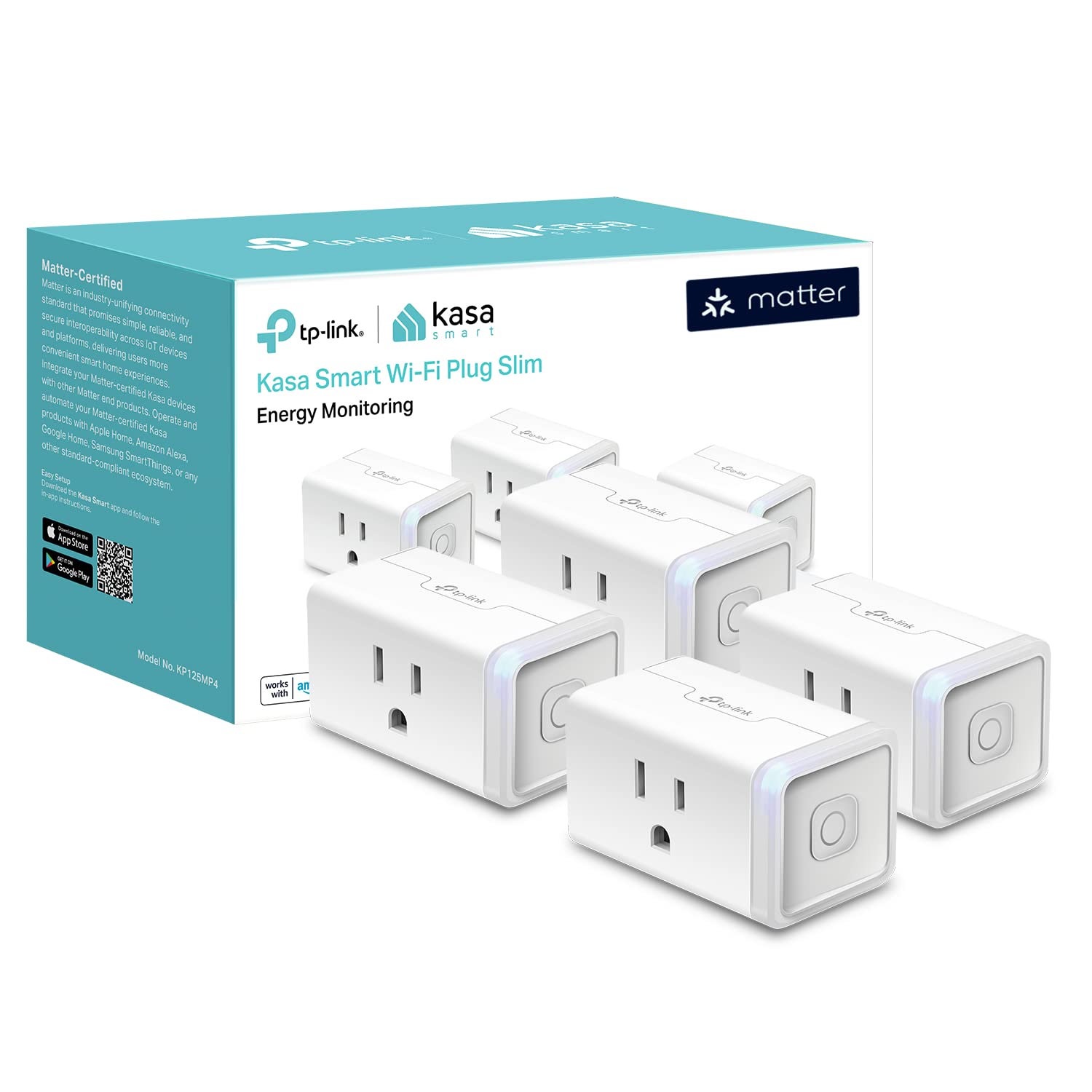
Of the lighting plugs we compared, only the outdoor Kasa EP40A and EP40M list Apple HomeKit support in their titles; the indoor 4-packs we compared (Kasa EP10P4, Amazon Basics, Govee and GHome Mini) don't mention HomeKit or Matter. The one indoor exception on this page is the Kasa KP125MP4 energy-monitoring pack in the box at the bottom, whose title says it works with Apple Home. The EP40A listing adds that remote HomeKit control needs a networked Apple device at home, such as a HomePod or Apple TV. Our Best Matter Smart Plugs guide covers what each app needs in the way of hubs.
The simplest way to avoid app sprawl is one brand. Kasa makes both the indoor 4-packs and the outdoor plugs, so a Kasa-only display lives in one app, and the EP40A's Amazon listing describes grouping Kasa plugs to control them together.12 Mix brands and you're juggling two or three apps for one display.
Can smart plugs switch my lights on at sunset?
Yes on the plugs we linked, with one thing to confirm on the EP10P4. The setup differs by brand:
- Kasa: TP-Link's scheduling guide says a schedule can use a custom time, sunrise or sunset, with an optional offset, and that you should sync your location in the app first.10 That guide covers Kasa plugs, bulbs and switches in general, and the EP10P4's Amazon bullets only say "timer or countdown schedules," so check for the sunset option in the app after setup. The EP40's listing does mention a sunset/sunrise offset.
- Govee, GHome outdoor: both listings describe sunrise/sunset scheduling (Govee in its app, GHome as an offset feature).
- Amazon Basics: the listing says routines can run at sunrise and sunset through the Alexa app. It doesn't say whether you can offset the time.
A setup that suits holiday lights is on at sunset plus a fixed off time. ESFI's advice is to turn decorations off when you go to sleep or leave the house,1 and a scheduled off time does that for you. One thing we haven't verified is what these schedules do if your Wi-Fi drops, so check before a long trip.
What should I buy for a small, medium or large display?
Buy Kasa across the board and you get one app and the best per-outlet numbers we found. These combos are paper math from Sept 25 prices, not a tested setup. In an Apple Home household, swap the EP40 for the EP40A (about $2.71 more per plug at those prices).
| Size | Zones covered | Buy | Total (checked Sept 25, 2026)* | Per outlet |
|---|---|---|---|---|
| Small | 2 outdoor + 2 indoor = 4 | 1x EP40 + 1x EP10P2 | ~$31.23 | ~$7.81 |
| Medium | 2 outdoor + 4 indoor = 6 | 1x EP40 + 1x EP10P4 | ~$41.27 | ~$6.88 |
| Large | 4 outdoor + 8 indoor = 12 | 2x EP40 + 2x EP10P4 | ~$82.54 | ~$6.88 |
*Approximate sums of the prices in the table above; they will drift.
Watch the load on the large one. Four outdoor zones on two EP40s sounds roomy, but each EP40 is limited to 15 amps across its two sockets, and if both plug into the same outdoor circuit, everything on them shares that circuit's 15 amps (1,440 W by our planning ceiling). With LEDs that's a non-issue; with incandescent strings it's where you'd hit the ceiling first.
Kasa EP10P4 4-pack: the indoor workhorse
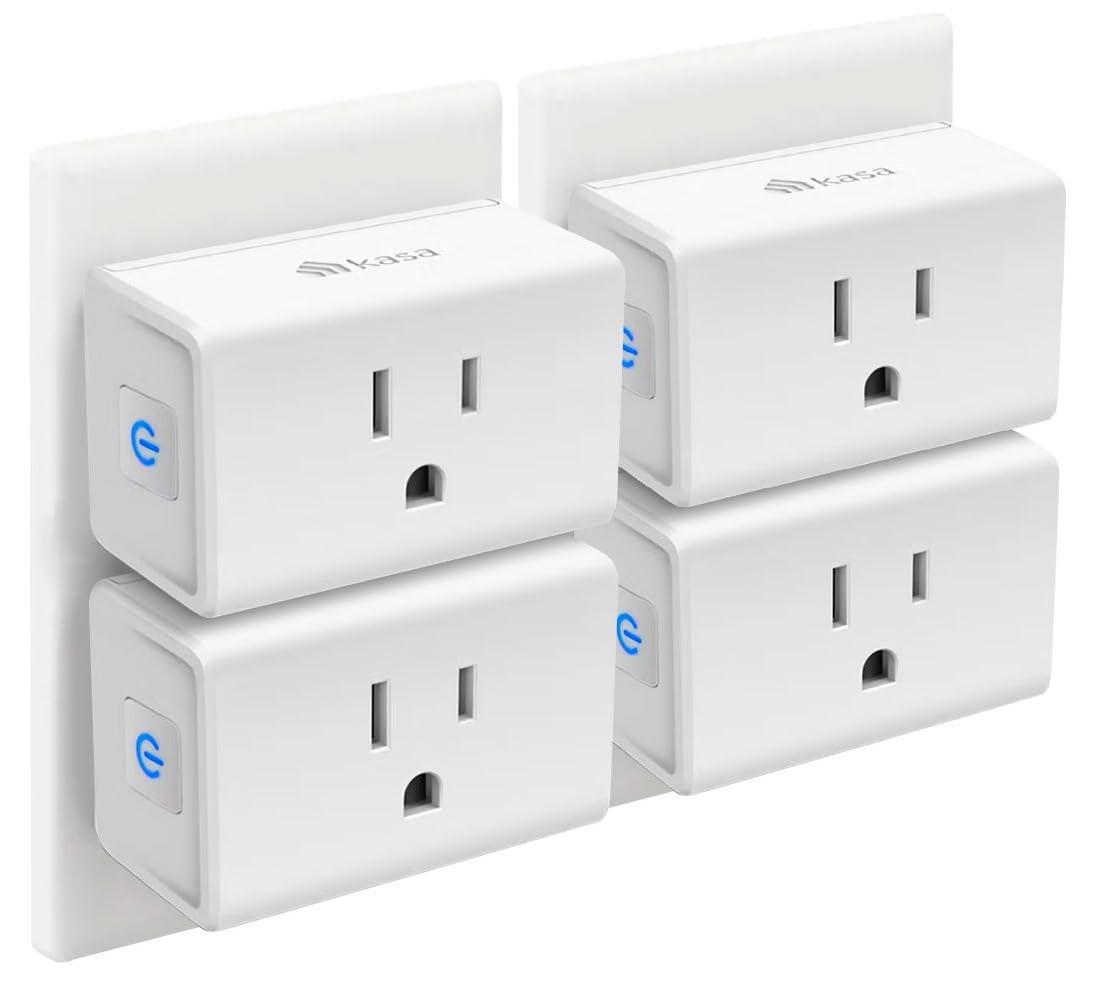
Per Kasa, each plug is rated 15A and 1,800 W,9 works over 2.4 GHz Wi-Fi only, and runs from the Kasa app plus Alexa or Google Assistant. The listing claims the compact design never blocks the second outlet on a wall socket; that's a listing claim we haven't checked. The downsides: no outdoor rating stated, no Apple Home mention, and the Kasa app is required.
For the small combo, the Kasa EP10P2 2-pack (paid link) is the same plug in a smaller box, about $13.95 on Sept 25.
Kasa EP40 outdoor plug: two zones in one plug
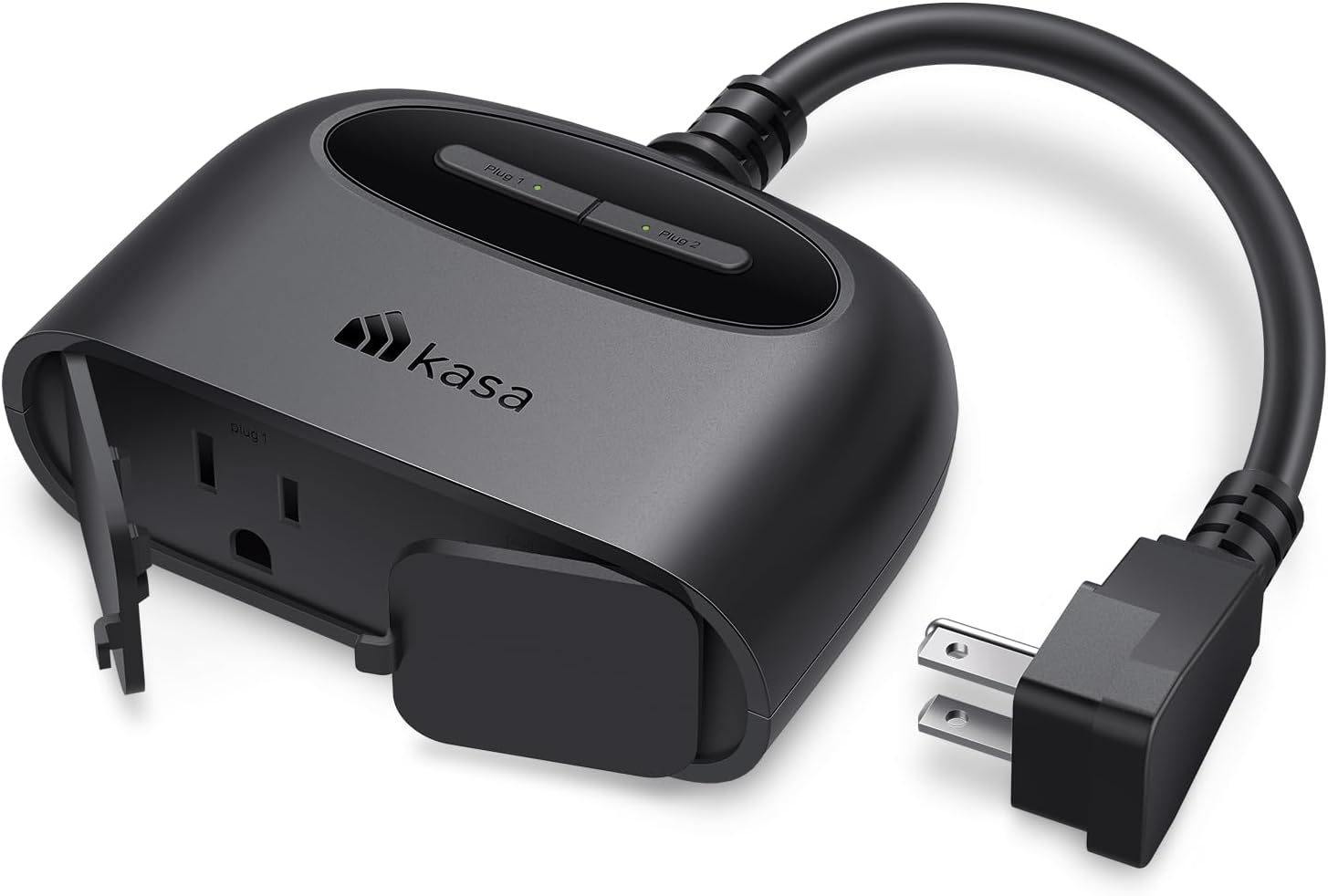
Two independently scheduled sockets, IP64, -4°F to 122°F, and the 15A-in-total limit we spent a section on.5 Kasa's page also says the Kasa app and a free account are required. The downsides: no Apple Home on this version (that's the EP40A), the sockets must stay capped when not in use, it needs a GFCI outlet, and it isn't two full-power outlets.
In an Apple Home household, the Kasa EP40A (paid link) is the same two-socket, IP64 plug with Apple Home added, about $19.99 on Sept 25.
Should I wait for Prime Big Deal Days to buy?
Maybe, but don't count on a discount. Prime Big Deal Days 2026 runs October 6 to 7, starting at 12:01 a.m. PDT on the 6th, for 48 hours, and Amazon says you need a Prime membership to shop the deals.11 We have no data showing these plugs will be marked down, and since Sept 7 their prices have moved both up and down.
What we'd do: buy the outdoor plugs early enough that you're not mounting them in a cold snap, check the live price instead of trusting any number in an article (ours included), and decide what you'd be happy paying. The price Amazon shows at checkout is the one that applies. When we re-check prices here, we'll change the date at the top of the page.
How Many Smart Plugs for Christmas Lights: FAQ
How many smart plugs do I need for Christmas lights?
One per zone, meaning one per group of lights you switch together: about 4 for a small display, 6 for a medium one and 12 for a large one, using two-socket outdoor plugs where you can. Then add up the wattage on your light tags, because a smart plug doesn't add any capacity to the circuit.
Can I run more than one string of lights on a single smart plug?
Yes, if the total wattage stays under the plug's rating and each string's tag allows it. The plugs we looked at are rated 15 amps (about 1,800 W), and we'd plan on roughly 1,440 W per 15-amp circuit as a rule of thumb. ESFI says never to connect more than three incandescent strings together.
Does a smart plug increase how many lights a circuit can handle?
No. The breaker and wiring set the circuit's limit, the plug has its own maximum, and the lower of the two applies. Four plugs on one circuit still share that circuit's 15 amps.
Is the Kasa EP40's 15-amp rating per socket or in total?
In total, according to Kasa's and TP-Link's own pages ("15A maximum load in total"). Amazon's listing says "15A/1875W Max for each," which is easy to misread. Plan on 15 amps shared between both sockets, and do the same for GHome's outdoor plug, which we couldn't confirm with GHome.
Do these smart plugs need a hub, and do they work on 5 GHz Wi-Fi?
No hub for any plug we linked. They connect straight to 2.4 GHz Wi-Fi, and Kasa, Govee and GHome all state they're 2.4 GHz only.
Which of these smart plugs work with Apple Home?
Of the lighting plugs we compared, only the outdoor Kasa EP40A and EP40M list Apple HomeKit support. The others don't mention HomeKit or Matter in their listings, and the Amazon Basics 4-pack is Alexa-only. The one indoor exception on this page is the Kasa KP125MP4 energy-monitoring pack in the box at the bottom, whose title lists Apple Home.
Sources
- Electrical Safety Foundation International (ESFI): Top 10 Holiday Safety Tips. Do not overload outlets, never connect more than three strings of incandescent lights, check for a UL/CSA/Intertek label, turn decorations off when going to sleep or leaving the house.
- IAEI Magazine (International Association of Electrical Inspectors), 100% vs 80%: Choosing the right OCPD solution. Secondary source: quotes NEC 210.20(A) (125 percent of continuous load) and the Article 100 definition of a continuous load (three hours or more), 2014 edition. We did not open the NEC text itself. The 1,440 W figure is our arithmetic from the 80 percent rule, used as a planning rule of thumb.
- U.S. Department of Energy: How Do Holiday Lights Work? (December 2015). LED strands use about 70 percent less energy than conventional incandescent strands.
- ENERGY STAR: Decorative Light Strings. Certified strings must use no more than 0.2 W per bulb; the "one 7-watt incandescent bulb could power 140 LEDs" comparison.
- Kasa Smart: Kasa Smart Wi-Fi Outdoor Plug (EP40). "15A maximum load in total," 1,875 W, IP64, -4°F to 122°F, 2.4 GHz only, Kasa app and account required, must plug into GFCI receptacles outdoors, up to 300 ft in open areas.
- TP-Link: EP40 (US) 1.0 datasheet. Input 125V, 15A; output "15A maximum load in total"; IP64 wording; sockets stay capped when not in use; 6-inch cable and clamp and screw in the box; GFCI requirement.
- Kasa Smart: Kasa Smart Wi-Fi Outdoor Plug (EP40A). "15A maximum load in total," 1,875 W, IP64, Apple Home and Siri support.
- TP-Link: EP40A specifications. Lists "Maximum Load 15A, 1875W, 1/2 HP Motor" without the "in total" wording, which is why we plan on a shared 15A.
- Kasa Smart: Kasa Smart Wi-Fi Plug Mini (EP10). Maximum load 15A, maximum power 1,800 W (general use, resistive load), no IP rating listed.
- TP-Link support: Kasa Schedule, Away Mode and Timer Setup. Custom time, sunrise or sunset schedules with an offset; location sync required.
- Amazon: Prime Big Deal Days 2026, October 6-7. Starts October 6 at 12:01 a.m. PDT, 48 hours, Prime membership required.
- Amazon product listings for the plugs named above (titles, bullet points and spec tables), read September 25, 2026. We don't link them here; use the paid-link buttons above. Listing wording is the seller's claim, not a lab measurement.