Do Smart Plugs Actually Save Electricity? (2026)
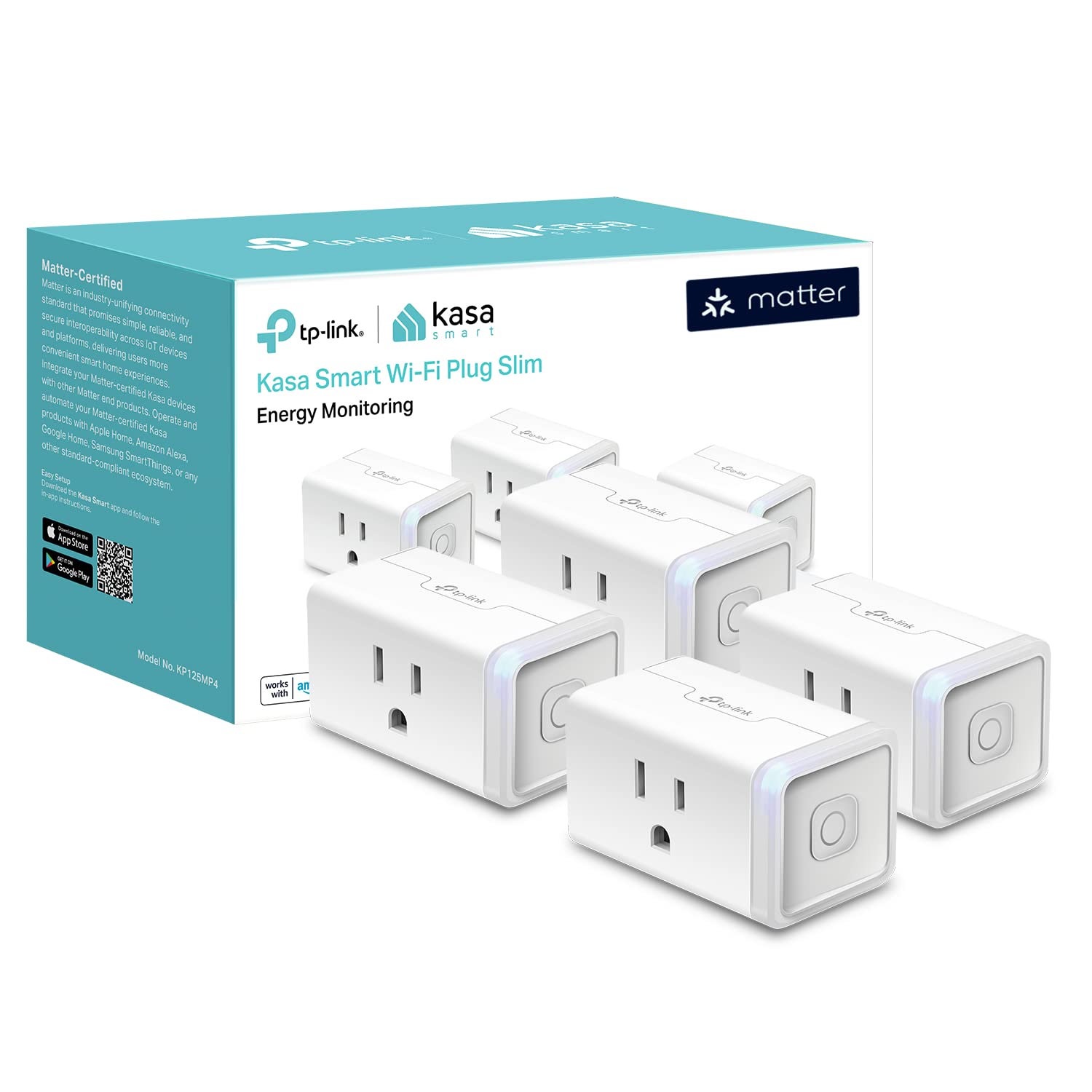
Quick answer: Yes — but only on what a device wastes while it's not really being used, not on electricity in general. The U.S. Department of Energy estimates standby power — usually called "phantom load" or "vampire power" — at close to 10% of a typical home's electricity use, spread across roughly 40 always-plugged-in products. Using the average U.S. household's 2023 electricity spending of about $1,760 a year, that works out to roughly $88–176 a year in phantom load, DOE's numbers suggest — but that's the whole house, not what any single $9 plug will personally save you. A smart plug doesn't cut your electricity use by existing; it just makes two things possible: switching a device's power off completely on a schedule instead of leaving it in standby, and — if you buy one that measures watts, like the Kasa KP125MP4 (~$35.73 for 4) — actually seeing what a device draws so you know whether it's worth targeting at all.
"Smart plug" gets sold as a blanket energy-saving gadget every holiday season, right next to the string lights it's supposed to control. That's not quite honest. A smart plug is a switch with a schedule and, on some models, a meter. The savings come entirely from what's on the other end of the cord — a TV and game console that sit in an always-ready standby mode all night are a real target; a lamp with an incandescent-free LED bulb that's already switched off at the fixture is not. This guide walks through the actual mechanism, the math the Department of Energy's own numbers support, which devices are worth the $9–18 a plug costs, and the honest cases where a smart plug just won't move your bill.
- The savings are real but narrow: standby/phantom power is DOE's ~10%-of-your-bill problem, spread across ~40 products — not concentrated in one.
- Best targets: game consoles and cable/streaming boxes left in "instant-on" mode, AV receivers, printers, chargers left in the wall with nothing attached.
- Weak or no target: lights already off at the switch, most modern low-power electronics, anything needing 24/7 power (router, security system, freezer — never schedule these off).
- How to know for sure: a metering plug reports real watts/kWh; a basic on/off plug can't tell you if it did anything at all.
How Do Smart Plugs Actually Save Electricity?
There are really three separate mechanisms bundled into one $9–18 device, and only the first two apply to a plain on/off smart plug:
1. Hard-cutting standby power. Most devices don't fully power down when you turn them "off" with a remote or the device's own button — they drop into a standby state that keeps a sensor, clock, or instant-on circuit alive. A smart plug cuts the actual mains connection, which a soft power-off never does.
2. Scheduling. A plug set to cut power overnight or while you're at work removes the human step of remembering to flip a switch — useful for anything that's genuinely idle on a predictable schedule, like holiday lighting or an entertainment center nobody uses before 6 p.m.
3. Visibility, if the plug measures it. A basic plug can't tell you anything happened. An energy-monitoring plug reports actual watts and kWh, which is the only way to find out a space heater got left on, a freezer is running warmer (and hungrier) than it should, or a "smart" TV is pulling more standby power than its spec sheet claims. That visibility is what turns a guess into a decision.
What's Phantom Load and Why Does It Matter?
Phantom load — also called vampire power, standby power, or vampire draw — is electricity a device consumes while it's plugged in but not doing anything you actually asked for.1 A television's power button doesn't disconnect it from the wall; it drops the set into a standby mode that keeps a remote sensor listening and a clock or LED lit. A game console's "quick start" or instant-on setting keeps enough of the system awake to resume in seconds instead of minutes. A printer stays "ready." None of that shows up as the device doing its job — it shows up only on the electric bill.
The Department of Energy's own consumer energy-literacy materials put a number on this: citing research from Lawrence Berkeley National Laboratory, DOE states that a typical American home has about 40 products constantly drawing power, together accounting for close to 10% of residential electricity use.1 Not every idle device pulls the same amount — a charger with nothing attached draws next to nothing, while a device with an always-on display, a wireless sensor, or an instant-on mode can pull enough to be worth targeting specifically. That's also why the Environmental Protection Agency's ENERGY STAR program built plug-load monitoring into its own criteria: it formally recognizes smart plugs, smart power strips, and home energy monitors as "Plug Load Monitor/Control" devices, and requires that qualifying ones report the actual power or energy a device is using — not just switch it.3
How Much Can a Smart Plug Actually Save You?
Two different numbers get conflated here, and separating them is the whole answer. The first is DOE's household-wide estimate: 5–10% of a home's electricity use lost to standby power.1 Using the U.S. Energy Information Administration's figure for average annual household electricity spending — about $1,760 in 20232 — that range comes out to roughly $88 to $176 a year, spread across everything plugged in throughout the house. That's not what one smart plug saves; it's the size of the entire problem DOE is describing.
The second number is what putting one device on one plug is actually worth, and that math is simple: watts × 24 hours × 365 days ÷ 1,000, multiplied by your electricity rate. At the current U.S. average residential rate of about $0.1834/kWh:2
| Standby draw | kWh/year | Cost/year (at $0.1834/kWh) |
|---|---|---|
| 5 watts (light standby) | 43.8 kWh | ~$8.03 |
| 15 watts (moderate standby) | 131.4 kWh | ~$24.10 |
| 25 watts (heavy standby) | 219.0 kWh | ~$40.16 |
Put one plug on one 5-watt phantom load and you've made back the cost of the plug in about a year, then it's pure savings. Put an energy-monitoring plug on your entertainment center — TV, soundbar, game console, streaming box — and you might find the real combined draw is closer to the 15–25 watt rows, which is where a smart plug starts paying for itself in months, not years. The only way to know which row you're actually in is to measure it, which is the one thing a non-metering plug can't do for you.
Which Devices Benefit Most From a Smart Plug?
- Game consoles / cable or streaming boxes left in "instant-on" or quick-start mode
- AV receivers, soundbars, and gear with an always-on standby light
- Printers, scanners, and office equipment idle most of the day
- Chargers left in the wall with nothing attached to them
- Seasonal or holiday lighting you only want running certain hours
- Anything you already forget to switch off by hand
- LED bulbs or light strips already switched off at the fixture
- Newer TVs, laptops, and chargers that already meet strict low-standby rules
- Devices used at the same hours every day — little for a schedule to fix
- Anything needing 24/7 power: router/modem, security system, freezer, sump pump, medical equipment — never schedule these off
When a Smart Plug WON'T Save You Money
Being honest about the downside cases matters more than the sales pitch. A smart plug does nothing for a device that's already low-power by design — modern LED lighting, most phone and laptop chargers with nothing attached, and newer electronics built to meet tighter standby-power rules than a decade ago. Efficiency standards have quietly shrunk the size of this problem for a lot of individual gadgets, even as DOE's household-wide average stays in that 5–10% range because of everything else still plugged in.
It also won't save you anything if you never actually use the scheduling or check the readings — a smart plug left on 24/7 with no schedule set is just a slightly more expensive regular outlet, thanks to its own small standby draw (more on that below). And it can actively cost you money or worse if it's put on the wrong device: never schedule power cuts to a router, a security system or camera, a sump pump, medical equipment, or a refrigerator or freezer. None of these are candidates for "saving electricity" by cutting them off — losing internet, disabling a security system, or thawing a freezer isn't a savings win.
Does the Smart Plug Itself Use Electricity?
Yes, a little — worth being upfront about it rather than pretending the device is free to run. A smart plug keeps its own Wi-Fi radio and relay circuit alive to stay connected and respond instantly, which draws standby power even while the outlet it controls is switched off. ENERGY STAR's own criteria for this device category cap that self-consumption at 1.0 watt.3 At the current U.S. average rate, 1 watt running nonstop for a year costs about $1.61.2 That means the device you're plugging in only has to waste more than about a dollar and a half a year in phantom load for the smart plug to be a net win — a bar that almost anything with a standby light, remote sensor, or instant-on mode clears without much argument, and one that a bare charger with nothing attached usually doesn't.
How Do You Find Out Your Real Number?
This is the actual difference between a $23 four-pack and a $36 four-pack, and it's worth being clear about what you're paying for. A basic smart plug switches power and runs a schedule — genuinely useful for holiday lighting or anything on a predictable on/off routine — but it can't tell you whether the device it's controlling was ever wasting real electricity in the first place. You're scheduling in the dark. An energy-monitoring plug reports actual watts and kWh per outlet in the app, so you can point it at whatever you suspect — an old game console, a home office setup, a space heater — and get a real number after a week instead of a guess borrowed from a national average.
| Kasa KP125MP4 (4-pack) | Amazon Basics Smart Plug (4-pack) | |
|---|---|---|
| Price (Sept 2026)* | ~$35.73 | ~$23.00 |
| Reports actual watts/kWh | Yes — per outlet, in-app | No |
| Scheduling | Yes | Yes |
| Compatibility | Matter, Alexa, Google Home, Apple Home | Alexa only |
| Tells you if it actually saved money | Yes | No — you're guessing |
| Best for | Finding and confirming real phantom load | Basic scheduling, lower cost |
*Reference prices at the time of writing; check live listings — Amazon prices change frequently.
If you already know exactly what you want to schedule — a string of holiday lights, a lamp on a timer — and you don't care about the readout, the plain Amazon Basics Smart Plug 4-Pack does that job for less. Just go in knowing it will never tell you whether it saved you anything; it only tells you it turned off.
Do Smart Plugs Actually Save Electricity FAQ
Do smart plugs really save electricity?
Only on what you plug into them. A smart plug can't lower the electricity a running device needs — it saves money by cutting standby/phantom power when a device would otherwise sit idle, and by scheduling things off instead of leaving them on out of habit.
What is phantom load (vampire power)?
Electricity a device draws while plugged in but not actively doing anything you asked it to. DOE attributes close to 10% of a typical home's electricity use to standby power spread across roughly 40 always-plugged-in products.
How much money can a smart plug actually save per year?
It depends on what's plugged in. At the current U.S. average rate of ~$0.1834/kWh, a device drawing 5 watts around the clock costs about $8.03/year; 15 watts is about $24; 25 watts is about $40. DOE's 5-10%-of-a-home's-bill estimate (roughly $88-176/year) is the total across an entire house, not one plug.
Which devices should NOT go on a smart plug schedule?
A router or modem, a security system or camera, a sump pump, medical equipment, or a refrigerator/freezer. These need continuous power — scheduling them off risks losing internet, disabling security, or spoiling food.
Do smart plugs use electricity themselves?
Yes, a small amount — ENERGY STAR caps a qualifying plug's own standby draw at 1.0 watt, which costs about $1.61/year at the current U.S. average rate. The device you're plugging in just needs to waste more than that for the plug to be a net win.
Do I need an energy-monitoring smart plug, or will a basic one do?
A basic plug can schedule a device off and on but can't tell you whether it was wasting electricity in the first place. A metering plug like the Kasa KP125MP4 reports real watts and kWh, so you test a suspected energy hog and get an actual number.
Sources
- U.S. Department of Energy — Test Your Home Energy IQ: standby power / phantom load estimate (~10% of residential electricity use, ~40 products per home), citing Lawrence Berkeley National Laboratory; and Measuring Standby Power (DOE Federal Energy Management Program).
- U.S. Energy Information Administration — U.S. Electricity Prices Continue Steady Increase: average U.S. household electricity spending (~$1,760/year, 2023); and Electric Power Monthly, Table 5.6.A: current average U.S. residential electricity rate (18.34¢/kWh, June 2026) used for the cost calculations above.
- U.S. Environmental Protection Agency — ENERGY STAR Smart Home Energy Management Systems Key Product Criteria: smart plugs/energy monitors as "Plug Load Monitor/Control" devices, and the 1.0-watt standby-power cap for qualifying devices.