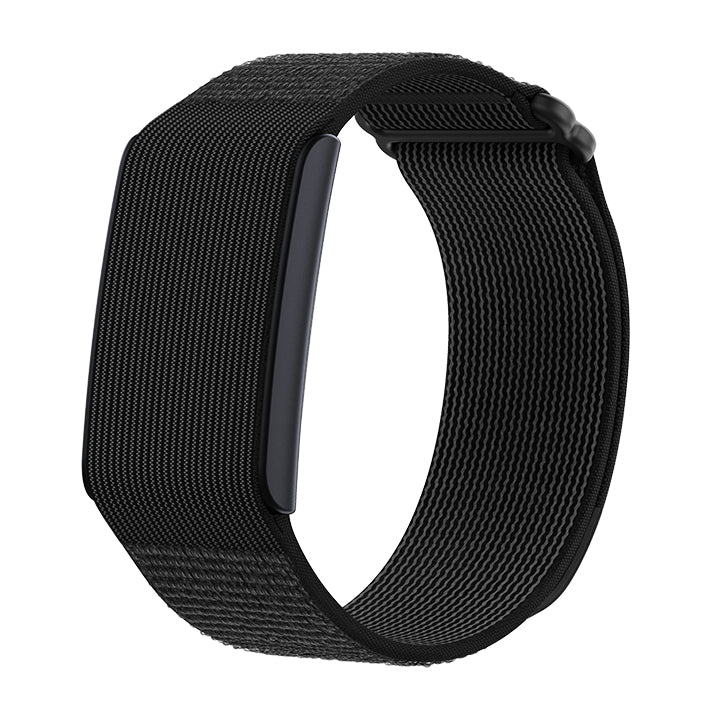
Can You Wear the Fitbit Air on Your Ankle? What Actually Happens
Quick answer: Google only officially supports wearing the Fitbit Air on your wrist — there's no ankle mode, no sizing guidance for it, nothing in the manual. People have tried it anyway, and the results are more nuanced than "works" or "doesn't." Worn on the outside of the ankle, away from the ankle bone, one 5K run test recorded a max heart rate within 1 bpm of a Garmin reference (160 vs 161 bpm). Worn on the inside of the ankle — over the posterior tibial artery — the numbers went haywire, with one comparison finding a 13-fold jump in time spent in "peak" heart rate zones that never actually happened. The bigger catch either way: sleep tracking gets measurably worse the moment the Fitbit Air leaves your wrist, and sleep is arguably this tracker's best feature.
This isn't a hypothetical. Search "fitbit air ankle" and you'll find Reddit threads, a TikTok trend, and a genuine Best Buy Q&A question from a shopper asking if it works around the ankle. Some of that curiosity traces back to something older than the Air itself — early Fitbit models like the One, Zip and Flex were routinely clipped to a sock or shoelace decades ago, back before wrist trackers were the default, and a few long-time users never broke the habit.2
Other people arrive here for a more practical reason: a Pixel Watch or similar wrist device failing to register steps during slow treadmill walking, where the arm barely swings. One Android Authority reviewer hit exactly that wall and strapped her Fitbit Air to her ankle instead — not for fun, but because her wrist tracker was undercounting steps by a factor of five.2 We dug through her results and three other independent tests to see what actually happens, good and bad.
- Officially: wrist only. Google's instructions don't mention the ankle, and there's no dedicated fit for it.
- If you try it anyway: outside of the ankle (away from the bone) tracks reasonably close to wrist data for steps and running heart rate. Inside the ankle is a mess.
- What you give up: sleep tracking gets noticeably worse off the wrist — and 24/7 wear is the Air's whole reason for existing.
- Want an off-wrist tracker Google/Amazfit actually built for it? The Amazfit Helio Strap officially supports upper-arm wear — no improvising. More on that below.
Does Google Officially Support Wearing the Fitbit Air on Your Ankle?
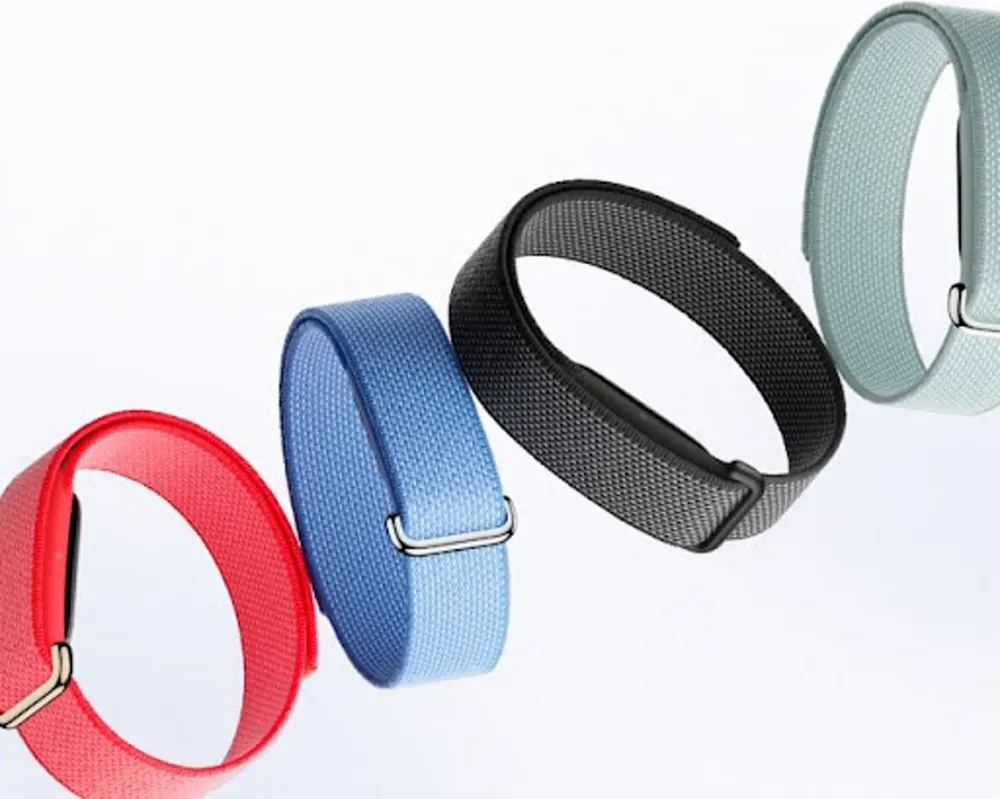
No, plainly. Google's own support documentation walks through fitting the Air on top of your wrist, behind the wrist bone, with a pinky-finger gap for proper tension — and that's the entirety of the official guidance.1 There's no ankle sizing chart, no "alternate wear positions" page, nothing acknowledging the ankle exists as an option. If you strap it to your leg, you're outside the manual, full stop.
That doesn't automatically mean it's reckless. The sensor itself — an optical heart rate module reading blood flow through skin — doesn't know or care what body part it's touching. What it does care about is how much that body part moves, how thick the tissue is underneath, and what's running close to the surface. Which is exactly why where on the ankle you put it turns out to matter enormously.
Where on the Ankle Should It Actually Go? Outside vs Inside
This is the part most casual "I tried it" posts skip, and it's the difference between usable data and garbage. The ankle isn't a uniform surface — the inside (medial side, closer to the arch) sits directly over the posterior tibial artery, a major vessel running close to the skin. The outside (lateral side, toward the outer shin) has no comparably large artery underneath, mostly veins and smaller capillaries — a tissue profile closer to what an optical sensor sees on the wrist.6
One direct comparison tested both sides under matched conditions and found the difference wasn't subtle: worn on the inside of the ankle, the tracker averaged 144 bpm and logged 39 minutes in a "peak" heart rate zone — about 70% of the session. Worn on the outside, under otherwise identical conditions, it averaged 128 bpm and spent just 3 minutes in that same peak zone. That's roughly a 13-fold gap in reported peak-zone time, from the same walk, from the same device, moved a few centimeters.6 The outside-ankle numbers, notably, were close to what wrist wear would have shown; the inside-ankle numbers weren't just off, they were fiction.
There's a broader pattern behind this, and it's worth knowing even if you never try the ankle trick. Published research on wearable heart rate accuracy has consistently found that placements with thicker, steadier tissue and less bone or tendon nearby — like the forearm or upper arm — outperform bonier, more mobile spots, largely because motion artifact and awkward light-scattering off bone and tendon corrupt the optical signal.7 The ankle bone (medial malleolus) and Achilles tendon sit right where the "inside ankle" position wraps a band — which lines up with why that spot performs so poorly in practice. The takeaway, if you're going to do this at all: wrap it around the outside of your lower shin, roughly the same snugness you'd use on your wrist, and stay away from the bone.
How Accurate Is Ankle Heart Rate During a Run?
Running is the harder test, and the results here are genuinely mixed — better than you'd guess on one metric, worse on another.
In a 5K run comparing an ankle-worn Fitbit Air against a Garmin Forerunner, the numbers landed like this:3
| Metric | Fitbit Air (ankle) | Garmin Forerunner |
|---|---|---|
| Average HR | 132 bpm | 144 bpm |
| Max HR | 160 bpm | 161 bpm |
| Distance | 5.16 km | 5.01 km |
| Duration logged | 35:48 | 28:33 |
Max heart rate came within a single beat, which is a better result than most wrist-worn optical sensors manage during a hard effort. But the average was 12 bpm lower — and the reason has nothing to do with the ankle placement itself. The tracker's automatic activity detection started the session before the run actually began and kept it going after the runner stopped, padding roughly seven extra minutes of low-heart-rate idle time into the average and inflating the logged distance and duration. Once the reviewer looked at the heart rate trace during the actual running portion, it tracked the Garmin closely.3
Part of why ankle heart rate can wobble at all, even on the correct outside placement, traces back to how the Fitbit Air samples data in the first place. Independent testing of the Air's raw output found it's specced to sample heart rate every 2 seconds, but during exercise it actually logs to file roughly every 5 seconds — meaning a meaningful share of the data between recorded points is simply missing, smoothed over rather than measured.5 That's a wrist-tuned limitation to begin with; asking it to also handle an unfamiliar, less-validated body position doesn't help.
The other real-world catch: heart rate isn't the only thing that can misbehave. One Android Authority test recorded a single anomalous spike to 182 bpm during otherwise calm ankle-worn walking — a one-off, not a pattern, but a reminder that this position hasn't been tuned or validated the way wrist placement has.2 And in a separate multi-day log, one long-time tester found the ankle-worn Air recorded essentially zero steps on two full weekend days — 2,157 and 2,236 steps total — while a wrist-worn Fitbit Charge 6 on the same person logged over 10,000 steps each of those days, alongside a reported drop in the app's "Energy Score" from 54 down to 15 over four days of ankle wear that recovered once the tracker went back on the wrist.8 That's a single user's anecdotal log, not a controlled study, but it lines up with the same theme: ankle wear can go badly wrong in ways wrist wear simply doesn't.
What Do You Lose by Moving It Off the Wrist?
Set aside heart rate accuracy for a second, because the bigger cost is sleep — and sleep is the single thing the Fitbit Air does best. At 12 grams, the whole design premise is that you forget you're wearing it and never take it off, which is exactly what makes its overnight sleep staging, HRV and heart-rhythm data as good as it is.
Move it to your ankle and that advantage erodes. Testing that compared wrist and ankle sleep sessions side by side found ankle wear consistently recorded shorter sleep than the same nights on the wrist — the working theory is that feet simply move more during sleep than arms do, so the device reads normal foot twitches and repositioning as wakefulness that never happened.4 For a tracker whose main selling point over something like WHOOP or a smartwatch is effortless, accurate 24/7 wear, that's not a small trade-off — it's giving up the thing you bought it for.
Put together with the step-count and Energy Score anomalies noted above, the pattern is consistent: ankle wear can be genuinely useful for a specific daytime problem (see below), but running it full-time, especially overnight, isn't something the current hardware or software was built to handle cleanly.
Should You Actually Do This?
For the specific problem that sends most people looking for this in the first place — a wrist tracker undercounting steps during slow treadmill walking or minimal-arm-swing activity — moving the Fitbit Air to the outside of your ankle, just for that session, is a reasonable fix. It's free, it takes ten seconds, and the step-count improvement in testing was dramatic (one treadmill session logged 7,590 steps on the ankle versus 1,521 on a wrist-worn Pixel Watch for the identical walk).2 Do it, get your steps, move it back.
What we wouldn't recommend: making the ankle a permanent home for the tracker. You'd be trading away sleep accuracy — the Air's strongest feature — for a heart rate signal that's only reliable if you get the side right and stays noisier than wrist data even then. If your goal is genuinely wearing a tracker somewhere other than your wrist — for lifting, for a busier training routine, for whatever reason — there's a better answer than improvising with a device built for one spot: the Amazfit Helio Strap officially supports upper-arm wear, complete with a strap extension sized for it, no workaround required. It doesn't have the Air's AFib alerts, but the placement itself is sanctioned, not a hack. We cover it — and three other subscription-free options — in our best WHOOP alternatives roundup.
Bottom line: the ankle trick is a real, useful tool for one narrow situation, not a wrist replacement. Keep the Fitbit Air on your wrist for the 24 hours a day it was actually designed for, and reach for the ankle only when you have a specific reason to.
Fitbit Air Ankle Wear FAQ
Does Google officially support wearing the Fitbit Air on your ankle?
No. Google's instructions describe wrist wear only — behind the wrist bone, with a specific fit guide — and never mention the ankle. Anything else is unofficial.
Which side of the ankle should it go on?
The outside, on the lower shin, away from the ankle bone. Testing found the inside of the ankle — over the posterior tibial artery — produces wildly erratic heart rate, while the outside tracks much closer to wrist-level readings.
Does ankle wear hurt sleep tracking?
Yes, in the testing we reviewed. Ankle wear recorded noticeably shorter sleep than the same nights on the wrist, likely because feet move more during sleep than arms and the device misreads that movement as being awake.
Is the ankle heart rate accurate during a run?
Mixed. One 5K test found max heart rate within 1 bpm of a Garmin reference, but average heart rate ran about 12 bpm low because automatic activity detection started too early and ended too late, pulling in extra low-effort minutes.
Is there an official tracker built for off-wrist wear?
Yes — the Amazfit Helio Strap officially supports upper-arm wear with a matching strap extension. It skips AFib alerts, but the placement is sanctioned rather than improvised.
Sources
- Google Health Help Center — How to wear your Fitbit device: official wrist-only fit instructions.
- Android Authority — I found a hidden way to wear the Fitbit Air that Google didn't tell you about: treadmill step-count test, 182 bpm anomaly, historical ankle-worn Fitbit context.
- gadgetsandwearables — Fitbit Air on the ankle delivers a surprisingly solid 5K run result: ankle-worn 5K run heart rate and distance data vs Garmin.
- gadgetsandwearables — I wore Fitbit Air on my wrist, ankle and arm to see what changed: sleep-tracking degradation on ankle wear, upper-arm findings.
- the5krunner — Fitbit Air Isn't Truly Accurate: The Spec Nobody Explained: real-world heart rate sampling interval during exercise.
- martto. — Why Wearing Fitbit Air Outward Is the Only Choice for Ankle Use: inside vs outside ankle heart rate comparison and vascular anatomy explanation.
- Moghaddam M, et al. Impact of Anatomical Placement on the Accuracy of Wearable Heart Rate Monitors During Rest and Various Exercise Intensities. Sensors, 2025. PMC
- martto. — Does Fitbit Air Work on the Ankle? 4-Day Tracking Data Reveals Bizarre Energy Score Bugs and Vanished Steps: multi-day ankle-wear step count and Energy Score log (single-user anecdotal data).