Best Home Blood Pressure Monitors (2026): Validated Upper-Arm Cuffs, Not Rings
Quick answer: Buy a validated upper-arm cuff, not a wearable. The Omron 5 Series (BP7255), Withings BPM Connect and Greater Goods Bluetooth monitor are each listed on validatebp.org for a 22 to 42 cm arm. WHOOP and Oura rings and bands give nighttime signals, not readings, so check with a cuff and a clinician.
Blood pressure is one of the few health numbers where the wrong gadget can do real harm, because a reading that is too low can talk you out of a doctor visit and one that is too high can scare you for nothing. That is why this page is stricter than our other buying guides. Every cuff below has validation evidence you can look up, and the wearable section says plainly what a ring or band can and cannot do. If your readings worry you, or you take blood pressure medication, talk to a clinician before you change anything based on a home number.
- Best default: Omron 5 Series (BP7255): validatebp.org listed, Bluetooth with the free Omron Connect app
- Best for syncing without a phone nearby: Withings BPM Connect: Wi-Fi and Bluetooth, rechargeable, validatebp.org listed
- Best for a shared household: Greater Goods Bluetooth monitor (0604): two-user tracking, validatebp.org listed
- Best for carrying around: QardioArm: FDA 510(k) cleared with a published validation study, but we could not find it on validatebp.org
How Do the 4 Best Home Blood Pressure Monitors Compare?
All four are upper-arm, oscillometric cuffs. Three have a model-specific listing on validatebp.org, the AMA-backed Validated Device Listing, and the fourth rests on an FDA clearance plus one peer-reviewed study. Prices move often, so we leave them out; check the live listing.
| Monitor | Validation evidence | Cuff range | Connectivity | Best for |
|---|---|---|---|---|
| Omron 5 Series (BP7255) | validatebp.org listed (ISO 81060-2:2013) | 22-42 cm on the listing; Omron's retail page says 9-17 in | Bluetooth, Omron Connect app | Most people |
| Withings BPM Connect (WPM05) | validatebp.org listed (ISO 81060-2:2013) | 22-42 cm | Wi-Fi and Bluetooth, Health Mate app | Phone-free syncing |
| Greater Goods Bluetooth (0604) | validatebp.org listed, models 0040/0604/0664 (ISO 81060-2:2018) | 22-42 cm (8.7-16.5 in) | Bluetooth, Balance Health app | Two users, one monitor |
| QardioArm | FDA 510(k) K140067 (2014); JMIR 2017 study (100 adults) | Check the box; narrower than the others | Bluetooth, Qardio app | Travel, small bag |
Sources: validatebp.org device pages, Amazon listing details and the FDA 510(k) database, as read November 7, 2026. The validated listing covers the tested population; individual results can differ.
What Makes a Home Blood Pressure Monitor Trustworthy?
A model-specific entry on a validated device list beats any marketing line about "clinical accuracy." The AMA-backed Validated Device Listing at validatebp.org shows only monitors whose validation papers passed an independent review committee, and a missing device may simply mean the maker never submitted it. The 2025 AHA/ACC guideline backs home monitoring with validated oscillometric devices (guideline published August 14, 2025).
Two practical points. First, search your exact model number, because brands sell near-identical names (Omron sells a 5 Series BP7250 and a BP7255 as separate models). Second, the listing is for a cuff size range, so a monitor can be validated and still be wrong for your arm. We cover sizing below.
1. Omron 5 Series (BP7255): The Safe Default
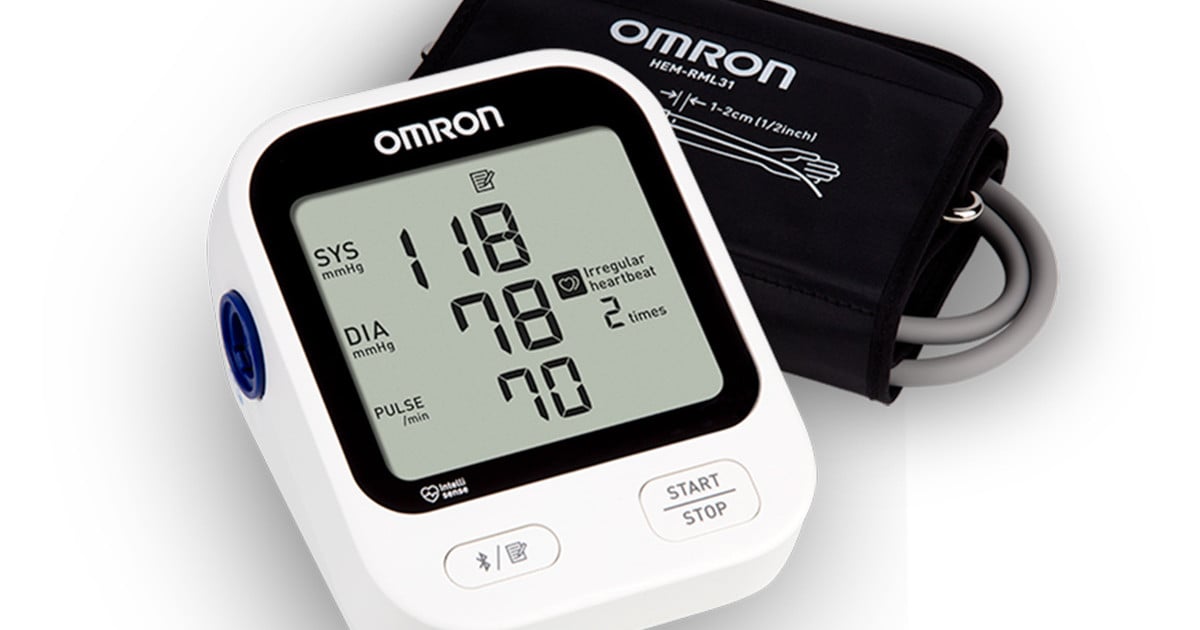
Upper arm · Bluetooth · validatebp.org listed
Omron is the brand most doctors' offices recognize, and the BP7255 has its own entry on validatebp.org with a 22 to 42 cm cuff. Omron's own product page adds Bluetooth sync to the free Omron Connect app, a wide-range D-ring cuff, an irregular heartbeat counter, four included AA batteries and memory for 30 readings (one user). It also says the cuff fits 9 to 17 inches, which is about 23 to 43 cm; if you are near either edge, trust the narrower validated range.
The knock is that this is a plain monitor with a plain app. It will not give you the polish of the Withings, and the single-user memory means a couple sharing one needs the app. Our inference: for someone who just wants the least risky choice, this is it.
2. Withings BPM Connect: Syncs Over Wi-Fi, Looks Nicer
Upper arm · Wi-Fi and Bluetooth · validatebp.org listed
The BPM Connect (model WPM05) is the stylish one, and it is on validatebp.org for a 22 to 42 cm cuff with Wi-Fi and Bluetooth. The Amazon listing says it syncs to the Health Mate app on its own, has a color-coded display and runs on a rechargeable battery. Withings' own BPM Connect page describes it as FDA cleared and CE marked, rechargeable by micro-USB, with up to six months of battery life (as read November 7, 2026); check FSA/HSA eligibility with your plan before you rely on it.
Because it syncs over Wi-Fi, readings reach the app even if your phone is in another room, which helps parents or anyone who forgets to open an app. The trade-off is a more closed ecosystem than Omron's, and a rechargeable battery means it is down while charging. If you plan to pay with HSA or FSA money, our HSA/FSA tracker guide explains how eligibility generally works, but confirm this specific monitor with your plan.
3. Greater Goods Bluetooth Monitor (0604): Two Users, One Cuff
Upper arm · Bluetooth · validatebp.org listed
Greater Goods has a validatebp.org entry covering models 0040, 0604 and 0664 (Bluetooth, app, 22 to 42 cm, ISO 81060-2:2018), and the Amazon page we checked on November 7, 2026 lists part number 0604. That is the match that matters: the monitor in the box has the same model number as the listing. The kit includes a travel case, AAA batteries and an AC adapter, and, per that listing, stores 60 readings per user, 120 in total, or unlimited readings in the Balance Health app.
Choose it if two people in a home share a monitor and want separate histories. The downside is brand recognition: clinics trust Omron by name, and Greater Goods is a smaller company. Its smaller-cuff and larger-cuff options come through Greater Goods support per the listing, so ask before you buy if your arm is near the limits.
4. QardioArm: Compact, With a Weaker Paper Trail
Upper arm · Bluetooth · FDA 510(k) cleared · not found on validatebp.org
The QardioArm was cleared by the FDA as K140067 on June 18, 2014, and the QardioArm 2 as K220106 on June 15, 2022. A 2017 JMIR mHealth and uHealth study of 100 adults in Spain, using the European Society of Hypertension protocol with an Omron M3 as the reference, concluded that the QardioArm "has validity." That is real evidence, but it is a study of healthy adults against another home monitor, so we rank it below the three listed cuffs.
We could not confirm which version Amazon currently sells, so the button below runs a search instead of linking one listing. Check the model and the stated arm range against your measurement before you buy. It suits readers who mainly want a slim cuff they can toss in a bag.
Why Is an Upper-Arm Cuff Better Than a Wrist Monitor?
Because the arm cuff sits at the right height and avoids the wrist's movement problems. Target:BP, the AMA and AHA initiative, states that wrist cuffs should not be used unless you cannot use an upper-arm cuff, because your arm is too large to fit a cuff or for medical reasons. It also says finger cuffs are not recommended. A validated wrist monitor can exist (validatebp.org lists some, such as the iHealth BP7), but most people do better with an arm cuff.
Can WHOOP, Oura or a Smart Ring Measure Blood Pressure?
No. They estimate or flag patterns, and none of them replaces a cuff. Target:BP, the AMA and AHA program, says cuffless devices such as smartwatches are not recommended for diagnosing or managing high blood pressure until studies show greater precision and reliability. Rings use the same cuffless approach (our inference), and AHA's summary of the 2025 guideline takes the same line. The5krunner (updated October 3, 2026) describes cuffless readings as estimates, not measurements.
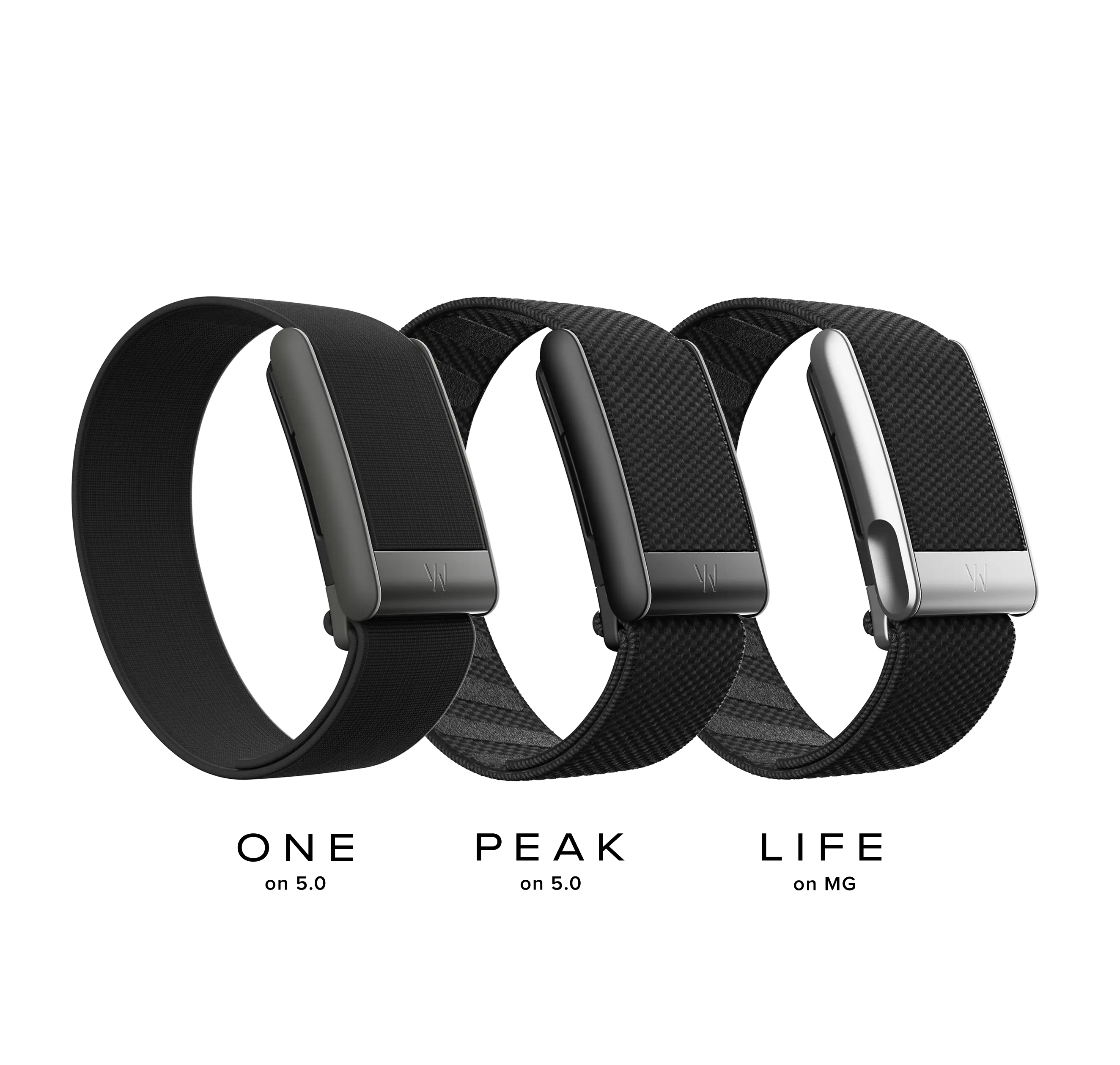
- WHOOP Blood Pressure Insights (WHOOP MG) gives a nightly estimate that you calibrate against a cuff, and WHOOP positions it as a wellness feature. The FDA sent WHOOP a warning letter over it in July 2025 and closed that case in June 2026, per FDA's close-out letter dated June 17, 2026. Closing the letter is not a clearance and not an accuracy endorsement. Our WHOOP 5.0 vs WHOOP MG breakdown covers who it is for.
- Oura Blood Pressure Signals watches nighttime ring data over 30-day periods, needs at least 15 nights of data to set a baseline and only notifies you if a pattern shows up. Oura's own page (updated October 14, 2026) says Nighttime BP "does not display mmHg values" and "doesn't replace blood pressure monitoring or care." Oura even recommends "a validated upper-arm cuff" for the most accurate readings. See the Oura Ring 5 review for the rest of the ring.
So the sensible use is as a nudge: if your ring or band flags something, take proper cuff readings and bring them to a clinician. Our heart-health tracker guide sorts out which screenless trackers do ECG and AFib alerts, which is a different job from blood pressure.
How Do I Measure My Blood Pressure at Home Correctly?
Rest about five minutes, sit properly, keep your bare arm at heart level, and take two readings about a minute apart. That is the Target:BP home-monitoring approach, and it is the same shape of advice you will hear from most clinics.
- Skip exercise, a big meal, caffeine, alcohol and decongestants for 30 minutes first, and empty your bladder.
- Sit with your back supported, feet flat on the floor and legs uncrossed.
- Put the cuff on your bare upper arm and rest the arm on a table at heart level, palm up.
- Stay quiet for about five minutes, then take two readings about one minute apart. Do not talk or scroll during them.
- Repeat morning and evening for seven days, and note the numbers. If you take blood pressure medication, ask your clinician whether to measure before or after your dose.
Which Cuff Size Fits Your Arm?
Wrap a tape measure around the middle of your bare upper arm. Target:BP maps arm circumference to cuff size as follows, and notes that manufacturers do not size cuffs consistently, so check the range printed for each device.
| Arm circumference | Target:BP cuff size |
|---|---|
| 22-26 cm (8.7-10.2 in) | Small adult |
| 27-34 cm (10.6-13.4 in) | Adult (regular) |
| 35-44 cm (13.8-17.3 in) | Large adult |
| 45-52 cm (17.7-20.5 in) | Extra-large adult |
Our inference: a single cuff that claims 22 to 42 cm stretches across three of those bands, so if your arm is under about 24 cm or over about 40 cm, look for a cuff made for your size rather than relying on the stretch. If your arm is above 44 cm, none of the four picks here is the right match.
Who Should Pick Which Monitor?
- You want the least risky choice: Omron 5 Series (BP7255).
- You want readings to reach the app without your phone nearby: Withings BPM Connect.
- Two people share one monitor: Greater Goods Bluetooth (0604), with separate histories.
- You want a compact cuff and accept thinner validation evidence: QardioArm, after you check the arm range.
- You already wear a WHOOP MG or Oura Ring 5: keep it for trends, buy one of the cuffs for numbers.
None of this is a diagnosis tool. If you see repeated high readings, chest pain, a severe headache or other worrying symptoms, contact a clinician or emergency services rather than re-testing.
Home Blood Pressure Monitor FAQ
What is the best home blood pressure monitor?
For most adults, a validated upper-arm cuff that fits your arm. The Omron 5 Series (BP7255), Withings BPM Connect and Greater Goods Bluetooth monitor are all listed on the AMA-backed validatebp.org list for a 22 to 42 cm cuff. Fit and validation matter more than brand.
Are wrist blood pressure monitors accurate?
They are less reliable than upper-arm cuffs. Target:BP, the AMA and AHA program, says wrist cuffs should not be used unless you cannot use an upper-arm cuff because your arm is too large to fit one or for medical reasons. Wrist position also changes the reading.
Can WHOOP or Oura measure my blood pressure?
No. WHOOP Blood Pressure Insights gives a nightly estimate that is calibrated against a cuff, and Oura Blood Pressure Signals flags 30-night patterns without showing mmHg numbers. Both are wellness features. Neither replaces a cuff, and the 2025 AHA/ACC guideline does not recommend cuffless devices for clinical assessment.
How do I know a blood pressure monitor is validated?
Search the exact model number on validatebp.org, the Validated Device Listing run through an independent review committee. A brand saying a monitor is clinically accurate is not the same thing. Models differ by region, so match the model on your box to the listing.
What cuff size do I need?
Measure around the middle of your bare upper arm. Target:BP lists 22 to 26 cm as small adult, 27 to 34 cm as adult, 35 to 44 cm as large adult and 45 to 52 cm as extra-large adult. A cuff that does not fit can give a wrong reading, so check the device's stated arm range.
How should I take my blood pressure at home?
Sit with your back supported and feet flat, rest your bare arm on a table at heart level, and wait about five minutes. Take two readings about one minute apart. Target:BP's protocol is morning and evening for seven days. Then bring the numbers to a clinician.

Sources
- Withings, BPM Connect: FDA cleared and CE marked, micro-USB rechargeable, up to six months of battery life.
- AHA Professional, Top Things to Know: 2025 High Blood Pressure Guideline: home monitoring with validated oscillometric devices; cuffless devices not recommended for clinical BP assessment (page was blocked to our fetch; read via search excerpt).
- Circulation, 2025 AHA/ACC High Blood Pressure Guideline: the full guideline (published online August 14, 2025).
- Target:BP (AMA and American Heart Association), Selecting the right cuff size: the arm-circumference to cuff-size table and the wrist-cuff statement used below.
- Target:BP, Self-measured blood pressure: how it works: preparation, positioning, two readings one minute apart, morning and evening for seven days.
- validatebp.org (Validated Device Listing), Omron 5 Series Upper Arm Blood Pressure Monitor (BP7255): listing, 22 to 42 cm cuff, ISO 81060-2:2013 protocol.
- validatebp.org, Withings BPM Connect (WPM05): listing, 22 to 42 cm cuff, Wi-Fi, Bluetooth.
- validatebp.org, Greater Goods BP (models 0040, 0604, 0664): listing, 22 to 42 cm cuff, Bluetooth and app, ISO 81060-2:2018.
- U.S. FDA 510(k) database, K140067, QardioArm (Qardio, Inc.): decision date June 18, 2014, product code DXN.
- U.S. FDA 510(k) database, K220106, QardioArm 2 (Qardio, Inc.): decision date June 15, 2022, product code DXN.
- JMIR mHealth and uHealth (2017), The QardioArm App in the Assessment of Blood Pressure and Heart Rate: Reliability and Validity Study: 100 adults, ESH International Protocol (2010), Omron M3 as reference.
- Oura Support, Heart Health Hub (last updated October 14, 2026): Blood Pressure Signals, Cuff Inputs and Nighttime BP descriptions and disclaimers.
- the5krunner, Blood Pressure Watches 2026: What Actually Works (updated October 3, 2026): independent summary of cuffless wearables, WHOOP Blood Pressure Insights and Oura.
- U.S. FDA, Whoop, Inc. close-out letter, Blood Pressure Insights: June 17, 2026; FDA does not intend to enforce for BPI as modified.