Amazfit Helio Ring Review: Is the $149 Smart Ring Worth It?
Quick answer: The Amazfit Helio Ring is a titanium smart ring priced around $149.99 that works with both iPhone and Android — a real advantage over the Android-only Galaxy Ring — and tracks sleep, heart rate, SpO2 and stress (through a rare EDA sensor) without a forced subscription. The catches: it only ships in three sizes with no half sizes, and while Amazfit claims 4 days of battery, real-world use runs closer to 2-3 days. We score it 7.8/10 — a legitimate middle ground between $40 novelty rings and $350+ flagships, as long as your finger fits one of its sizes.
Every smart ring brand eventually has to answer the same question: what do you do once Oura and RingConn have already staked out sleep, recovery and "no monthly fee" as their turf? Amazfit's answer with the Helio Ring is to split the difference — undercut the $350+ flagships by more than half, add a sensor almost nobody else bothers with, and lean on the fact that its free Zepp app already runs on tens of millions of phones through Amazfit's watches and the Helio Strap.
This isn't a brand-new launch, either — it's been selling since 2024, which means the price has had time to settle and the app has had two years of updates to mature past its rougher early reviews. At around $149.99, it sits in a gap this site cares about: too serious to lump in with the $40 rings that come and go on Amazon every few months, too cheap to compete on hardware polish with Oura or RingConn. We went through Amazfit's own spec sheet line by line, cross-checked the subscription fine print, and read through what independent testers found living with it day to day. Here's the honest version.
7.8 / 10
- Best for: people who want real ring data on iPhone or Android without a $300+ commitment or a monthly bill
- Standout: an EDA stress sensor most rings under $300 don't bother including
- Biggest drawback: only three sizes (8, 10, 12) with none in between, and real battery life falls short of the 4-day claim
- Price: around $149.99 at the time of writing (September 2026) — no subscription required for core tracking
- Bottom line: the sensible middle option in a market mostly priced at $40 or $350+, once you've confirmed it fits
What Is the Amazfit Helio Ring?
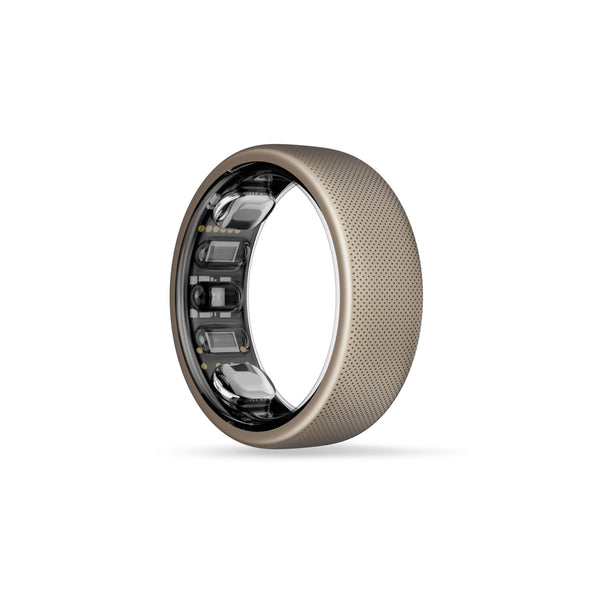
The Helio Ring is Zepp Health's (Amazfit's parent company) first standalone smart ring: a titanium-alloy shell over a resin interior, 8mm wide and 2.6mm thick, weighing under 4 grams depending on size. It carries a 10 ATM water-resistance rating — genuinely tough for this category, and a step up from the 5 ATM rating on Amazfit's own Helio Strap — so showers, pool laps and light water sports are all fine.
Unlike the Galaxy Ring, which needs an Android phone and works best specifically with a Samsung one, the Helio Ring runs on the free Zepp app on iOS 14+ or Android 7+, and it doesn't need an Amazfit watch to function. That's a bigger deal than it sounds in this category: in a household with one iPhone and one Android phone, this is the ring that doesn't force anyone to switch. (For the full breakdown of iPhone-vs-Android tradeoffs across every ring we track, see our Galaxy Ring vs Oura Ring 5 comparison.)
What Does the Helio Ring Actually Track?
The Daily Readiness Score
Sleep with it on, and in the morning you get a Readiness score from 1 to 100, built from your sleep resting heart rate, sleep HRV, breathing rate and skin temperature — the same broad recipe WHOOP and Oura use to signal whether to push a hard session or ease off.
An EDA sensor most rings this price skip
The genuinely distinctive piece of hardware here is electrodermal activity (EDA) tracking, paired with HRV, to flag shifts in your emotional and stress state through the day. Nobody's claiming clinical precision — this is a wellness trend indicator, not a diagnostic tool — but at around $149.99, having a stress sensor at all is unusual. Oura only added something comparable more recently, and RingConn's Gen 3 doesn't track it quite the same way. It's one of the reasons independent testers have rated the Helio Ring's sensor package above what its price tag would suggest.
Sleep, SpO2 and steps — the basics, done competently
Sleep staging, resting heart rate, blood oxygen and step counts round out the package, and they're handled well rather than as an afterthought. Heart-rate accuracy during exercise has held up in outside testing too — one hands-on comparison found it tracking within roughly 1 bpm of a chest-strap-paired Garmin on a run — so the core sensor package isn't the part of this ring that lets you down.
Do You Need a Subscription for the Amazfit Helio Ring?
There's a wrinkle here worth spelling out clearly, because a few reviews gloss over it. Amazfit's Zepp Aura Premium tier — customized sleep sounds, detailed weekly and monthly sleep reports, an AI chatbot, and deeper Readiness "insights" beyond the plain score — normally costs a few dollars a month if you're using it with an Amazfit watch or the Helio Strap. Buy the Helio Ring specifically, though, and Amazfit includes that membership free, permanently, no card required. Every core metric — heart rate, sleep, SpO2, EDA/stress, steps — is also free regardless of which device you own.
Net effect: you will not see a subscription prompt using this ring. But it's worth knowing a paid tier genuinely exists in Amazfit's ecosystem — the Helio Ring is simply the one product where you never pay it. That's the same no-monthly-fee logic behind every ring in our best smart rings with no subscription guide, where the Helio Ring holds a spot precisely because of this.
What's the Real Battery Life?
Amazfit's spec sheet says "up to 4 days" per charge, with a wireless charging puck that tops it back up in about 1 hour 40 minutes. In practice, that number assumes lighter use than most owners actually run. Independent testing has landed closer to 2 to 3 days once EDA, SpO2 and continuous heart-rate tracking are all switched on together, with some testers reporting overnight drains as steep as 20%. That's a meaningful step behind the ~10-day batteries on the RingConn Gen 3 and shorter than most Oura generations too — plan on charging it every other day if you run every sensor, not once a week.
Sizing: the Amazfit Helio Ring's Real Catch
This is the complaint you'll find in nearly every review of this ring, and it's earned. The Helio Ring ships in exactly three sizes — 8 (24mm), 10 (25.7mm) and 12 (27.3mm) — with nothing in between, versus Oura's sizes 6 through 13 or the RingConn Gen 3's 6 through 15. Land between those three and there's no size 9 or 11 to split the difference; you're either sizing up loose or down snug.
Amazfit does sell a standalone Sizing Kit (around $10, credited back once you buy the actual ring) that lets you test-wear each size for a full day before committing. Given how unforgiving the size range is — the wrong fit throws off both comfort and sensor contact — it's worth the small upfront step rather than guessing. All three sizes are listed as options on the same Amazon product page linked in this review, so you can compare them side by side before choosing. If you want the full picture on how ring sizing rules differ across brands, our Oura Ring 5 sizing guide covers the other side of this problem.
How Does the Helio Ring Compare to RingConn, Oura and Galaxy Ring?
| Ring | Price (Sept 2026)* | Subscription | Battery | Works with | Best for |
|---|---|---|---|---|---|
| Amazfit Helio Ring | ~$149.99 | None (Zepp Aura free for owners) | 2–4 days | iOS + Android | Budget-conscious first ring |
| RingConn Gen 2 Air | ~$199 | None | ~10 days | iOS + Android | Best value flagship-adjacent |
| RingConn Gen 3 | ~$349 | None | 10–14 days | iOS + Android | Best overall no-sub ring |
| Samsung Galaxy Ring | ~$399.99 | None | 5–7 days | Android only | Samsung households |
| Oura Ring 5 | $399+ | $5.99/mo for full features | ~9 days | iOS + Android | Most polished app |
*Reference prices at the time of writing; check live listings. Full field: best no-subscription smart rings, ranked. Deep dive on the category leader: RingConn Gen 3 review.
Amazfit Helio Ring Pros and Cons
- ✓ Works fully on iPhone and Android, no smartwatch required
- ✓ EDA stress sensor most competitors skip at this price
- ✓ 10 ATM water resistance, tougher than most rings
- ✓ Zepp Aura Premium included free, forever, for ring owners
- ✓ Heart-rate accuracy holds up well against reference devices
- ✕ Only 3 sizes, no half sizes — the sizing kit is basically mandatory
- ✕ Real battery life (2–3 days) falls short of the 4-day claim
- ✕ Exercise tracking is thinner without a paired Amazfit watch
Who Should Buy the Amazfit Helio Ring — and Who Shouldn't?
Buy the Helio Ring if you…
- Want a real smart ring under $150 without gambling on an unknown Amazon brand
- Split an iPhone/Android household and want one ring that works for both
- Are specifically curious about EDA/stress tracking
- Already own an Amazfit watch or the Helio Strap and want everything in one Zepp dashboard
Look elsewhere if you…
- Land between sizes 8, 10 and 12 → RingConn Gen 3 covers sizes 6 through 15
- Want the longest possible battery life without near-daily charging → RingConn Gen 3's 10–14 days
- Are an all-Android or Samsung household and don't mind Android-only → Galaxy Ring
- Aren't sure a ring beats a band for your use case at all → our smart ring vs fitness band guide
- Have a hard $60 ceiling → see our cheap smart rings under $60 guide instead — just know that's a genuinely different, more basic tier than the Helio Ring
Is the Amazfit Helio Ring Worth It? The Verdict
The Helio Ring earns its 7.8/10 by being honest about what it is: not a flagship, not a toy, but a real ring for people who want ring-shaped health data without paying flagship money or a monthly bill. The EDA sensor and full iOS/Android support are genuine wins at this price, and the free-forever Zepp Aura inclusion is a nicer deal than most reviews give it credit for.
What keeps it out of the 8s: a size range narrow enough to lock some buyers out entirely, and a battery that needs charging noticeably more often than Amazfit's spec sheet suggests. If those two things don't bother you — check your size against the Sizing Kit first — this is the clearest on-ramp into smart rings that doesn't feel like a compromise on either end of the price spectrum.
Amazfit Helio Ring FAQ
Does the Amazfit Helio Ring require a subscription?
No, not for the features that matter day to day — heart rate, sleep, SpO2, steps and EDA/stress tracking are free forever. Amazfit's paid Zepp Aura Premium tier does exist, but it's included free, permanently, specifically for Helio Ring owners.
How long does the battery actually last?
Amazfit claims up to 4 days. Independent testing with every sensor running has landed closer to 2–3 days, with some overnight drains as steep as 20%. Plan on charging every other day.
What sizes does it come in?
Just three: size 8 (24mm), size 10 (25.7mm) and size 12 (27.3mm), no half sizes. Amazfit sells a ~$10 Sizing Kit, credited back on purchase, so you can test-wear all three first.
Do I need an Amazfit smartwatch to use it?
No — it works standalone through the free Zepp app on your phone. A paired Amazfit watch or the Helio Strap adds more detailed exercise data, but neither is required.
Does it work with iPhone and Android?
Yes — iOS 14+ and Android 7+, both through the same free Zepp app. That's a real advantage over the Android-only Galaxy Ring.
Is it better than the Oura Ring or RingConn Gen 3?
Not on hardware — both last longer on a charge, fit more finger sizes, and run a more polished app. The Helio Ring's case is price: a real ring experience at under half the cost, with an EDA sensor neither tracks quite the same way.
Sources
- Amazfit — Helio Ring official product page: battery life, 10 ATM rating, sizing, EDA sensor and iOS/Android compatibility.
- the5krunner — Amazfit Helio Ring specs and battery life: independent verification of sizing, water resistance, and real-world battery life falling short of the 4-day claim.