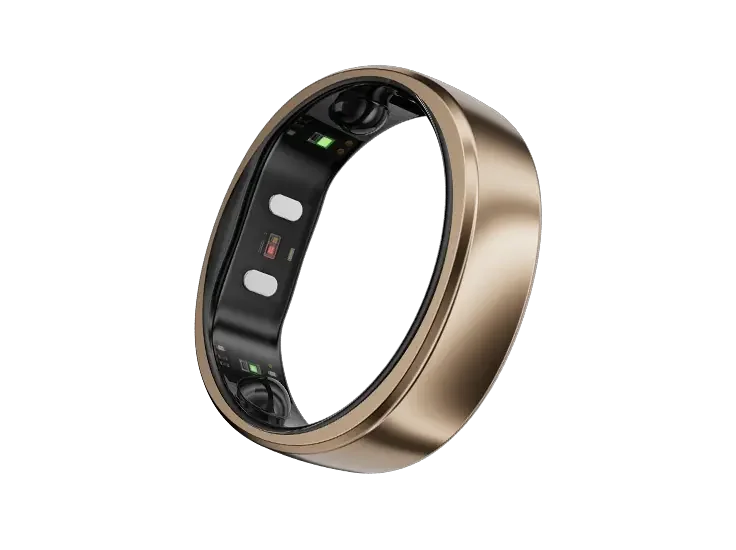
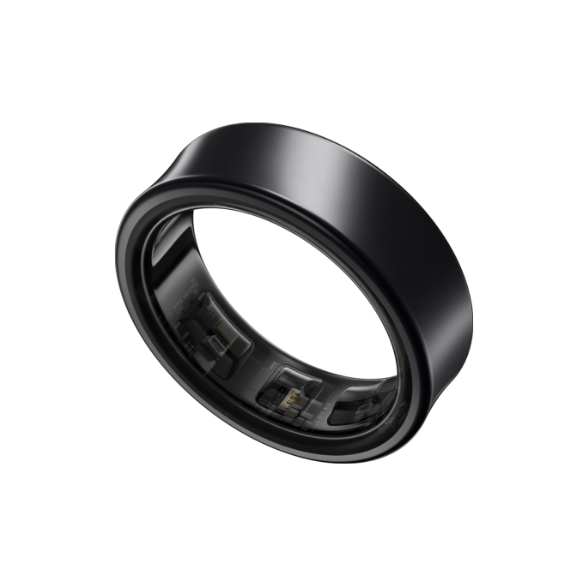
Cheap Smart Rings Under $60: What You Actually Get
Quick answer: A smart ring under $60 — our picks are the Herz P1 (~$59.99), Aoyool (~$49) and VAMOTRA (~$39) — genuinely tracks sleep timing, heart rate trends, SpO2 and steps with zero subscription. What you don't get: accuracy you should make health decisions on, real blood pressure measurement (no ring at any price is FDA-cleared for that), or any guarantee the companion app still exists in two years. As a $50 experiment, worth it. As a medical device, absolutely not.
Type "smart ring" into Amazon and sort by price, and you'll wade into a sea of brands you've never heard of — this month it's Herz, Aoyool, VAMOTRA, Mirlray, uaue; next month half the names will be different. Most of them are variations on the same handful of white-label designs coming out of Shenzhen, wrapped in listings that promise "20+ biometrics" and, in the bolder cases, blood pressure monitoring from your finger.
Here's the thing: these rings are not scams. For $40–60 you get a real optical heart rate sensor, a real accelerometer, and an app that will genuinely tell you roughly when you fell asleep and what your resting heart rate is doing. That was flagship territory five years ago. It's just that the listings oversell what that hardware can do, and nobody in the product pages mentions the actual risks — so we will.
Below: the three rings under $60 we'd actually consider right now, followed by the stuff the listings won't tell you — the blood pressure fiction, the app problem, and the honest math on when you should just spend $199 instead.
- Best under $60: Herz P1 (~$59.99) — 6-day battery, temperature trends, the most complete budget package
- Thinnest & cheaper: Aoyool (~$49) — 2mm-thin build, family data sharing, solid basics
- The bare-minimum floor: VAMOTRA (~$39) — sleep, heart rate, SpO2, steps; nothing more, nothing pretending to be more
1. Herz P1 — The Best of the Budget Bunch (~$59.99)
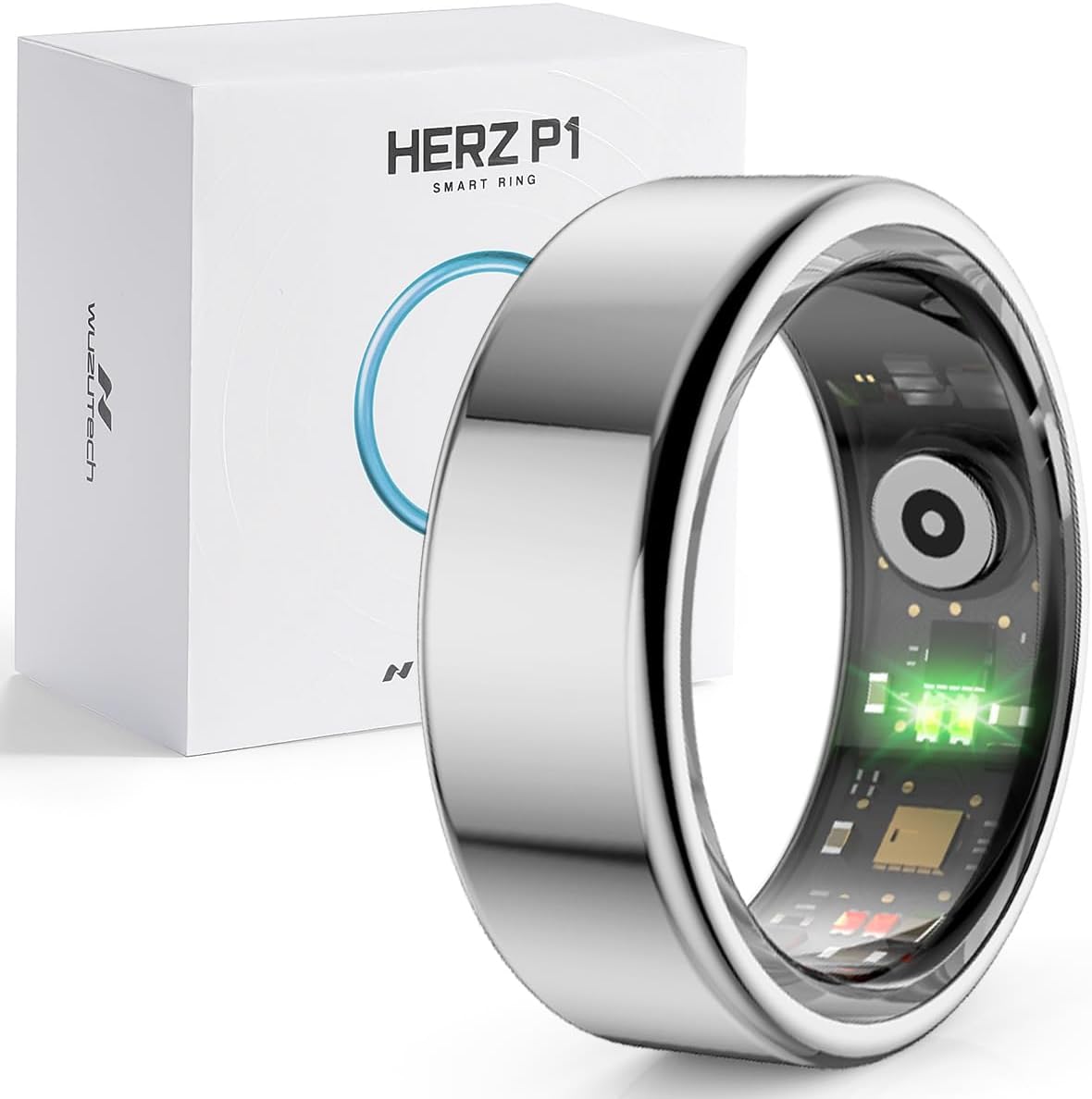
Around $59.99 (August 2026) · Kudomax Score 6.9
The Herz P1 sits right at the top of the under-$60 bracket and it's the most complete package here: heart rate, SpO2, skin temperature trends, sleep staging, activity, and menstrual cycle tracking, with a claimed 6-day battery — believable for this class, since these rings do far less continuous sampling than an Oura. The listing says water-resistant, it works on both iOS and Android, and it has accumulated hundreds of Amazon reviews plus an unusual amount of third-party coverage for a budget ring, which at least means the brand is trying to exist beyond one listing.
Now the honest part. The P1's companion app is QRing — the same white-label app that powers dozens of rebadged budget rings. It's functional: sleep data, dashboards, Apple Health and Google Fit sync. It's also generic, occasionally loses the connection to the ring, and its long-term support depends on a developer you can't name. And "tracks 20+ biometrics with pinpoint accuracy," per the listing, is marketing — the sleep timing is decent, the sleep staging and stress numbers are rough estimates. More on that below.
Still: if you want the fullest taste of smart ring life for under $60, this is the one.
2. Aoyool — Thinner, Cheaper, Same Story (~$49)
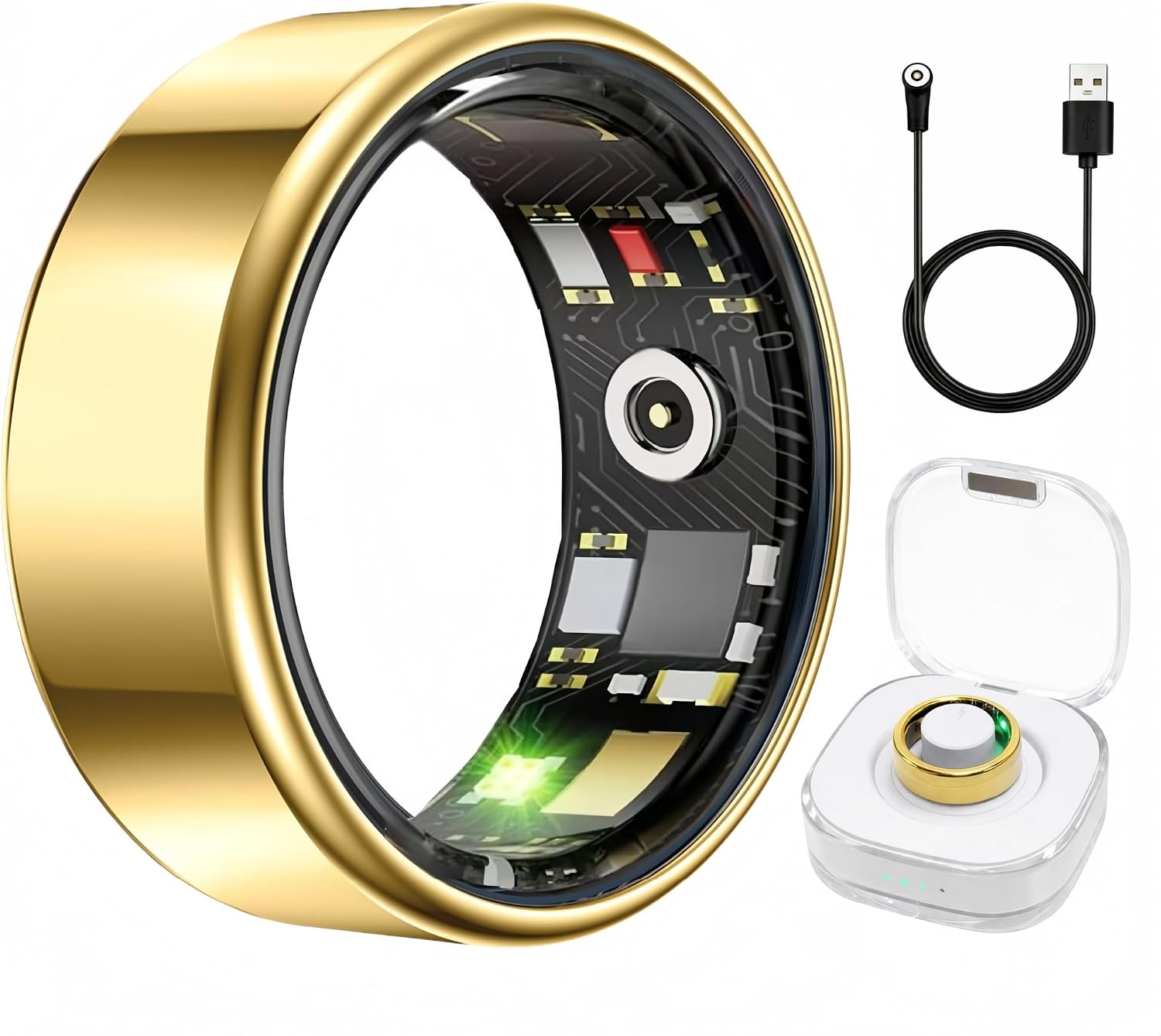
Around $49 (August 2026) · Kudomax Score 6.5
The Aoyool's pitch is comfort: a 2mm-thin band with a polished inner surface, noticeably slimmer than most budget rings, IP68-rated against water. It covers the same core set — 24/7 heart rate, SpO2, sleep tracking with deep/light breakdown, activity — and claims 3–5 days of battery, which is shorter than the Herz but honest of them to print. Two features you don't usually see at this price: a family care mode that shares your health data with a relative's phone (genuinely useful if you're buying this for an aging parent), and a remote camera shutter, which is a gimmick but a harmless one.
The trade-offs are the same as every ring in this class: an app from an unknown developer, sleep stages that are educated guesses, and a brand with no track record — Aoyool has hundreds of reviews across variants but existed for approximately nobody eighteen months ago. Buy it as a slim, comfortable sleep-timing ring and you'll be satisfied. Buy it expecting Oura-grade data and you won't.
3. VAMOTRA — The $39 Floor (~$39)
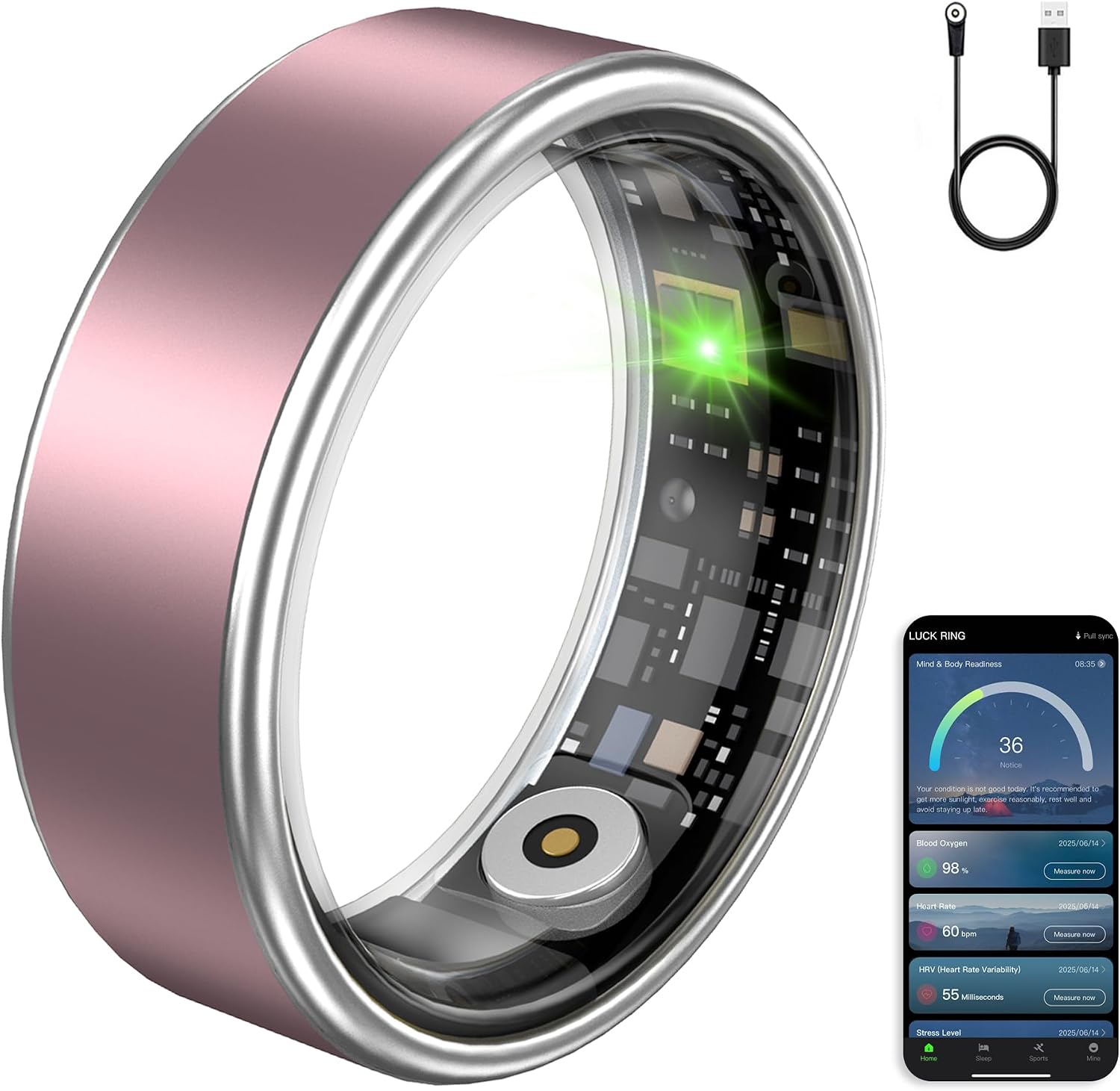
Around $39 (August 2026) · Kudomax Score 6.2
The VAMOTRA is what's left when you strip the category to its chassis: heart rate, blood oxygen, stress estimate, sleep, steps. No temperature sensor, no cycle tracking, a newer listing with a smaller review base than the other two. That's the entire pitch, and at ~$39 it's a fair one — this is the cheapest way on this page to find out whether you can tolerate wearing a ring to bed every night, which is genuinely the make-or-break question of smart ring ownership that no spec sheet can answer for you.
We'd point you here if the money matters more than the feature list, with one caveat stated plainly: the newer and smaller the brand, the higher the odds the app stops getting updates. At this price you're buying a coin-flip on longevity, and the coin is fine as long as you know you're flipping it.
The Budget Rings Side by Side
| Ring | Price (Aug 2026)* | Battery (claimed) | Standout | Weak spot |
|---|---|---|---|---|
| Herz P1 | ~$59.99 | Up to 6 days | Temp trends, cycle tracking | Generic QRing app |
| Aoyool | ~$49 | 3–5 days | 2mm-thin, family care mode | No-name brand, unknown app |
| VAMOTRA | ~$39 | "Long-lasting" (unspecified) | Cheapest real option | Newest brand, thinnest track record |
| RingConn Gen 2 Air (reference) | ~$199 | ~10 days | Proven accuracy, established app | Costs 4–5x more |
*Reference prices at the time of writing; check live listings.
Can a Cheap Smart Ring Really Measure Blood Pressure?
No. And this is the claim that made us write this guide.
Scroll the budget ring results on Amazon and you'll find "Blood Pressure" printed right in product titles, usually on rings from the same R02-style white-label family. Here is the plain state of the science: no smart ring — at any price, from any brand — is FDA-cleared to measure blood pressure. Not the $39 ones, not the $399 ones. The American Heart Association said it directly in a December 2025 scientific statement: cuffless blood pressure technologies "show promise" but are not yet proven accurate enough to diagnose high blood pressure or guide treatment decisions. Harvard Health's review of cuffless devices lands the same way, and a peer-reviewed study of smartwatch-based BP measurement found accuracy insufficient for clinical use — and that was on hardware far better funded than anything in this article.
What a cheap ring actually does when it shows you "120/80" is run your pulse waveform through an estimation formula. The output tends to hover near normal-looking values regardless of what your arteries are doing — which is worse than no reading, because it can false-reassure someone with real hypertension. If blood pressure is why you're shopping: buy a validated arm cuff (about $30, actually FDA-cleared) and any ring you like for the sleep tracking. Never the ring for the BP.
The same logic applies at lower stakes to the other numbers. Sleep duration and bedtime on these rings track reasonably well, because detecting "not moving, low heart rate" is easy. Sleep stages, stress scores and calorie counts are estimates stacked on estimates. Watch the trends, ignore the decimals.
The App Is Where Cheap Rings Live or Die
The hardware in a $50 ring is honestly fine — optical sensors are cheap and mature. The software is where the category cuts corners, and it's the thing you'll live with daily.
Most budget rings, including the Herz P1, run on white-label companion apps like QRing, built by developers in China you can't look up, with privacy policies that are vague about where your sleep and heart rate data lives and who can see it. That's a real consideration for data as intimate as your nightly biometrics — decide for yourself how much you care, but decide it before checkout, because the listings won't raise the subject.
The sharper risk is abandonment. A smart ring is 100% dependent on its app: no screen, no on-device history, no fallback. If the developer stops updating the app and a new iOS or Android version breaks it, your ring becomes an anonymous piece of metal — and no-name brands abandon apps all the time, because supporting last year's product costs money and this year's ring already has a new name on it. This is the structural reason budget rings should be treated as 6–18 month experiments, and it's the single biggest thing that ~$199 buys you with an established brand: a developer with a reputation to lose.
One Nice Surprise: Charging Is Basically Universal
A rare point in the budget rings' favor: most of them descend from the same R02/R03 reference designs, which means they share pin layouts, and generic "R02/R03 smart ring charging cables" — about $7 on Amazon — will charge most of them. Lose the charger that came in the box and you're not stranded; it's commodity hardware in the best way.
One warning from our smart ring charger guide, where these cables come up constantly: that compatibility runs through the budget family only. Those $7 R02-family cables use a different pin layout than an Oura dock and will not charge an Oura ring — so if you graduate from a cheap ring to a flagship later, the cables don't come with you.
When Should You Skip All Three and Spend $199 Instead?
Here's the honest decision framework, since "budget vs. flagship" is really the question underneath this whole page.
Buy a ring under $60 if: you're testing whether you'll actually wear a ring 24/7; you mainly want sleep timing and step counts; the data is entertainment with a side of insight; or it's a gift for someone mildly curious. For all of that, these rings deliver, and the $0/month part is real — every metric they collect is free forever, which is more than a $399 Oura with its $5.99/month membership can say.
Spend ~$199 on a RingConn Gen 2 Air if: you'll act on the data. Training recovery, HRV trends, actually fixing your sleep — anything where a wrong number sends you in a wrong direction. The extra ~$140 buys sensor accuracy that reviewers have validated against reference devices, a ~10-day battery that doubles anything here, sizing that fits, and — the quiet big one — an established app from a company whose entire brand is "no subscription, supported for years." Per night over two years of ownership, the difference is about 19 cents. If you're the person who'll still be looking at the data in month six, that's the better math; our RingConn Gen 3 review covers what the flagship tier adds on top.
And if you're not sure a ring is the right form factor at all, read our smart ring vs fitness band breakdown first — for workout-heavy tracking, a screenless band is often the smarter budget buy than any ring on this page.
Cheap Smart Rings: FAQ
Are cheap smart rings under $60 any good?
For sleep timing, resting heart rate trends, steps and finding out whether you'd wear a ring at all — yes, genuinely, and with no subscription. Treat the numbers as rough trends, not medical data, and know the companion app is the weakest link.
Can a $50 smart ring measure blood pressure?
No. No smart ring at any price is FDA-cleared for blood pressure, and the American Heart Association's December 2025 statement says cuffless devices aren't accurate enough to diagnose or treat hypertension. Any BP number a cheap ring shows is an estimate — use a validated arm cuff instead.
Do cheap smart rings have a subscription?
No — that's their one honest superpower. The Herz P1, Aoyool and VAMOTRA show everything they collect for free, forever.
How long do cheap smart rings last?
Plan on 6–18 months of useful life. Small non-replaceable batteries, coatings that scratch, and — the bigger risk — companion apps that may stop being updated. Budget rings are an experiment, not an heirloom.
Cheap ring now, or save for a RingConn?
Curious? Spend $40–60 and find out if you'll wear it. Already know you'll act on the data? Go straight to the RingConn Gen 2 Air at ~$199 — validated accuracy, 10-day battery, established app, still no subscription.
Sources
Blood pressure and accuracy claims in this article are based on: the American Heart Association's scientific statement on cuffless blood pressure technologies (December 2025); Harvard Health's review of cuffless blood pressure devices; and a peer-reviewed study finding smartwatch-based blood pressure measurement insufficiently accurate for clinical use. Product specs are from the manufacturers' Amazon listings as of August 16, 2026.